Tell us about the job
Takes about a minute. No obligation.
Sizing a boiler for a Wright County home is a question of local heating load, not of bracing for an unusually punishing weather record. 93 severe weather events were recorded in Wright County, Iowa between 2015 and 2024. That rate puts this county in the middle of the national spread, which means severe weather here is present but not the dominant variable shaping how contractors spec a system. The quality of the installation and how well the equipment is matched to the actual heat loss of the house carry more weight on the outcome than the county's storm history does.
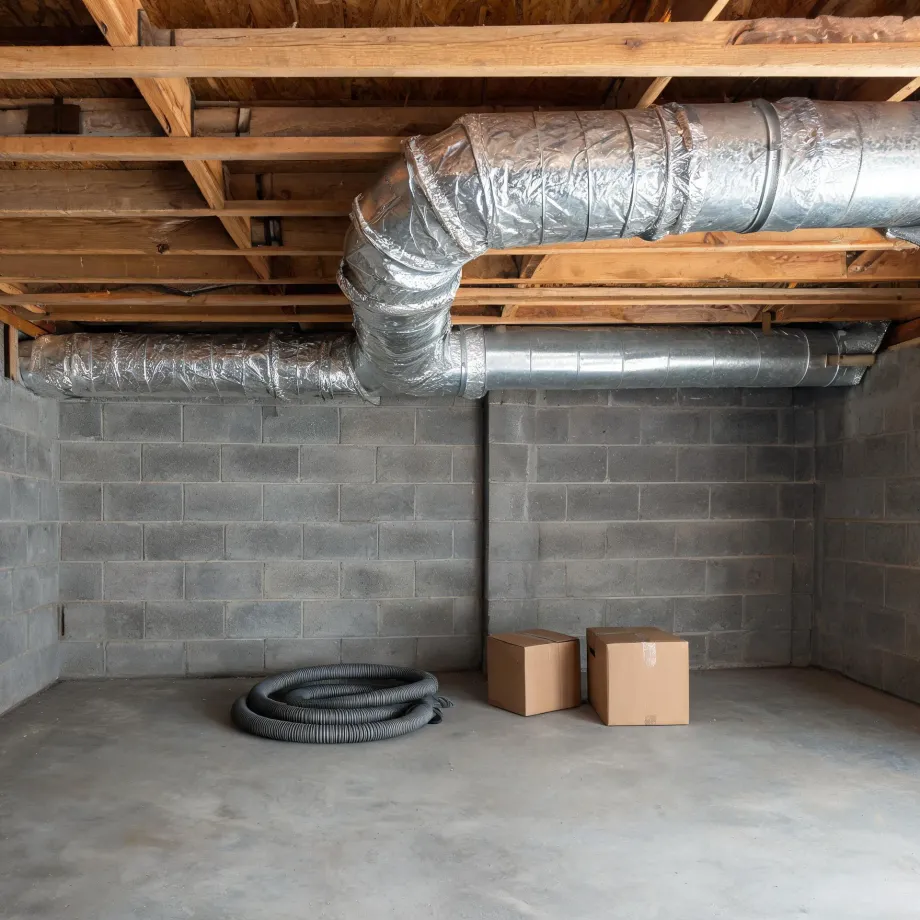
Ductwork laid down for the heating equipment of an earlier generation was routed, sized, and connected around that equipment's demands. Half the homes in Wright County, Iowa were built in 1960 or earlier (2020-2024 ACS 5-year). A contractor quoting a boiler installation in this county opens walls or pulls access panels before committing to a price, because the existing runs may need to be rerouted, resealed, or replaced outright to carry the new system. The electrical is a separate question and gets its own look. What the house already contains, in those two systems, is what sets the actual scope of the job.
What a New Boiler Installation Covers
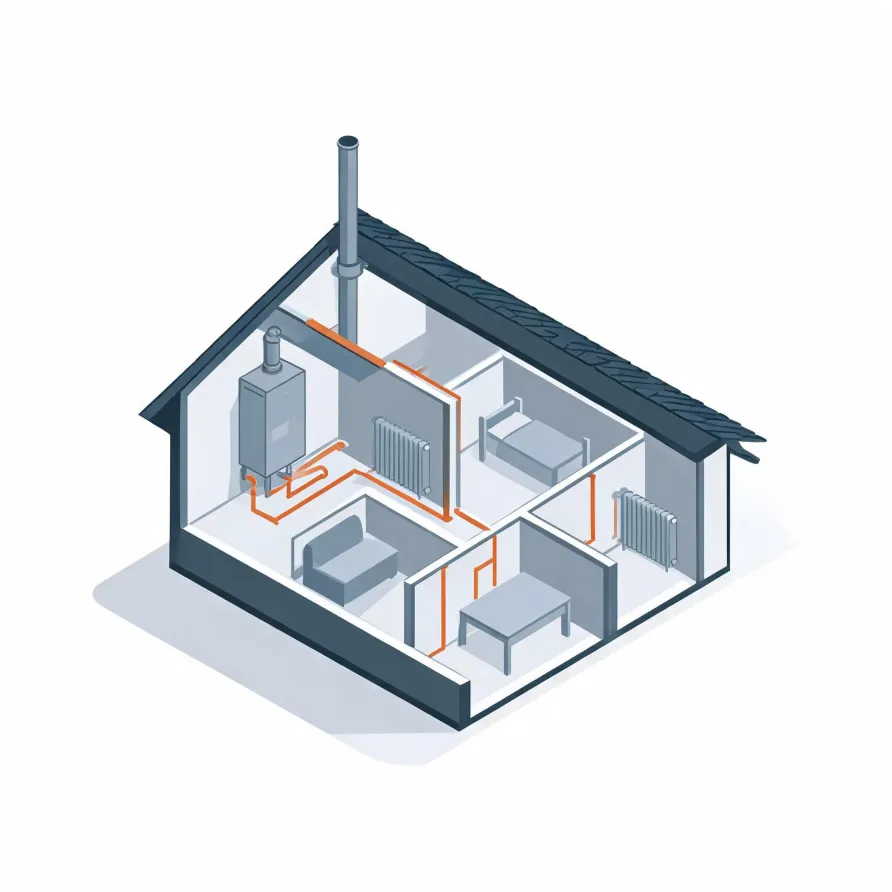
The boiler itself sits in a utility space, basement, or mechanical room and is the unit that heats water and sends it through the system. Alongside it, the expansion tank absorbs pressure changes as the water heats and cools. The circulator pump moves that water out of the boiler and through the pipes.
The thermostat goes on an interior wall and tells the boiler when to fire. Zone valves, where the system has them, sit along the pipe runs and direct hot water to specific areas of the house. The pressure relief valve mounts directly on the boiler as a safety device.
The drawing shows a typical layout, and a licensed contractor determines exactly what applies to this house.
Get matched in Wright CountyWright County, Iowa, by the numbers
93 severe weather events were recorded in Wright County, Iowa between 2015 and 2024.
NOAA National Centers for Environmental Information, Storm Events Database, bulk CSV export, events 2015-01-01 through 2024-12-31.Half the homes in Wright County, Iowa were built in 1960 or earlier (2020-2024 ACS 5-year).
U.S. Census Bureau, 2020-2024 American Community Survey 5-Year EstimatesWright County, Iowa holds 6,278 housing units (2020-2024 ACS 5-year).
U.S. Census Bureau, 2020-2024 American Community Survey 5-Year EstimatesOwners occupy 77.0% of the occupied homes in Wright County, Iowa (2020-2024 ACS 5-year).
U.S. Census Bureau, 2020-2024 American Community Survey 5-Year EstimatesBoiler Installation Rules and Codes for Wright County, Iowa1 sourced standards and regulations
Licensing and Legal Requirements in Wright County, Iowa
Iowa requires a state licence to install or repair HVAC, refrigeration, mechanical or plumbing systems, and to operate as a contractor, with exceptions listed in section 105.11.
Severe Weather Events in Wright County
Weather in Wright County puts real demand on heating equipment, and that demand shapes what a boiler here needs to handle year after year. Installation decisions that ignore local conditions are installation decisions that cost more later.
93 severe weather events, 2015–2024. Source: NOAA National Centers for Environmental Information, Storm Events Database.