Tell us about the job
Takes about a minute. No obligation.
Sizing a boiler for a Hancock County home starts with what this climate asks of it. 110 severe weather events were recorded in Hancock County, Iowa between 2015 and 2024. At that rate, severe weather is a regular feature of operating here, and a contractor quoting a new boiler has to work from load calculations that account for that pressure rather than pulling a standard spec. A unit sized for a milder set of conditions will run harder, cycle more, and wear faster. The install decision shapes how the system performs for years afterward.
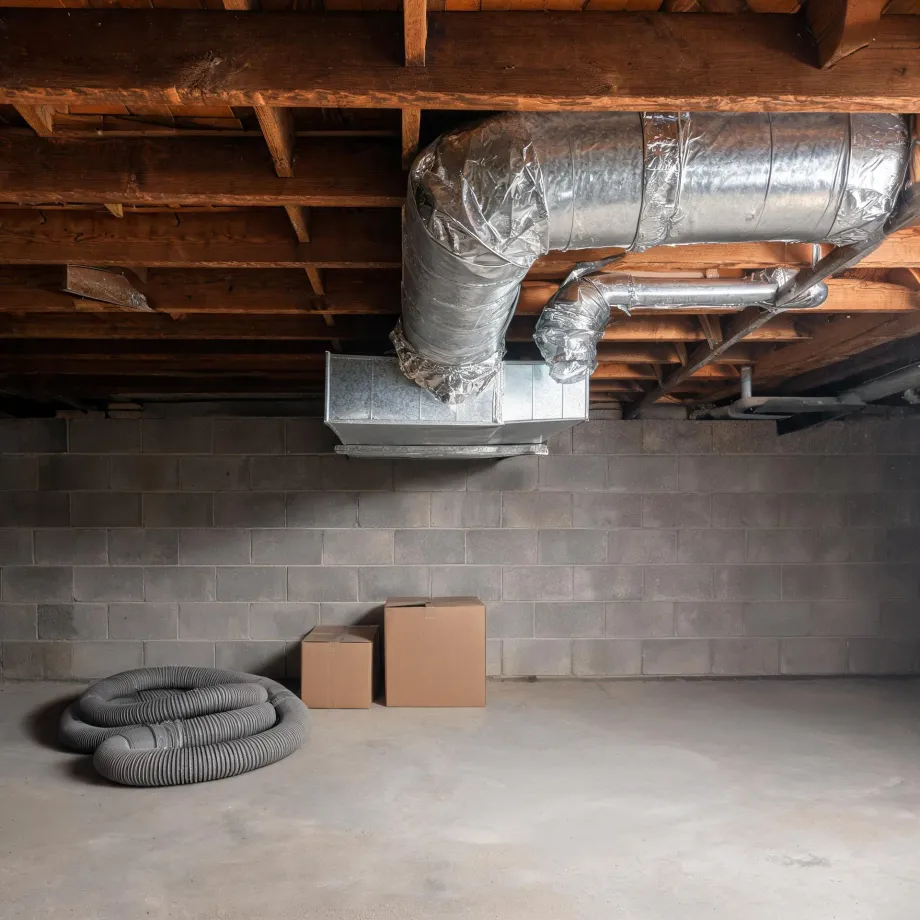
Ductwork laid down for an earlier generation of heating equipment shapes what a boiler installation here can actually do. Half the homes in Hancock County, Iowa were built in 1961 or earlier (2020-2024 ACS 5-year). That stock was built around heating systems whose distribution requirements differed from a modern boiler, and the runs already inside the walls reflect those original decisions. A contractor sizing a new unit has to trace what is there, check where the runs go and how they are joined, and work out whether the existing distribution carries what a new system delivers. The equipment choice follows from that.
What a New Boiler Installation Puts in Your Home
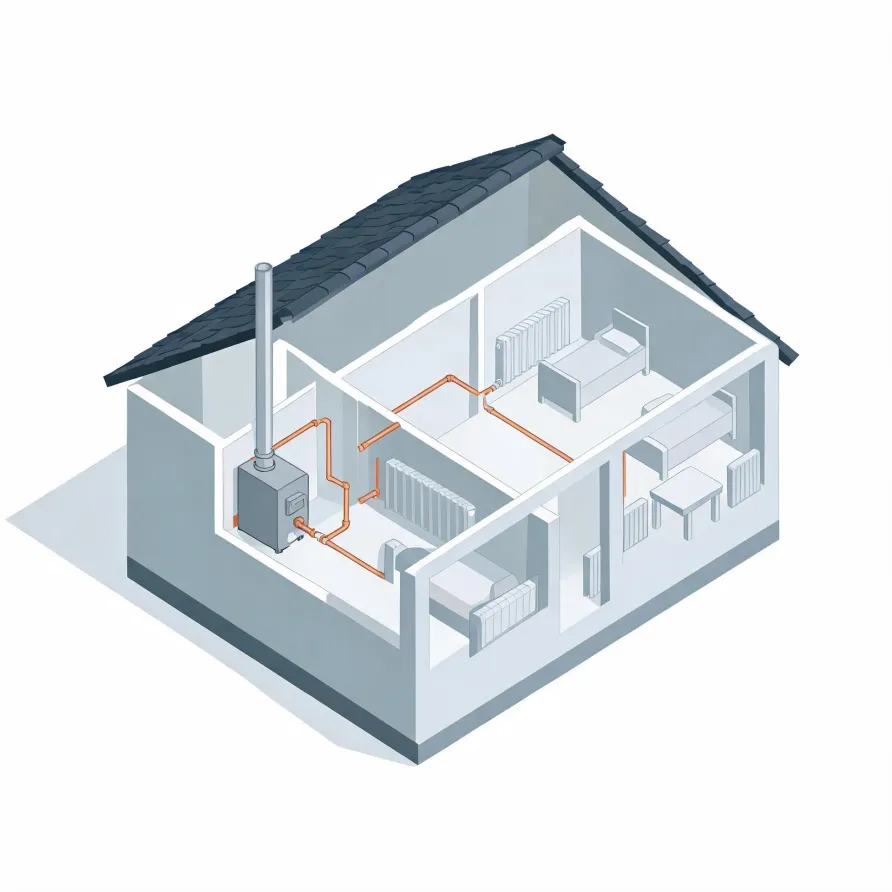
The boiler itself sits in a utility space, most often a basement or mechanical room, and is the unit that heats water and sends it out through the house. Alongside it, the expansion tank handles pressure changes in the system as water heats and cools. Both pieces are part of the same installation.
Radiators or hydronic baseboards sit in the living spaces and are the points where heat actually enters the rooms. The circulator pump, mounted close to the boiler, moves the heated water through the pipes that connect everything. Thermostats go on the walls and tell the system when to run.
The drawing shows a typical layout, and a licensed contractor determines exactly what applies to your house.
Get matched in Hancock CountyHancock County by the Numbers
110 severe weather events were recorded in Hancock County, Iowa between 2015 and 2024.
NOAA National Centers for Environmental Information, Storm Events Database, bulk CSV export, events 2015-01-01 through 2024-12-31.Half the homes in Hancock County, Iowa were built in 1961 or earlier (2020-2024 ACS 5-year).
U.S. Census Bureau, 2020-2024 American Community Survey 5-Year EstimatesHancock County, Iowa holds 5,116 housing units (2020-2024 ACS 5-year).
U.S. Census Bureau, 2020-2024 American Community Survey 5-Year EstimatesOwners occupy 82.5% of the occupied homes in Hancock County, Iowa (2020-2024 ACS 5-year).
U.S. Census Bureau, 2020-2024 American Community Survey 5-Year EstimatesBoiler Installation Rules for Hancock County, Iowa1 codes and standards
Licensing and Legal Requirements in Hancock County, Iowa
Iowa requires a state licence to install or repair HVAC, refrigeration, mechanical or plumbing systems, and to operate as a contractor, with exceptions listed in section 105.11.
Severe Weather Events in Hancock County
Weather puts direct stress on heating equipment: hard winters and volatile swing seasons push boilers through cycles of demand that shape how long a system lasts and how hard it has to work. Knowing the local weather record helps a contractor size and install equipment that fits what Hancock County actually asks of it.
110 severe weather events, 2015–2024. Source: NOAA National Centers for Environmental Information, Storm Events Database.