Tell us about the job
Takes about a minute. No obligation.
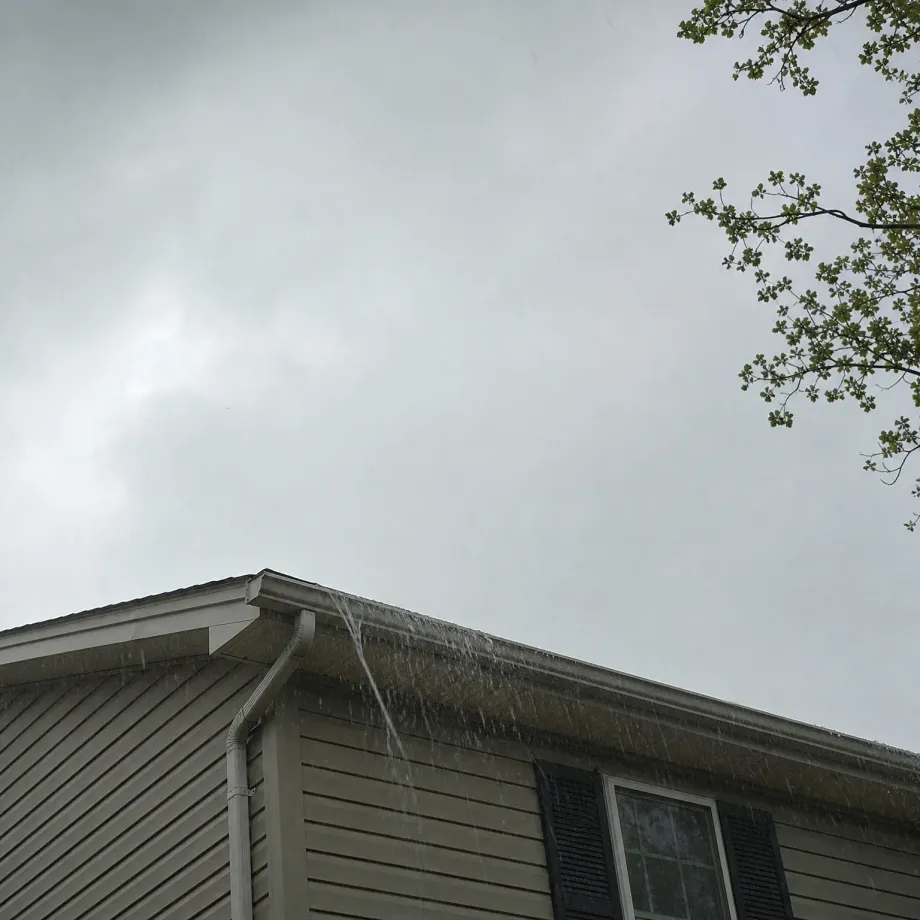
A contractor quoting a boiler installation in Franklin County starts from what the local heating load actually demands, and severe weather sits somewhere in the middle of that picture. 105 severe weather events were recorded in Franklin County, Iowa between 2015 and 2024. At that rate, hard weather is a real but unremarkable part of operating here, not a rarity and not a constant assault. That means sizing decisions rest mostly on the house itself: square footage, insulation, window area, ductwork or radiator layout. A contractor who treats the weather record as either negligible or alarming will land on the wrong equipment for the same reason.
Piping and distribution systems laid down for equipment from generations past carry assumptions about flow rates and pressure that a modern boiler may not match. Half the homes in Franklin County, Iowa were built in 1954 or earlier (2020-2024 ACS 5-year). A contractor pricing a boiler installation here has to assess what is already in the walls before the equipment selection means much, because the existing distribution infrastructure is where the job either fits or has to be rebuilt around the new unit.
What a New Boiler Installation Puts in Your Home
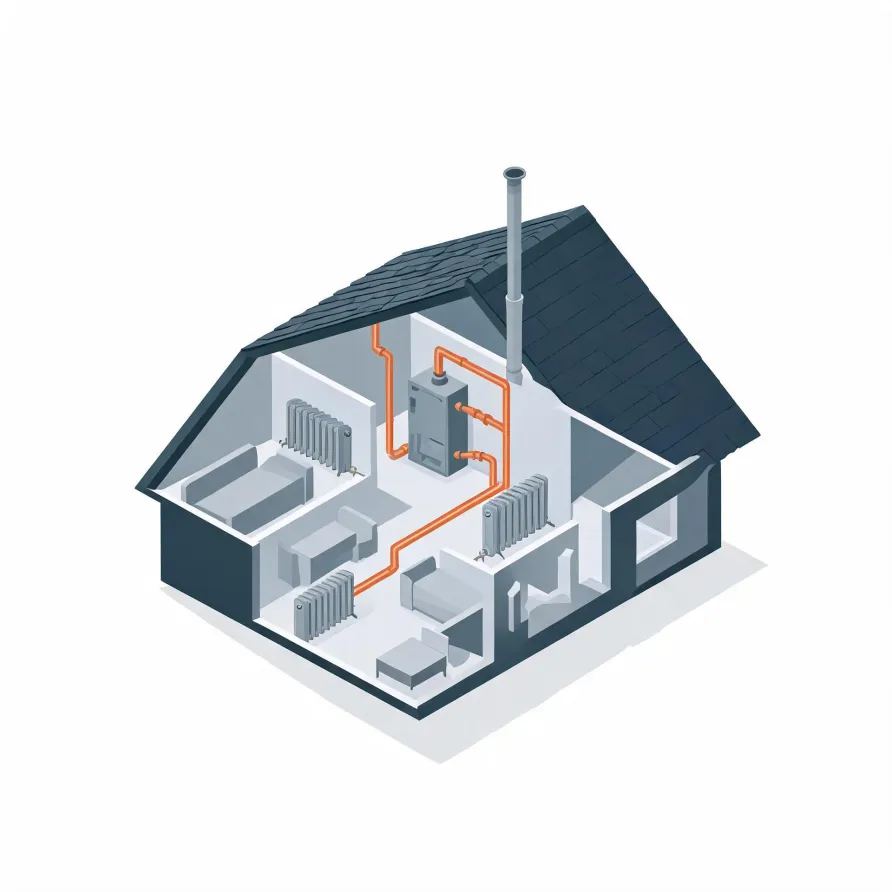
The boiler itself sits in a utility space, basement, or mechanical room and is the unit that heats water and sends it through the system. Alongside it, the expansion tank absorbs pressure changes as water heats and cools, and the circulator pump moves heated water out to where it is needed.
Radiators or radiant floor tubing sit throughout the living space and release heat into each room. The thermostat mounts on a wall and tells the system when to fire. A contractor also accounts for the flue pipe, which runs from the boiler to an exterior vent and carries combustion gases out of the house.
The drawing shows a typical layout, and a licensed contractor determines what applies to your specific home.
Get matched in Franklin CountyFranklin County, Iowa, by the numbers
105 severe weather events were recorded in Franklin County, Iowa between 2015 and 2024.
NOAA National Centers for Environmental Information, Storm Events Database, bulk CSV export, events 2015-01-01 through 2024-12-31.Half the homes in Franklin County, Iowa were built in 1954 or earlier (2020-2024 ACS 5-year).
U.S. Census Bureau, 2020-2024 American Community Survey 5-Year EstimatesFranklin County, Iowa holds 4,657 housing units (2020-2024 ACS 5-year).
U.S. Census Bureau, 2020-2024 American Community Survey 5-Year EstimatesOwners occupy 72.4% of the occupied homes in Franklin County, Iowa (2020-2024 ACS 5-year).
U.S. Census Bureau, 2020-2024 American Community Survey 5-Year EstimatesBoiler Installation Rules for Franklin County, Iowa1 sourced standards and codes
Licensing and Legal Requirements in Franklin County, Iowa
Iowa requires a state licence to install or repair HVAC, refrigeration, mechanical or plumbing systems, and to operate as a contractor, with exceptions listed in section 105.11.
Severe Weather Events in Franklin County
Franklin County's weather puts real demands on heating equipment, and those demands shape what a boiler installation here needs to handle. Sizing, components, and system choices are all local decisions.
105 severe weather events, 2015–2024. Source: NOAA National Centers for Environmental Information, Storm Events Database.