Tell us about the job
Takes about a minute. No obligation.
A boiler repair in Wright County starts with what the system has actually been through, and severe weather here sits near the middle of the national picture rather than at its edge. 93 severe weather events were recorded in Wright County, Iowa between 2015 and 2024. At that rate, the climate is a real presence but not the dominant explanation for most failures a contractor finds. Cracked heat exchangers, failed circulator pumps, and worn pressure relief valves are more often products of deferred service than of storm load. A contractor who pins a diagnosis on weather alone, without checking service records and the age of key components, is skipping the step that determines what the repair actually costs.
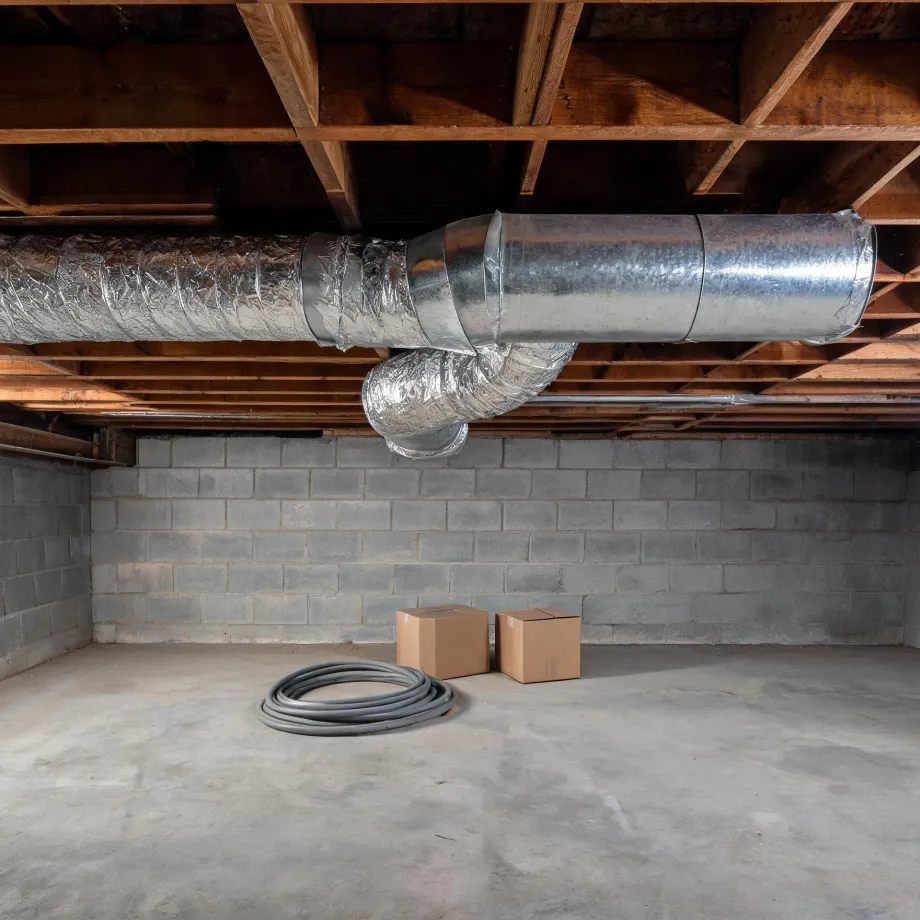
Boilers in houses this old tend to carry a layered history inside them: seals that were replaced with close-enough substitutes, sections that were reseated without being properly flushed, and controls updated piecemeal rather than as a system. Half the homes in Wright County, Iowa were built in 1960 or earlier (2020-2024 ACS 5-year). A contractor who opens a boiler in a house like that is looking at what those years of incremental decisions left behind, which is why the visible failure and the repair scope often diverge once the work is actually underway. Parts for systems of this vintage are not always in current production, and what a contractor can source shapes what the repair ends up being.
The Parts of a Boiler a Contractor Checks First
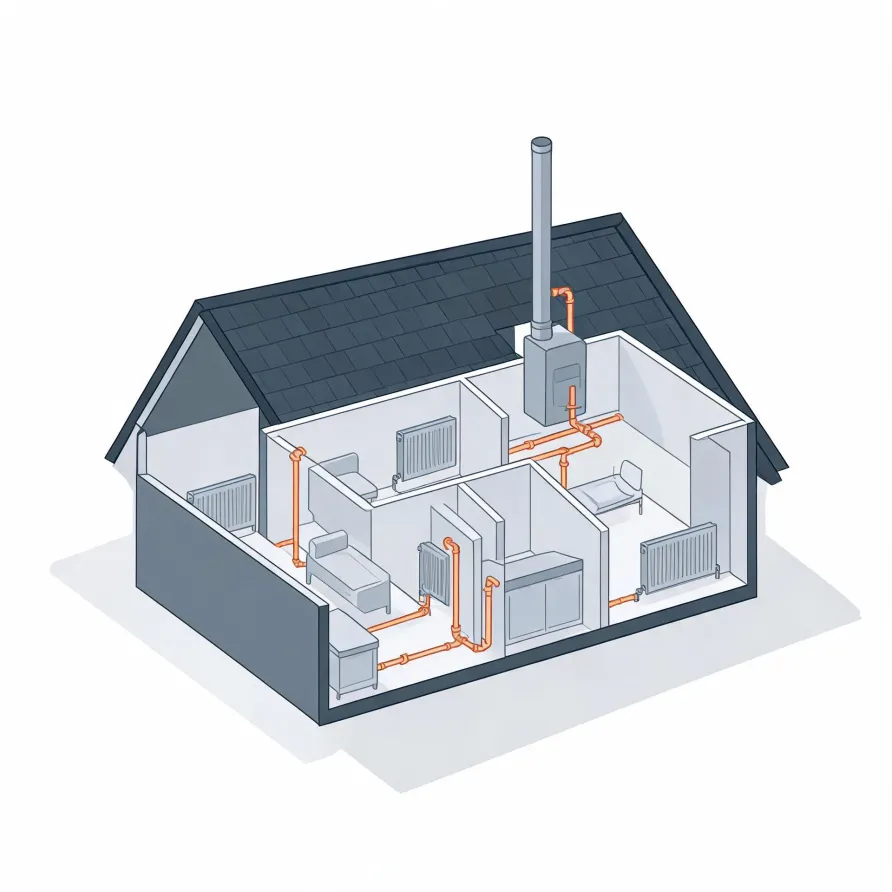
The boiler itself sits in a mechanical room, basement, or utility closet and is the piece a contractor goes to first. It houses the burner, the heat exchanger, and the controls that govern the whole system. When something fails at the source, the fault usually lives in one of those three components.
Running out from the boiler, the supply and return pipes carry hot water to the radiators or radiant panels in each room and bring cooled water back. The expansion tank, pressure relief valve, and circulator pump each sit close to the boiler and keep pressure and flow in check. A fault in any of them shows up as uneven heat, pressure loss, or noise at the boiler itself.
The drawing shows a typical boiler layout, and a licensed contractor will assess which components apply to your specific setup.
Get matched in Wright CountyWright County, Iowa, by the numbers
93 severe weather events were recorded in Wright County, Iowa between 2015 and 2024.
NOAA National Centers for Environmental Information, Storm Events Database, bulk CSV export, events 2015-01-01 through 2024-12-31.Half the homes in Wright County, Iowa were built in 1960 or earlier (2020-2024 ACS 5-year).
U.S. Census Bureau, 2020-2024 American Community Survey 5-Year EstimatesWright County, Iowa holds 6,278 housing units (2020-2024 ACS 5-year).
U.S. Census Bureau, 2020-2024 American Community Survey 5-Year EstimatesOwners occupy 77.0% of the occupied homes in Wright County, Iowa (2020-2024 ACS 5-year).
U.S. Census Bureau, 2020-2024 American Community Survey 5-Year EstimatesBoiler Repair Rules & Standards for Wright County, Iowa1 sourced rules and standards
Licensing and Legal Requirements in Wright County, Iowa
Iowa requires a state licence to install or repair HVAC, refrigeration, mechanical or plumbing systems, and to operate as a contractor, with exceptions listed in section 105.11.
Severe Weather Events in Wright County
Hard weather puts a load on boilers that steady, mild winters never do. Repair demand in Wright County follows what the sky does, and a local contractor knows that pattern.
93 severe weather events, 2015–2024. Source: NOAA National Centers for Environmental Information, Storm Events Database.