Tell us about the job
Takes about a minute. No obligation.
A boiler going into a Webster County home has to be sized for what this area actually asks of it, and the local weather record is part of that calculation. 140 severe weather events were recorded in Webster County, Iowa between 2015 and 2024. At that rate, severe weather is a standing operating condition, and a contractor quoting a new installation has to account for it in equipment selection and in how tightly the system is sealed and set up. A unit that fits the catalog spec for a milder area will be undersized for what runs here.
Ductwork laid down for an older heating system was sized, routed, and sealed for conditions that a modern boiler does not replicate. Half the homes in Webster County, Iowa were built in 1957 or earlier (2020-2024 ACS 5-year). That gap between what the house was built around and what a new system needs is where installation decisions actually get made. A contractor here is checking whether existing runs can carry the new distribution load before pricing the unit, because if they cannot, the scope changes before the equipment question even opens.
What a Boiler Installation Puts in Your Home
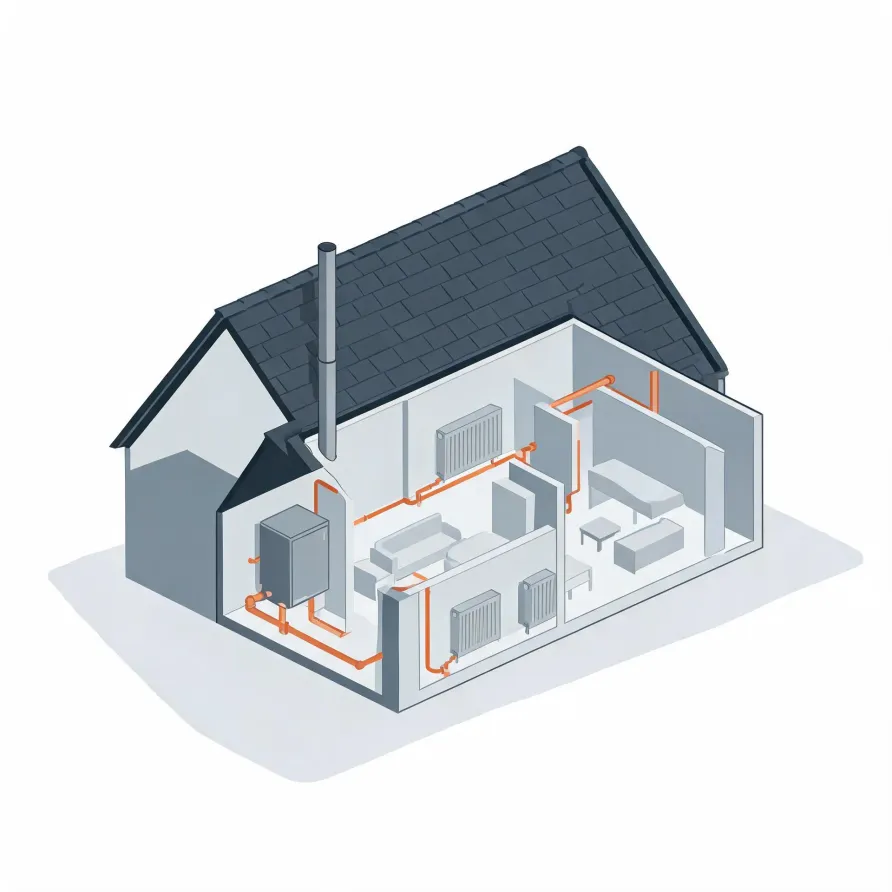
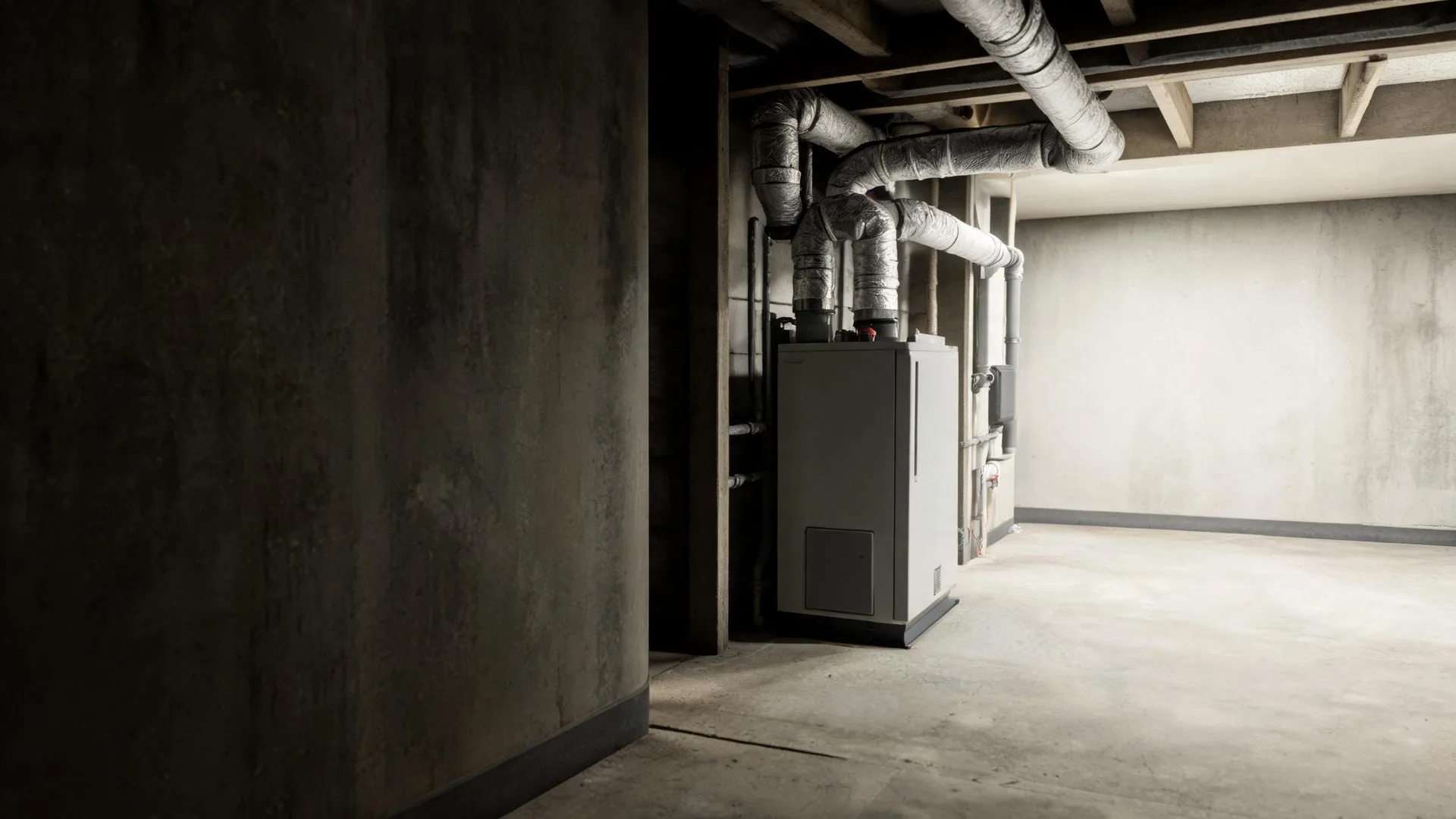
The boiler itself sits in a utility space, most often a basement or mechanical room, and is the unit that heats water and sends it out through the system. Connected to it are the expansion tank and the pressure relief valve, both mounted close by, which keep the system pressure within a safe range as the water heats and cools.
From the boiler, supply and return pipes run through the house to the heat emitters, whether those are radiators, baseboard units, or radiant floor loops set into the subfloor. A circulator pump, mounted on the piping near the boiler, moves the heated water through that loop and back again.
The drawing shows a typical layout, and a licensed contractor determines which components and configurations apply to your specific home.
Get matched in Webster CountyWebster County, Iowa, by the numbers
140 severe weather events were recorded in Webster County, Iowa between 2015 and 2024.
NOAA National Centers for Environmental Information, Storm Events Database, bulk CSV export, events 2015-01-01 through 2024-12-31.Half the homes in Webster County, Iowa were built in 1957 or earlier (2020-2024 ACS 5-year).
U.S. Census Bureau, 2020-2024 American Community Survey 5-Year EstimatesWebster County, Iowa holds 17,082 housing units (2020-2024 ACS 5-year).
U.S. Census Bureau, 2020-2024 American Community Survey 5-Year EstimatesOwners occupy 70.3% of the occupied homes in Webster County, Iowa (2020-2024 ACS 5-year).
U.S. Census Bureau, 2020-2024 American Community Survey 5-Year EstimatesBoiler Installation Rules for Webster County, Iowa1 codes and standards
Licensing Rules for Webster County, Iowa
Iowa requires a state licence to install or repair HVAC, refrigeration, mechanical or plumbing systems, and to operate as a contractor, with exceptions listed in section 105.11.
Severe Weather Events in Webster County
Webster County's weather puts real load on heating equipment, and load is what determines how hard a boiler works and how long it lasts. That makes local conditions a practical factor when a contractor is sizing or installing a system here.
140 severe weather events, 2015–2024. Source: NOAA National Centers for Environmental Information, Storm Events Database.