Tell us about the job
Takes about a minute. No obligation.
A boiler installed in Sioux County has to be sized for what this climate actually demands, not for a median load. 159 severe weather events were recorded in Sioux County, Iowa between 2015 and 2024. At that rate, severe weather is a routine part of a system's working life, which means a contractor has to calculate heat loss and capacity for conditions that arrive regularly. An undersized unit running hard against real winters shortens its service life. A correctly sized install, set up by someone who knows this area's load, holds up where a catalog spec would not.
Older ductwork and the electrical service it was paired with were put in for whatever ran at the time, and a modern boiler does not inherit that layout without a contractor checking it first. Half the homes in Sioux County, Iowa were built in 1973 or earlier (2020-2024 ACS 5-year). That tells a contractor something specific before they open a single wall: the distribution side of the house is as likely to shape the scope of a boiler installation as the unit itself is. A contractor will trace the existing runs, measure what is there, and decide what carries over and what has to change before any equipment is priced.
What a New Boiler Installation Puts in Your Home
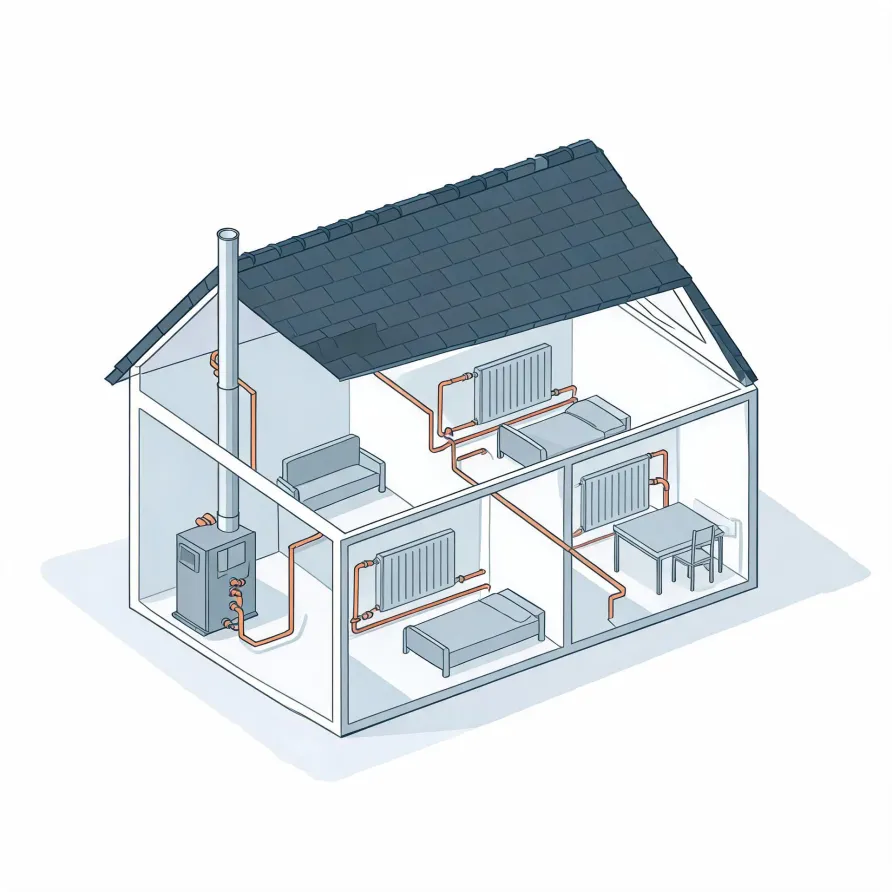
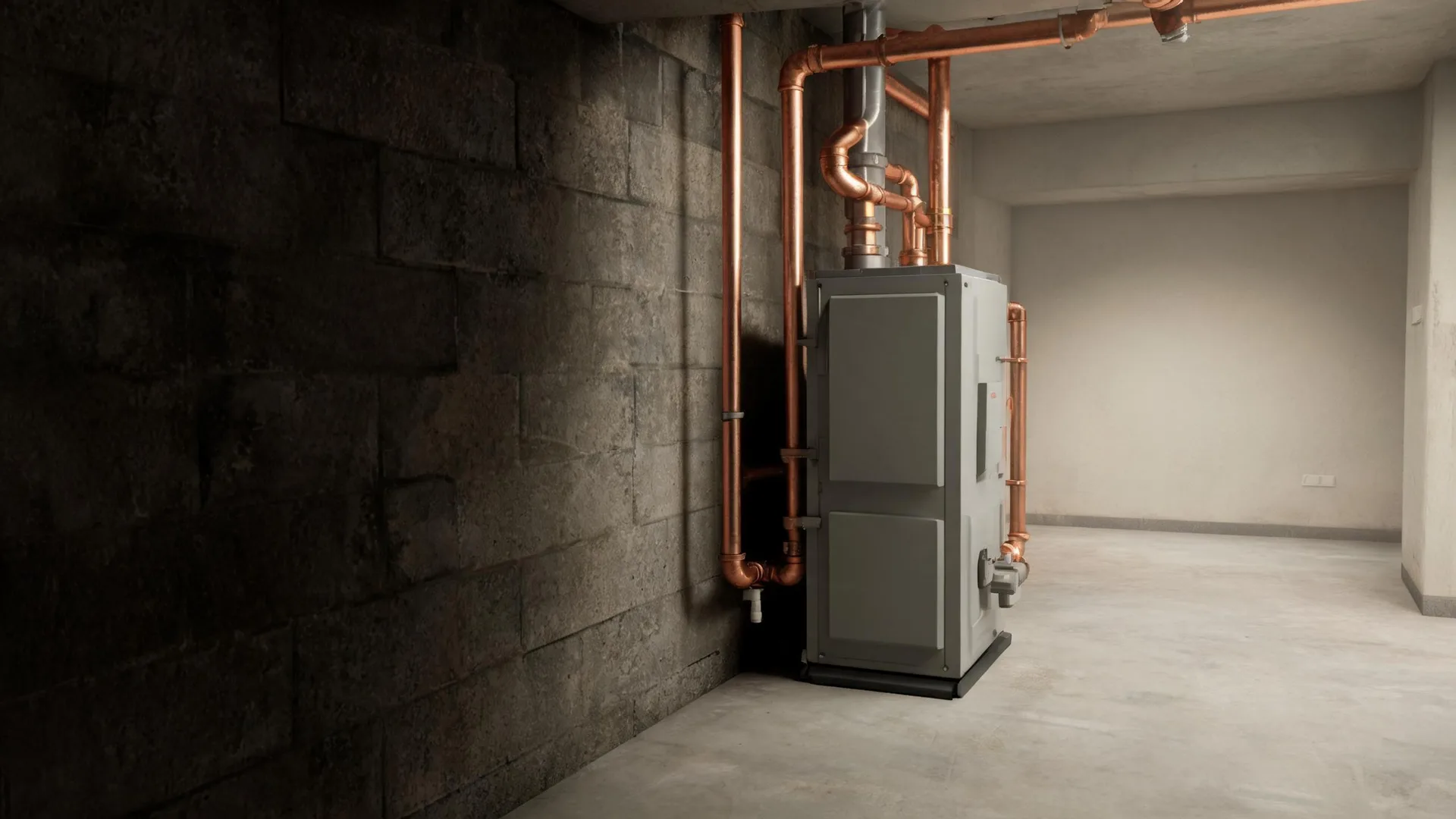
The boiler itself sits in a mechanical room, basement, or utility closet and is the unit that heats water and sends it through the system. Paired with it is the expansion tank, which absorbs pressure changes as the water heats and cools. Both pieces are installed together as the core of the new system.
Radiators or baseboard convectors sit along the walls of each room and are where the heat actually enters the living space. Connecting them to the boiler are supply and return pipes, along with a circulator pump that moves the heated water through the loop. A thermostat, mounted on an interior wall, tells the system when to fire.
The drawing shows a typical layout, and a licensed contractor determines exactly what applies to your home.
Get matched in Sioux CountySioux County, Iowa, by the numbers
159 severe weather events were recorded in Sioux County, Iowa between 2015 and 2024.
NOAA National Centers for Environmental Information, Storm Events Database, bulk CSV export, events 2015-01-01 through 2024-12-31.Half the homes in Sioux County, Iowa were built in 1973 or earlier (2020-2024 ACS 5-year).
U.S. Census Bureau, 2020-2024 American Community Survey 5-Year EstimatesSioux County, Iowa holds 13,285 housing units (2020-2024 ACS 5-year).
U.S. Census Bureau, 2020-2024 American Community Survey 5-Year EstimatesOwners occupy 76.1% of the occupied homes in Sioux County, Iowa (2020-2024 ACS 5-year).
U.S. Census Bureau, 2020-2024 American Community Survey 5-Year EstimatesBoiler Installation Rules for Sioux County, Iowa1 sourced standards and codes
Licensing and Legal Requirements in Sioux County, Iowa
Iowa requires a state licence to install or repair HVAC, refrigeration, mechanical or plumbing systems, and to operate as a contractor, with exceptions listed in section 105.11.
Severe Weather Events in Sioux County
Weather in Sioux County puts real demand on heating equipment, from hard freezes that run boilers long and hard to swings that force systems to cycle at the worst times. What a boiler handles here is a local question, and the record below shows the conditions contractors in this area work around.
159 severe weather events, 2015–2024. Source: NOAA National Centers for Environmental Information, Storm Events Database.