Tell us about the job
Takes about a minute. No obligation.
A boiler install in Plymouth County starts with what the system will actually face here. 136 severe weather events were recorded in Plymouth County, Iowa between 2015 and 2024. At that rate, severe weather is a standing condition, and a contractor sizing a replacement or new unit has to treat local load as a first input, not an afterthought. A unit undersized for the demand will cycle short, stress the heat exchanger, and wear components faster than the ratings suggest. The install specs, the flue configuration, and the controls all follow from what the system has to handle in this area.
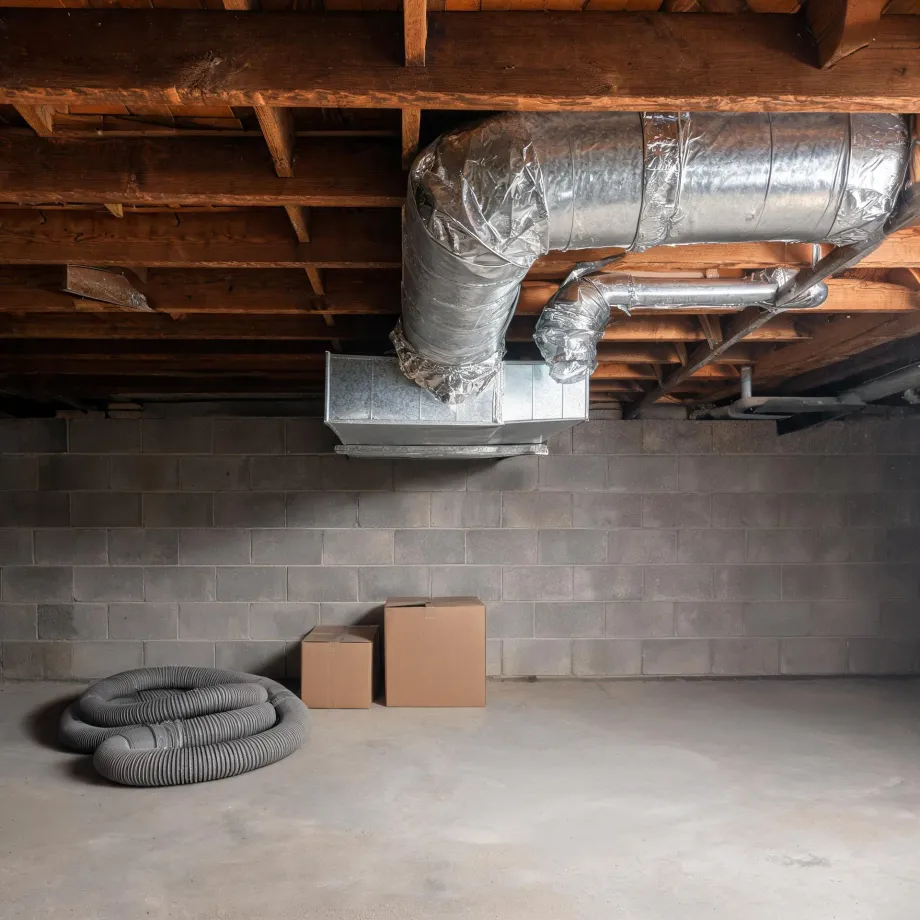
Existing ductwork and electrical service vary enough house to house that what a contractor quotes on day one can shift once the walls are open. Half the homes in Plymouth County, Iowa were built in 1971 or earlier (2020-2024 ACS 5-year). In stock that old, the distribution infrastructure was laid in for equipment whose demands looked nothing like a modern boiler's, and a system sized and placed without checking what is already in the house will either underperform or require more remediation than the original quote covered. The ductwork is what decides it.
What a Boiler Installation Puts in Your Home
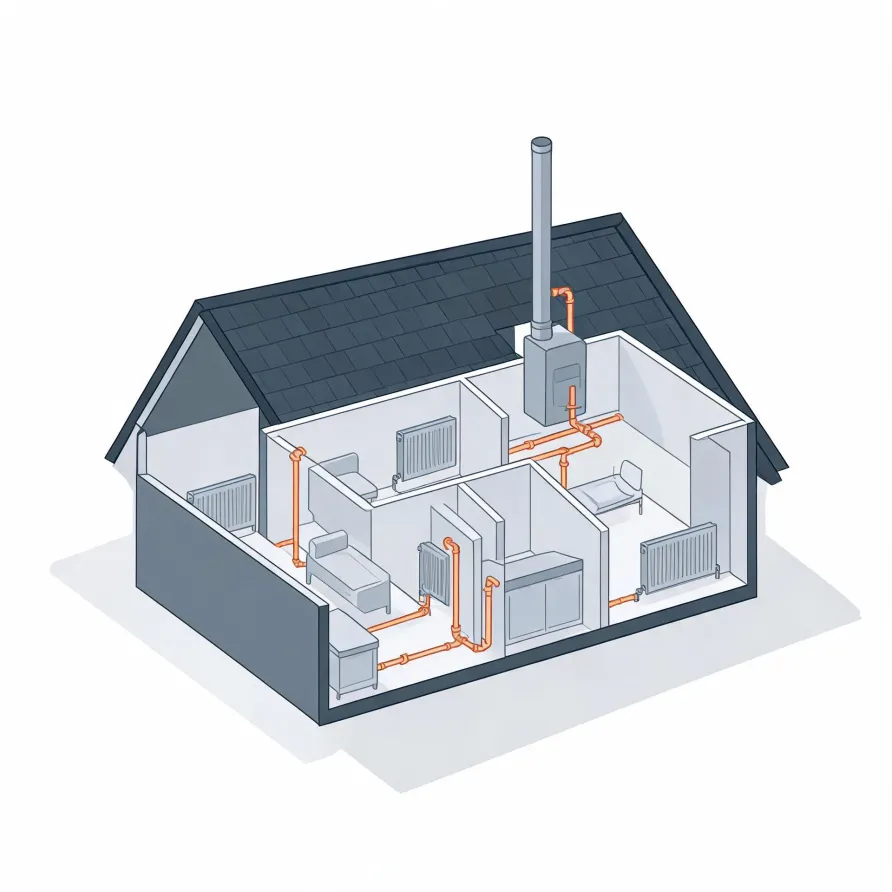
The boiler itself sits in a mechanical room, basement, or utility closet and is the unit that heats water for the whole system. Wall-mounted or floor-standing depending on the house, it connects to a flue that carries exhaust gases out through the roof or an exterior wall. That flue termination point is part of what a contractor accounts for during a new install.
From the boiler, a network of pipes carries hot water to radiators or radiant floor loops positioned throughout the living space, and a circulator pump mounted on the system keeps that water moving. An expansion tank, typically hung near the boiler, handles pressure changes as the water heats and cools. A thermostat on the wall ties the whole system together by telling the boiler when to fire.
The drawing shows a representative layout of these components, and a licensed contractor determines exactly how they come together in your specific home.
Get matched in Plymouth CountyPlymouth County, Iowa, by the numbers
136 severe weather events were recorded in Plymouth County, Iowa between 2015 and 2024.
NOAA National Centers for Environmental Information, Storm Events Database, bulk CSV export, events 2015-01-01 through 2024-12-31.Half the homes in Plymouth County, Iowa were built in 1971 or earlier (2020-2024 ACS 5-year).
U.S. Census Bureau, 2020-2024 American Community Survey 5-Year EstimatesPlymouth County, Iowa holds 10,891 housing units (2020-2024 ACS 5-year).
U.S. Census Bureau, 2020-2024 American Community Survey 5-Year EstimatesOwners occupy 73.6% of the occupied homes in Plymouth County, Iowa (2020-2024 ACS 5-year).
U.S. Census Bureau, 2020-2024 American Community Survey 5-Year EstimatesBoiler Installation Rules for Plymouth County, Iowa1 codes, standards, and licensing rules
Licensing and Legal Requirements in Plymouth County, Iowa
Iowa requires a state licence to install or repair HVAC, refrigeration, mechanical or plumbing systems, and to operate as a contractor, with exceptions listed in section 105.11.
Severe Weather Events in Plymouth County
What the weather does to a county shapes what heating equipment has to survive. A boiler serving a Plymouth County home works against whatever the local climate demands, and that workload is a reason to get the installation right from the start.
136 severe weather events, 2015–2024. Source: NOAA National Centers for Environmental Information, Storm Events Database.