Tell us about the job
Takes about a minute. No obligation.
A contractor quoting a boiler installation in O'Brien County has to account for what the weather here actually asks of heating equipment, not what a catalog spec assumes. 121 severe weather events were recorded in O'Brien County, Iowa between 2015 and 2024. At that rate, severe weather is a regular condition of operating here, which means duct connections, flue runs, and heat output all get sized for what this area delivers rather than for a gentler baseline. A system installed without that adjustment runs harder than it was built for and loses efficiency before it should.
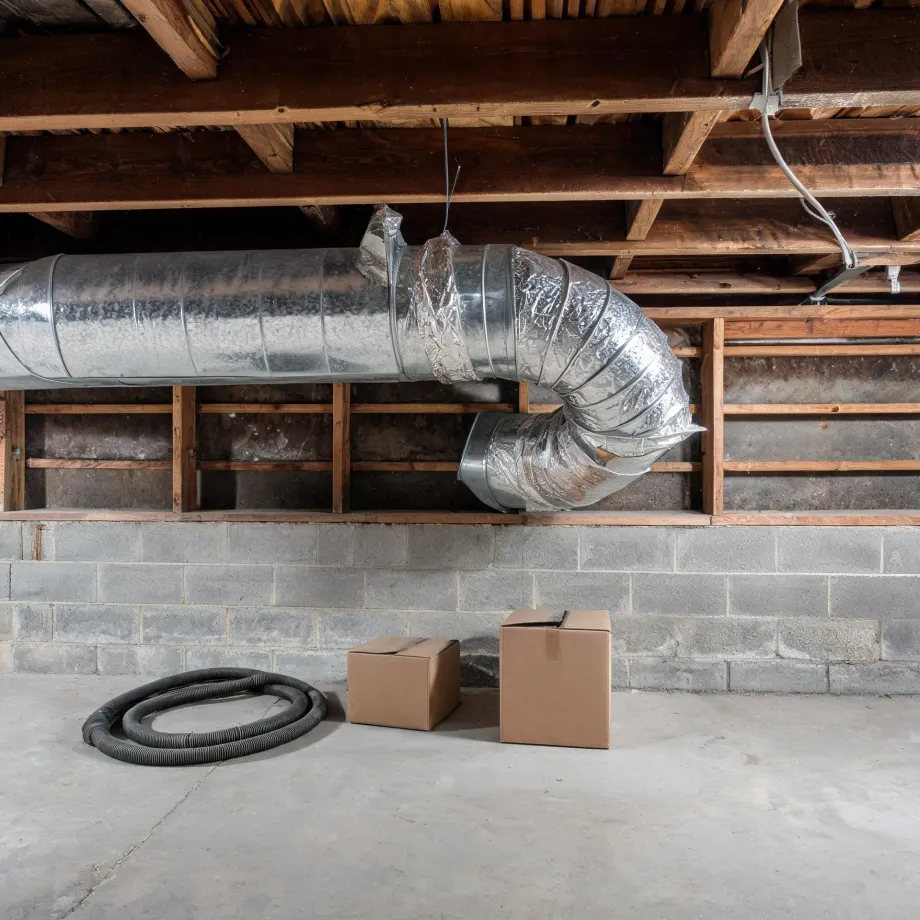
Ductwork laid down for one generation of heating equipment does not automatically suit the next. Half the homes in O'Brien County, Iowa were built in 1959 or earlier (2020-2024 ACS 5-year). A contractor pricing a boiler installation here has to assess what the existing distribution system will actually carry before the equipment selection means anything, because a boiler specified for the load can still be hobbled by pipe runs and radiator configurations that were never designed around it. That assessment changes the scope of the job, and sometimes the budget, before a single part is ordered.
What a New Boiler Installation Puts in Your Home
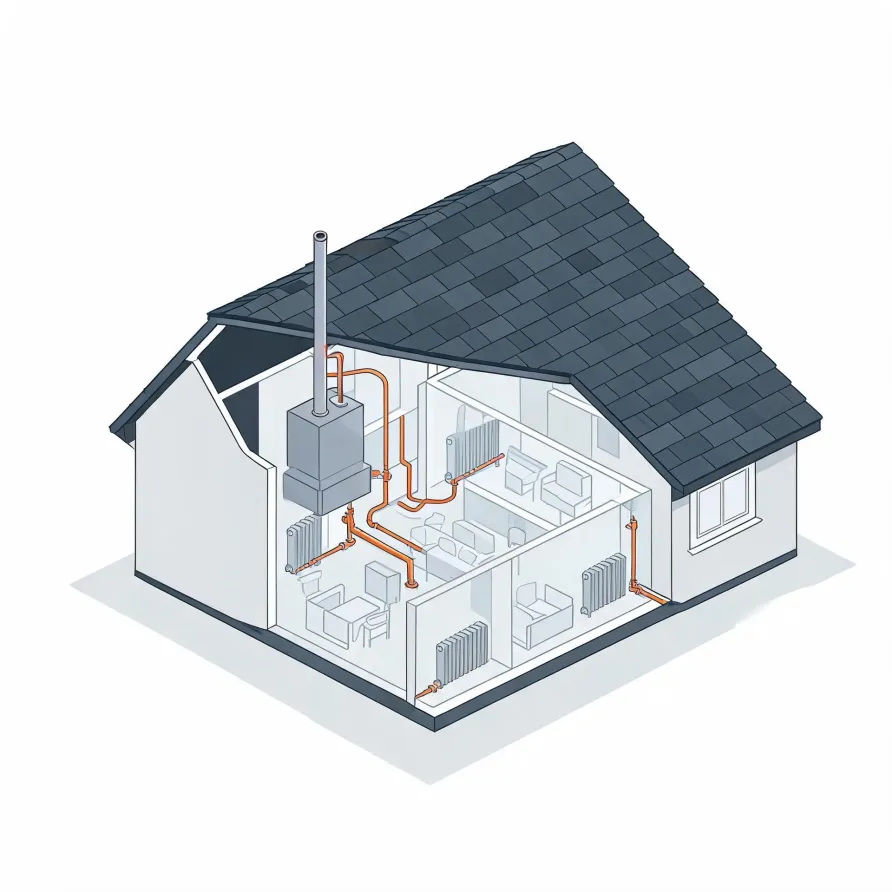
The boiler itself sits in a mechanical room, basement, or utility closet and is the unit that heats water for the whole system. Wall-mounted or floor-standing, it is the piece a contractor positions and connects first. From there, a network of pipes carries hot water to each room.
Radiators or radiant floor loops are the delivery points, placed in living spaces to release heat where the house needs it. The expansion tank and pressure relief valve sit close to the boiler and protect the system from pressure swings. A circulator pump, also near the boiler, keeps water moving through the pipes.
The drawing shows the general layout of a boiler system, and a licensed contractor determines exactly which components and configurations apply to your house.
Get matched in O'Brien CountyO'Brien County, Iowa, by the numbers
121 severe weather events were recorded in O'Brien County, Iowa between 2015 and 2024.
NOAA National Centers for Environmental Information, Storm Events Database, bulk CSV export, events 2015-01-01 through 2024-12-31.Half the homes in O'Brien County, Iowa were built in 1959 or earlier (2020-2024 ACS 5-year).
U.S. Census Bureau, 2020-2024 American Community Survey 5-Year EstimatesO'Brien County, Iowa holds 6,564 housing units (2020-2024 ACS 5-year).
U.S. Census Bureau, 2020-2024 American Community Survey 5-Year EstimatesOwners occupy 76.1% of the occupied homes in O'Brien County, Iowa (2020-2024 ACS 5-year).
U.S. Census Bureau, 2020-2024 American Community Survey 5-Year EstimatesBoiler Installation Rules for O'Brien County, Iowa1 codes, standards, and licensing rules
Licensing and Legal Requirements in O'Brien County, Iowa
Iowa requires a state licence to install or repair HVAC, refrigeration, mechanical or plumbing systems, and to operate as a contractor, with exceptions listed in section 105.11.
Severe Weather Events in O'Brien County
Extreme weather puts real load on heating equipment, shortening service life and driving the kind of failures that show up as emergency calls in the coldest stretches of the year. What happens in O'Brien County shapes what a boiler here has to handle, which is why local installation decisions start with local conditions.
121 severe weather events, 2015–2024. Source: NOAA National Centers for Environmental Information, Storm Events Database.