Tell us about the job
Takes about a minute. No obligation.
A boiler repair in this county starts with what the system has already been through. 189 severe weather events were recorded in Dubuque County, Iowa between 2015 and 2024. At that rate, severe weather is a standing condition here, and it accumulates in the components that regulate combustion and heat transfer. A contractor will check the heat exchanger for stress fractures and the pressure and temperature controls for drift before writing off a failure as ordinary wear. Those components carry the load first, and in this county that load is worth accounting for before the quote goes any further.
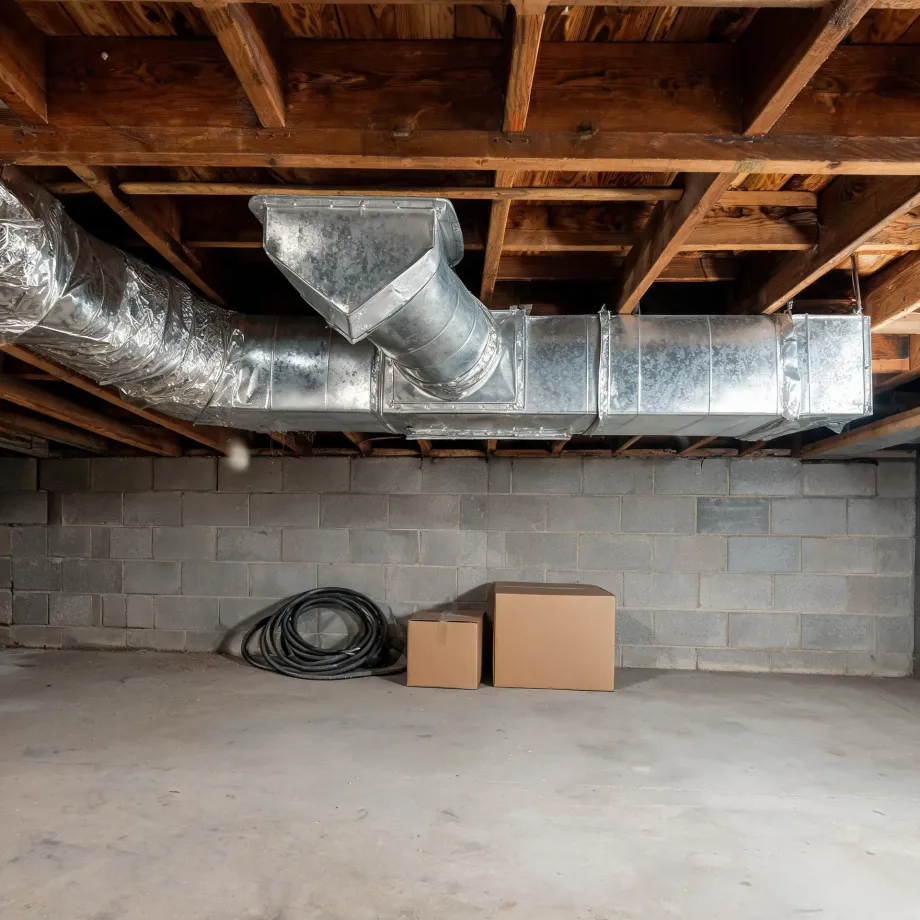
Boilers in houses built for an earlier era of heating often run on components that manufacturers have long since redesigned or discontinued. Half the homes in Dubuque County, Iowa were built in 1970 or earlier (2020-2024 ACS 5-year). A contractor who opens a unit in stock this old may find that the part the system needs has been superseded, and that fitting its modern equivalent requires additional adaptation work. That gap between what the boiler was built for and what the parts market now stocks is where repair costs are decided.
The Parts of a Boiler a Contractor Checks First
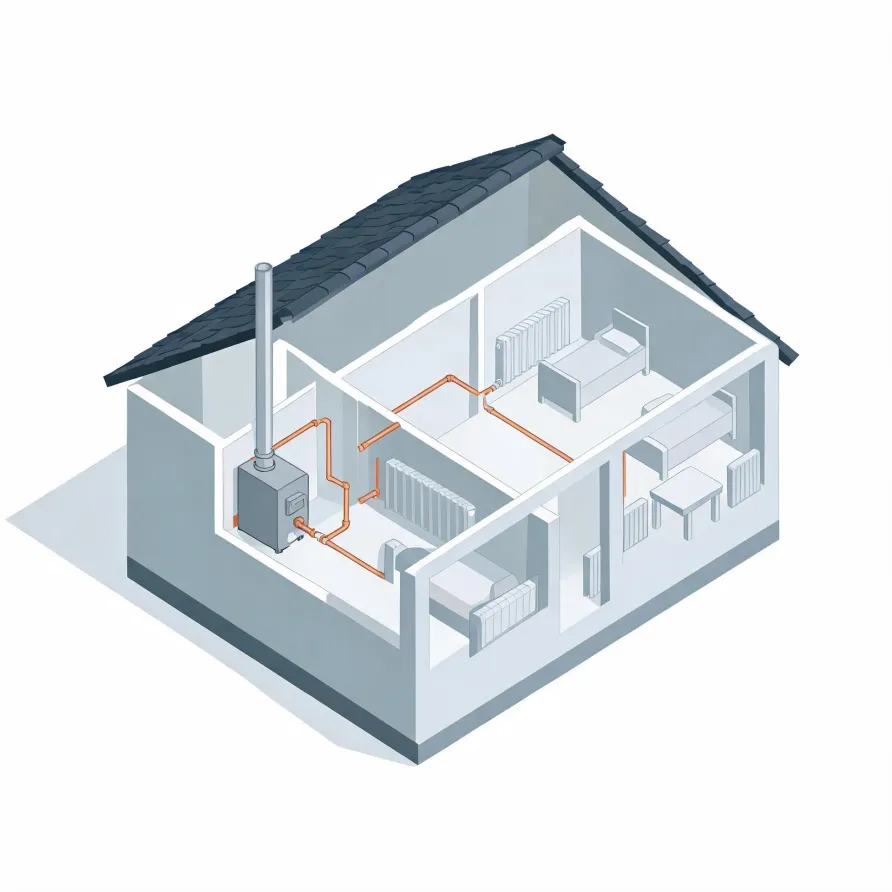
The boiler itself sits in a utility room, basement, or mechanical closet and is the piece a contractor goes to first. It heats water and sends it out through the system. When heat stops arriving in a room, or pressure keeps dropping, or the unit cycles on and off without settling, the boiler's burner, heat exchanger, or pressure relief valve is often where the fault lives.
From the boiler, pipes carry hot water to radiators or baseboard units positioned along the walls of each room, where the heat is given off. The circulator pump, mounted on the piping close to the boiler, moves the water through that loop. A failed pump means the water sits still, and a radiator that stays cold while the boiler fires is a sign the contractor will follow back to it.
The drawing shows a typical layout, and a licensed contractor determines which components and conditions apply to your specific home.
Get matched in Dubuque CountyDubuque County, by the numbers
189 severe weather events were recorded in Dubuque County, Iowa between 2015 and 2024.
NOAA National Centers for Environmental Information, Storm Events Database, bulk CSV export, events 2015-01-01 through 2024-12-31.Half the homes in Dubuque County, Iowa were built in 1970 or earlier (2020-2024 ACS 5-year).
U.S. Census Bureau, 2020-2024 American Community Survey 5-Year EstimatesDubuque County, Iowa holds 43,288 housing units (2020-2024 ACS 5-year).
U.S. Census Bureau, 2020-2024 American Community Survey 5-Year EstimatesOwners occupy 73.3% of the occupied homes in Dubuque County, Iowa (2020-2024 ACS 5-year).
U.S. Census Bureau, 2020-2024 American Community Survey 5-Year EstimatesBoiler Repair Rules & Standards on Record for Dubuque County, Iowa1 sourced rules and standards
Licensing and Legal Requirements in Dubuque County, Iowa
Iowa requires a state licence to install or repair HVAC, refrigeration, mechanical or plumbing systems, and to operate as a contractor, with exceptions listed in section 105.11.
Severe Weather Events in Dubuque County
Boiler systems work hardest when outdoor conditions swing hard, and Dubuque County's weather record shapes how much that work adds up over time. Repair frequency is a local fact, and the history below is part of why.
189 severe weather events, 2015–2024. Source: NOAA National Centers for Environmental Information, Storm Events Database.