Tell us about the job
Takes about a minute. No obligation.
A boiler going into a Clayton County home is not a standard catalog pull. 119 severe weather events were recorded in Clayton County, Iowa between 2015 and 2024. At that rate, severe weather is part of the normal operating life of any system here, not an occasional disruption, and a contractor sizing a new boiler has to account for the sustained load the climate puts on heat exchangers, seals, and venting runs. A unit that fits the math on paper but ignores what this area regularly demands will run harder than it was designed to and wear faster.
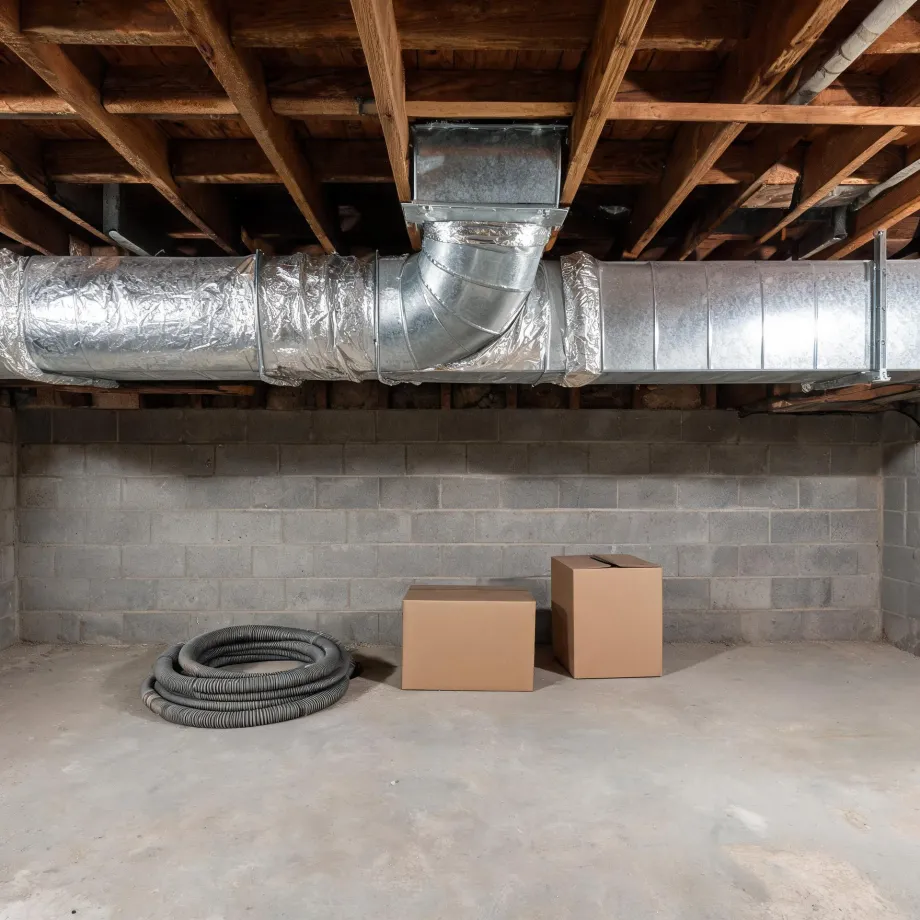
Ductwork laid down when a house was built for one kind of heating system does not automatically suit what a contractor is putting in today. Half the homes in Clayton County, Iowa were built in 1960 or earlier (2020-2024 ACS 5-year). That gap between the original build and the current installation is where a boiler job either stays on scope or expands: a contractor opening up a wall to check a run may find dimensions, materials, or routing that require adjustment before the new equipment can be connected correctly. The electrical service gets the same look. What is already in the house sets the real terms of the job.
What a Boiler Installation Puts in Your Home
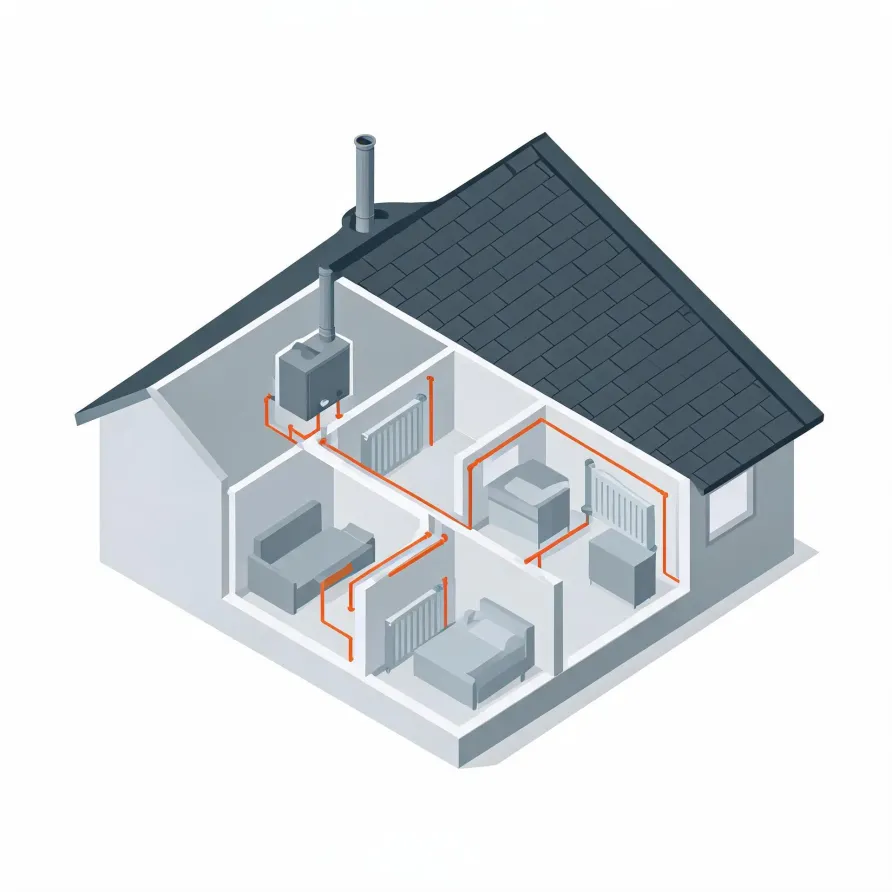
The boiler itself sits in a utility space, basement, or mechanical room and is the unit that heats the water the system runs on. Connected to it are the supply and return pipes that carry hot water out to the living spaces and bring cooler water back. A pressure relief valve and an expansion tank mount close to the boiler to keep the system safe as water heats and cools.
Radiators or radiant floor loops sit at the points where heat enters each room, and a circulator pump drives water through the whole circuit. A thermostat goes on an interior wall and tells the system when to fire. The flue or exhaust vent runs from the boiler to an outside wall or through the roof to carry combustion gases out.
The drawing shows a typical layout, and a licensed contractor determines exactly which components apply to your house and how they connect.
Get matched in Clayton CountyClayton County, Iowa, by the numbers
119 severe weather events were recorded in Clayton County, Iowa between 2015 and 2024.
NOAA National Centers for Environmental Information, Storm Events Database, bulk CSV export, events 2015-01-01 through 2024-12-31.Half the homes in Clayton County, Iowa were built in 1960 or earlier (2020-2024 ACS 5-year).
U.S. Census Bureau, 2020-2024 American Community Survey 5-Year EstimatesClayton County, Iowa holds 8,796 housing units (2020-2024 ACS 5-year).
U.S. Census Bureau, 2020-2024 American Community Survey 5-Year EstimatesOwners occupy 78.0% of the occupied homes in Clayton County, Iowa (2020-2024 ACS 5-year).
U.S. Census Bureau, 2020-2024 American Community Survey 5-Year EstimatesBoiler Installation Rules for Clayton County, Iowa1 sourced standards and codes
Licensing Rules for HVAC Work in Clayton County, Iowa
Iowa requires a state licence to install or repair HVAC, refrigeration, mechanical or plumbing systems, and to operate as a contractor, with exceptions listed in section 105.11.
Severe Weather Events in Clayton County
Clayton County's weather puts real demands on heating equipment over time. A boiler sized and installed for local conditions holds up better than one spec'd for somewhere else.
119 severe weather events, 2015–2024. Source: NOAA National Centers for Environmental Information, Storm Events Database.