One bleed valve, every radiator
Each radiator has its own valve near the top. Bleeding one doesn't fix another; a contractor checks every radiator in the house, not just the loudest one.

Cold radiators usually mean air trapped inside them, and that's often the first thing to check before anything else. Air collects at the top of a radiator over time and keeps hot water from filling it, so the bottom gets warm but the rest stays cold or the whole thing stays cold. Bleeding the radiator fixes this when that's all it is. But if radiators across the house are cold, the problem is more likely with the boiler itself, a failed circulator pump that isn't moving water through the system, or a zone valve stuck shut. With gas heat and a boiler running hard through an Iowa winter, these parts wear, and a pump or valve that's failed won't fix itself with bleeding. A boiler technician can trace which one it is and whether the fix is quick or the system needs closer work.
Hot water leaves your boiler and gets pushed through the supply lines by a circulator pump. If that pump is weak or seized, the radiators at the far end of the loop are usually the last to get warm, sometimes they never do. Zone valves decide which loops get water and when, so one stuck valve can leave a whole section of the house cold while the rest heats up the way it should. The boiler itself relies on a part called the aquastat to know when the water's hot enough to send out. If that reading is off, the boiler may shut down before the loop ever gets properly heated. Pressure matters too. Most systems want to sit around 12 psi, and if it drops below that, water may not make it up to radiators on a second floor. And in older cast iron radiators, years of sediment can settle inside and block flow on its own, even in a radiator that's already been bled.


Each radiator has its own valve near the top. Bleeding one doesn't fix another; a contractor checks every radiator in the house, not just the loudest one.
Iowa winters keep a gas boiler running hard. A local contractor who services this equipment all season knows which parts tend to fail first.
Walk through the house and check each radiator by hand. One stone cold while the others are hot points to a closed valve or a clogged line feeding that one unit. Several cold radiators, especially the ones farthest from the boiler, point to a circulator that isn't pushing water as far as it should. You might hear gurgling or clanking from the pipes, or notice the boiler running longer than it used to without the house actually warming up. Left alone, a room that won't heat means the furnace or boiler works harder for less result, and pipes that stay full of trapped air or sediment are more likely to corrode or fail outright come the coldest part of winter.
Bleeding a radiator takes a key and a few minutes, and plenty of homeowners do it themselves before calling anyone. If a cold radiator warms up once the air is out and water drips steady from the valve, that was the whole problem. It's a fair first step, and nobody needs a license to hold a key against a valve and turn it.
A radiator that needs bleeding every few weeks has a reason, and it isn't the radiator. Water picks up air somewhere in the system, often at the boiler or through a fitting that's letting in more than it should, and a contractor who works on boilers in Iowa all winter has seen where that usually starts. Finding it means checking the parts behind the wall, not just the one you can reach with a key.




Your request goes to one pro, not a list of companies.
Asking costs nothing, and the choice to hire stays yours.
Keep bleeding radiators yourself and you'll know within a try or two whether air was the whole problem. If the same ones keep going cold again within a week, air isn't the real issue anymore.
A boiler tech who works on these every winter in Iowa can pressure test the system, check the circulator, and find what's actually failing instead of guessing room by room.
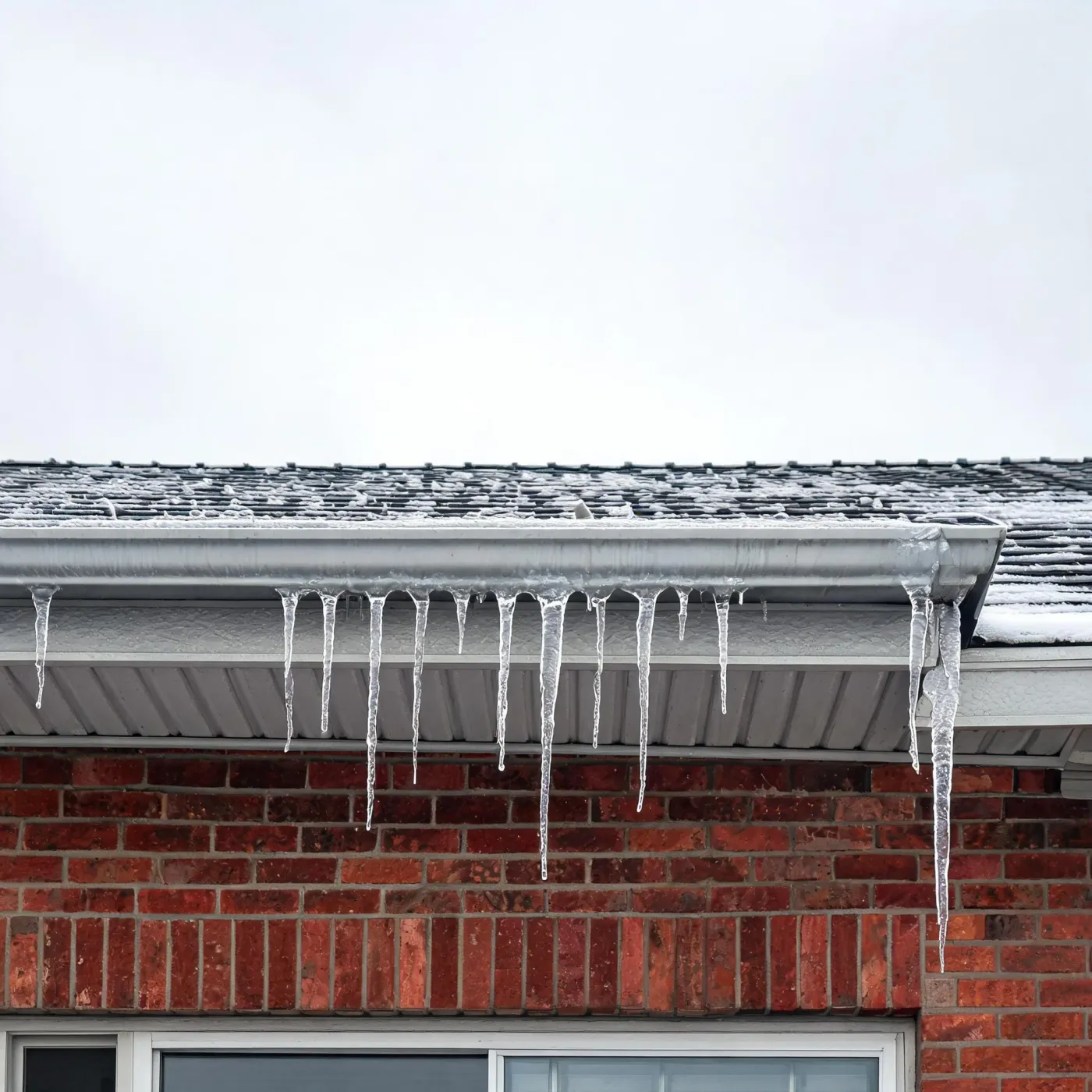
Winter nights average 15°F statewide, according to NOAA, and a boiler here runs long stretches without much of a break once temperatures drop that low. The longer it runs, the more water moves through the system and the more chances for air to work loose and collect at the top of a radiator. That's why a radiator that bled out fine in November can go cold again in January. It isn't a sign anything broke. It's just what happens when a boiler is working harder and longer to keep up with cold like that.
NOAA nClimDiv 1991-2020 county normals weighted by homes
Why does my boiler run fine but the radiators still stay cold?
A boiler that fires up, runs, and shuts off normally is only doing half the work. The other half is the circulator pump and the zone valves moving that hot water out through the pipes to every radiator in the house. If the circulator has failed or a zone valve is stuck shut, the boiler has no way to know. It keeps heating water in its own loop while the radiators on the far side of the house never see any of it. That's why a tech checks the circulator and the valves before touching the boiler itself. The boiler running fine rules out less than most people expect.
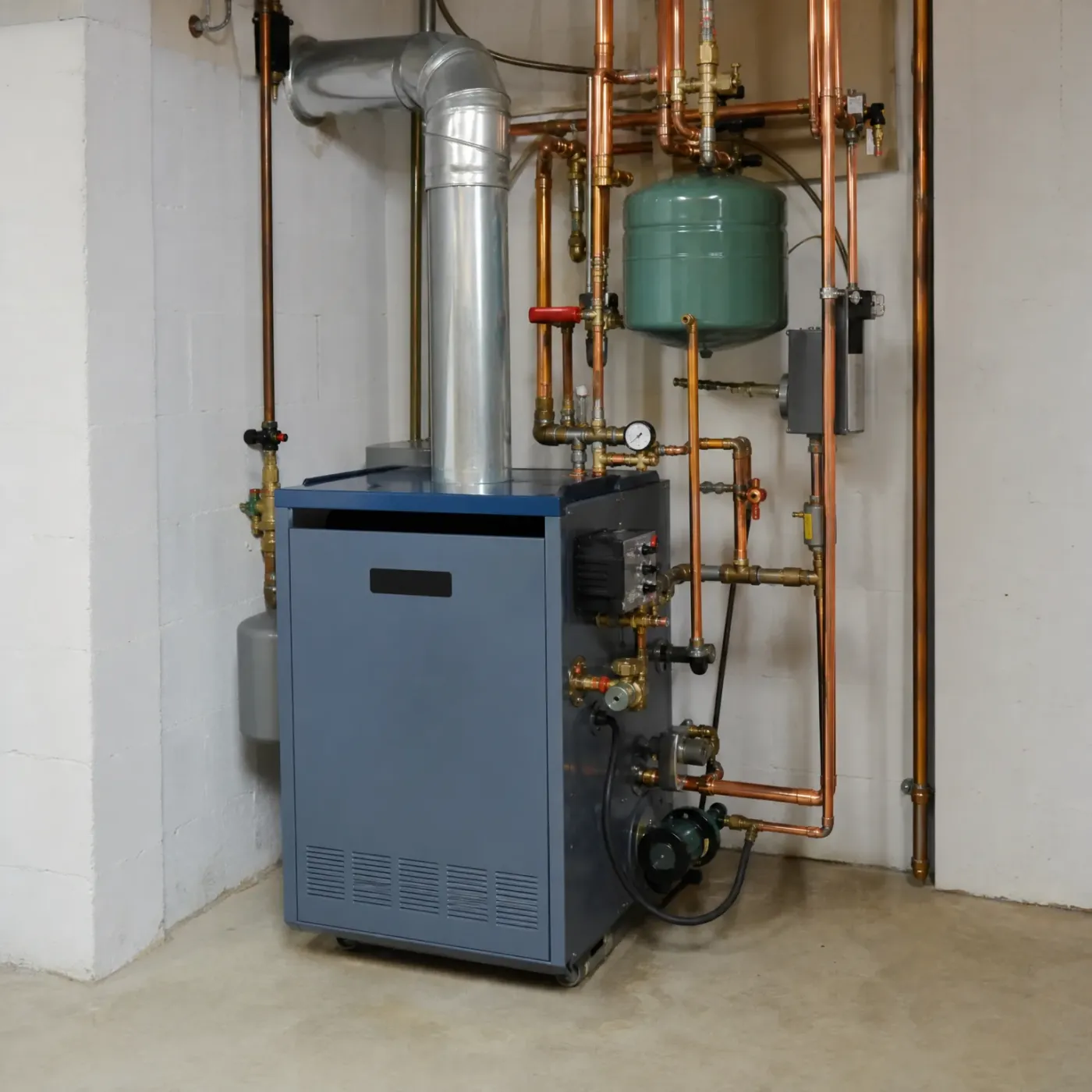
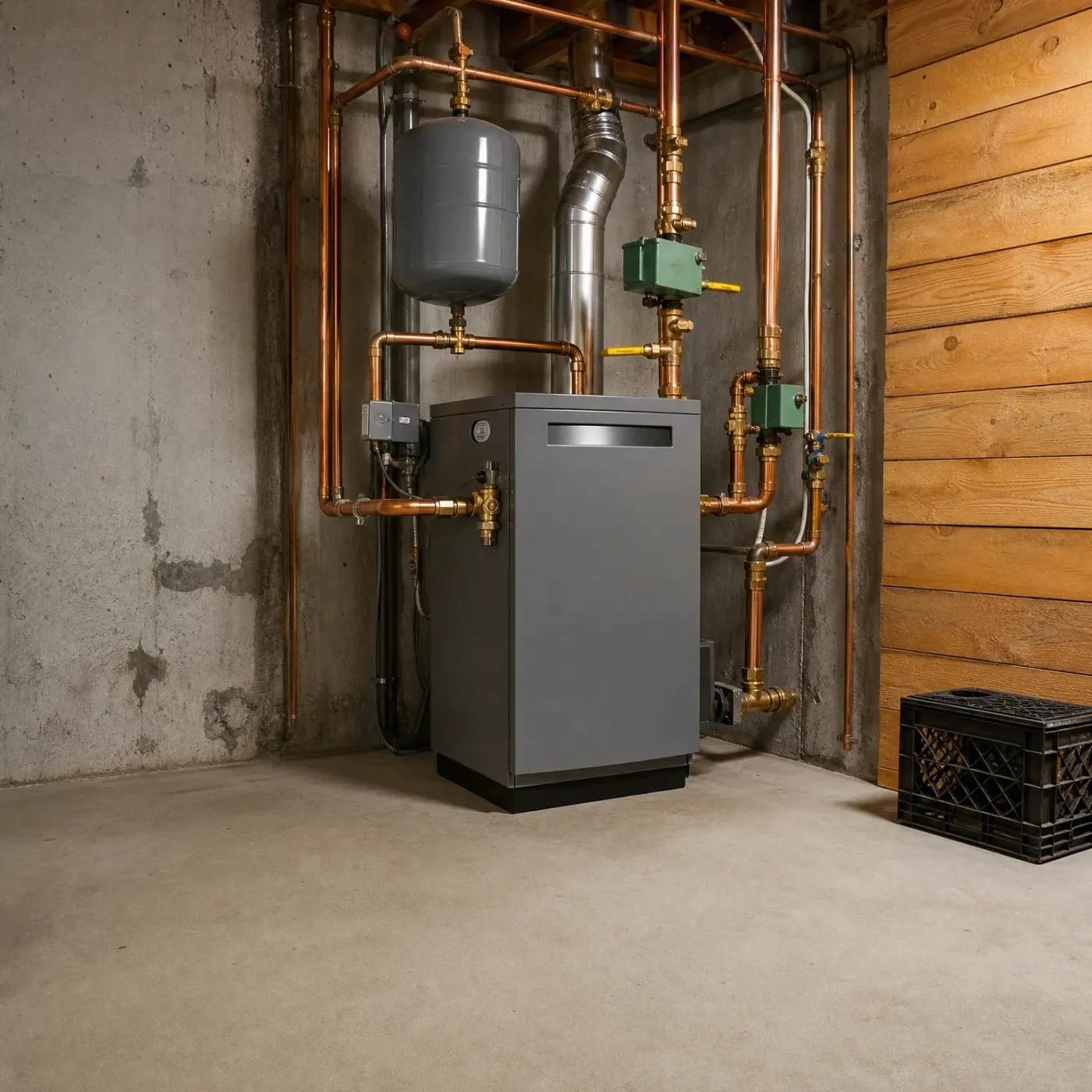
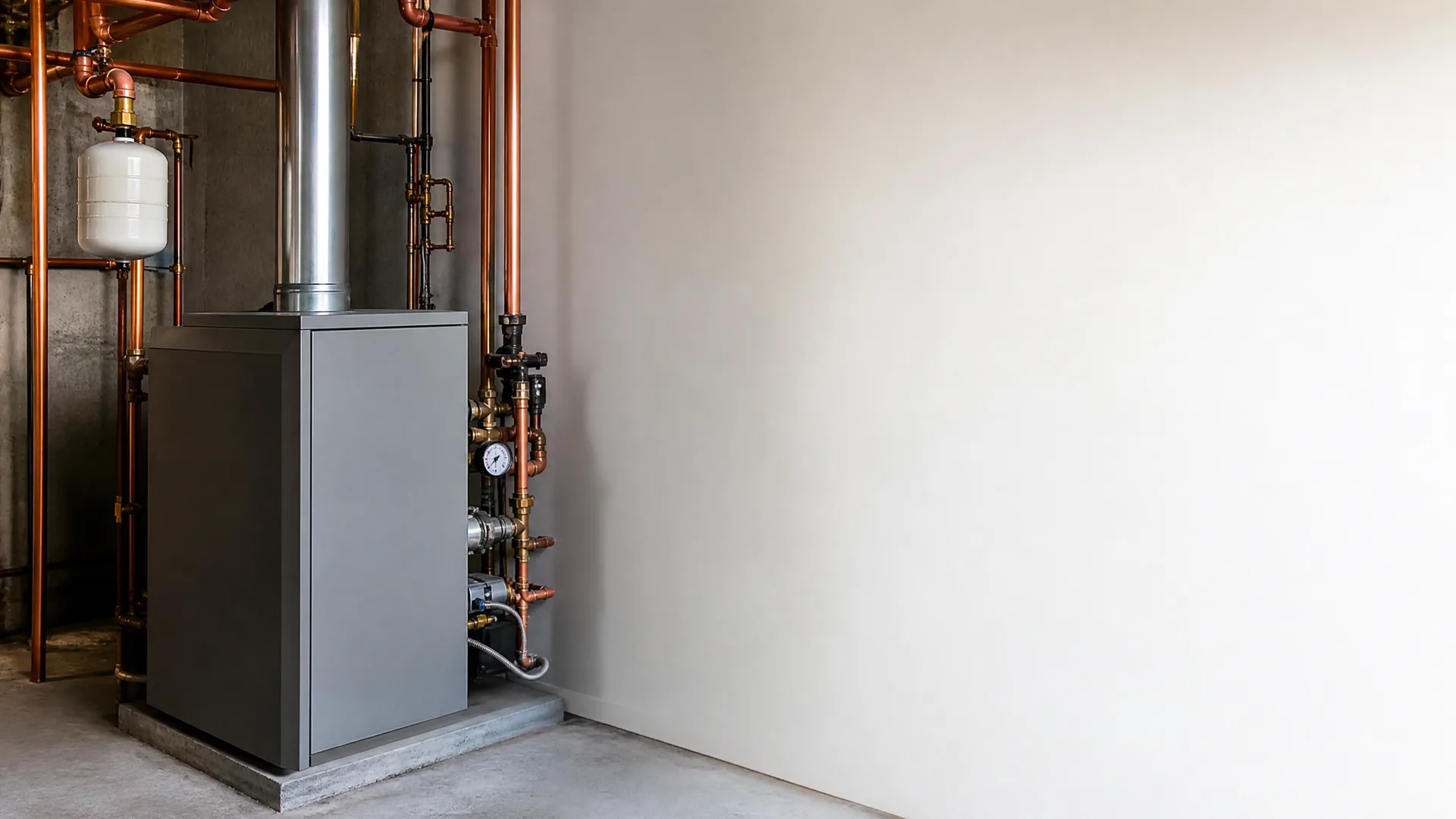
Copper lines run from the boiler to every radiator, with circulators pushing water through each loop and the expansion tank holding steady pressure. When these parts are sound, the whole network fires evenly, upstairs and down.
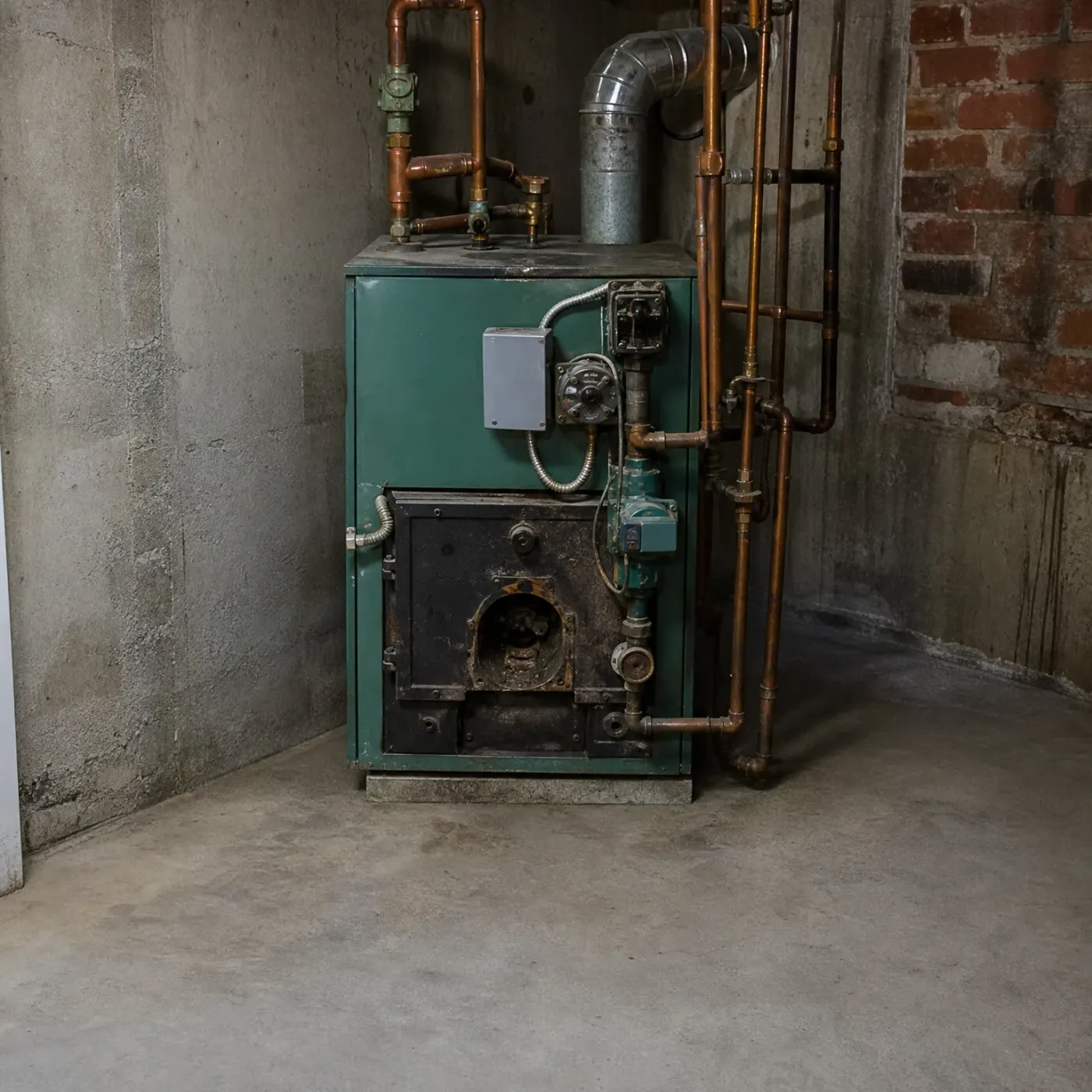
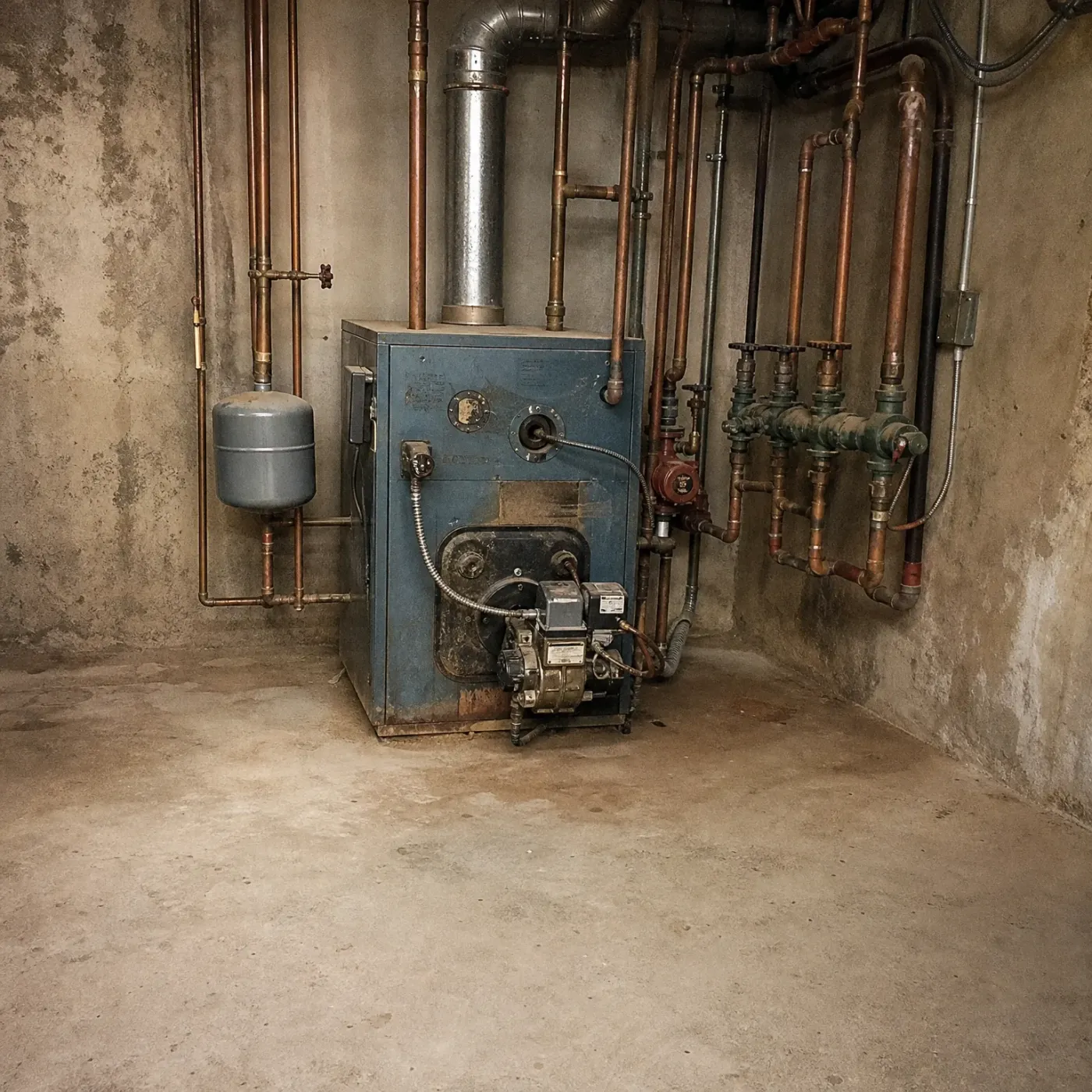
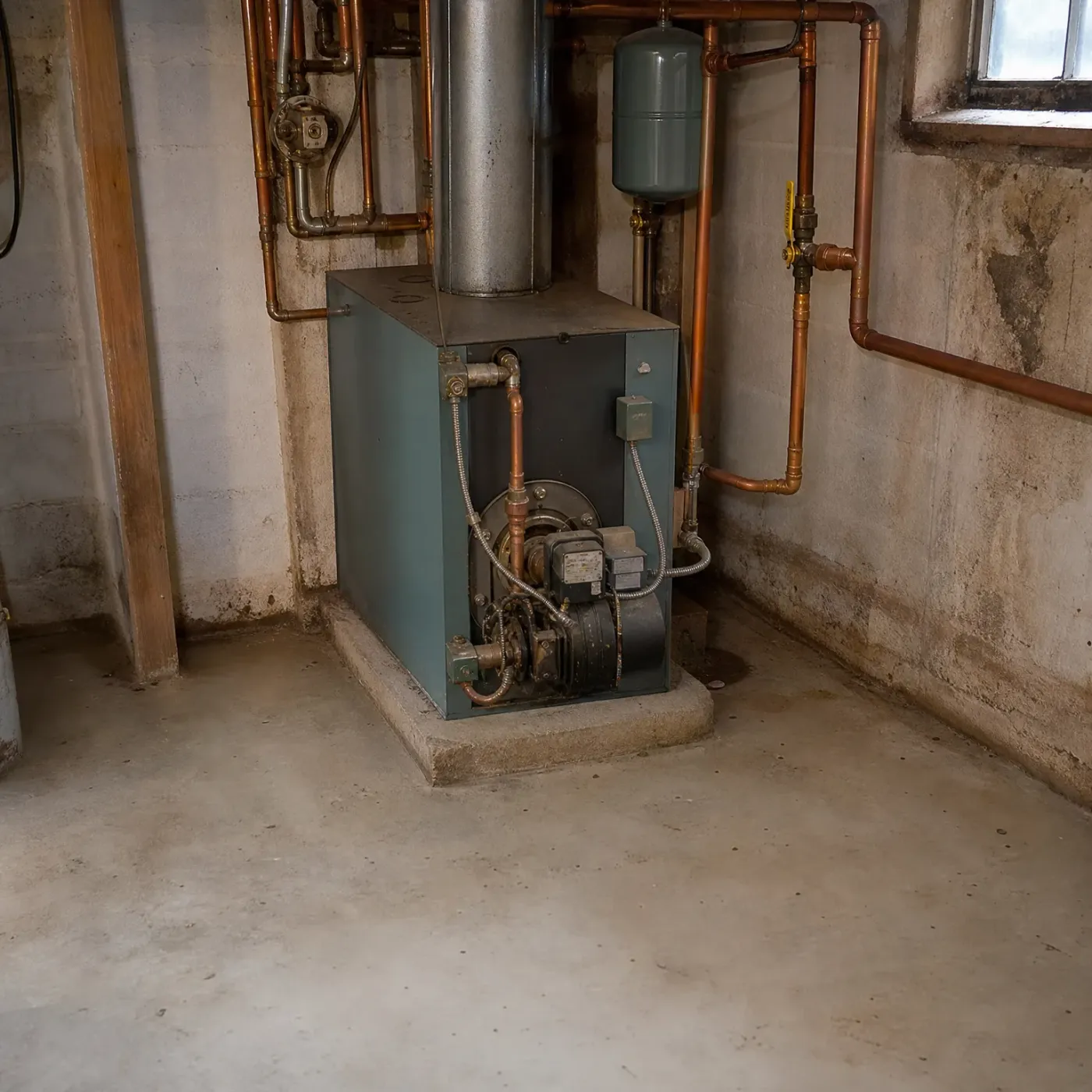
A corroded firebox door and bare brick around it don't stop a boiler from firing, but what's inside tells another story. Rust at that stage can mean a cracked heat exchanger or a flue venting wrong, and that's a repair job a licensed contractor needs to see in person.
At 15°F overnight, a cold radiator isn't just an inconvenience, it's the room losing heat fast while the rest of the house stays warm. A boiler working to cover that gap needs every radiator pulling its weight, and a bad circulator or trapped air shows up quicker on nights this cold.
NOAA nClimDiv 1991-2020 county normals weighted by homes
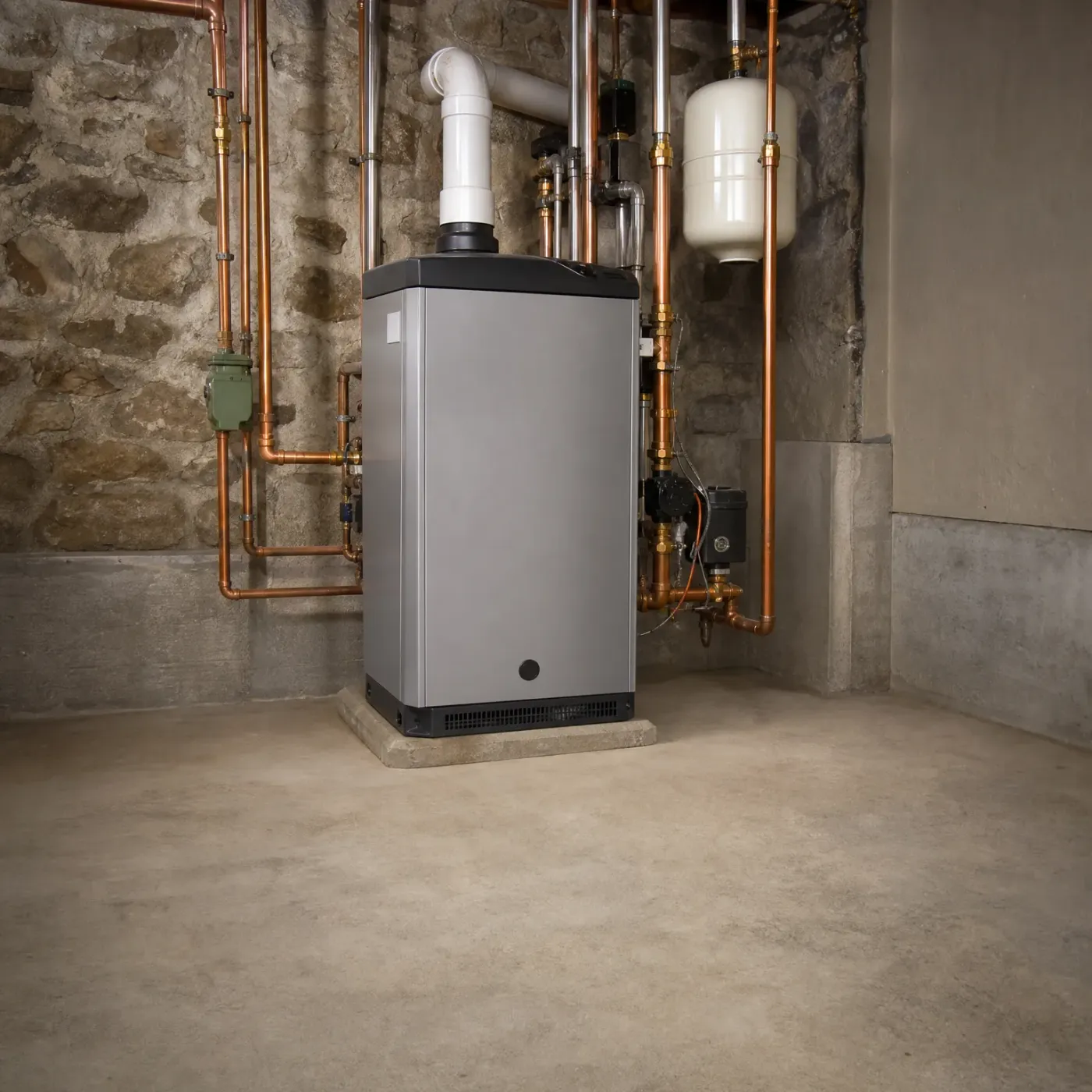
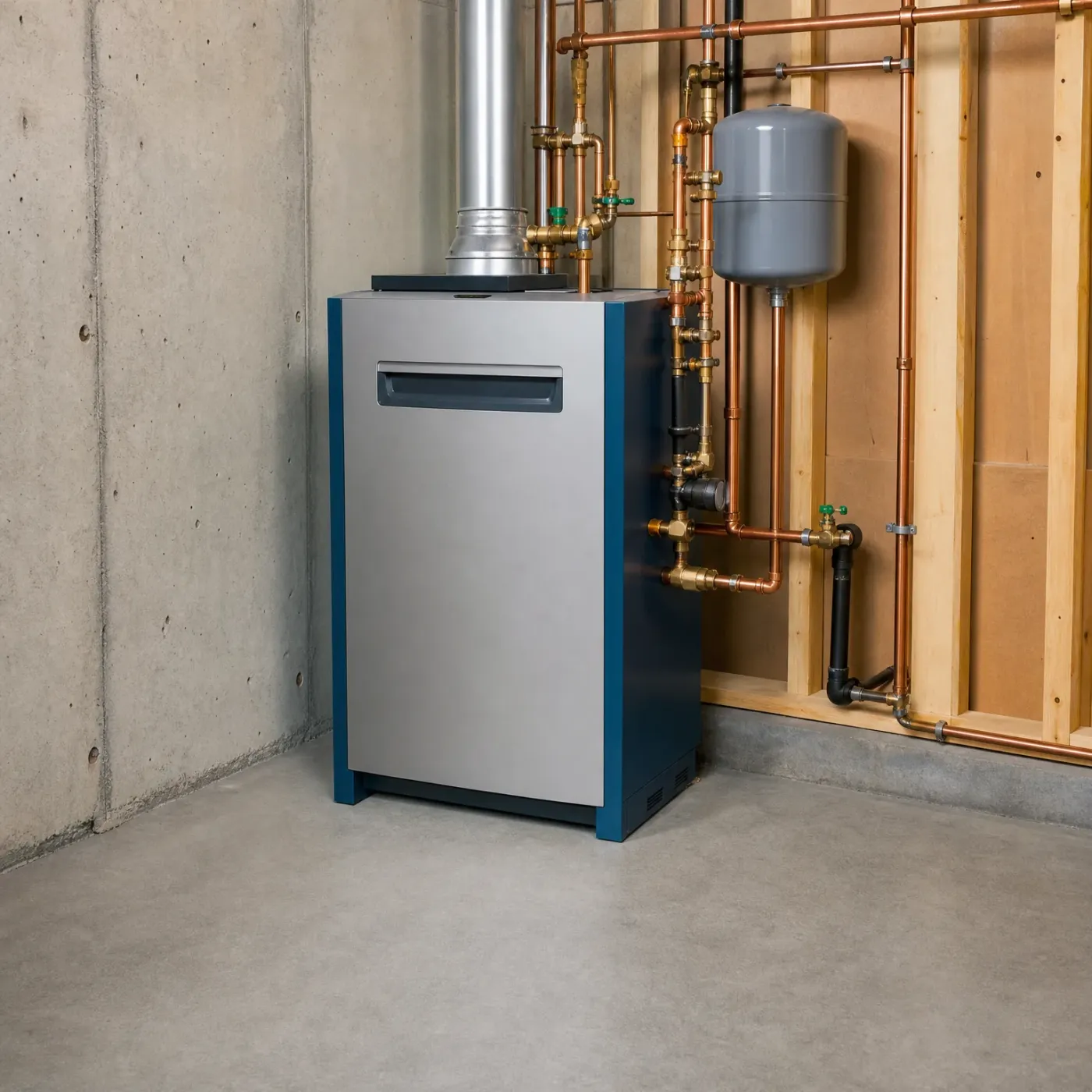
This is what a boiler circulating properly looks like. Copper lines, brass fittings, and a working pump move hot water out to every radiator in the house and back again. The expansion tank holds steady pressure so the system doesn't short-cycle or lose flow to the far rooms.
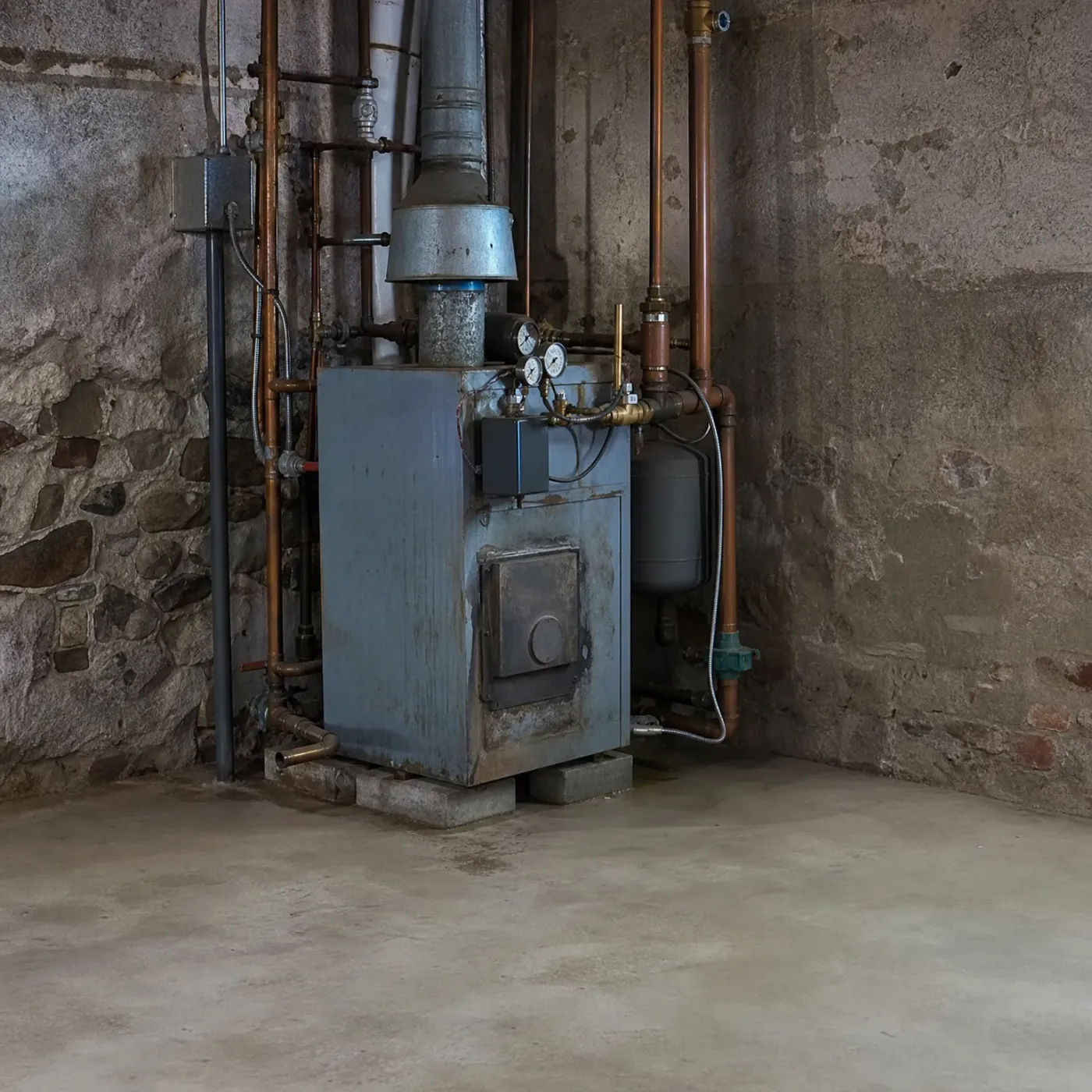
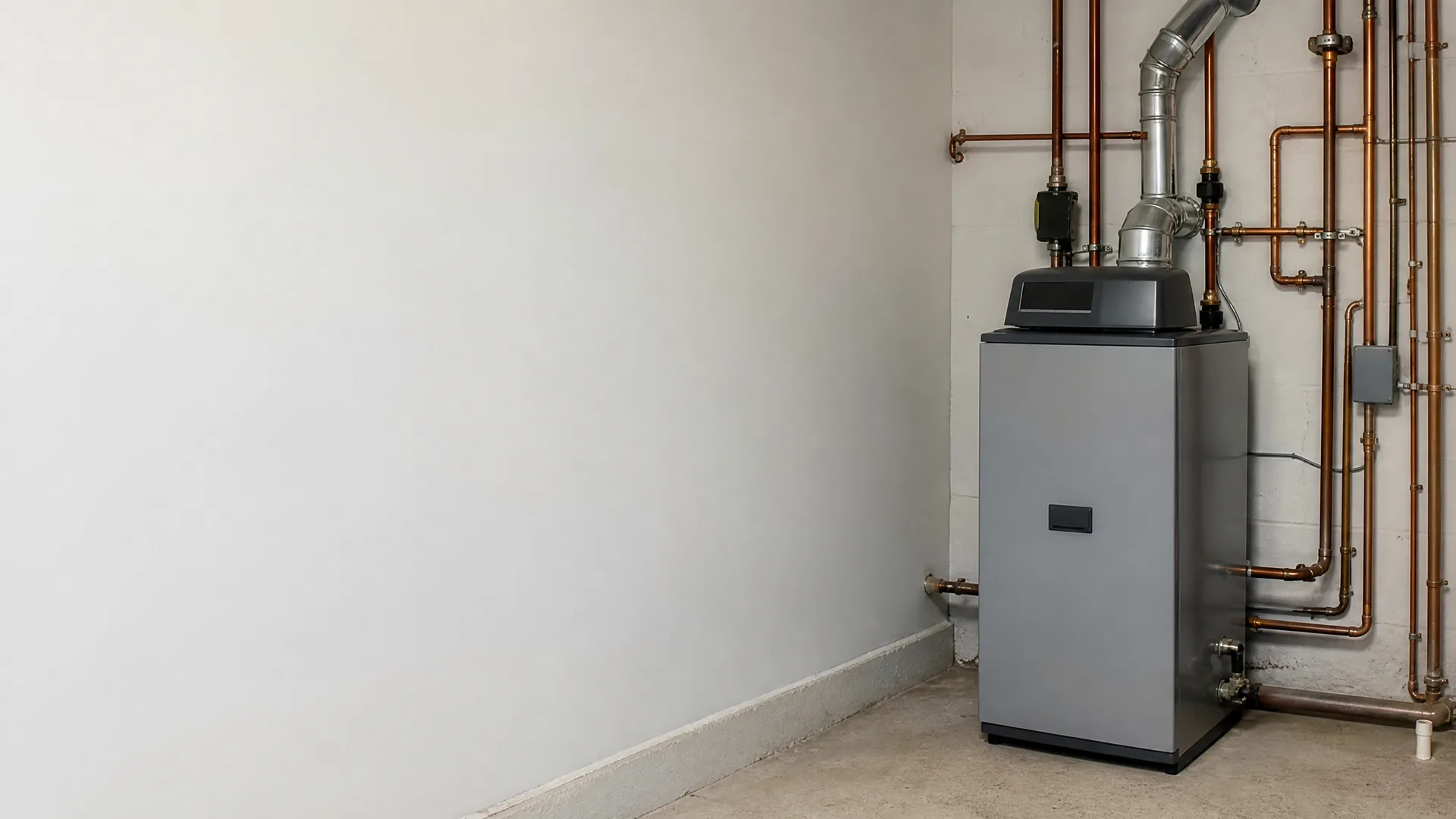
This one still fires and still heats water, but age catches up to the parts around it. Gauges, valves, and an aging expansion tank on a boiler like this are more likely to stick or fail, and a stuck valve anywhere in the loop can leave radiators cold no matter how hard the boiler works.

Bleeding the radiators tells you something either way. If water drips steady and the room heats up, you were done before you started. If the same radiator goes cold again a few days later, or if bleeding never brought water at all, the problem is somewhere past the valve. A zone valve, a circulator, a line that isn't feeding that loop. That's not something to keep guessing at through a long Iowa winter.
A boiler tech who works these systems every season in this state has likely seen your exact setup before, same zone valves, same circulator pumps, the same spots where a flue pipe or a line gives out first. Once you're past what you can check yourself, you'll be matched with one licensed contractor local to you, and that contractor will reach out. Not a handful of companies competing for the job. One, who knows what to look at first.

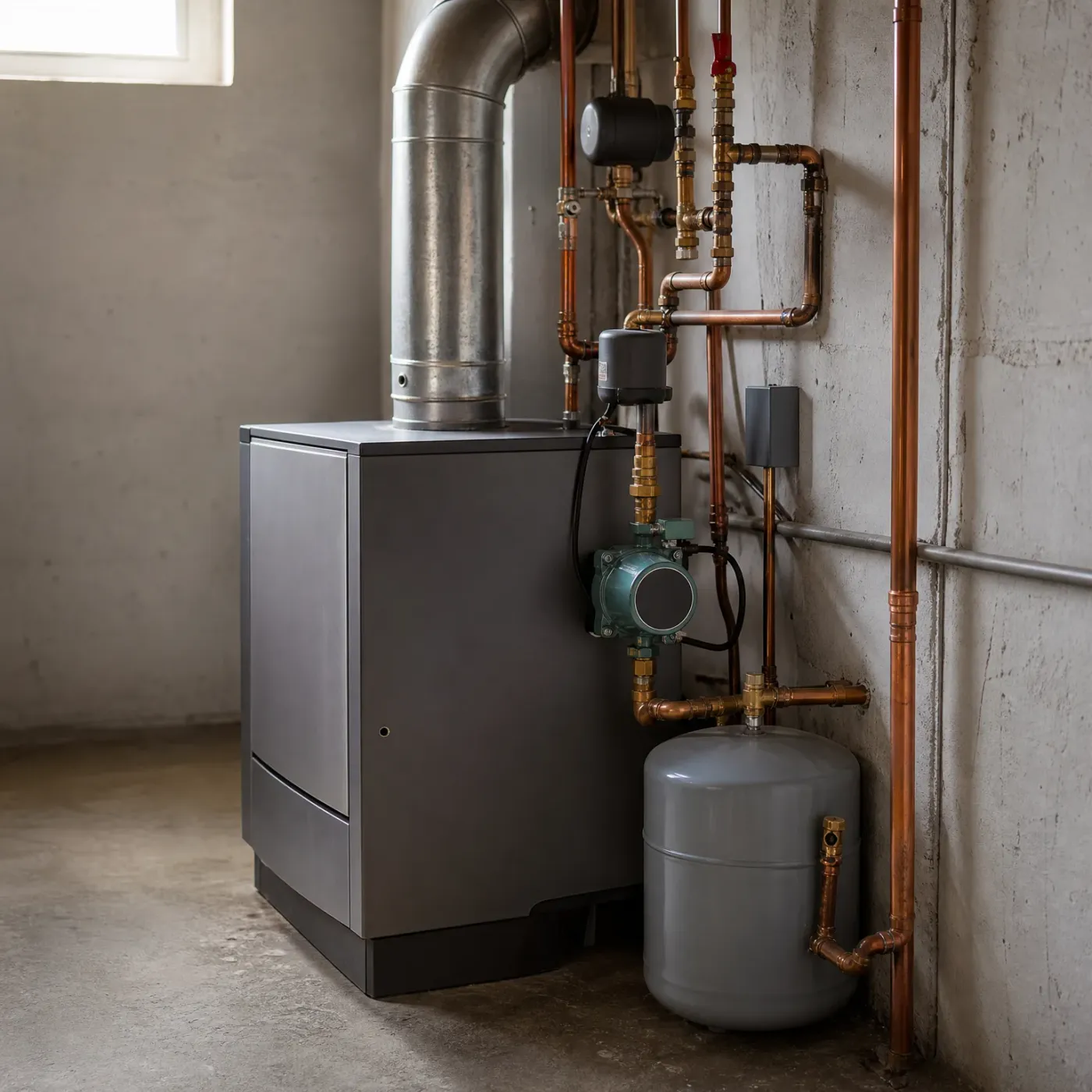
The pro who reaches out is licensed in Iowa.
No fee to send it, and nothing to sign.