
Why your boiler runs out of hot water in Iowa

A local pro who knows boilers gets your details and gets in touch.

Find a boiler pro

A boiler that runs out of hot water usually has a bad diverter valve, a worn heat exchanger, or sediment built up in the tank, and any of the three cuts down how much hot water actually reaches your tap. If your boiler is tankless style, a failing diverter valve means it never fully switches over to heat water on demand, so you get a few warm minutes then cold. If it's a tank system, sediment settling at the bottom insulates the water from the burner, so the boiler fires but the heat doesn't transfer. Gas is how most homes in Iowa heat, and that same boiler often handles hot water too, so a part wearing out means less hot water and a furnace working harder in the months ahead. Either way, it's a mechanical problem, not something that fixes itself with a thermostat adjustment or a reset, and it tends to get worse the longer it runs.

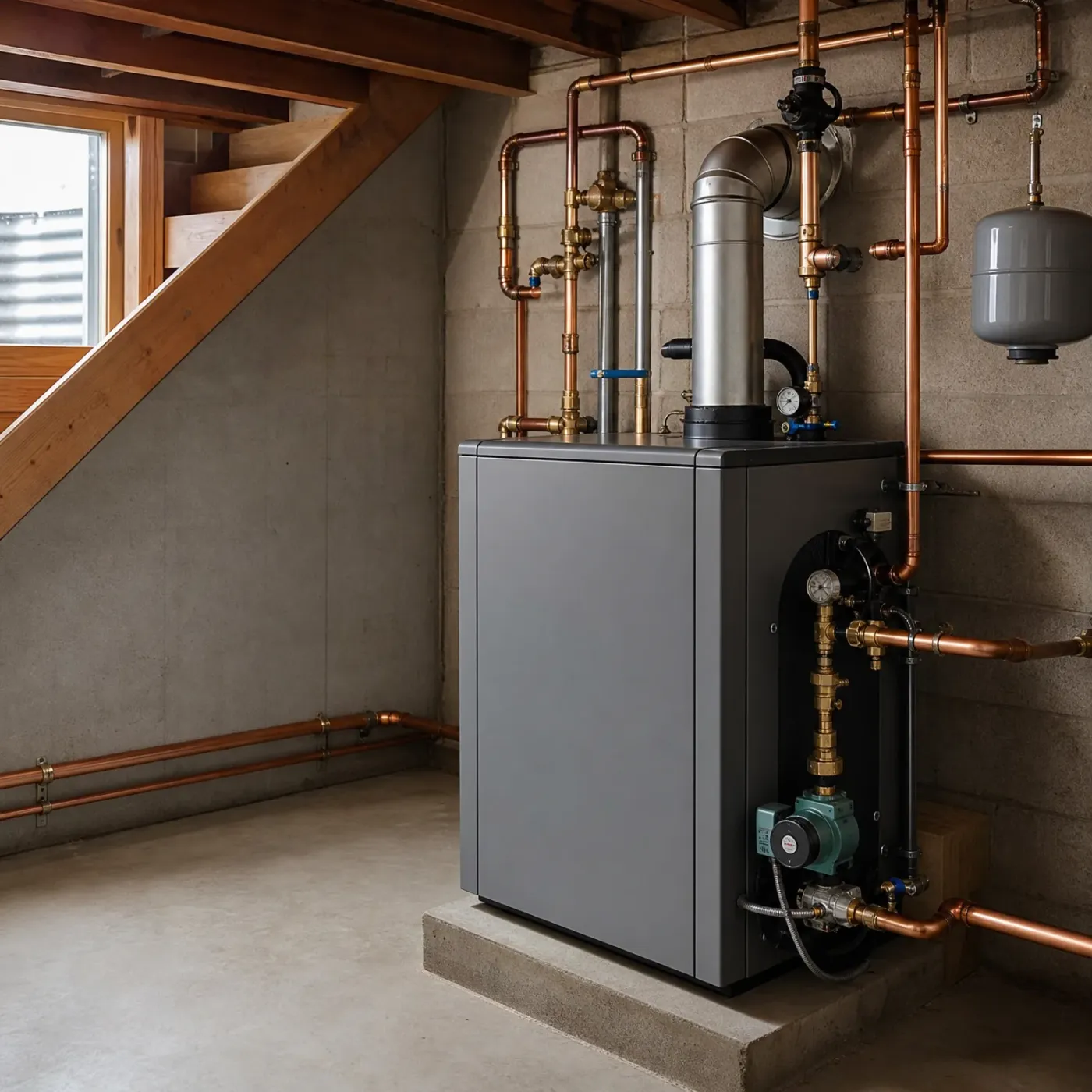
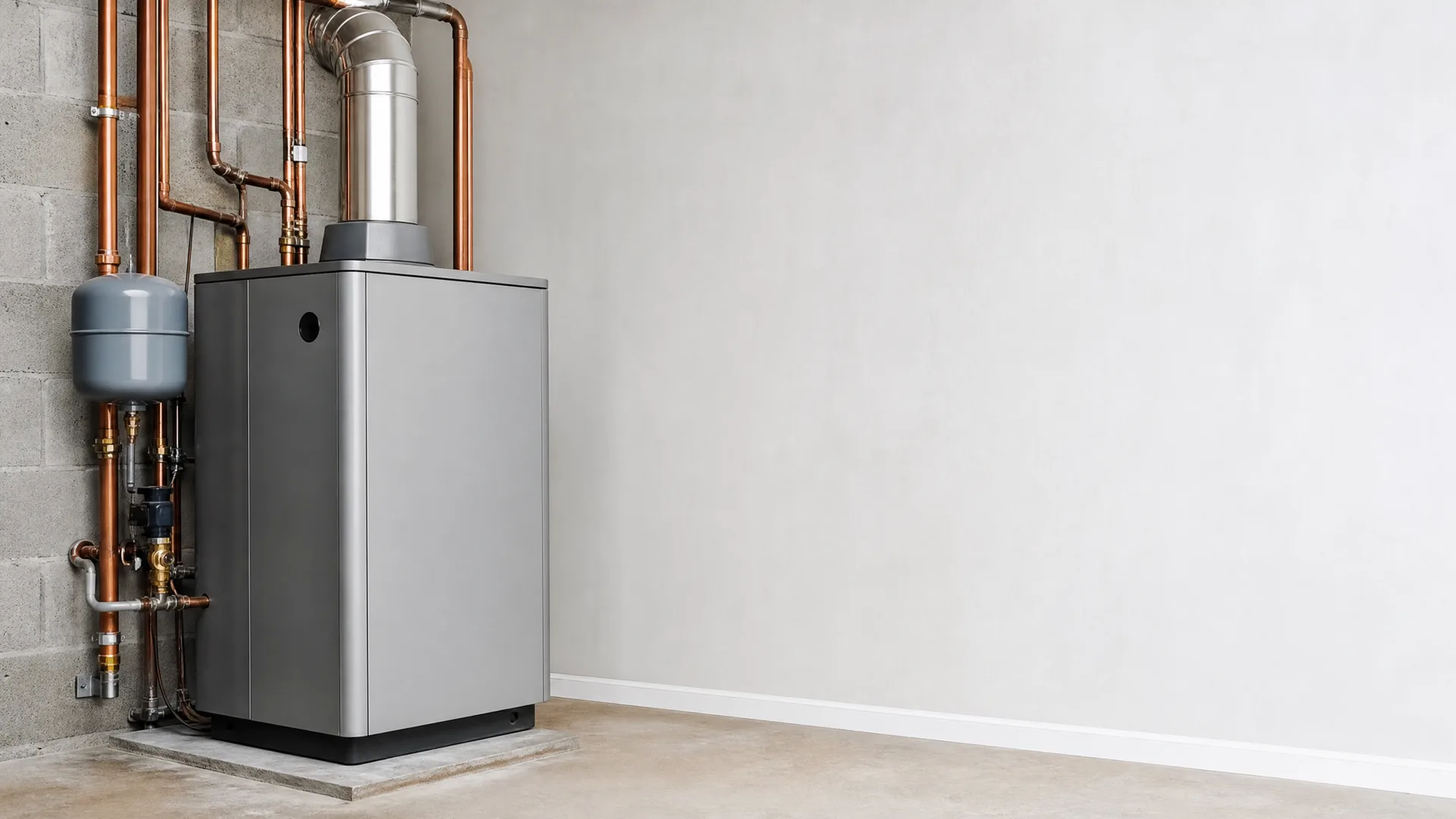
A grey floor-standing boiler with a metal flue and copper pipework and an expansion vessel stands against a concrete block wall beside a plain light-coloured wall.

What the diverter valve does

A combi boiler uses a diverter valve to switch between heating your radiators and heating water for the tap. When that valve sticks or wears out, it can't fully switch over, so some heat still goes to the radiators instead of your hot water. You end up with lukewarm water or a hot supply that fades fast, even though the boiler itself fires up fine.

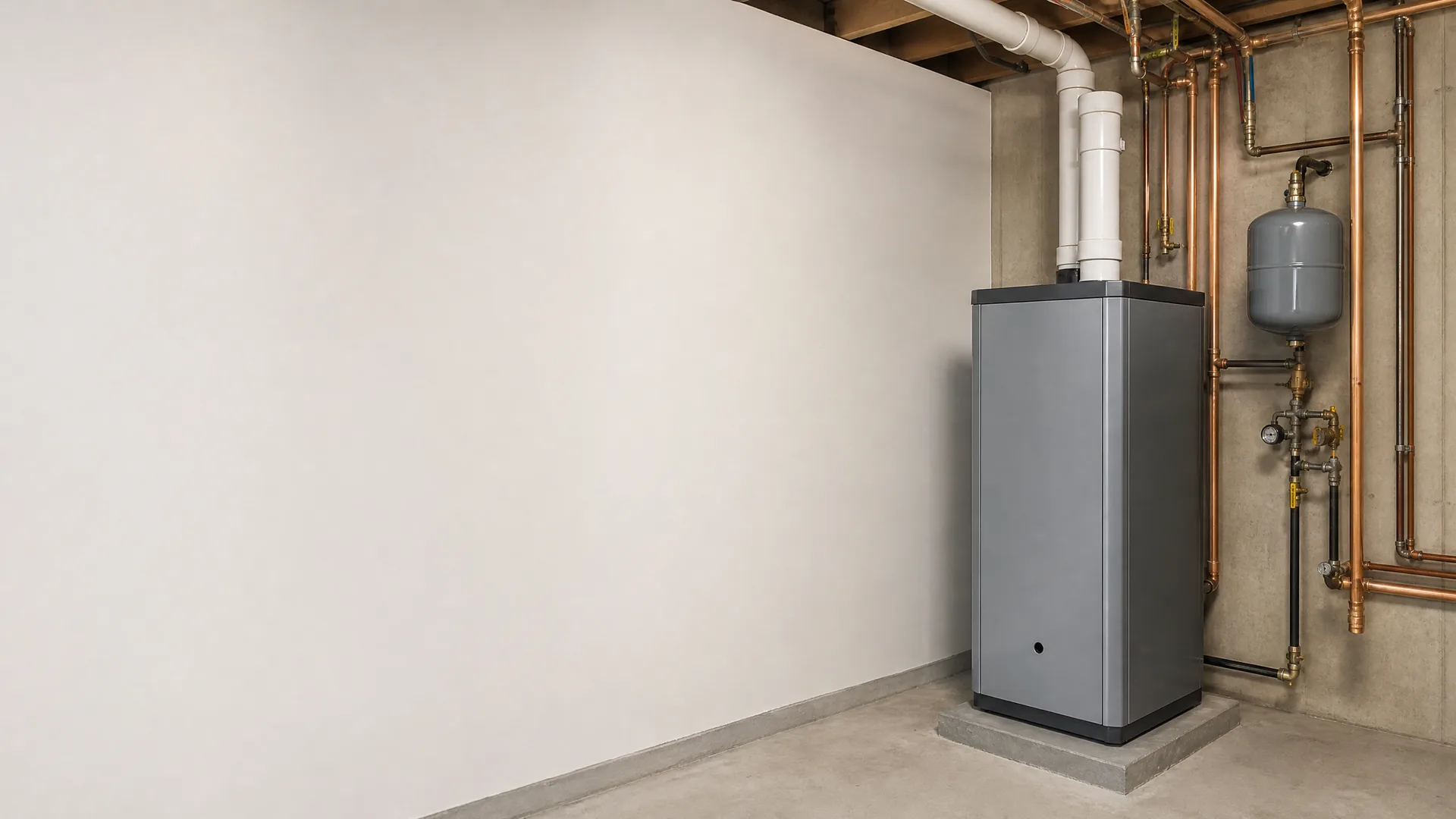
A gray boiler unit on a concrete pad in a basement corner, with white PVC flue pipes, copper piping, and a gray expansion tank on the wall behind it.

Why sediment cuts output

If your boiler has a storage tank, sediment settles at the bottom over time, especially with Iowa's hard water. That layer sits between the burner and the water, so the boiler has to work harder to heat the same amount, and less of that heat actually reaches the tank. A tank with a thick sediment layer holds noticeably less usable hot water than it did new.

Live With It or Get It Fixed

Running out of hot water

  • You turn the shower on and the hot water fades in a few minutes instead of lasting through the whole thing.
  • Dishes or laundry on the same cycle as a shower mean someone ends up with lukewarm water, sometimes cold.
  • The water heats fine at first, then drops off, which points to the diverter valve not fully switching over.
  • Sediment sitting in the tank cuts down how much hot water it can hold or pass through at one time.
  • A worn heat exchanger can't transfer enough heat to keep up, even though the boiler is firing normally.
  • Left alone, the problem tends to get worse instead of staying steady, since the valve or sediment doesn't fix itself.

Getting it fixed

  • A contractor can tell you whether it's the diverter valve, the heat exchanger, or sediment build-up in the tank.
  • You skip calling around to find someone who works on boilers and checking who actually has time this week.
  • You explain the problem once, to the person doing the repair, instead of repeating it to every company you call.
  • Catching this now, before it affects the whole system, is the kind of thing you're already used to doing.
  • You get matched with a contractor suited to your specific setup instead of sorting through quotes yourself.
  • That contractor reaches out to you directly, so the next step is on their end, not yours.
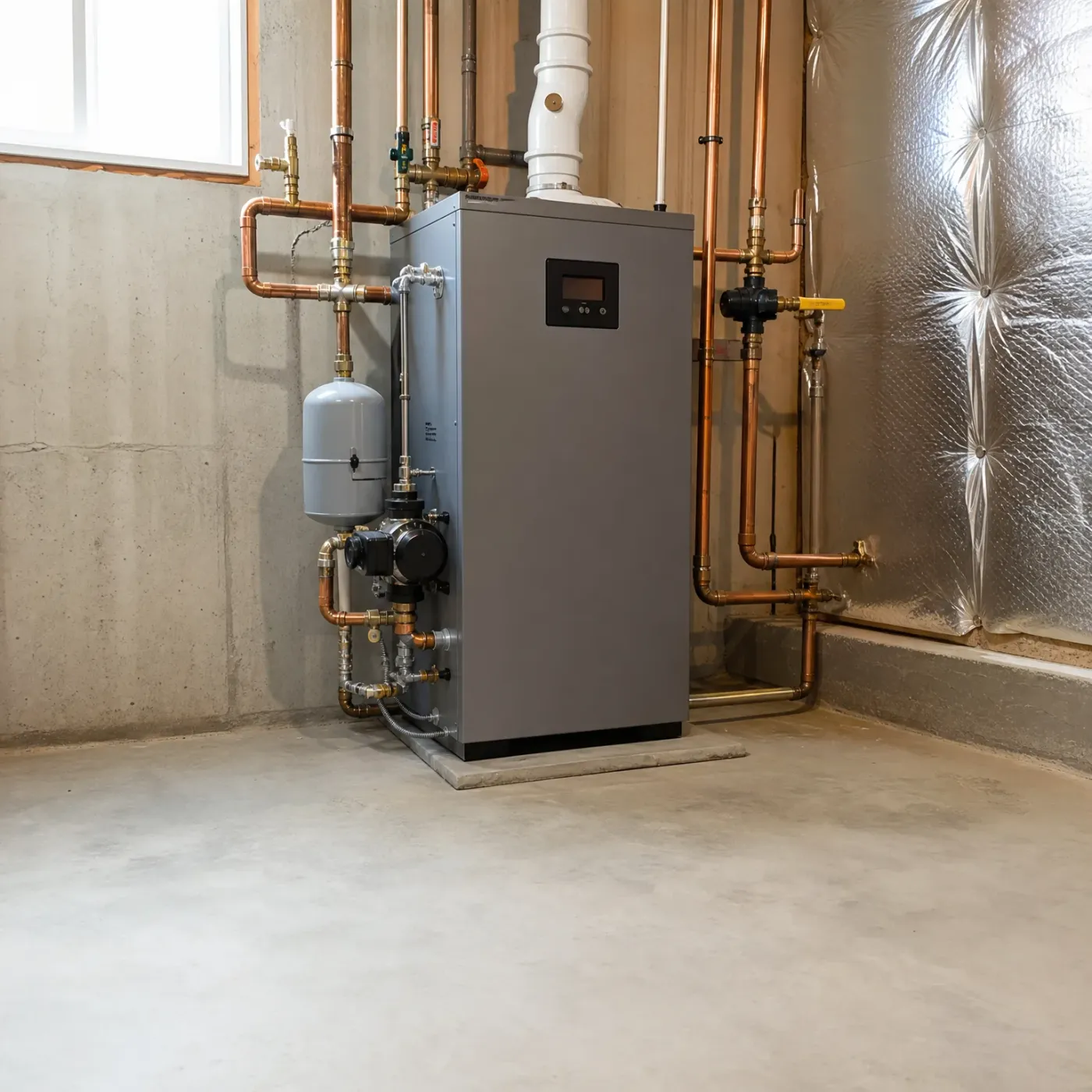
A gray boiler unit with a digital display stands on a concrete basement floor, connected to copper piping, a gas valve, a circulator pump and an expansion tank, beside a concrete wall and foil-faced insulation.

Working the way it should

A boiler like this one heats water on demand and sends it where it's needed, radiators or tap, without one starving the other. The pump and expansion tank hold steady pressure, and the flue clears exhaust the way it was designed to. Hot water lasts as long as you're running it.
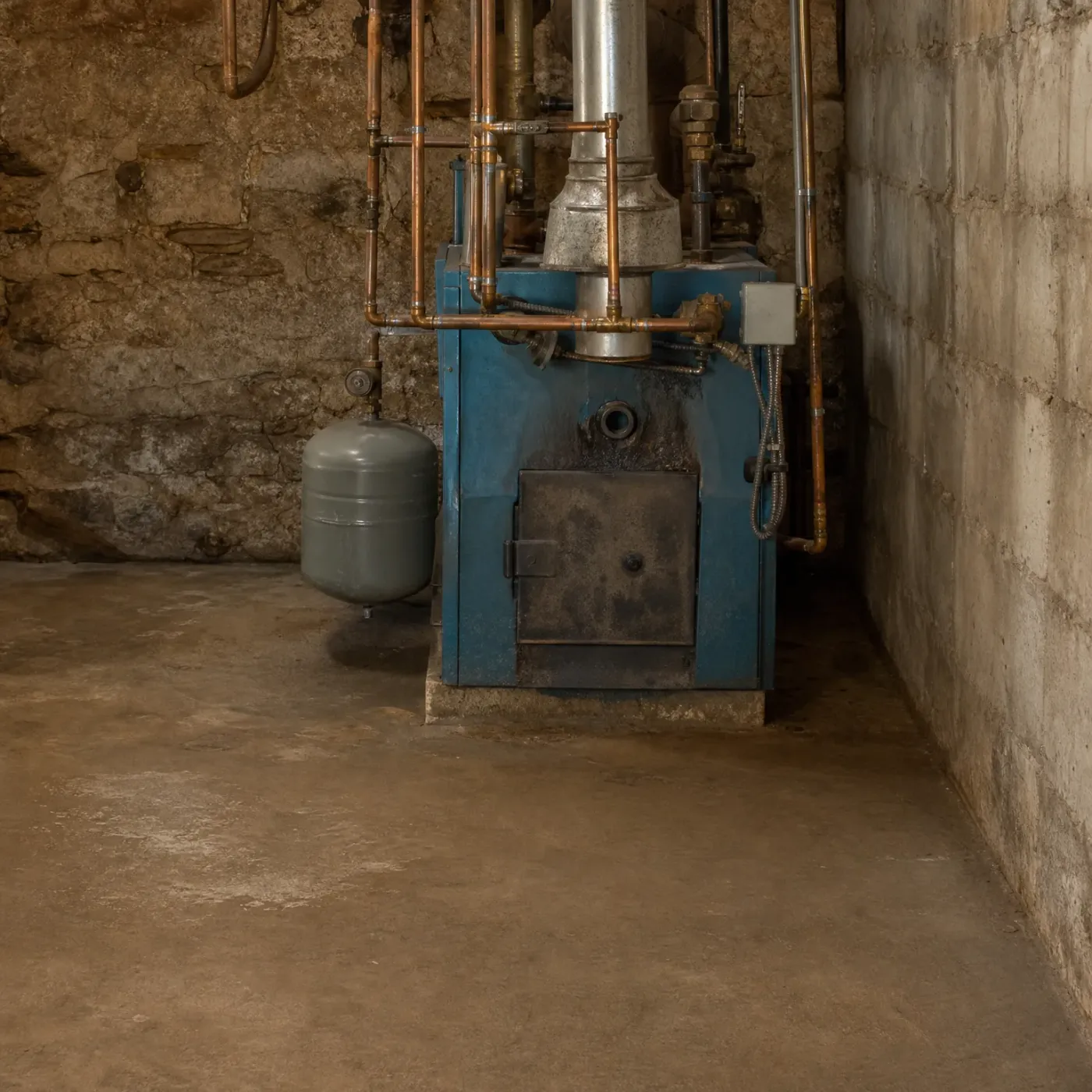

A blue cast-iron boiler with a metal flue pipe and copper piping stands against a stone and concrete block basement wall beside a gray expansion tank on a bare concrete floor.

Sediment and age catching up

A cast-iron boiler this old has had years for sediment to settle in the tank and scale to build on the heat exchanger. That corroded access door is a sign the unit's been working harder to do what it used to do easily. Hot water runs out sooner than it should.

A woman in a gray turtleneck sweater stands near a window with snow outside, in a dimly lit living room with a lit Christmas tree, table lamp, sofa and bookshelf.
A woman in a cream knit sweater with her hair in a bun stands in a dimly lit living room looking out a large window at snow-covered evergreen trees, with a lamp, sofa, framed picture and lit candle behind her.
A woman in a thick gray knit sweater stands beside a window looking out at falling snow, with a dimly lit living room containing a lamp, sofa, string lights and a candle behind her.
A woman in a gray turtleneck sweater stands in a dimly lit room with a lit table lamp, framed picture and sofa, looking toward a window with snow outside.
A gray boiler on a concrete pad in a basement, connected to copper and black pipes with valves, gauges, a circulator pump, a flue, and a wall-mounted expansion tank, beside a wooden staircase.

A boiler pro near you

Explain the job once and skip repeating it on every call.

Tell a local repair pro what your boiler is doing.

Fill out one form

It costs nothing to send, and you don't have to hire anyone.

Why does your hot water fade so fast

You notice it most at the sink or in the shower. The water runs warm, then turns lukewarm, then goes cold well before you're done. Someone running a load of laundry while another person showers means one of them gets cold water. The tap might take longer to heat up than it used to, or the water coming out looks rusty or smells off, which points to sediment sitting in the tank. If the boiler is also making a low rumble or a knocking sound when it fires, that's often sediment too. Left alone, a boiler working around a bad valve or a fouled tank strains harder each time it runs, and in an Iowa winter, a boiler that can't keep up with hot water is one that's also working harder to keep the house warm.

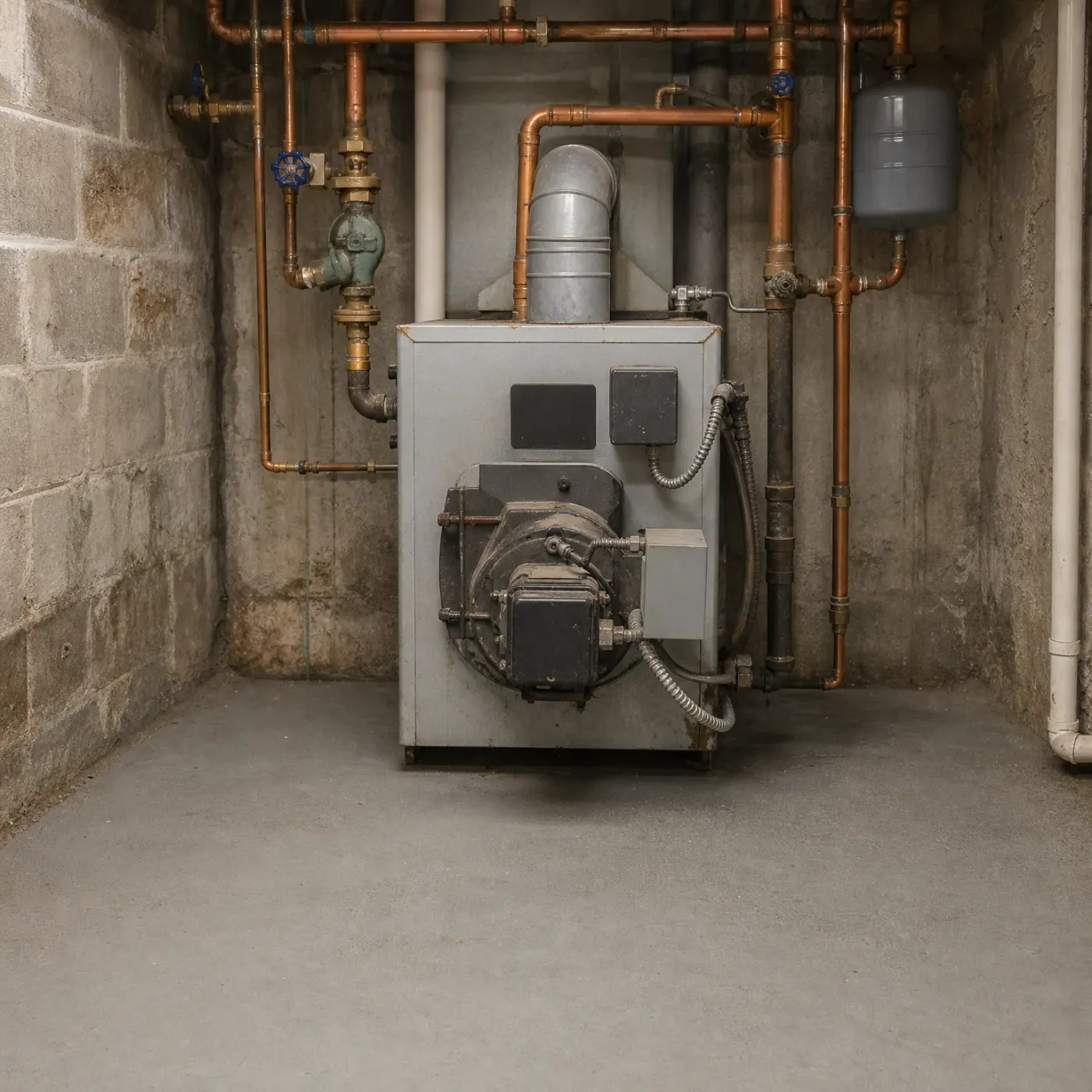
A gray boiler with a flue pipe and burner unit stands against a concrete block basement wall, surrounded by copper and steel piping, valves, and a gray expansion tank, on a bare concrete floor.
Before you get your boiler repair
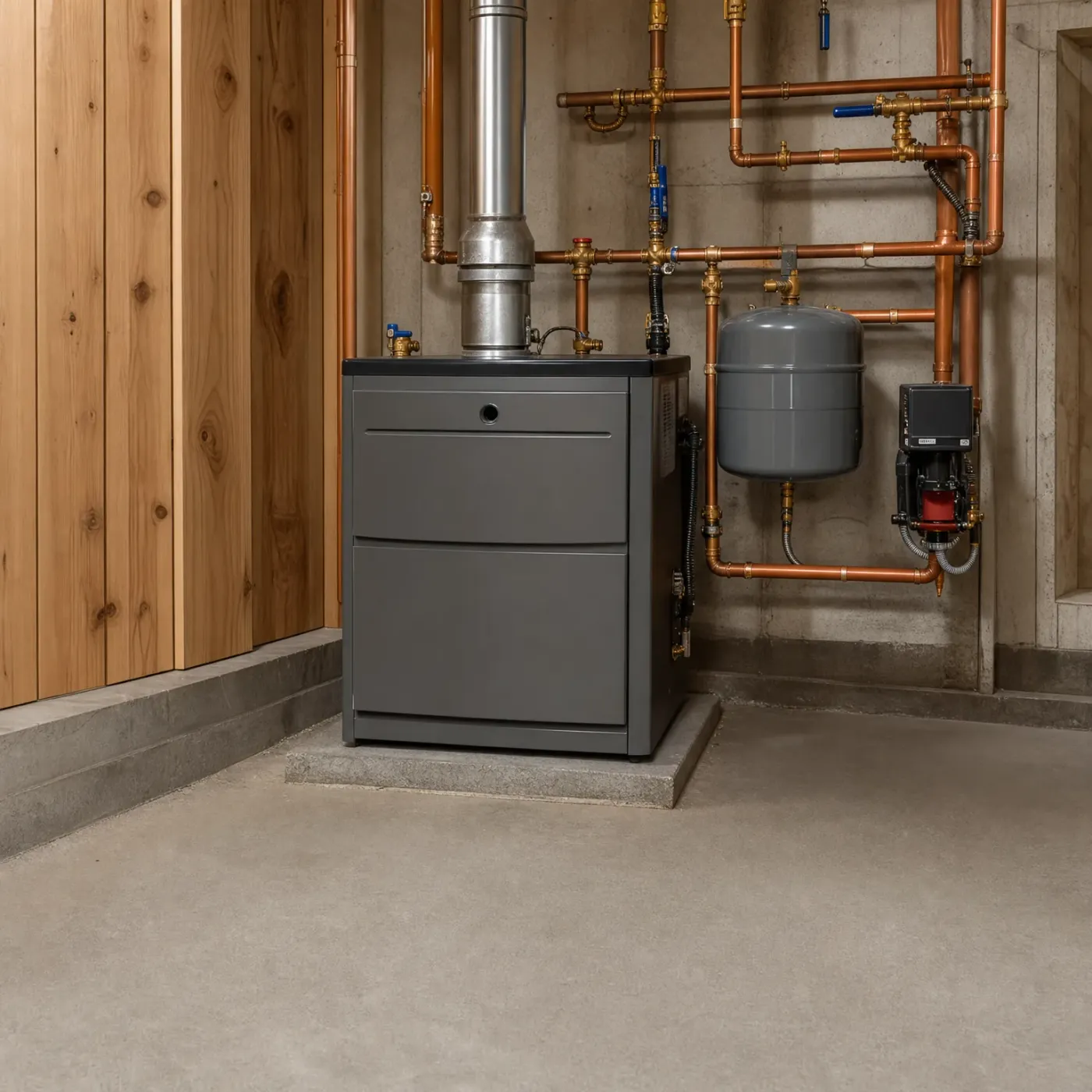
A gray boiler on a concrete pad in a basement, with a metal flue pipe and copper piping, brass valves, a gray expansion tank and a circulator pump mounted on the concrete wall beside wood paneling.
After you get your boiler repair
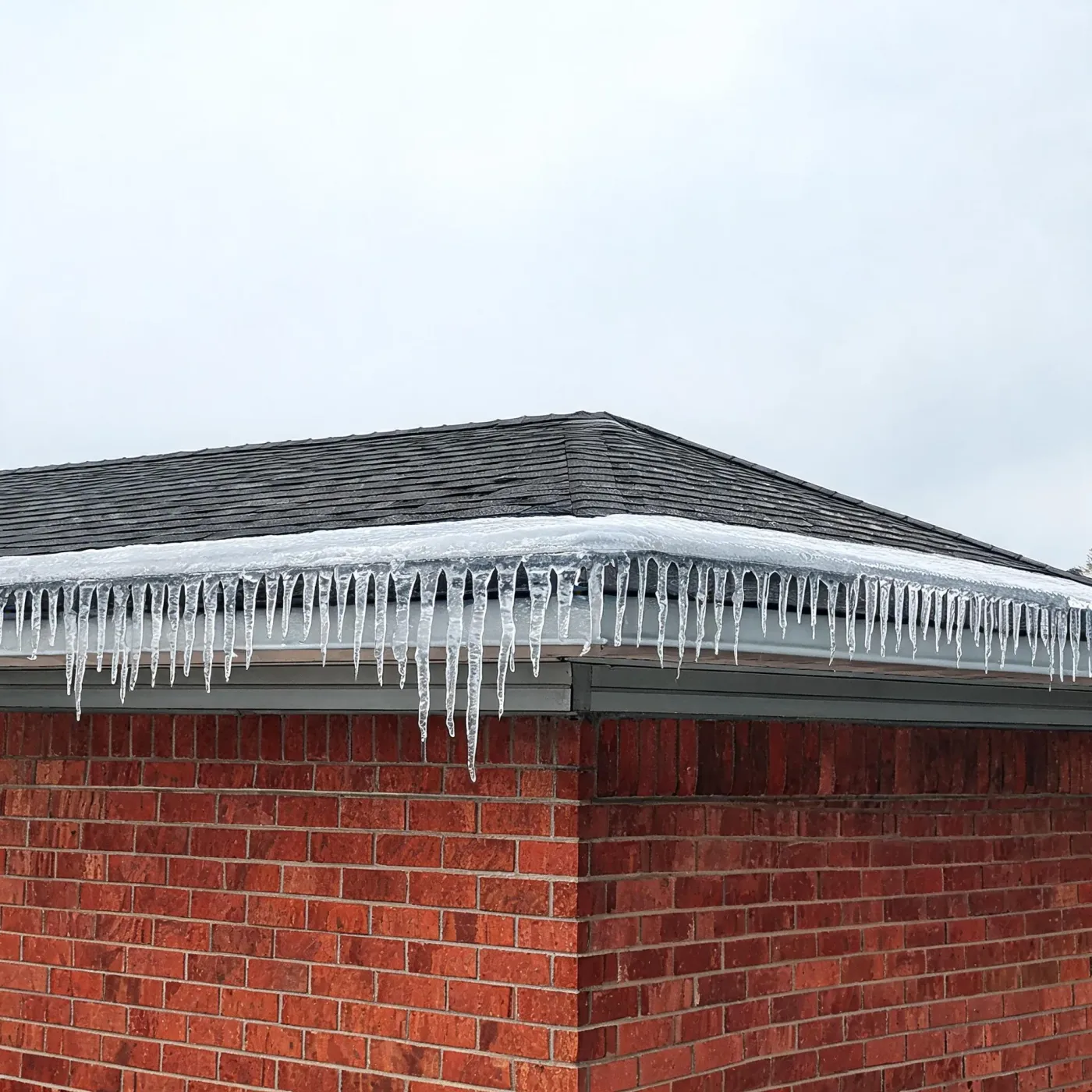
Corner of a red brick building with a dark shingled hip roof, a row of icicles hanging from the ice-covered gutter, under an overcast white sky.

Winter nights average 15°F across Iowa, according to NOAA climate data, and that's the stretch when your boiler works hardest and has the least room for a problem. Cold groundwater coming into the tank takes more heat to bring up to temperature, so a diverter valve that's already struggling or a tank with sediment built up on the bottom runs out of margin fast. You'll notice it first on the coldest nights, when the shower that was fine in October turns lukewarm in five minutes. A boiler in good shape handles 15°F input water without trouble. One that's already worn shows it right when you need hot water most.

NOAA nClimDiv 1991-2020 county normals weighted by homes

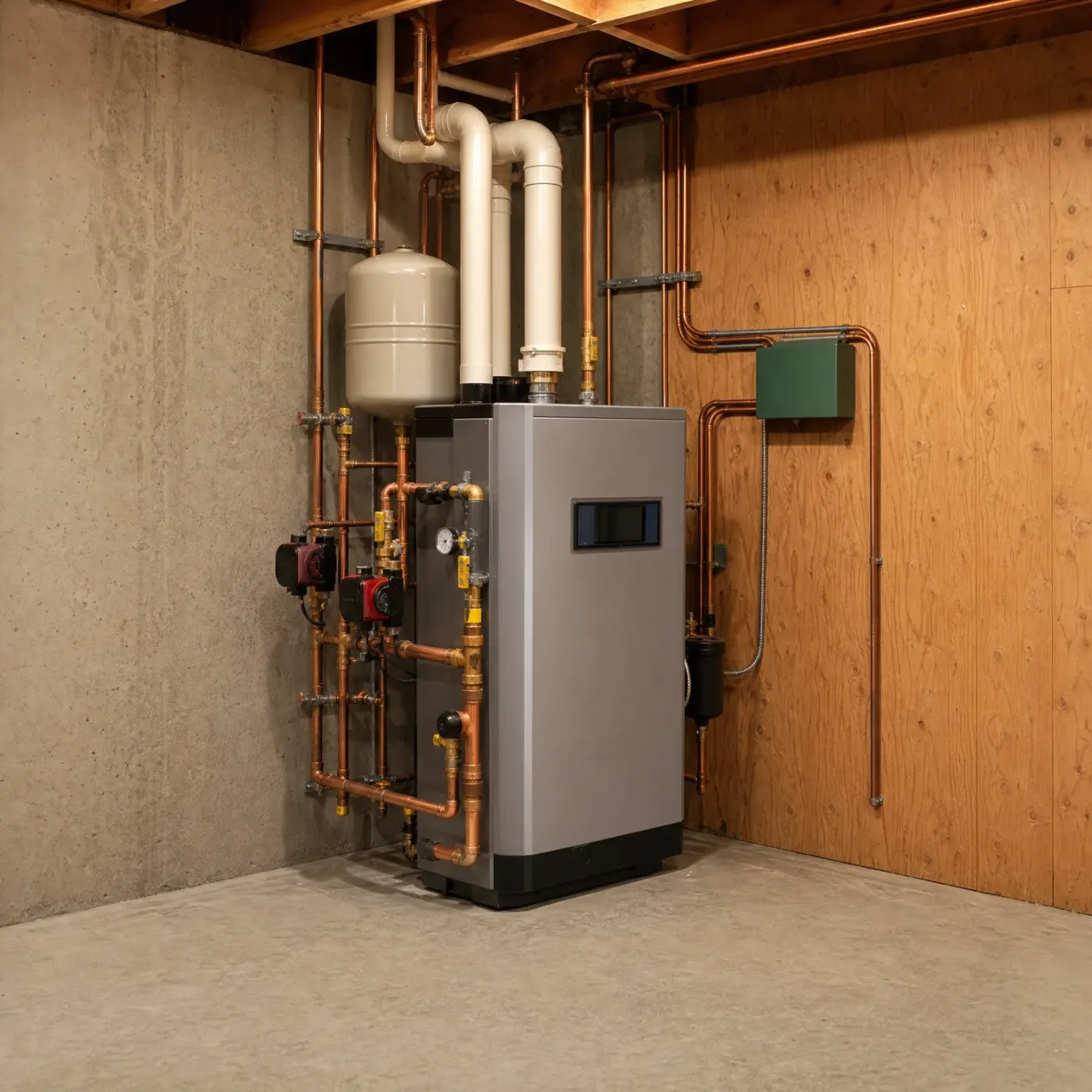
A gray floor-standing boiler in a basement corner with copper piping, two red circulator pumps, a beige expansion tank, white PVC vent pipes, concrete and plywood walls.
A boiler piped and venting the way it should keeps hot water going to the tap without pulling heat away from the radiators.
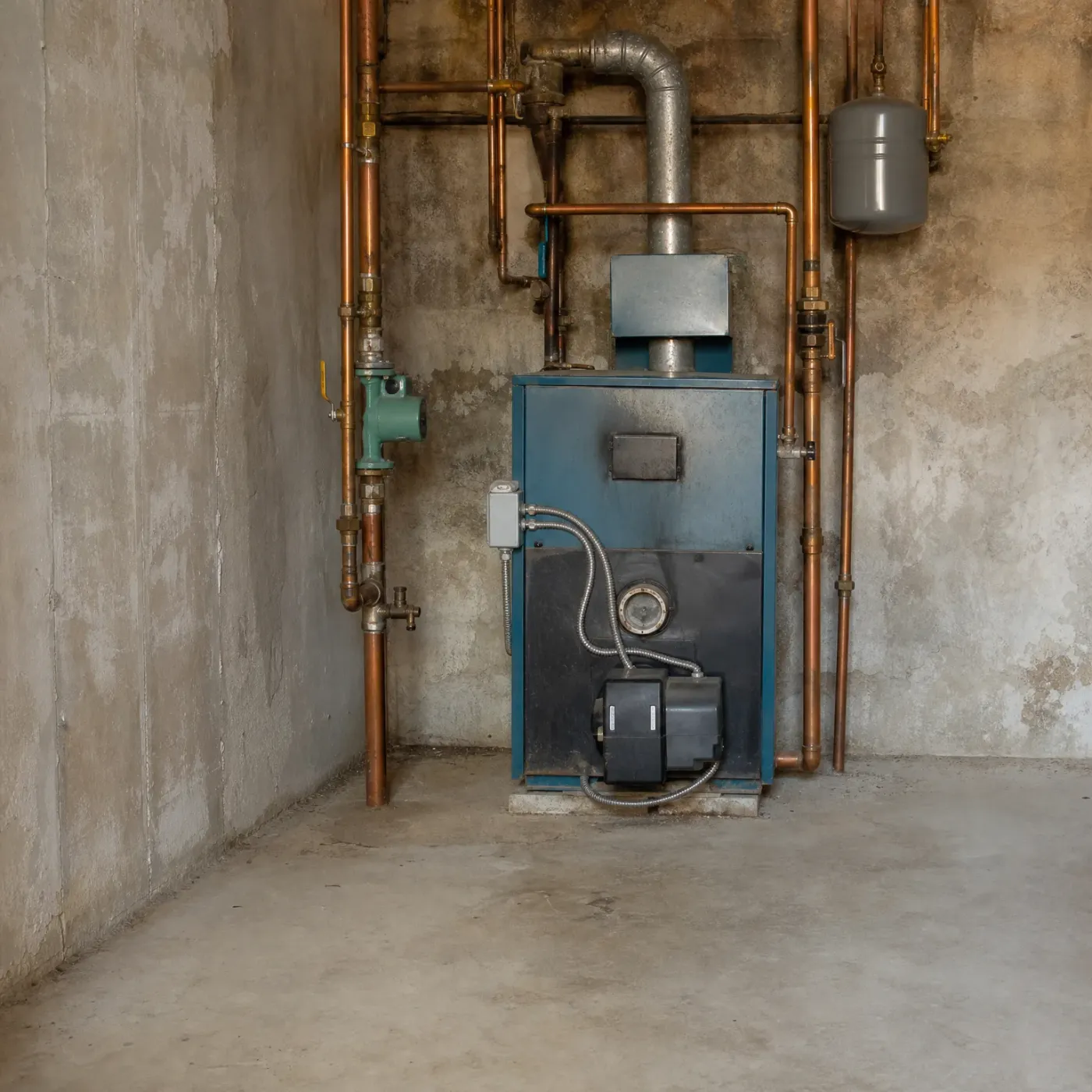
A blue residential boiler with a metal flue, pressure gauge and burner unit stands against a stained concrete basement wall, surrounded by copper pipes, a green circulator pump and a gray expansion tank.
A boiler left to run this way, against a bare wall with no fix in sight, is losing the fight between your radiators and your tap.
  1. Cold water enters the tank and the burner fires to heat it

  2. The diverter valve shifts to send heat toward the tap

  3. A worn valve lets heat leak back to the radiators instead

  4. Less heat reaches the tap, so hot water runs out faster

Winter nights average 15°F statewide

With nights near 15°F, groundwater coming into your tank starts out colder and takes longer for the burner to catch up. A diverter valve that's already struggling has even less margin, so the fade to lukewarm shows up sooner than it did in October.

NOAA nClimDiv 1991-2020 county normals weighted by homes

Letting it ride out the winter without a fix means every cold snap tests a valve that's already struggling, and each call to a different repair shop starts the explanation over from scratch.

Getting matched once means the next contractor who shows up already knows what you told them, and you're not the one sorting through quotes to figure out who's worth calling back.

A bearded man in a plaid flannel shirt sits indoors looking out a window at snow-covered trees, with a steaming mug on the sill and wooden kitchen shelves behind him.
A bearded man in a navy T-shirt sits on a light-colored couch indoors, smiling while looking down at a laptop screen in the foreground, with a framed picture and a potted plant blurred behind him.
A woman in a long cream cardigan and jeans stands at an open wooden front door of a gray shingled house with stone-based porch columns, with a second person visible inside, and potted flowers and shrubs beside the entry.

A boiler running out of hot water has a cause, not a mystery

A sticking diverter valve, a worn heat exchanger, or sediment in the tank. One of those three is behind the fade to lukewarm, and Iowa winters give it less room to hide. At 15°F outside, the water coming into your tank starts out colder, so whatever margin that valve had left shrinks fast.

You don't have to track down which one it is yourself, or call around to find someone who will. Once you're matched with a contractor who handles this kind of repair, they'll already know what you've described and reach out to you directly. No explaining it again from the start, no comparing quotes on your own. You'll know what's wrong with your boiler and who's coming to look at it.

A speckled beige ceramic vase holding thin dried branches sits on a round wooden table near a window with sheer curtains, with a dark upholstered chair and draped blanket blurred in the background.
A single-story stucco house at dusk with a lit paver walkway lined by low path lights, desert plants and boulders in front, and distant mountains under an orange and blue sky.

Boiler Repair

A local pro for your boiler repair

Step 1 of 3: Equipment
  • A ceramic vase holding leafy green branches and a shallow wooden bowl sit on a wooden window ledge beside a sunlit window, with a cream upholstered chair and knit throw in the foreground.
    • Say what's going on with your boiler, and a pro who works on them reaches out.
  • Sunlit living room corner with a beige upholstered sofa, a round wooden side table holding a ceramic vase of olive branches, linen curtains at a window, a floor vent in the baseboard, and a woven jute rug on hardwood flooring.
    • Send the request today and stop worrying about who to call.
    • Send the request and finding a pro stops being your problem.
  • A wooden side table with a single drawer holds a shallow carved wood bowl and a white ceramic vase of green eucalyptus stems, beside a window and an upholstered chair draped with a cream knit throw.
    • One form replaces the calls you'd make to find a boiler pro.
    • Describe what your boiler is doing once, in one form.
  • Corner of a house with horizontal siding, a white-framed window and stone veneer base, beside a covered entry with wooden steps, a potted plant, mulched beds of green shrubs and a flagstone path.
    • The pro who reaches out is licensed in Iowa.
    • Only one pro gets your request, so you hear from one company.