
Pressure holding steady
A system running right keeps its pressure somewhere between 12 and 15 psi, cold. The gauge stays put. The relief valve stays dry. Pumps and fittings do their job quietly, and nothing needs to escape.
A relief valve drips because something is pushing the pressure or temperature inside your boiler past what it's built to hold, and the valve is doing its job letting that out before it becomes a bigger problem. Most often it's pressure, from a faulty fill valve overfilling the system or from waterlogged expansion tank that can no longer absorb the water's expansion as it heats. Sometimes it's the valve itself, worn out after years of opening and closing and no longer seating back down tight, so it weeps even at normal pressure. A valve that only drips when the boiler is running hard points to heat or pressure. One that drips all the time, even cold, points to the valve itself. Either way, it isn't something to watch and wait on. A relief valve is the last safeguard on a closed, pressurized system, and it's already telling you something upstream needs attention.
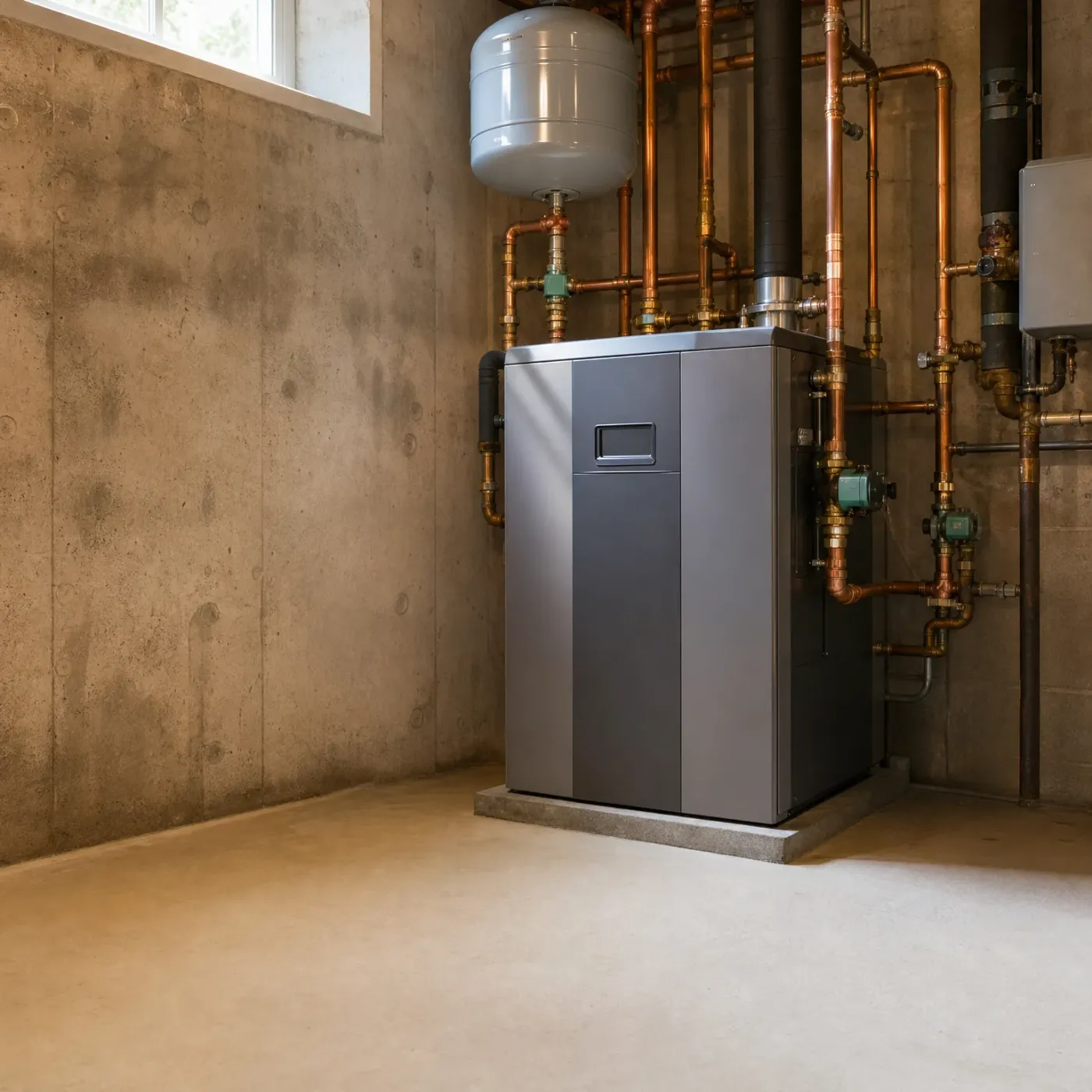
A system running right keeps its pressure somewhere between 12 and 15 psi, cold. The gauge stays put. The relief valve stays dry. Pumps and fittings do their job quietly, and nothing needs to escape.
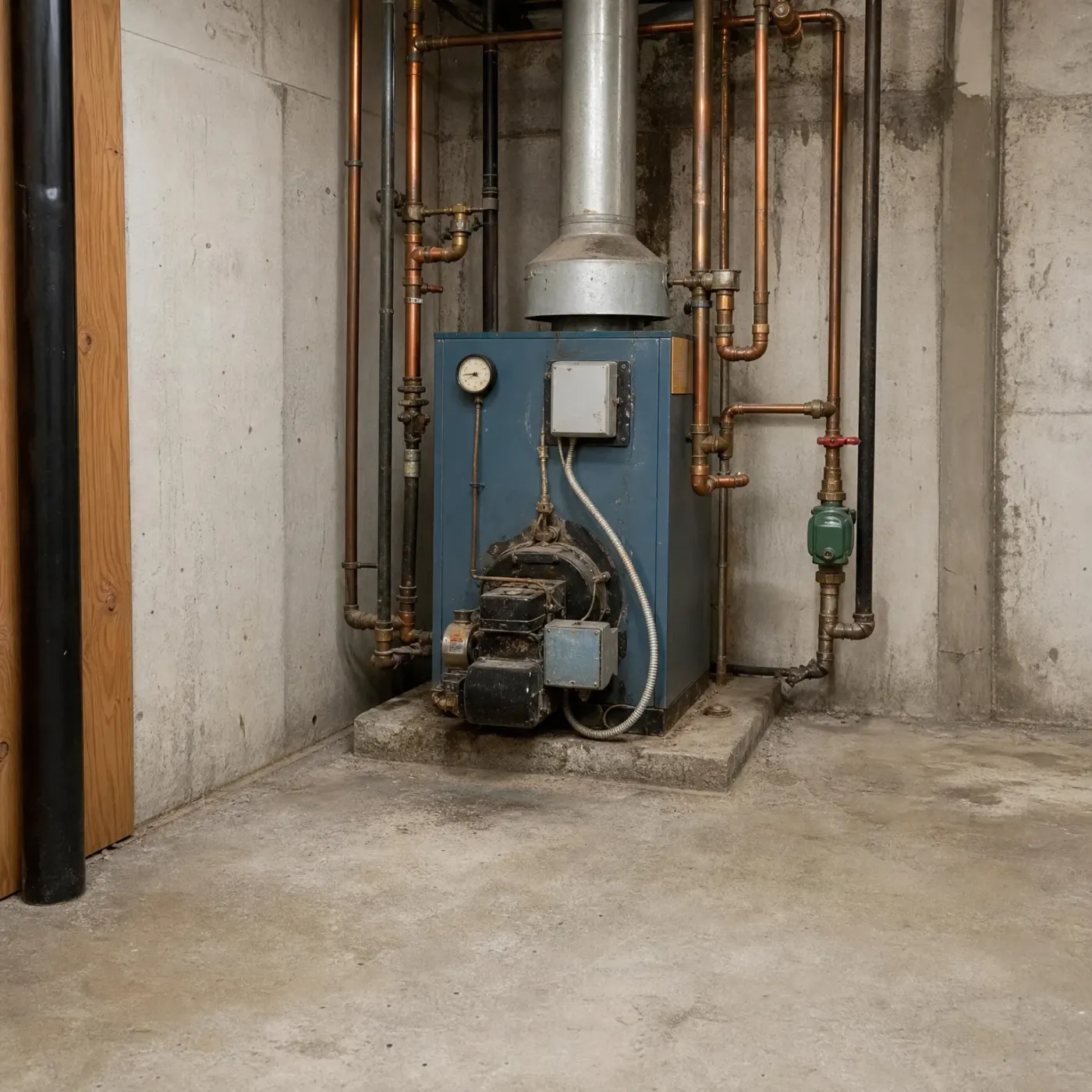
Once the gauge climbs past 30 psi, the relief valve opens to protect the boiler from a split seam or worse. A drip at the valve is the system telling you it already had to let something out.
You might notice a small puddle on the floor under the valve, or a stain on the pipe where water has dried and left a white or rust colored ring. Sometimes it's not water you see first but the sound, a hiss or a steady drip you can hear from across the basement. The smell is mineral, almost metallic, nothing like a sewer smell. If the valve keeps weeping, the water can corrode the fittings around it and the floor beneath it, and the boiler loses pressure it needs to heat your house properly. Left alone through an Iowa winter, that's not a small thing to ignore.

You're up before the rest of the house, and the living room is cold in that way that gets into your socks. You cross to check the thermostat and catch it from the corner of your eye: the window over the radiator has iced up on the inside, a thin frost pattern on the glass. The cast-iron radiator under it is barely warm, not the usual heat you'd lean against. You crouch down near the boiler and hear it, a faint hiss, and there's a line of water running down from the relief valve onto the floor. Outside it's still dark, maybe ten below with the wind. You stand there a second, feeling the cold coming off the glass.




One form replaces the calls you'd make to find a boiler pro.
Asking costs nothing, and the choice to hire stays yours.
Your boiler stays at the right pressure because a fill valve lets in just enough water to replace what's lost and then stops. When that valve sticks open, water keeps entering with nowhere to go, and the pressure climbs past 15 psi until the relief valve opens to bring it back down. A fill valve can stick from age or from grit caught in the seat, and once it's stuck, closing the valve by hand often doesn't fix it for long. Checking whether yours holds steady a day after you reset it tells you whether the valve itself is the problem.
A relief valve that opens once from a stuck fill valve will open again, because the cause is still there every time pressure builds back up. Each opening wears the seat a little more, so a valve that used to reset itself clean starts weeping even at normal pressure. Left alone, that drip finds its way to the gas valve or the wiring near the bottom of the unit, and a problem that started as a few ounces of water a week turns into a boiler that won't fire at all. The fill valve is a small part, but it decides how often you see that drip.
With overnight lows near 15°F across the state this time of year, your boiler is running long stretches to keep up, and that means more cycles of heating and cooling pressure inside it. Each cycle is a chance for the relief valve to open if something upstream isn't holding steady.
NOAA nClimDiv 1991-2020 county normals weighted by homes
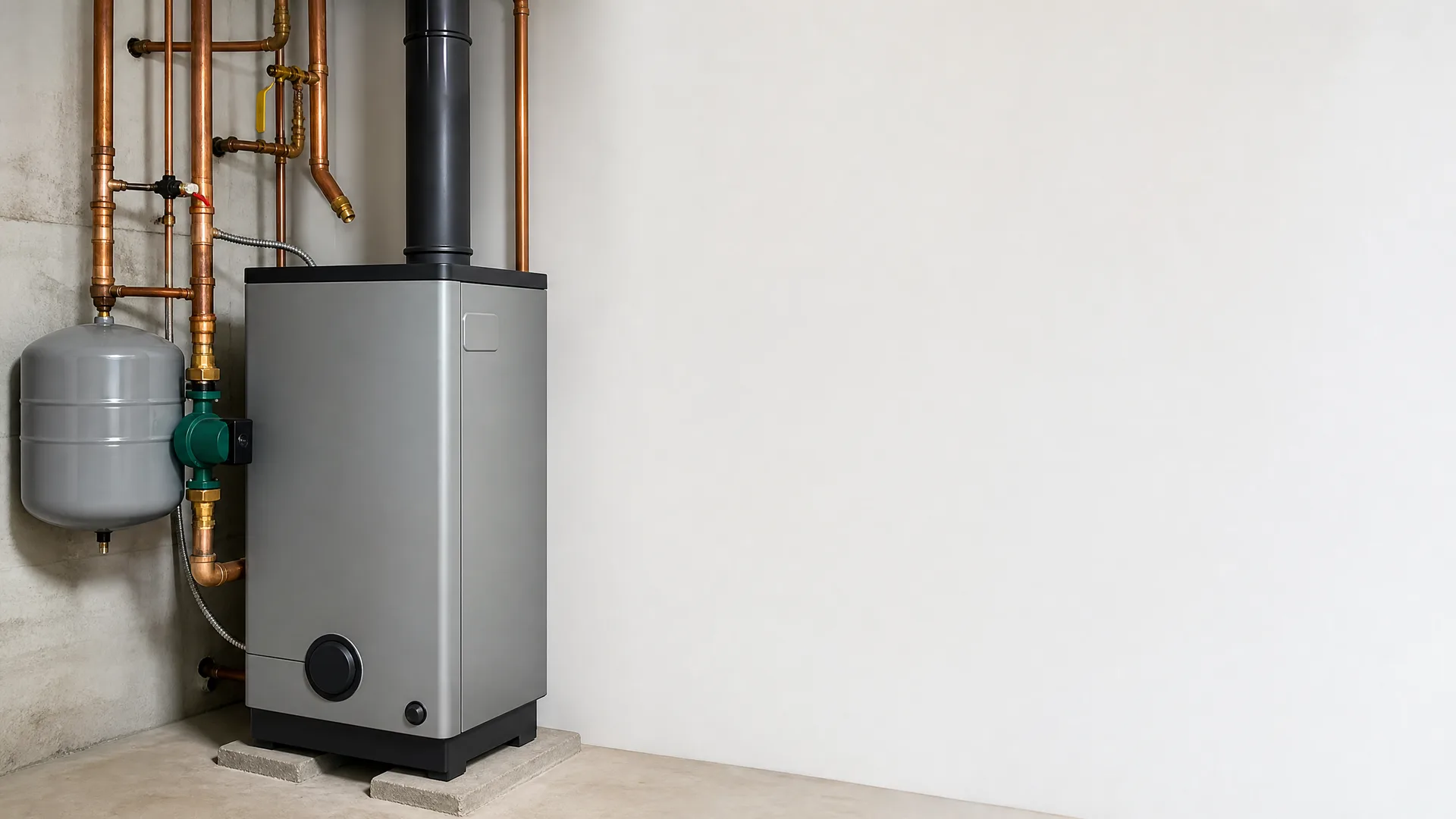
Someone traces the drip to its source instead of guessing. The fill valve gets checked for grit holding it open. The pressure gauge gets watched through a full cycle, not just glanced at once. If the expansion tank has waterlogged, that gets caught too, since a tank that can't absorb pressure anymore will push every bit of it toward the relief valve. The valve itself gets replaced if the seat is worn, not just tightened.
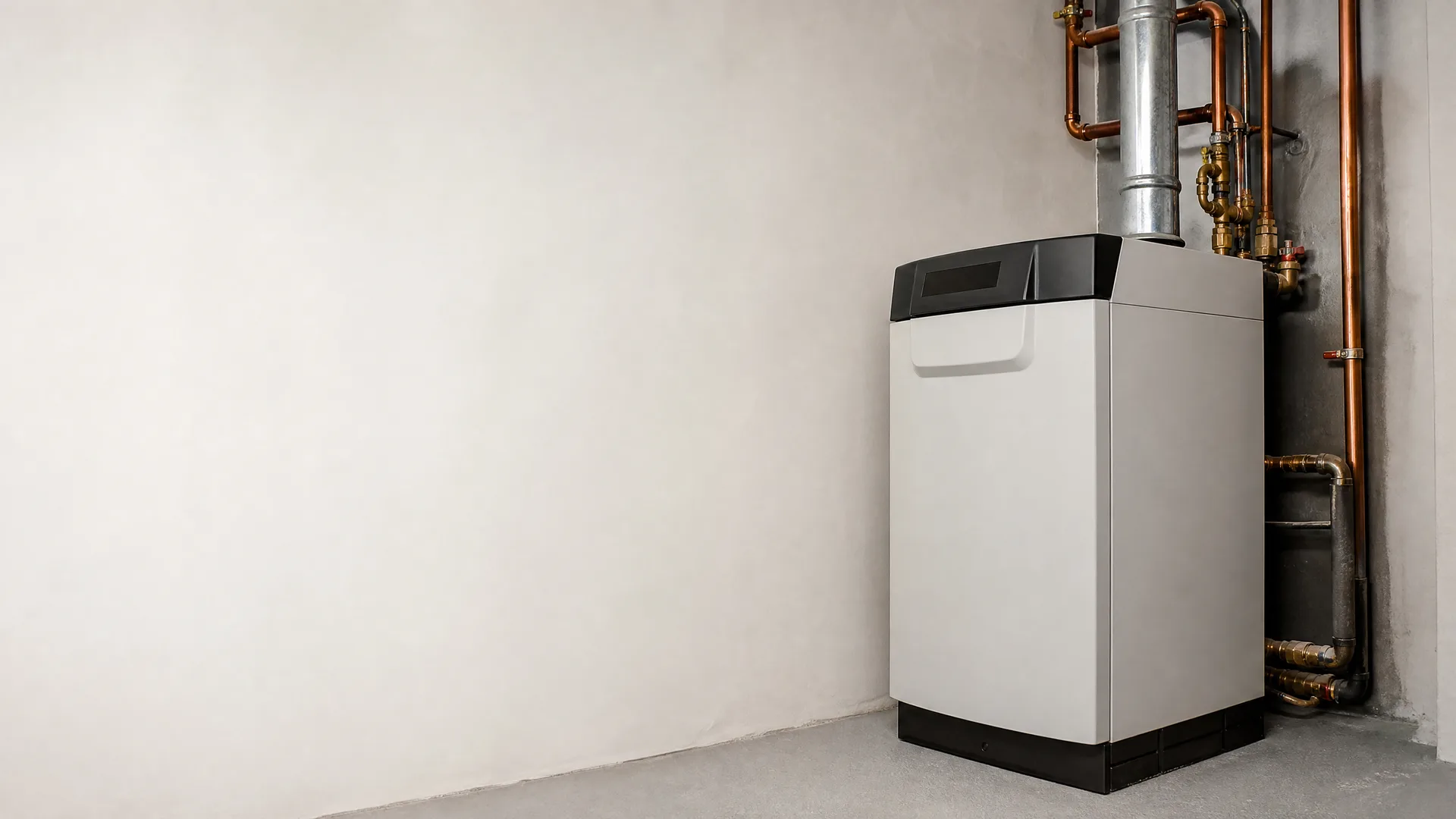
The drip keeps going, slow enough to put off dealing with. Water keeps finding the same path down the side of your boiler, toward the floor, toward anything metal nearby. Winters here mean that boiler runs for months straight, cycling on and off most nights the way it will with lows near 15°F, and every cycle is another chance for the same valve to open again. Nothing about waiting makes the fix simpler later, and the puddle only gets wider.

A relief valve doesn't drip for no reason. It opens because pressure or temperature inside your boiler went past what the system is built to hold, and somewhere upstream, usually the fill valve or the expansion tank, something isn't doing its job. That's the whole story. The drip is the symptom, not the problem.
You don't have to figure out which part it is before you ask for help. That's the part a licensed contractor sorts out, by watching the gauge through a full cycle and checking the fill valve and the tank instead of guessing. What you'd otherwise be doing, calling around, explaining the drip and the stain and the sound to three different people, waiting on callbacks, trying to tell a real quote from a guess, is the part that goes away once you send the form. You get to stop carrying that around.



A dripping relief valve won't fix itself, and leaving it means a weak spot near the gas valve and wiring stays wet. Instead of searching around for a plumber who works on boilers, checking reviews, and explaining the drip over and over to each one, send the form and let someone qualified take it from here. One licensed contractor gets in touch, looks at the fill valve and the pressure, and tells you what's actually behind it.
Describe what your boiler is doing once, in one form.
No fee to send it, and nothing to sign.