Why your boiler makes a banging noise in Iowa

Step 1 of 3: Equipment

That banging is usually trapped water flashing to steam inside the heat exchanger. It happens when sediment has settled on the bottom of the boiler and the burner heats water faster than it can move through the scale. The water pockets underneath the sediment boil, and the steam bubbles collapse hard against the metal, which is the bang you hear. It can also be a sign of water trapped in the pipes themselves, rattling as it pushes past air or a restriction. Either way, the noise isn't cosmetic. A boiler running this way is working harder than it should through a long Iowa winter, and the banging tends to get worse, not better, on its own. Left alone, it can stress the heat exchanger enough to shorten its life. Someone who services boilers regularly can tell from the pattern and location of the noise whether it's sediment, trapped air, or something else, and flush or repair it before it turns into a bigger repair.

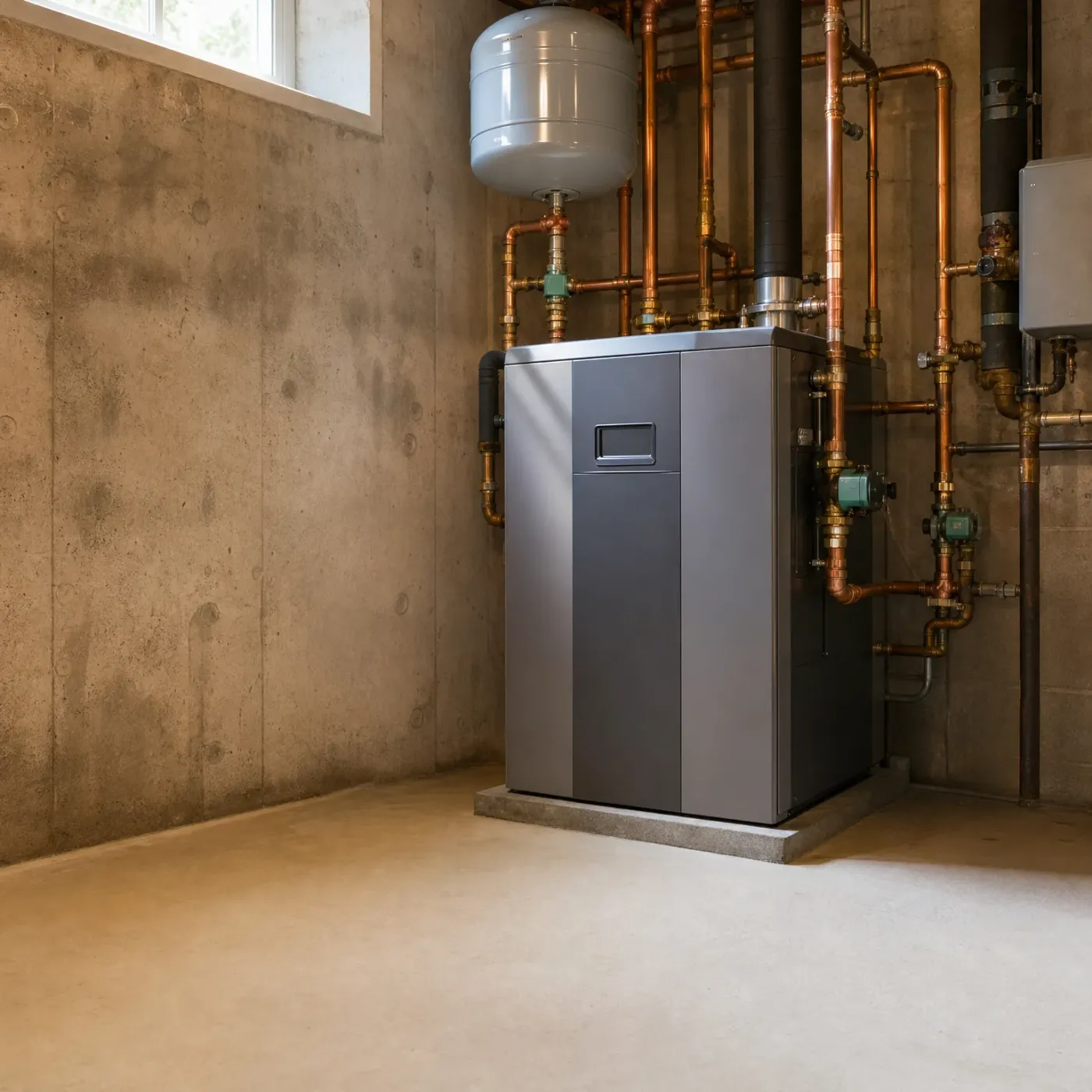
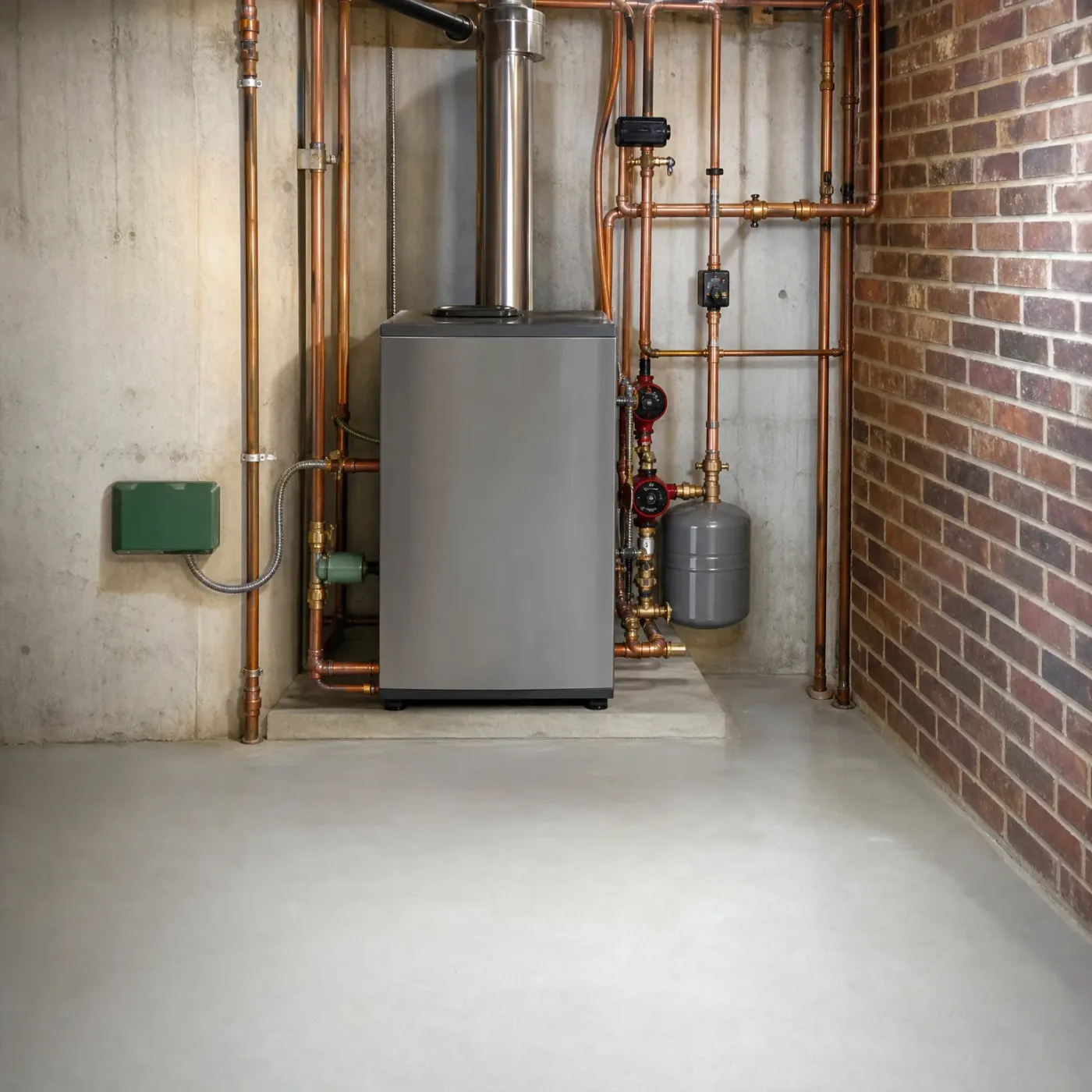
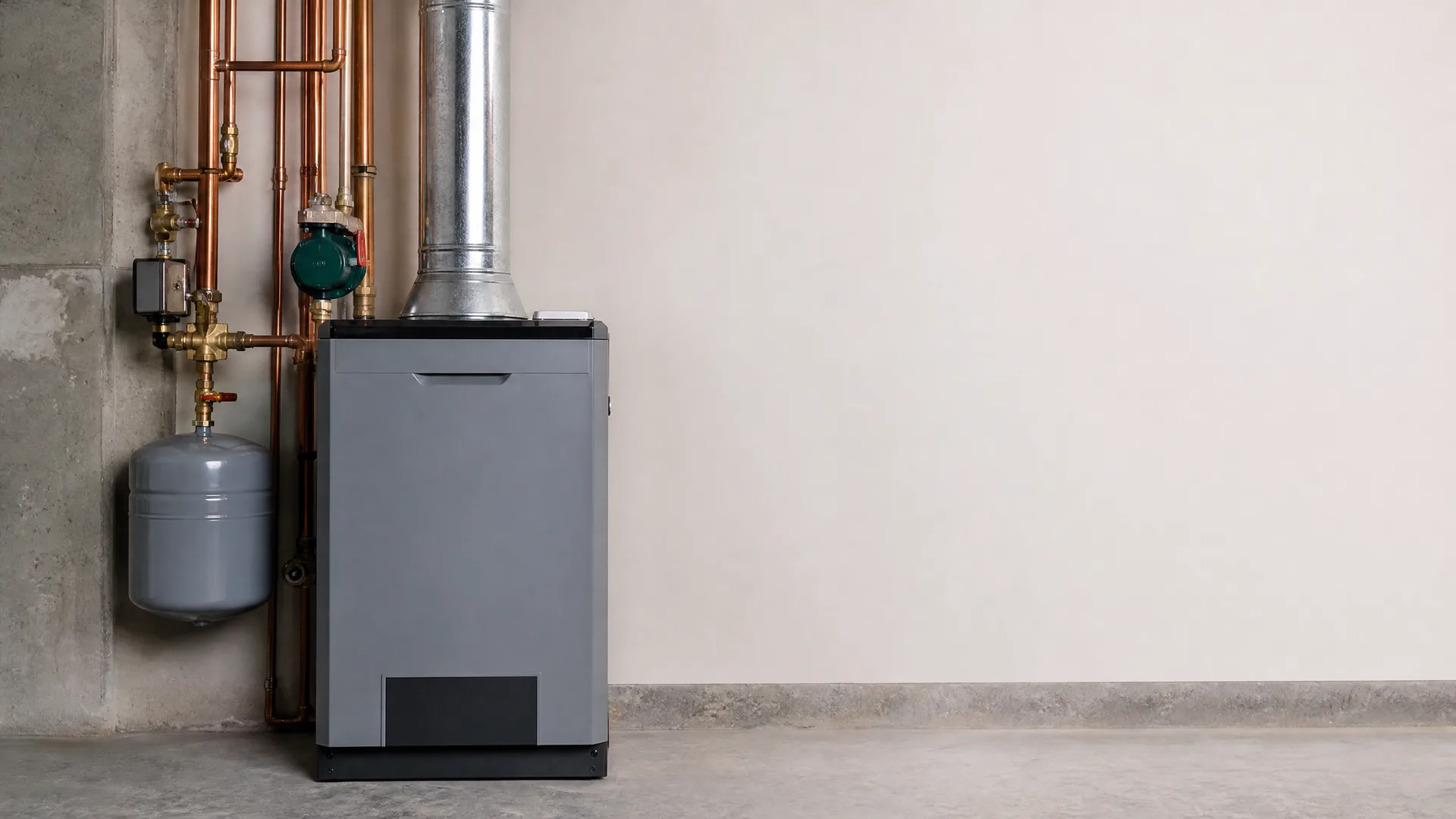
A dark gray floor-standing boiler on a concrete pad in a basement, surrounded by copper piping, brass valves, a gray expansion tank, a circulator pump, and a metal flue pipe against concrete block walls.

Running quiet

A boiler that's been flushed and treated runs close to silent. Water moves freely past the heat exchanger with nothing sitting on the bottom to block it. The burner heats water, not scale, so there's no steam popping trapped underneath sediment. This is what yours sounded like before the noise started.
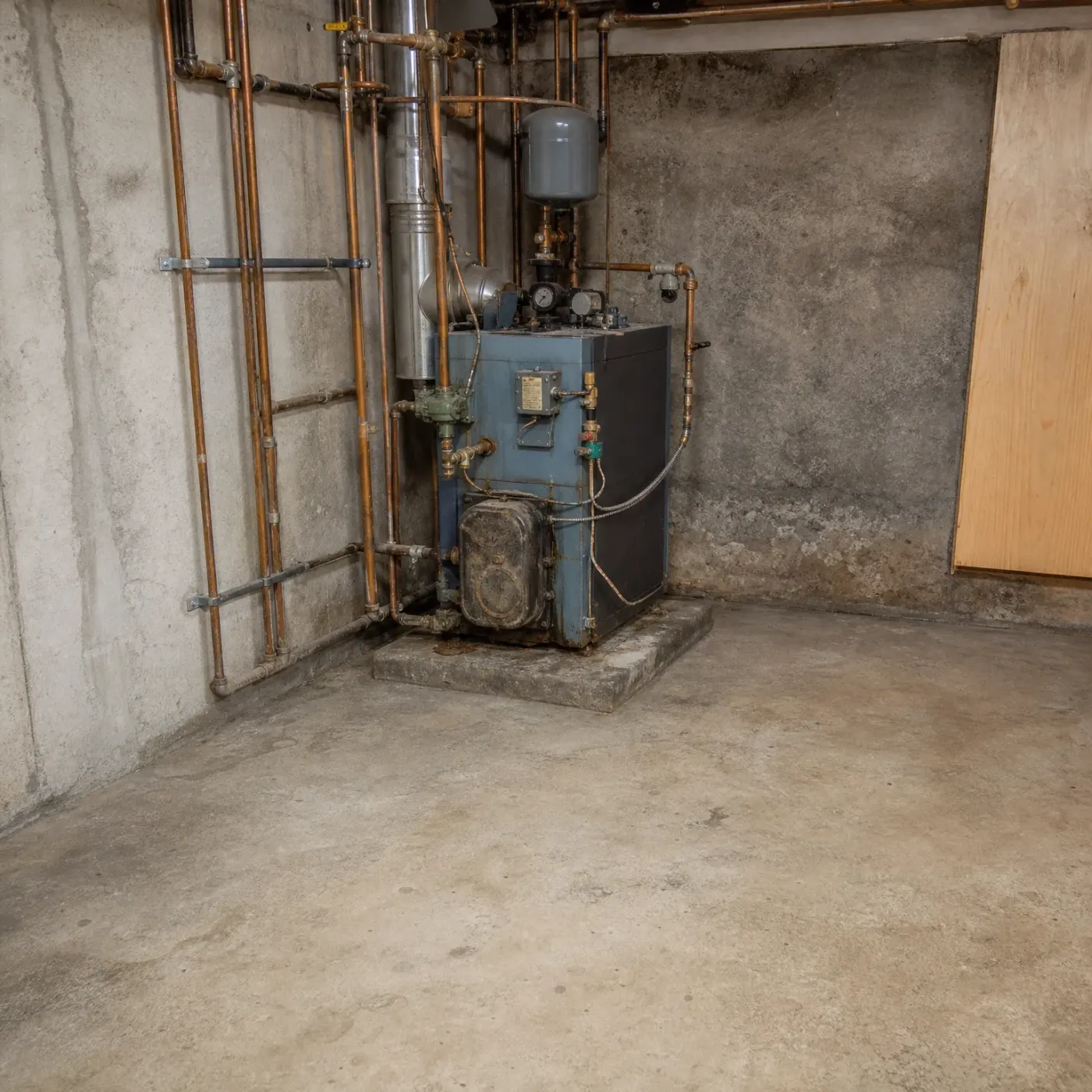
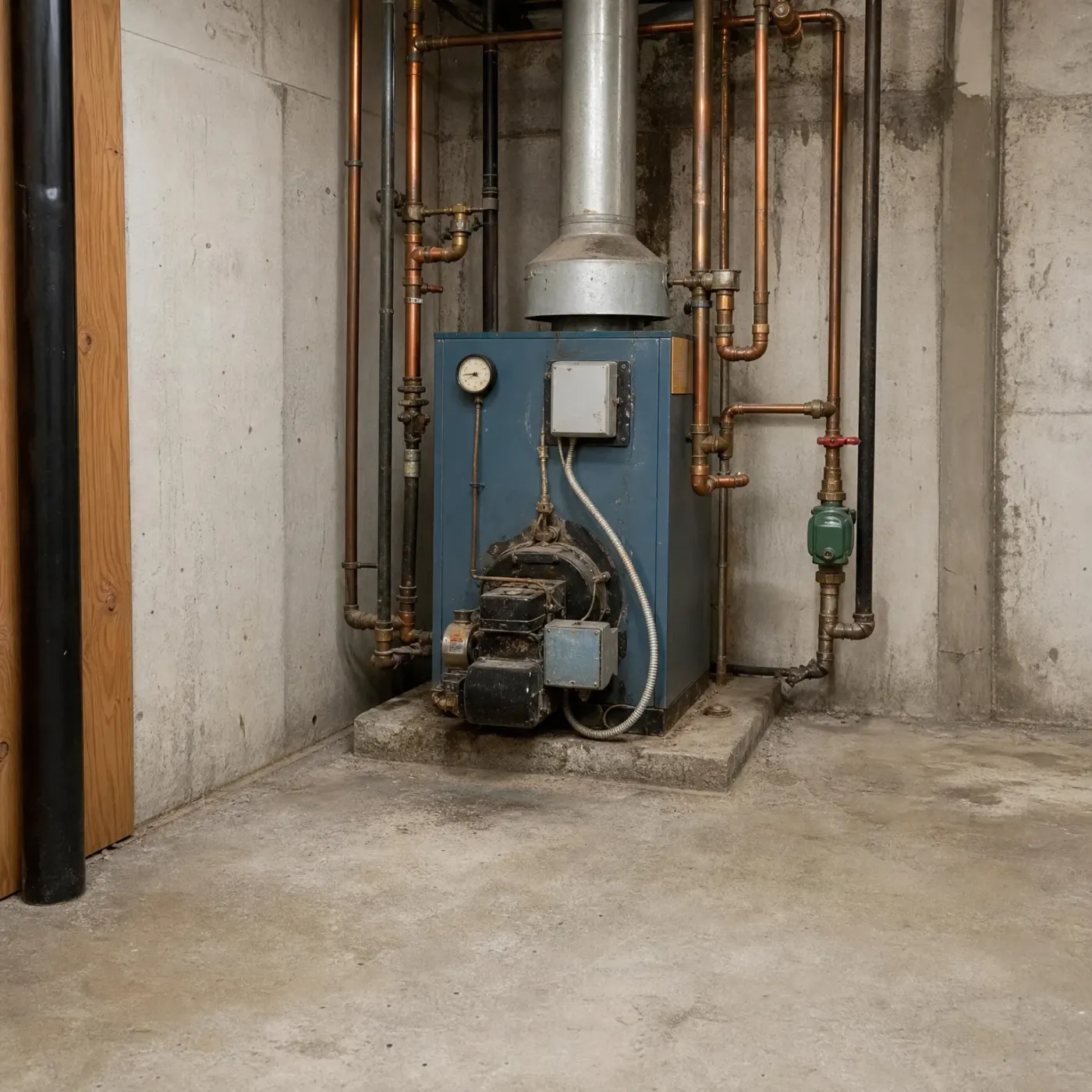
A blue boiler on a raised concrete pad in a basement corner, with copper and steel pipes, a gauge cluster, an expansion tank, and a metal flue running up the bare concrete walls.

Banging and getting worse

Once scale builds up, the banging doesn't fix itself. Each heating cycle bakes more sediment onto the bottom of the tank, and the pockets of trapped water get worse through the winter. Left alone, that heat exchanger works harder than it should, and the noise keeps you up at night.

Winter nights average 15°F statewide

At 15°F on a January night, your boiler is firing often and staying on long enough to really cook whatever sediment has settled on the bottom. That's when the banging shows up worst, right when you need the heat most.

NOAA nClimDiv 1991-2020 county normals weighted by homes

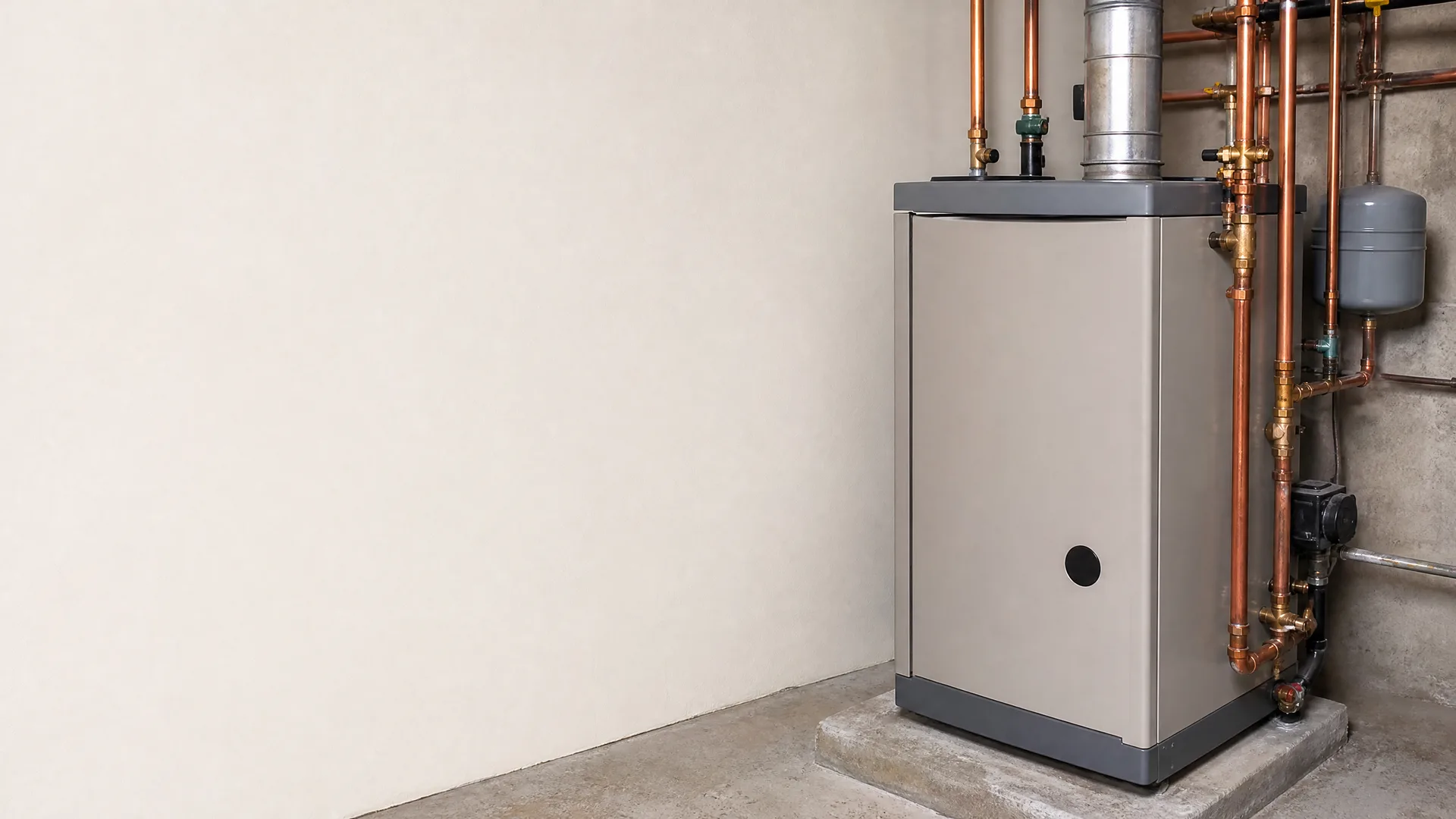
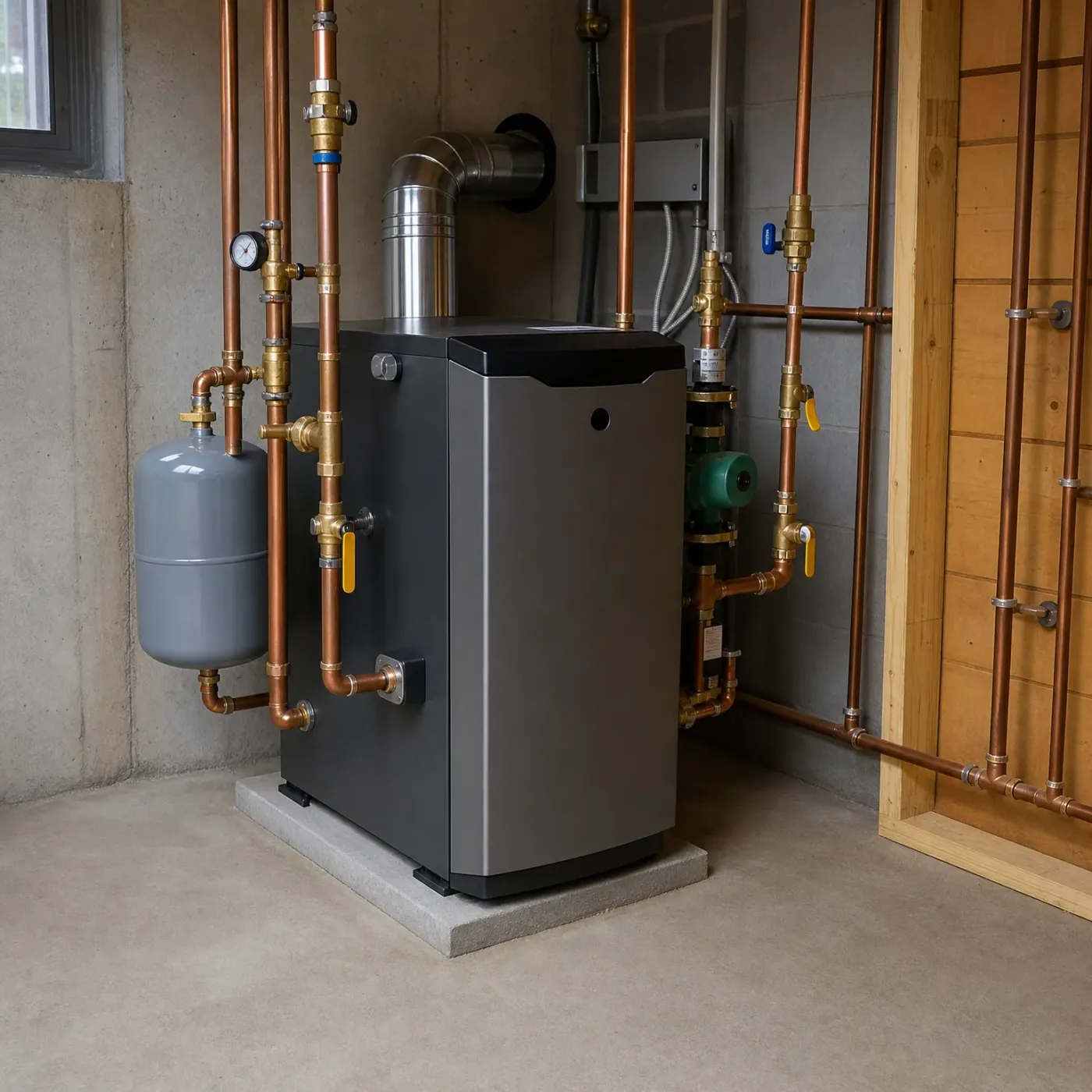
A gray floor-standing boiler with a metal flue pipe, copper piping, a circulator pump and a gray expansion tank, installed against a concrete wall.

Why hard water makes it worse

Iowa's groundwater runs hard in most places, and that mineral content is what turns into scale once it settles on the bottom of the boiler. Softer water still leaves some sediment over years, but hard water builds the layer faster. The thicker that layer gets, the sooner trapped pockets form and the louder the banging gets each winter.

A tall grey floor-standing boiler on a concrete plinth in a corner of a room, with copper pipework, a flue, a circulator pump and an expansion vessel to its right, beside a plain cream wall.

What a flush actually clears

A contractor opens the drain valve at the bottom of the boiler and runs water through until it comes out clear instead of cloudy or gray. That sediment has to go somewhere other than back into the system, which is why a drain and refill does more than just bleeding a radiator or topping off pressure. Gas burns the same either way, but it's heating water instead of baking scale.

What's that banging doing to your boiler right now

You probably hear it most right after the burner kicks on, a few sharp knocks or a dull thud from down low, sometimes loud enough to notice from another room. It might come with a low rumble or gurgle before or after the bang. Some homeowners catch a faint burning or metallic smell near the unit too. None of that is the boiler working harder, it's the heat exchanger taking a beating every time it fires. Left alone through another Iowa winter, that stress can crack the exchanger or wear through the metal where the scale sits, and a cracked exchanger usually means replacing it rather than repairing it.

  1. Sediment settles on the bottom of the heat exchanger.

  2. The burner fires beneath that layer and heats it fast.

  3. Water trapped under the scale turns to steam suddenly.

  4. Steam pockets collapse and knock against the heat exchanger.

Why does my boiler only bang when it first turns on?

You notice the banging is worst right when the burner kicks on, then it quiets down once the boiler's been running a few minutes. That pattern feels like it should mean something, and it does. It points to where the sediment is sitting and why the first few minutes of a cycle are the roughest part for a boiler that's carrying scale on the bottom of the heat exchanger.

It's hitting the coldest water and the thickest sediment first

When the boiler has been sitting idle, the water at the bottom of the heat exchanger is coolest and the sediment layer is undisturbed. The burner fires into that layer first, before any circulation has mixed things around, so the water trapped underneath heats fastest and hardest right at startup. That's why the first bang or two is often the loudest. Once the system's been running a few minutes, water is moving, the temperature evens out, and there's less sitting still long enough to flash to steam. The noise doesn't mean the sediment is gone. It just means the worst of the heating happened in that first push, and it'll happen again the same way next time the burner cycles on.

A gray boiler unit on a concrete pad in a basement corner, connected to copper piping, circulator pumps, and a ceiling-mounted expansion tank against bare concrete walls.
A boiler like this moves water past a clean heat exchanger, so there's nothing sitting on the bottom to flash into steam.
A blue oil-fired boiler with a pressure gauge, burner unit and metal flue sits on a concrete pad in a basement corner, surrounded by copper and black pipes against bare concrete walls.
A boiler like this is already banging, and that pressure gauge is worth watching until someone flushes the scale out.
A woman with shoulder-length brown hair wearing a beige knit cardigan sits in a gray upholstered armchair near a window, looking off to the side with a slight smile, with bookshelves blurred in the background.
A woman and a sleeping child wrapped together in a cream knitted blanket on a couch, with a potted plant, framed photo and lit lamp in the background.

Skip calling around

Your request goes to one pro, not a list of companies.

You only hire the pro if you want to.

How a technician actually clears it

  • A technician checks the pressure relief valve and the expansion tank before touching the heat exchanger itself.
  • Chemical descalers break down scale that a plain flush can't reach once it's hardened on the heat exchanger.
  • A flush that only runs clean water through the system often leaves the toughest layer of scale behind.
  • Low water volume boilers show this banging sooner than larger systems because there's less water to buffer the burner's heat.
  • Circulator pump noise sounds different from heat exchanger banging, and a technician rules it out before assuming scale is the cause.
  • Pressure testing after a flush confirms the sediment is actually gone and not just pushed to a different spot in the loop.

A technician starts by checking the pressure relief valve and the expansion tank, because a pressure problem can mimic the banging that scale causes and there's no point treating one when the other is the real issue. Once the heat exchanger is the confirmed cause, plain water alone rarely finishes the job. Scale that's had time to harden onto the metal needs a chemical descaler to break it down, since a flush with clean water tends to move the loose stuff through and leave the hardened layer sitting right where it was. That's why a flush that skips the descaling step can look like it worked for a week or two, then the banging comes back.

Low water volume boilers tend to show this problem earlier than larger systems. With less water in the loop to absorb the burner's heat, any sediment on the bottom gets cooked harder and faster, so these units bang sooner even with less scale built up.

Before any of that, a technician listens for whether the noise is really coming from the heat exchanger at all. Circulator pump noise has its own sound, more of a steady whine or grinding than a sharp knock, and ruling it out first keeps someone from descaling a boiler that didn't need it. After the flush, pressure testing the system confirms the sediment actually left the boiler instead of just settling somewhere else in the loop.

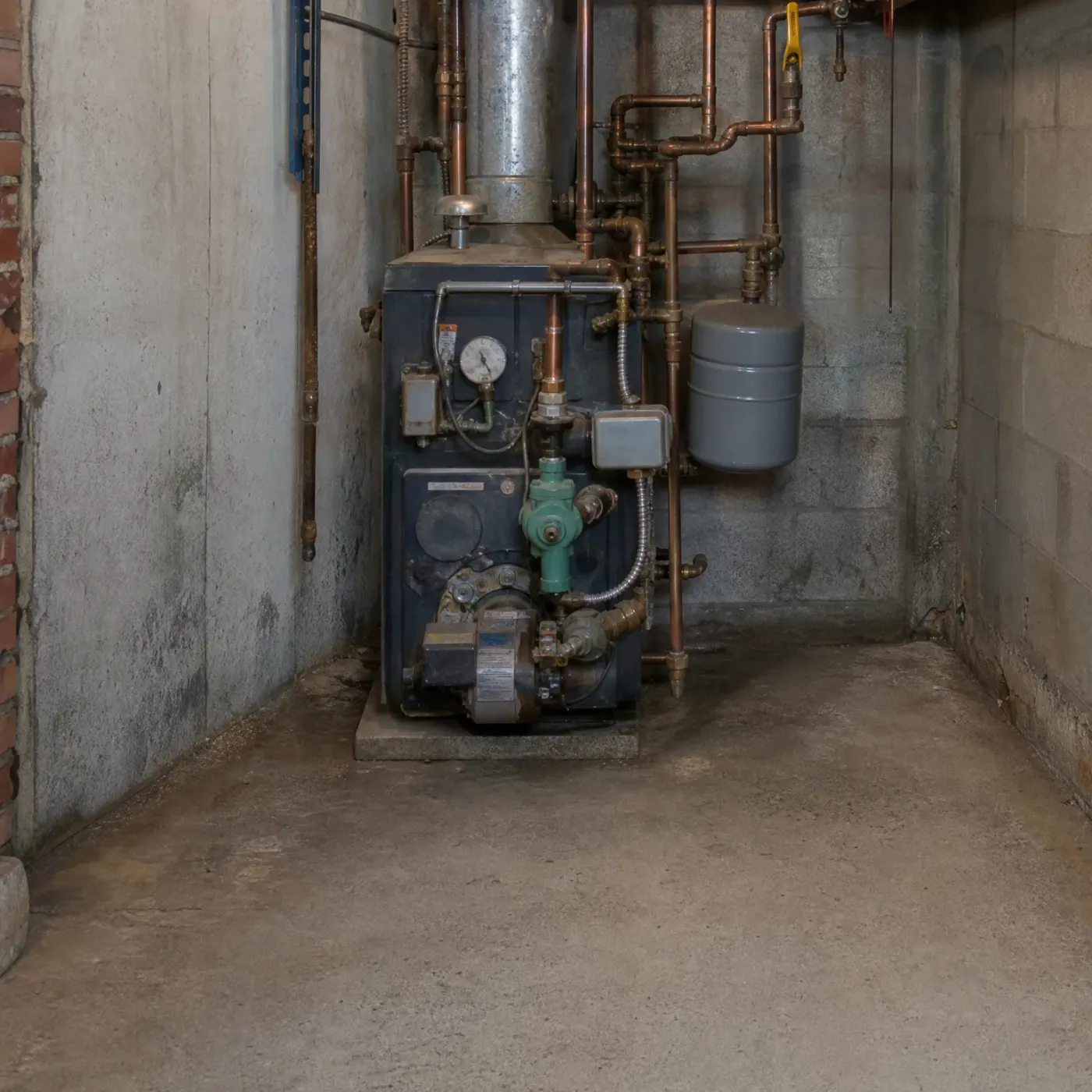
A dark cast-iron boiler with copper piping, pressure gauge, and a gray expansion tank sits on a concrete pad in a basement corner with concrete block and brick walls.
Before you get your boiler repair
A gray boiler on a concrete pad in a basement, connected to copper piping, valves, pumps and a gray expansion tank, with a concrete wall on the left and a brick wall on the right.
After you get your boiler repair

Wait until spring

You could leave it until the weather turns and the boiler shuts off for the season. The banging won't damage much over a few more weeks of mild nights, since the burner isn't running long or hard enough to stress the heat exchanger the way a January cold snap does. But the sediment doesn't go anywhere on its own. It sits there through the summer, and when you fire the boiler back up next fall, you're starting from the same layer of scale, maybe a little thicker. The noise comes back the first cold night.

Get it flushed now

A technician who works on boilers all winter in Iowa has heard this exact noise plenty of times and knows to check the pressure relief valve and expansion tank before touching the heat exchanger. Flushing the scale out now means the boiler runs quiet through the rest of the cold months, not just until the next hard freeze finds whatever sediment is left. You call one local contractor, explain the banging once, and they handle the diagnosis and the flush instead of you sorting through quotes from a handful of companies first.

A man with grey hair and stubble in a dark sweater sits on a grey sofa indoors, looking off to the side, with a potted plant and a sunlit window behind him.
A man with gray hair, a beard and glasses, wearing a dark green sweater, sits on a gray sofa in a sunlit living room with a potted plant, table lamp and wooden sideboard behind him.
A middle-aged man with graying hair and a short beard sits on a blue sofa in a living room, looking toward a window, with a bookshelf, lamp and framed picture in the background.
A man with graying curly hair and a dark green sweater sits on a gray sofa in a sunlit living room, looking off to the side, with a framed picture, shelving, an armchair and a window with sheer curtains behind him.
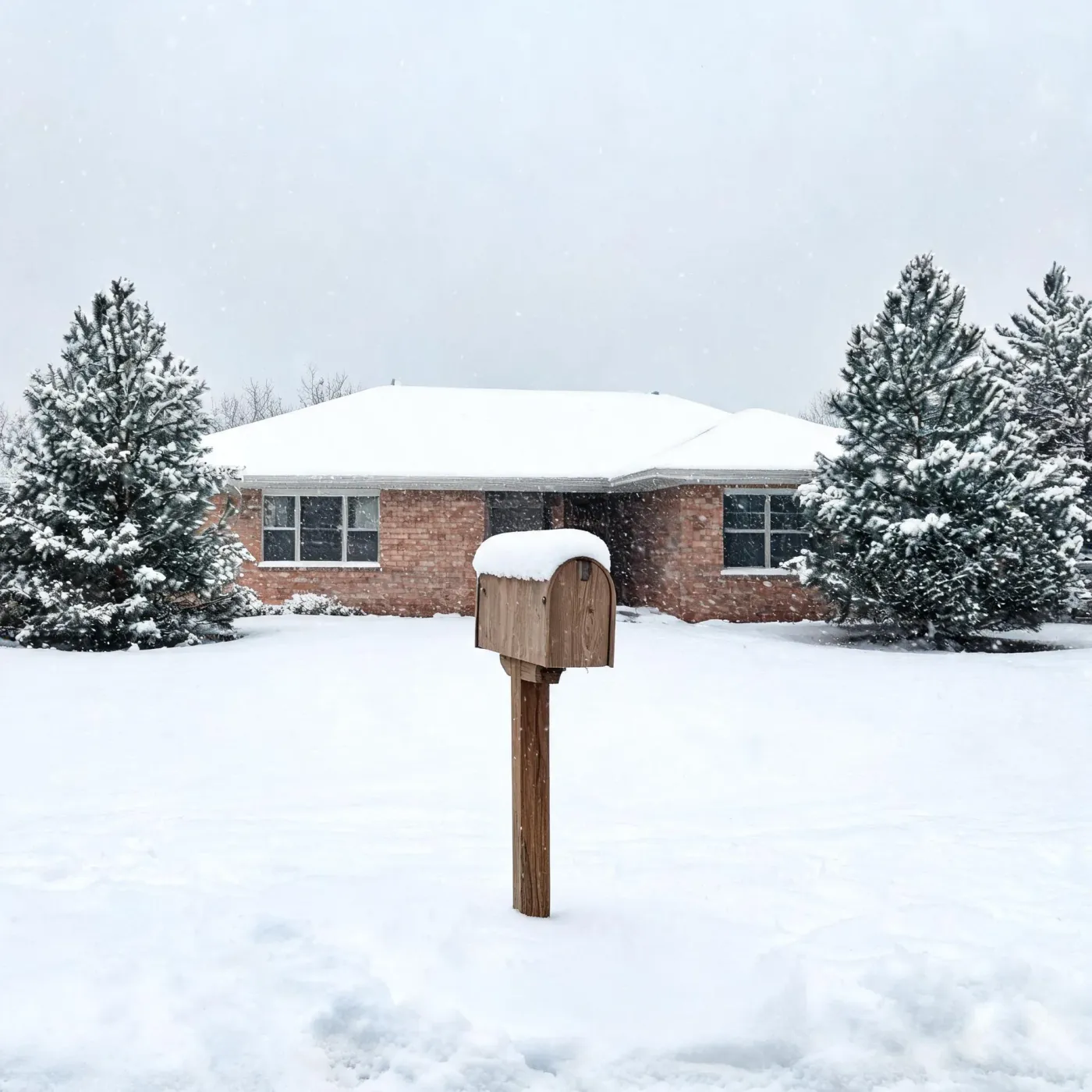
A snow-covered wooden mailbox on a post stands in a snowy yard in front of a single-story brick house flanked by snow-laden evergreen trees during falling snow.

Statewide, winter nights average 15°F, according to NOAA climate data, and in Iowa that means your burner is running long, hard cycles most nights from December through February. The longer the burner stays on, the hotter it cooks whatever's settled on the bottom of the heat exchanger, and the worse the banging gets. You'll likely notice it's loudest on the coldest nights, right after the thermostat calls for heat, then it eases up some once the water's circulating. That's not a coincidence. Cold nights push the system harder, and a harder-working burner turns trapped water to steam faster than a mild one would.

NOAA nClimDiv 1991-2020 county normals weighted by homes

A closed silver laptop and a ceramic mug of dark coffee sit on a wooden table in front of two chair backs, with a kitchen counter, tiled backsplash, wooden cutting boards, a vase of greenery and a potted plant by a window behind.

The banging has an answer

The knock you hear is sediment on the bottom of the heat exchanger, and a technician who flushes it out and checks the pressure relief valve and expansion tank can tell you how bad the scale has gotten in your boiler. That's the whole story. It's not a sign your boiler is failing, and it's not something to just live with either.

Instead of searching around for someone who works on boilers, calling a few places, and explaining the same banging noise over and over so you can compare quotes, you can get matched with one licensed Iowa contractor who already knows what this noise means and has flushed this same scale out of plenty of boilers before yours. No juggling calls, no repeating yourself. Just someone who shows up knowing what to check first.

A living room corner with a light beige sofa holding a textured taupe cushion, a large ceramic vase of olive branches by a window, a framed neutral artwork on the wall, and a dark bowl with stacked books in the foreground.
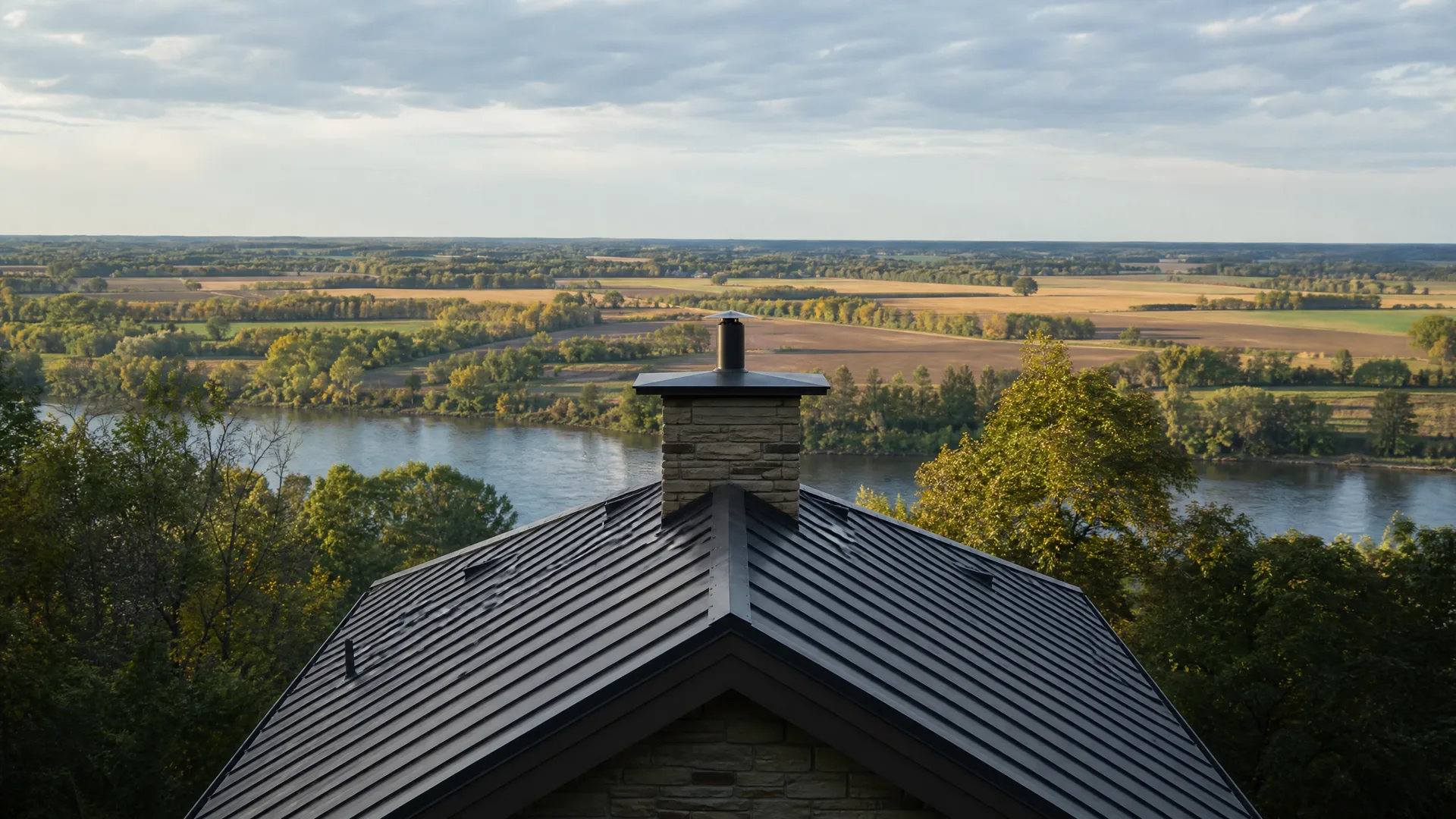
Close view of a dark standing-seam metal roof with a stone chimney and metal flue cap, overlooking a wide river, trees, and flat farmland under a partly cloudy sky.

Describe it once

Describe it once

Asking costs nothing, and the choice to hire stays yours.

A boiler that keeps banging through January nights is burning gas against a layer of scale instead of heating your water straight. One technician who already knows what hard Iowa water does to a heat exchanger can flush it out before the coldest stretch makes it worse.