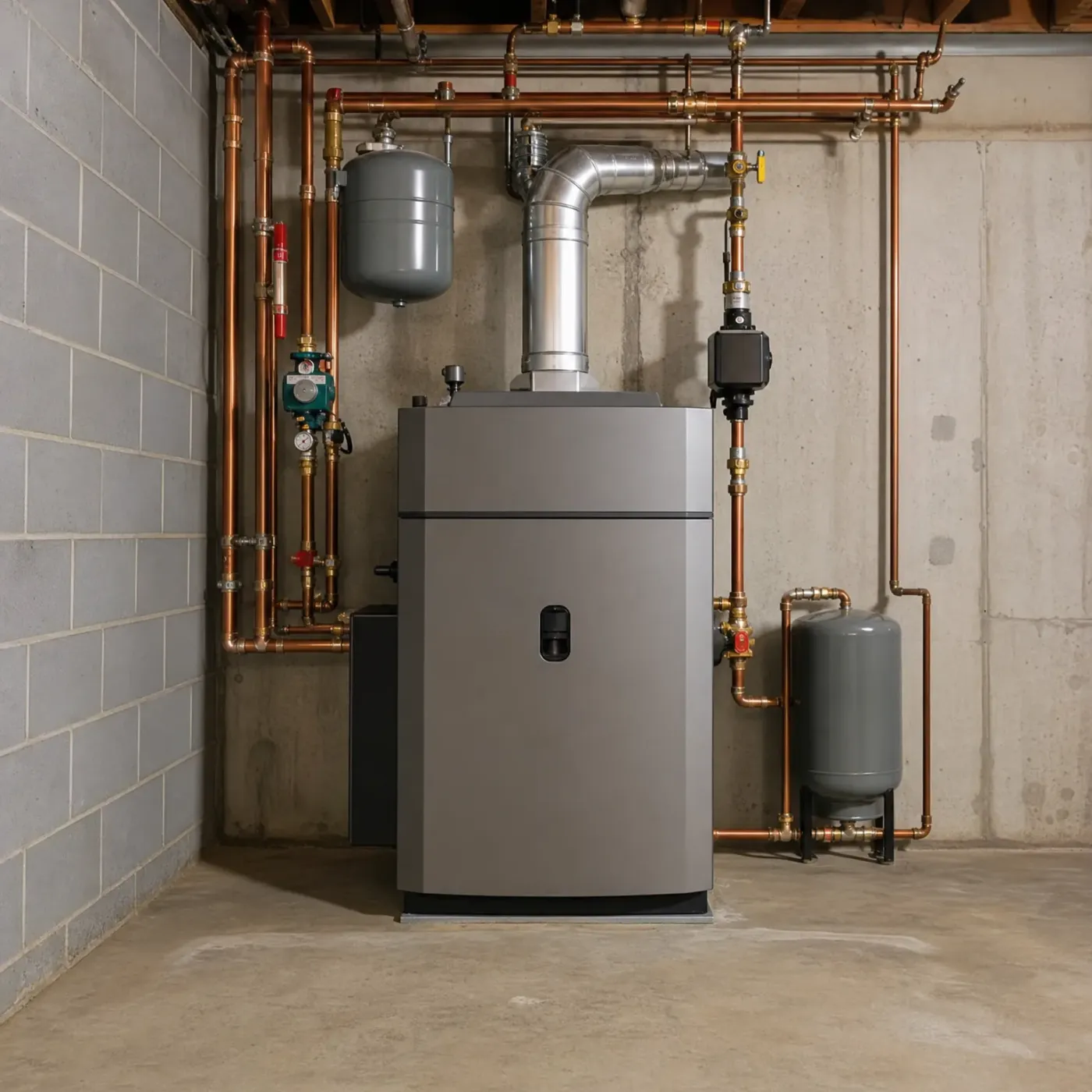
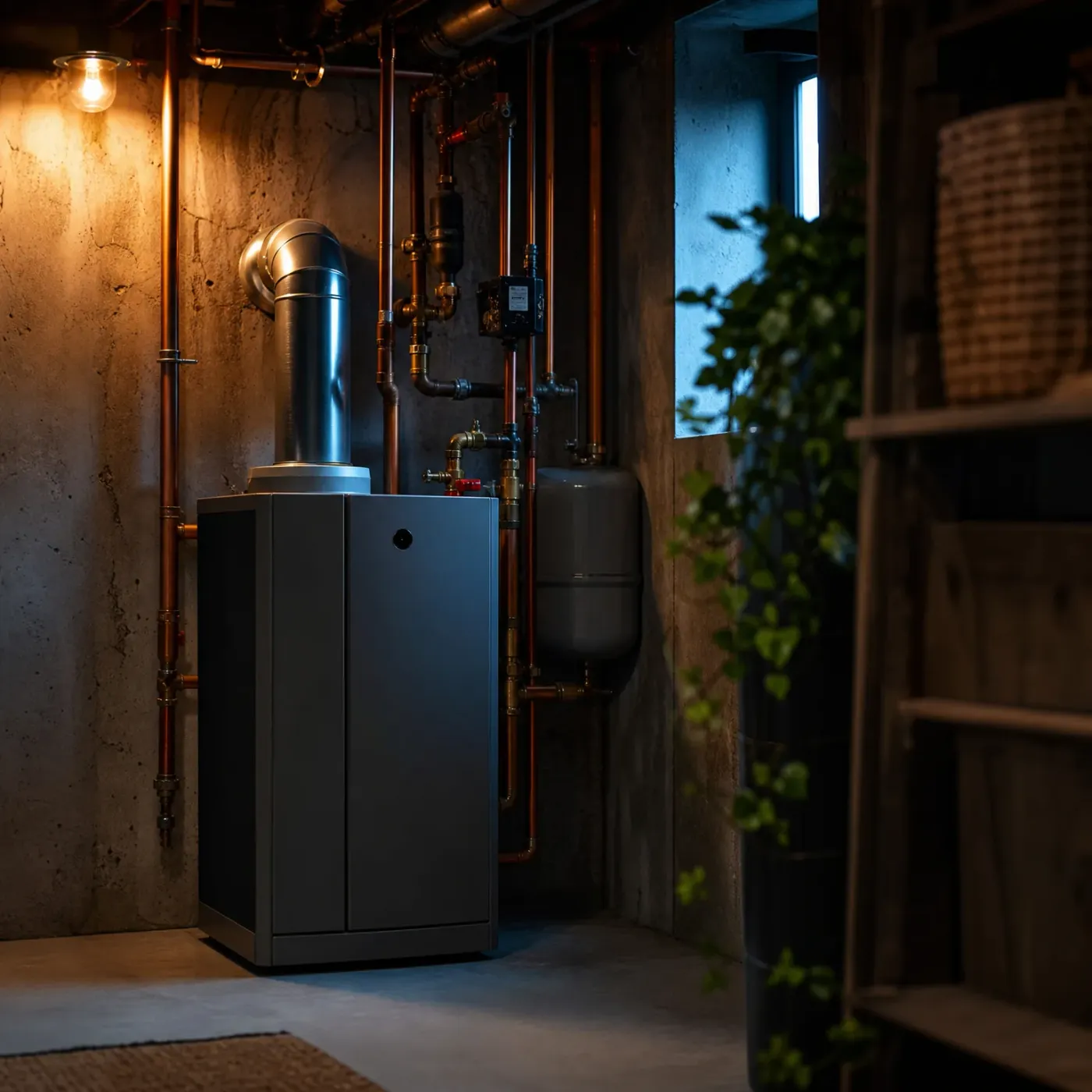
A dark grey floor-standing boiler with a metal flue stands against a concrete basement wall, surrounded by copper pipework, valves and a wall-mounted expansion tank, with ivy and a shelving unit at right.

Matched to your boiler job

Why your boiler is losing pressure in Iowa

A boiler that keeps losing pressure usually has a leak somewhere, or air getting into the system, or a failing part that's letting water out. This page gets into what causes it and what a drop in pressure means for your heat this winter. A local contractor who works on boilers all season can take a look and tell you which one it is.

Find a pro near me

A boiler that keeps losing pressure is letting water out somewhere, or in some cases, air. Most often it's a small leak at a valve, a fitting, or the pressure relief valve itself, sometimes nowhere near enough to see as a puddle, just enough to drop the gauge over a week or two. It can also be a failing expansion tank that's no longer holding its air charge, which lets pressure fall even with no leak at all. Topping it off yourself keeps the heat running for now, but water that's going somewhere is also carrying minerals that build up in the pipes and at the heat exchanger over time. In Iowa, where gas heat has to carry the house through a real winter, a boiler running low on pressure can start short cycling or stop firing altogether on the cold morning you need it most. Catching it now, while it's a slow drop instead of no heat, is the difference between a repair and a much bigger one.

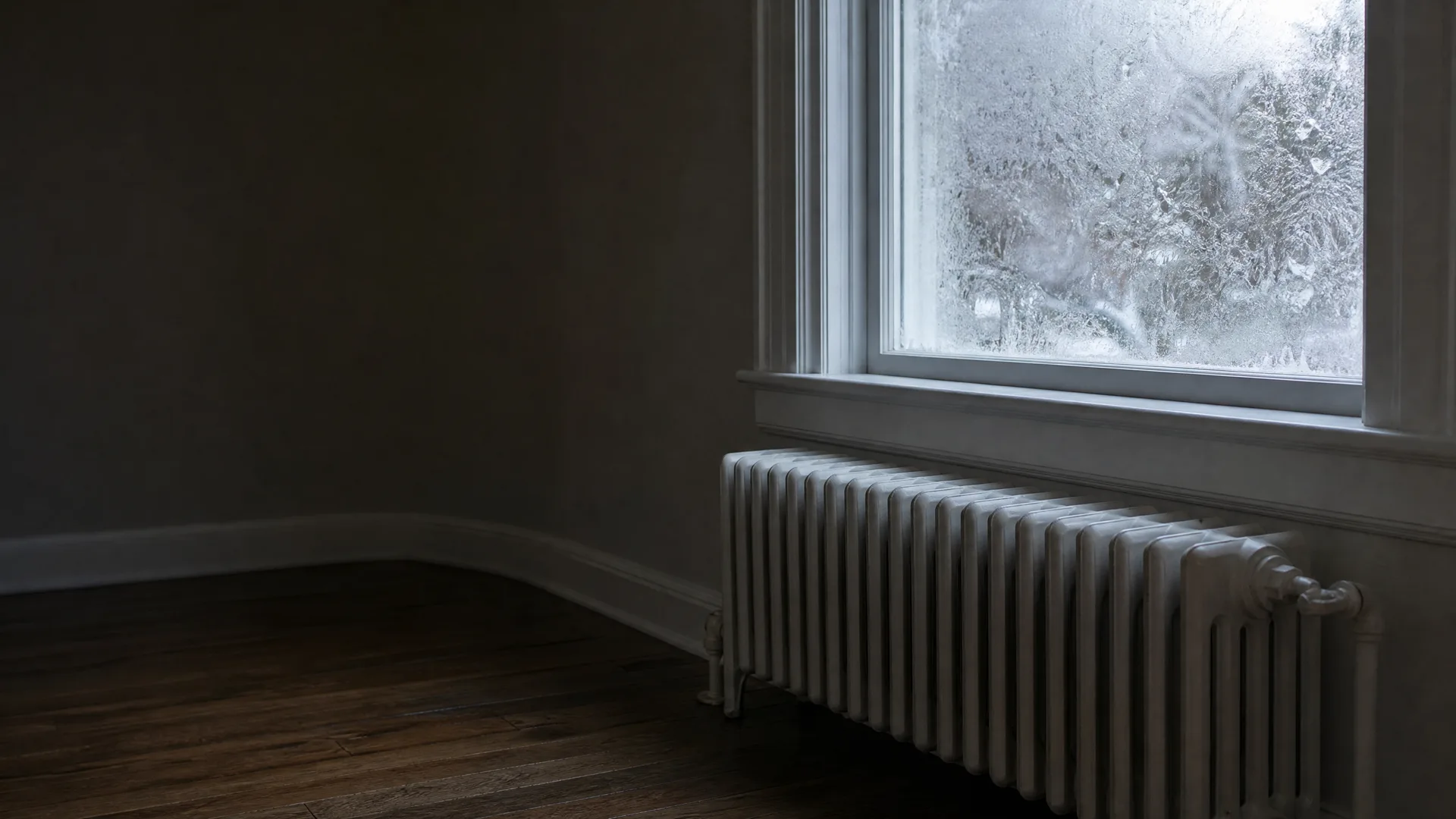
A white cast-iron column radiator under a frosted window in a dim empty room with dark walls and a wood floor, with snowy trees visible outside.

You come downstairs before the thermostat's even kicked on again and the living room is cold in a way that feels different from outside. The radiator under the window is barely warm at the bottom, stone cold at the top. Ice has formed a thin film on the inside of the glass, the kind that only shows up when it's been below zero for days straight. You check the gauge on the boiler out of habit now. It's dropped again, below where you topped it off last week. Outside, the driveway is scraped down to bare concrete and the sky is that flat gray January gets in Iowa. You pull a blanket off the couch and sit with your coffee, watching the glass, waiting to see if the house warms up before you have to do something about it.
Why do you keep having to repressurize your boiler

You're probably checking the gauge more than you used to, topping it up every week or two instead of letting it sit. Maybe one radiator upstairs never gets as hot as the rest, or you hear a faint hiss near a valve when the house is quiet. Some homeowners notice a damp spot on the floor near the boiler, or a dried white ring where water evaporated and left minerals behind. None of this means the boiler is about to quit, but a system that keeps losing pressure is working harder to heat the same rooms, and left alone, the leak that's causing it tends to get worse, not better.

A gray boiler with a metal flue pipe stands in a basement against concrete and concrete-block walls, connected to copper piping, a circulator pump, and two gray expansion tanks.

Pressure holding steady

A boiler at the right pressure keeps its gauge in the same spot week after week. The expansion tank does its job, the pump moves water quietly through the pipes, and every radiator in the house gets hot end to end. Nobody downstairs has to think about it.

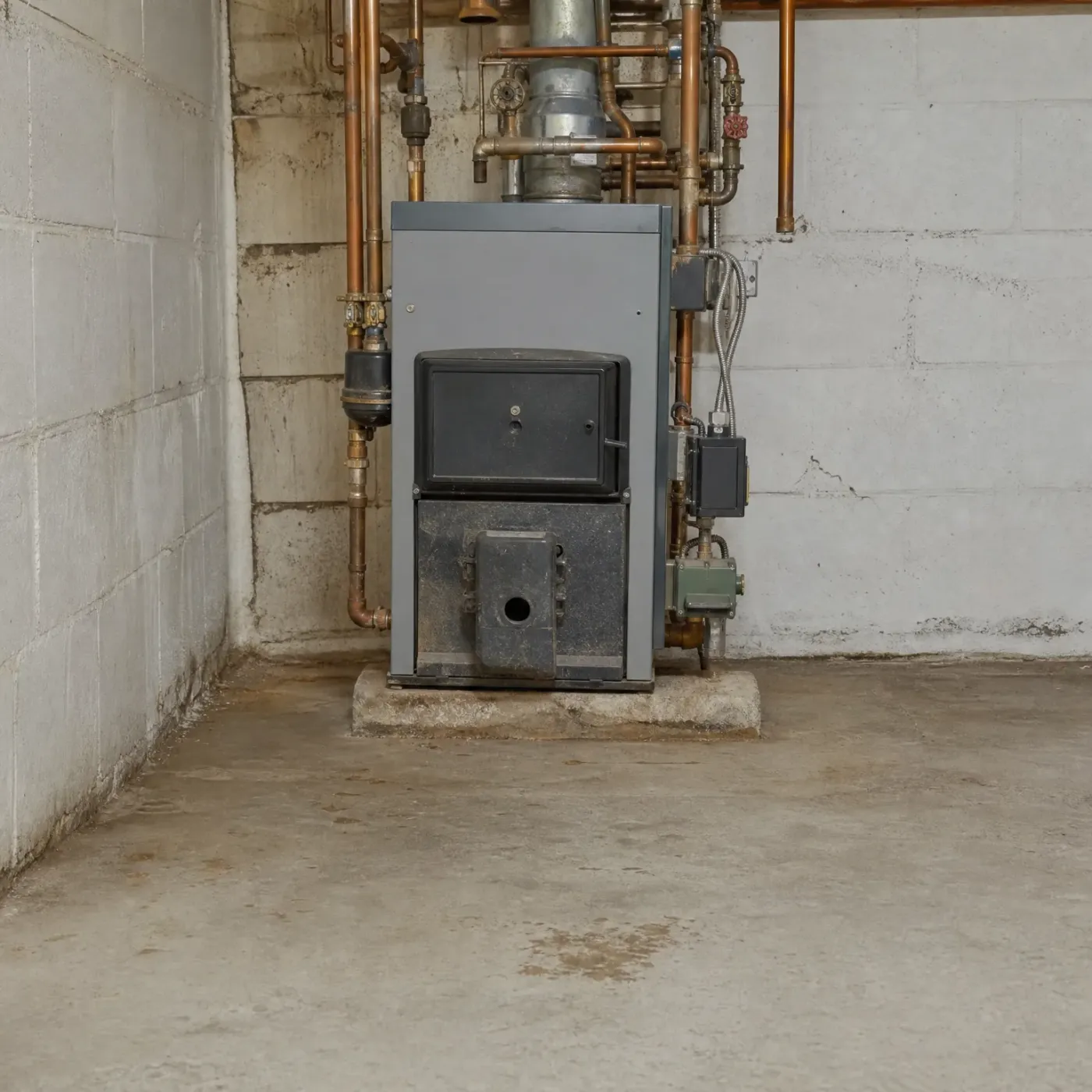
A gray boiler on a concrete pad in a basement with painted concrete block walls, copper piping, a metal flue, and electrical control boxes.

Pressure dropping again

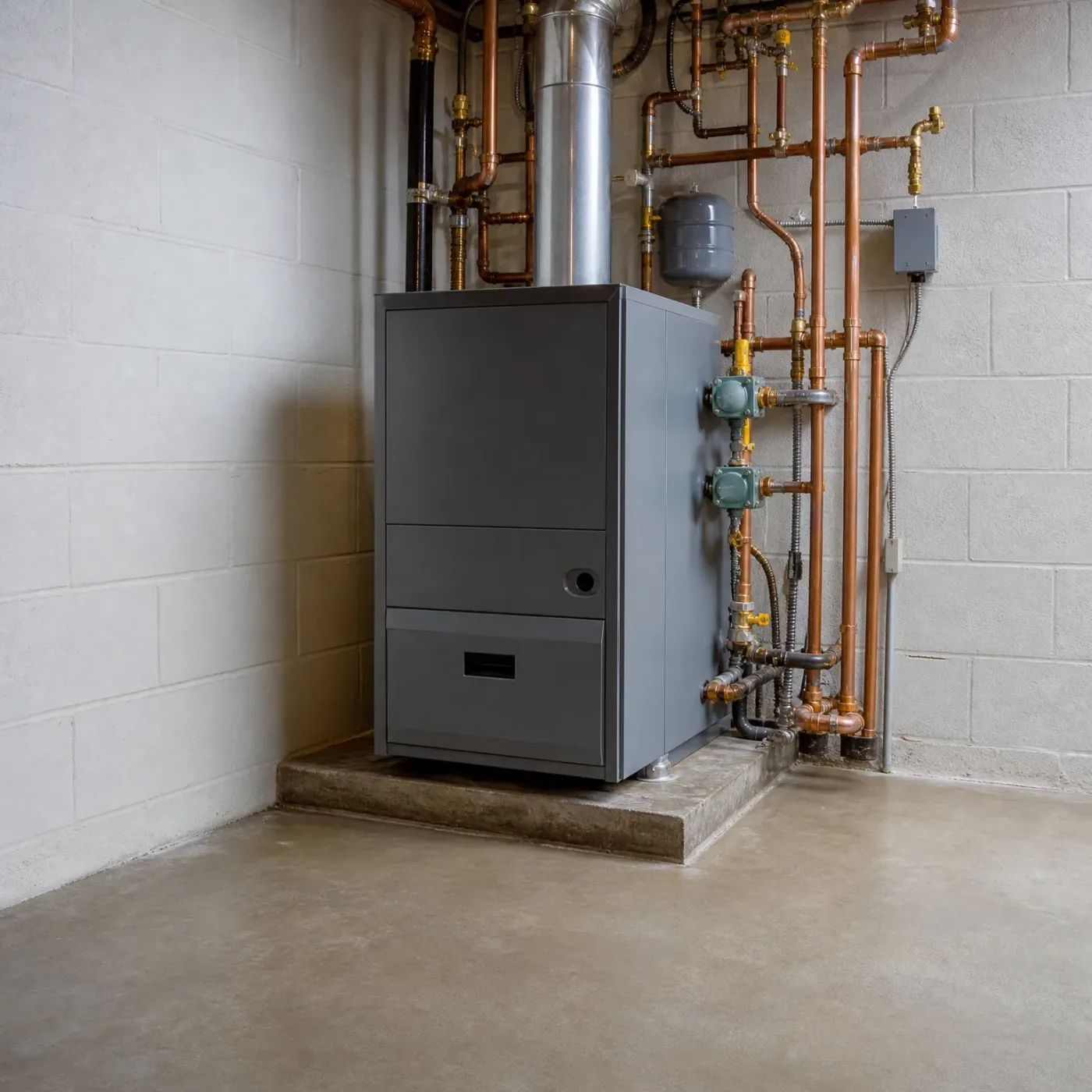
This boiler needs water added more often than it should. Check the pipes and fittings around it for a damp spot or a dried mineral trail, and look at the pressure relief valve too. An older unit on a raised pad like this one has had more years for a joint to start weeping.

A woman in a gray turtleneck sweater stands by a window looking outside at snowy ground, with a dimly lit living room containing a sofa, shelves, lamp and a lit candle behind her.
A woman in a cream cable-knit turtleneck sweater stands in a warmly lit living room with a fireplace and shelves behind her, looking out a window toward snow-covered trees and a railed deck.
A woman in a cream knit turtleneck sweater stands by a window looking out at snow, with a lit fireplace, sofa and lamp in the room behind her.
A woman in a gray knit sweater sits by a window looking out at falling snow, with a dimly lit living room containing a sectional sofa, pillows, a lamp and houseplants behind her.
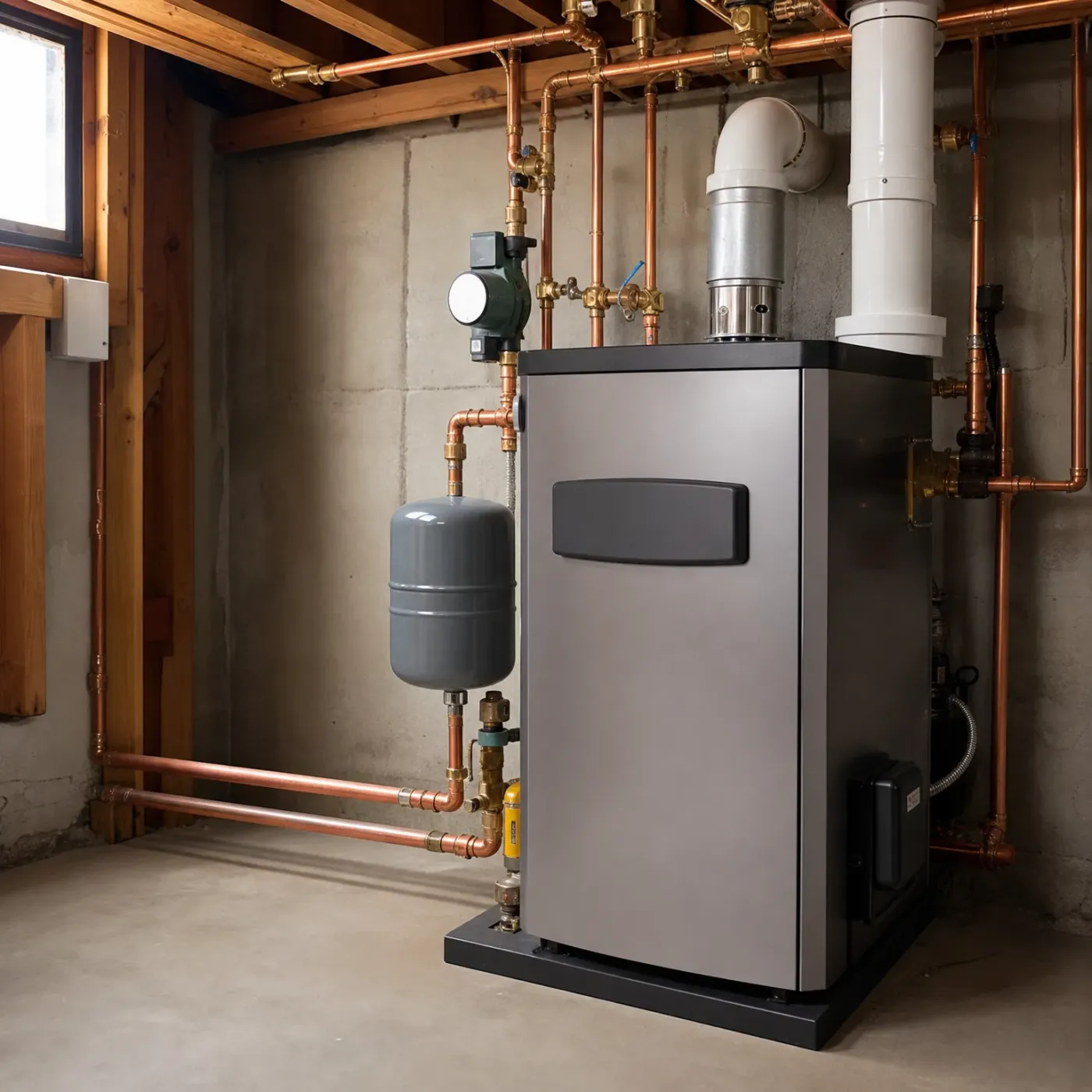
A gray boiler on a black base in a basement with concrete walls, connected to copper piping, a circulator pump, a gray expansion tank, and white and metal flue vent pipes.

A boiler pro near you

The pro who reaches out is licensed in Iowa.

Tell a local repair pro what your boiler is doing.

Get a licensed local pro

No charge to send it. You decide if you hire them.

How does a boiler actually lose pressure?

You've seen the gauge drift down again and you want to know what's physically happening inside the system, not just that it's "normal" or that you should call someone. A boiler is a sealed loop. Water doesn't just disappear from a sealed loop on its own, so when the needle keeps dropping, something is letting it out, drop by drop, somewhere you can't see.

Water is leaving the sealed loop, usually through a part that's supposed to only open under pressure

The system holds a fixed amount of water under pressure, and that pressure is what pushes hot water up to every radiator in the house. Nothing should be able to get in or out. When pressure drops, water is finding a way out through a joint, a valve, or the pressure relief valve itself, which is built to open and release water if pressure gets too high. If that valve is worn, it can weep small amounts even at normal pressure, and you'd never see a puddle, just a gauge that keeps needing topped up. Air works the same way in reverse, slipping in through a fitting and taking up room the water used to fill, which reads on the gauge the same as a leak would.

  1. Pressure drops below the fill line on the gauge.

  2. Water or air is escaping somewhere in the loop.

  3. The pump starts pulling in air alongside water.

  4. Air collects in radiators instead of hot water.

A bearded man in a plaid flannel shirt stands in a kitchen looking out a window toward snow-covered shrubs, with a steaming mug on the windowsill and potted plants on a shelf behind him.
A smiling man with dark curly hair in a navy t-shirt sits on a gray couch indoors, with a large-leafed plant and a window in the background.

What the pressure relief valve does

The pressure relief valve sits on the boiler for one reason: to open and let water out if pressure climbs too high, protecting the system from damage. It's set to open around 30 psi, well above the 12 to 15 psi a boiler normally runs at. Once a relief valve opens, even slightly, it often doesn't seat back down perfectly. A small amount of water keeps weeping through, drop by drop, down a discharge pipe near the floor. You won't see a puddle. You'll just see the gauge creep down over a week or two, then need topping up again.

Where the water actually goes

Water that leaves a boiler loop doesn't vanish without a trace, it goes somewhere you can find if you look. A relief valve discharge pipe usually runs down to a floor drain or just above one. A leaking fitting leaves a stain or a crust of white mineral deposit on the pipe below it. An automatic air vent, usually mounted high on the pipe near the top of the system, can weep from its cap when the seal inside wears out. Checking these spots before calling anyone narrows down what a contractor needs to look at first.

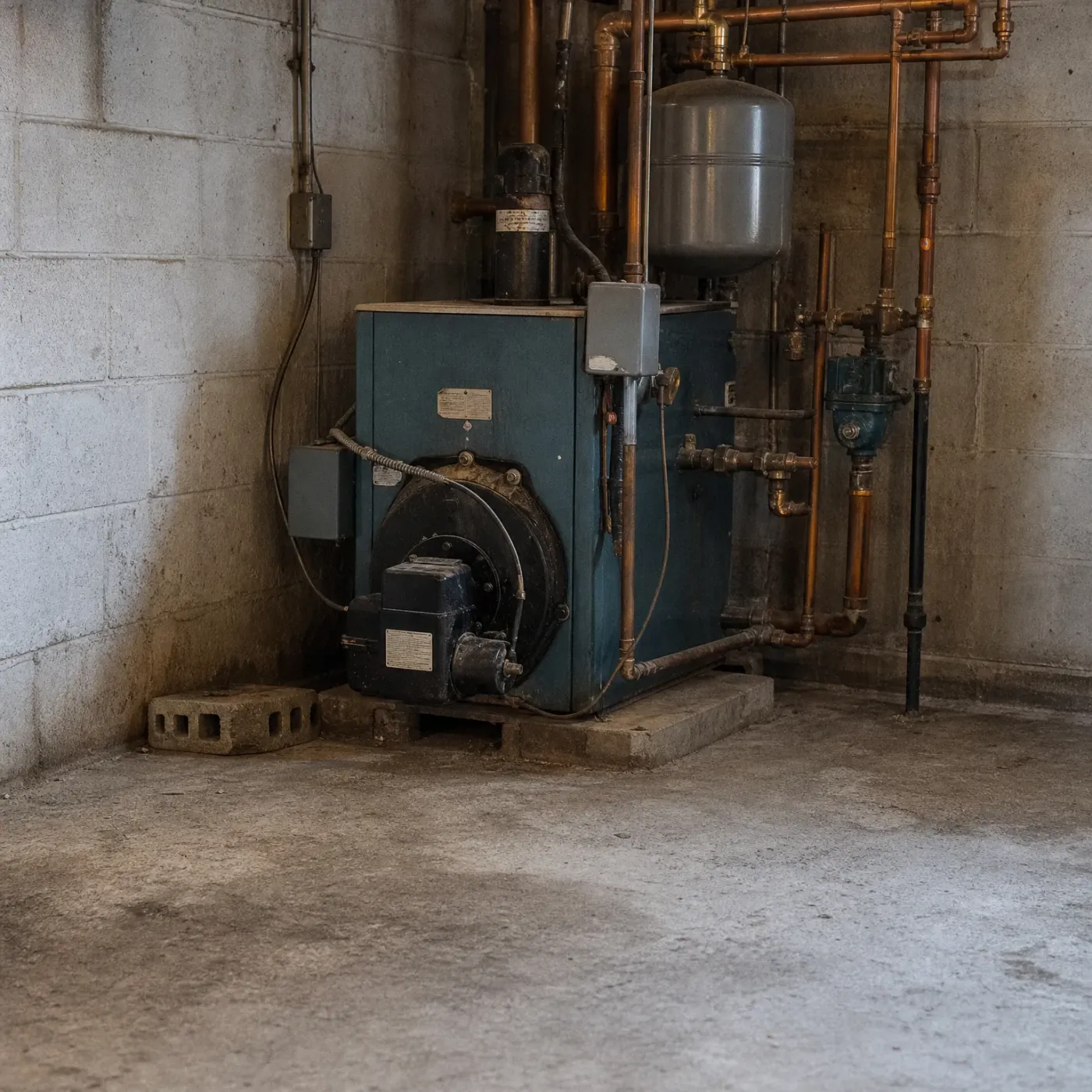
A blue oil-fired boiler with a burner unit sits on a concrete pad in a basement corner, with copper piping, valves and a gray expansion tank overhead against concrete block walls.
Before you get your boiler repair
A gray boiler unit on a concrete pad in a basement corner, connected to copper piping, valves and a metal flue against painted concrete block walls.
After you get your boiler repair

Winter nights average 15°F statewide

Overnight lows across Iowa average 15°F through December, January and February. At that temperature your boiler is running long stretches to keep up, and a system already losing pressure has less reserve to draw on when it needs to run the longest.

NOAA nClimDiv 1991-2020 county normals weighted by homes

A woman in a cream cardigan and jeans stands with one hand raised facing an open front door of a gray horizontal-siding house, with a black lantern wall light, a potted shrub with yellow flowers, and a stone-faced porch column.

A boiler losing pressure has a reason, and it's findable

A boiler that's losing pressure is telling you something specific: water or air is leaving the loop somewhere, through a valve, a fitting, a seal, or the pressure relief valve doing exactly what it's built to do. The gauge drifting down isn't random, and it isn't something to just keep correcting with the filling loop every week. Once you know that, the question stops being "why does this keep happening" and becomes "what part is letting it happen," which is a question a contractor can actually answer by looking at your system.

That's the kind of find that goes faster with someone who works on boilers all winter in Iowa and has seen which part usually gives out first. A local contractor matched to your situation can look at your specific boiler, not a general case, and tell you what's actually failing. You'd hear from one contractor, not a handful calling at once, and that's someone who knows your equipment by the time they're done with it, not partway through.

Interior corner of a room with a window and sheer curtain at left, a gray upholstered sofa with a cushion at right, and a round wooden table holding stacked books and a round vase with an olive branch.
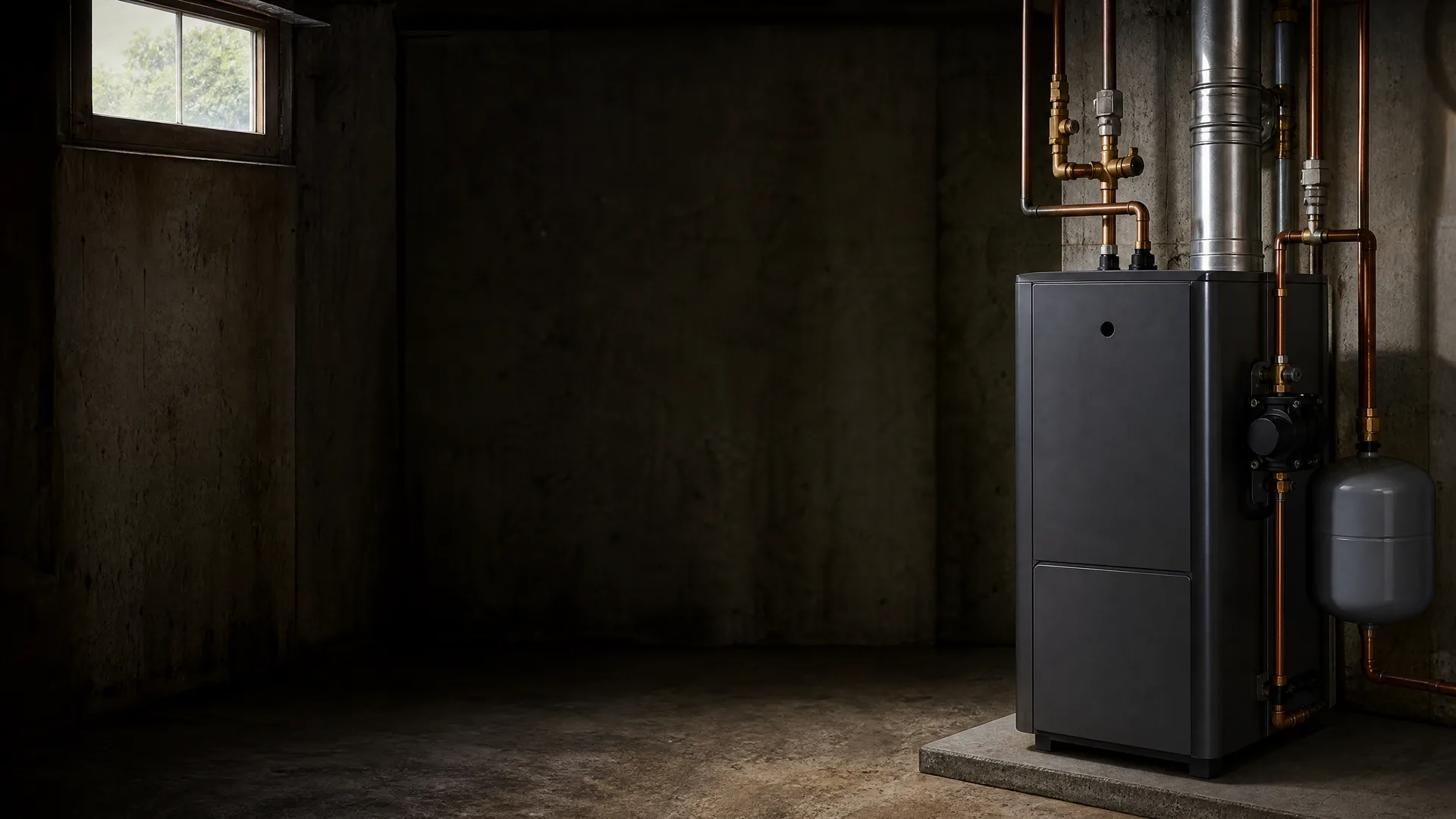
A dark grey boiler unit on a concrete pad in a dim basement, with copper pipes, a metal flue, and a grey expansion tank on the wall, and a small window with daylight on the left.

A local pro for your boiler repair

Only one pro gets your request, so you hear from one company.

Step 1 of 3: Equipment