



Why your boiler is leaking water in Iowa

Step 1 of 3: Equipment

Why is my boiler leaking water?

Water pooling under the boiler or dripping from a pipe is never something to leave alone. You want the house warm and dry for the people in it, not dealing with a puddle in the utility room in the middle of an Iowa winter. Most boiler leaks come from one of a handful of spots, and which one it is changes what happens next.

A worn valve, a cracked seal or too much pressure inside the tank

Most boiler leaks start at the pressure relief valve, a loose fitting, or a seal that has worn out after years of heating cycles. The pressure relief valve is built to let water out if pressure inside the system climbs too high, so a drip there can mean the valve is doing its job, or that it has failed and needs to be replaced. A crack in the tank itself is less common but more serious, since that means the tank needs to be replaced, not just a part. Gas boilers heat Iowa homes through long, hard winters, and that steady cycling of heating and cooling puts wear on seals and joints over the years. Where the water is coming from decides what it takes to fix it.

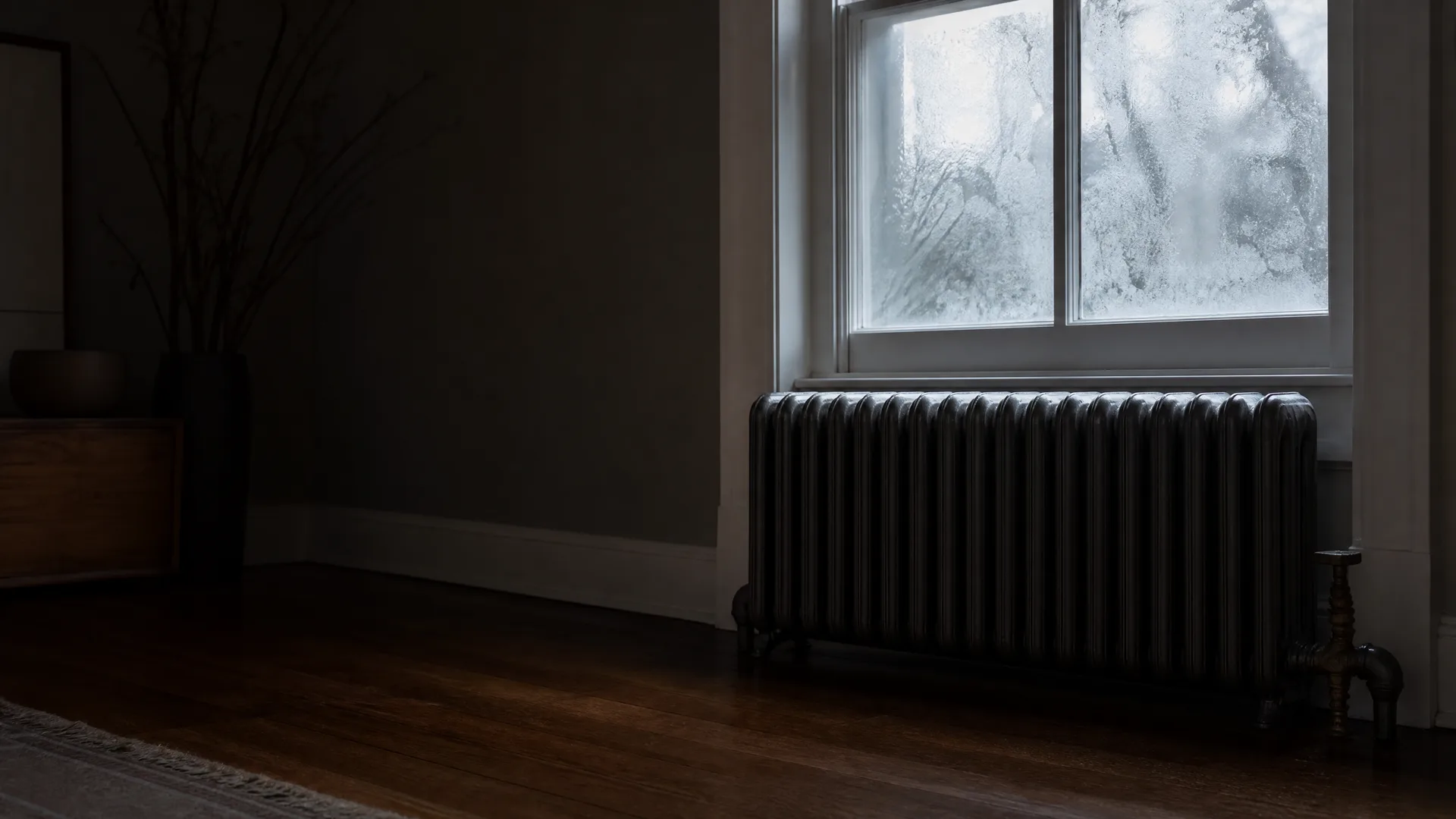
A cast-iron column radiator stands beneath a frosted window in a dim room with dark walls, a wood floor, and a vase of bare branches on a low cabinet at left.

You're up before the rest of the house, and the living room is cold enough that you can see your breath near the window. Ice has formed on the inside of the glass overhight, a thin white crust across the bottom pane. The cast-iron radiator under it should be ticking with heat by now. Instead there's a damp ring spreading across the floor at its base, dark against the wood. You crouch down and find the shutoff valve wet to the touch, a slow bead working its way down the fitting. Outside it's still dark, well below freezing. You pull a towel from the hall closet and lay it under the valve, then go find the phone.

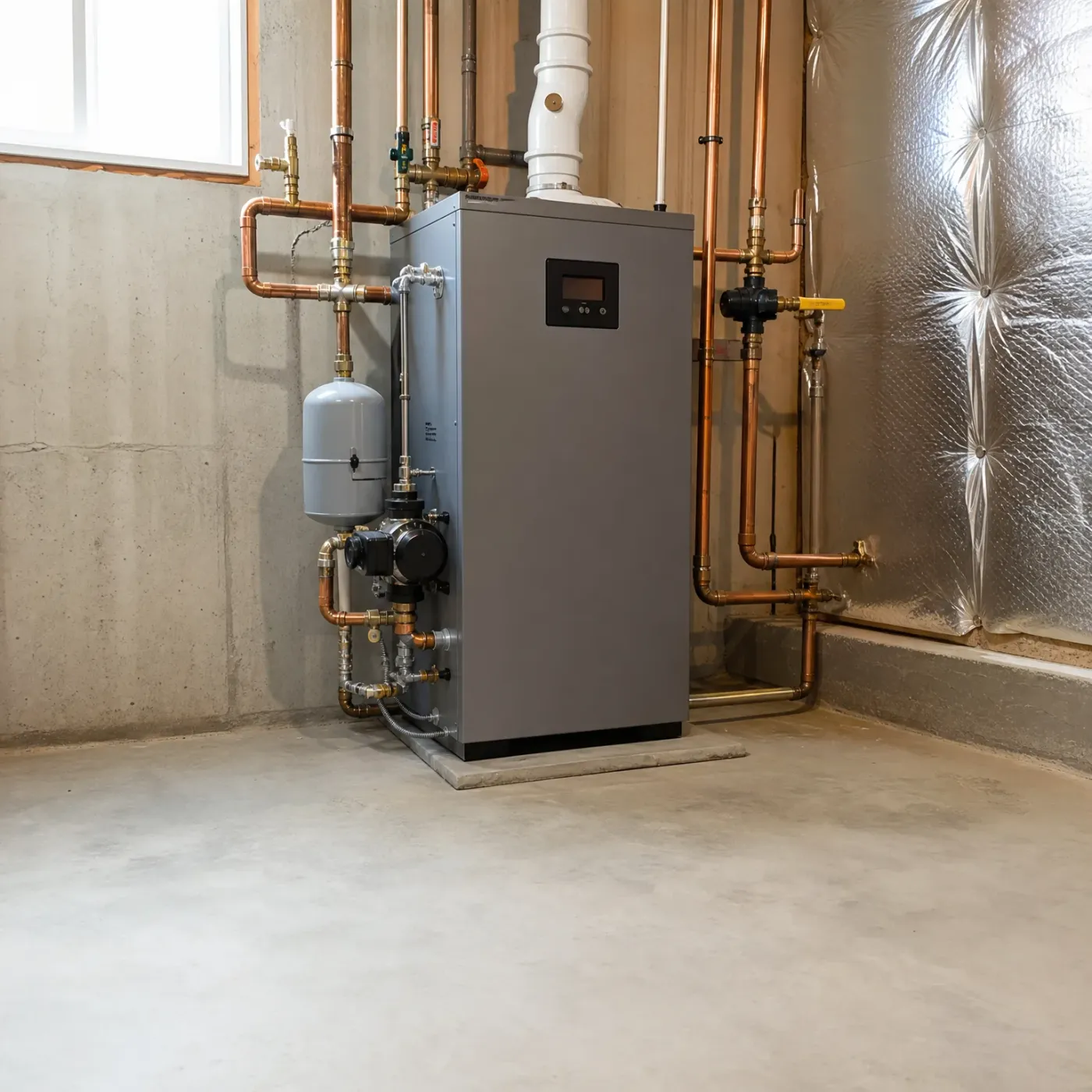
A gray boiler unit with a digital display stands on a concrete basement floor, connected to copper piping, a gas valve, a circulator pump and an expansion tank, beside a concrete wall and foil-faced insulation.
A sealed pressure relief valve and a dry expansion tank mean the copper lines stay tight and the floor underneath stays clear.
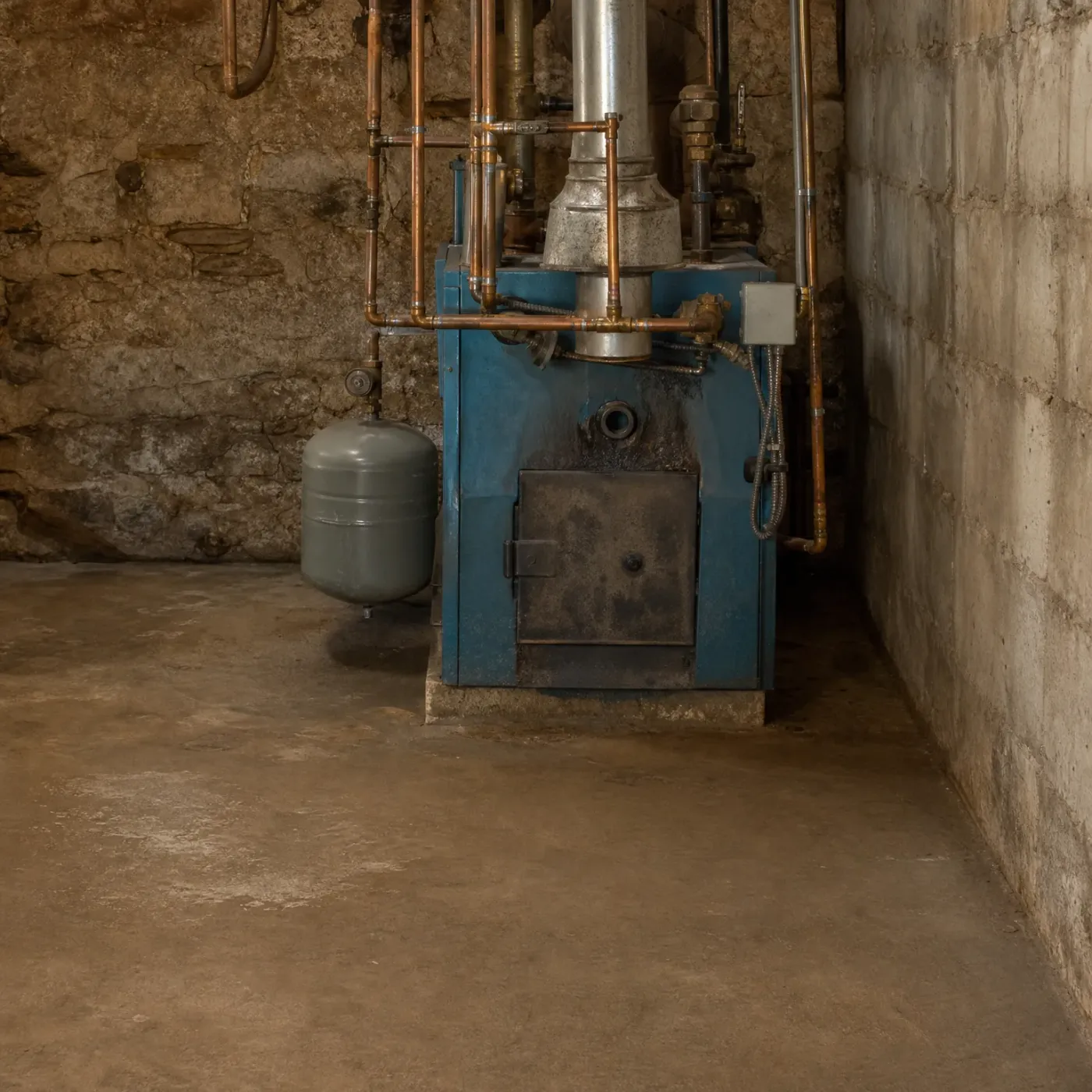
A blue cast-iron boiler with a metal flue pipe and copper piping stands against a stone and concrete block basement wall beside a gray expansion tank on a bare concrete floor.
Corrosion on the access door and a worn seal are where the leak usually starts, often right where the old pipe joints meet the tank.

Where Boiler Leaks Actually Start

  • Most leaks start at the pressure relief valve, which opens on its own once pressure climbs past 30 psi.
  • A cracked heat exchanger lets water mix with combustion gases and often shows up as a drip only when the burner is running.
  • The circulator pump has a seal around its shaft that wears out over years of constant turning and starts weeping there first.
  • Corroded pipe fittings near the boiler loosen slowly, so the leak gets worse over a few weeks rather than starting all at once.
  • A waterlogged expansion tank pushes extra pressure through the whole system and forces the relief valve to open more than it should.
  • Low water pressure from a leak can shut the boiler down entirely, which is often the first sign something is wrong.

A boiler holds water under pressure, and every leak traces back to one of a few spots. The pressure relief valve sits near the top of the unit and it's designed to open when pressure gets too high, so if you see water around it, the valve may be doing its job rather than failing on its own. That usually points to something else pushing pressure up, often the expansion tank. That tank holds a cushion of air that gives the water room to expand as it heats. Once the tank waterlogs, that cushion is gone, and the system has nowhere to send the extra pressure except out through the relief valve.

Inside the boiler, the heat exchanger is what actually warms the water, and a crack there lets water seep out only while the burner is firing, which is why that kind of leak can be easy to miss at first. The circulator pump, which pushes hot water out to your radiators or baseboards, has a seal around its shaft that wears from years of spinning. That seal is usually the first part on the pump to go.

Further out, the pipe fittings connecting the boiler to the rest of the system corrode slowly over time. That kind of leak tends to start small and worsen over weeks, not overnight. And if enough water escapes anywhere in the system, pressure drops low enough that the boiler's safety controls shut it down, which is sometimes the first thing a homeowner notices.

A woman with long light-brown hair in a gray knit sweater sits in a living room looking off to the side, with a sectional sofa, houseplant, lamp, wooden table and large windows behind her.
A woman in a chunky gray turtleneck sweater sits indoors looking off to the side, with a blurred dining table, chairs, pendant lamp and window behind her.
A woman in a cream knit sweater with her hair in a bun stands near a window, looking off to the side, with a gray sofa, houseplant and open kitchen with pendant lights blurred behind her.
A woman with long brown hair in a cream knit sweater stands near a window, looking to the side, with a white sofa, shelving, and a hallway visible behind her.

No phone calls to make

A leaking boiler is not something to keep an eye on for a few days. Once a seal or valve starts to go, the leak usually gets worse, and a cracked heat exchanger or a failed circulator pump isn't something to fix yourself. Finding someone who actually works on boilers, not just furnaces and central air, takes calling around and explaining the same drip, the same puddle, the same model number more than once. A boiler tech working in Iowa sees these systems every winter and knows whether a wet spot by the relief valve means something different from water pooling under the tank. That's who gets your request, not a handful of companies bidding on your afternoon. With the furnace cold outside and the heat running most of the day, this is worth getting in front of someone who can look at it soon.

What a healthy boiler looks like

Pressure on the gauge sits between 12 and 15 psi when the system is cold. The relief valve stays dry and closed. The expansion tank holds its air charge, so it doesn't pass water back into the system every time the boiler fires. Pipe joints and the circulator pump housing stay dry to the touch. A boiler running the way it should doesn't need water added to the system month after month. If you're topping off the fill valve more than once or twice a season, something upstream is already losing water, even if you haven't found the drip yet.
Where water actually shows up first

A relief valve starts by weeping just a little, a small stain on the floor below it before it ever runs steady. A cracked heat exchanger often shows no water at all until the burner kicks on, because the crack only opens under heat. The circulator pump leaks at the seal around the shaft, a steady drip right at the motor housing. Corroded pipe joints near the boiler show rust streaks before they show standing water. Checking these spots when the boiler is running, not just when it's off, is often how the actual source gets found.

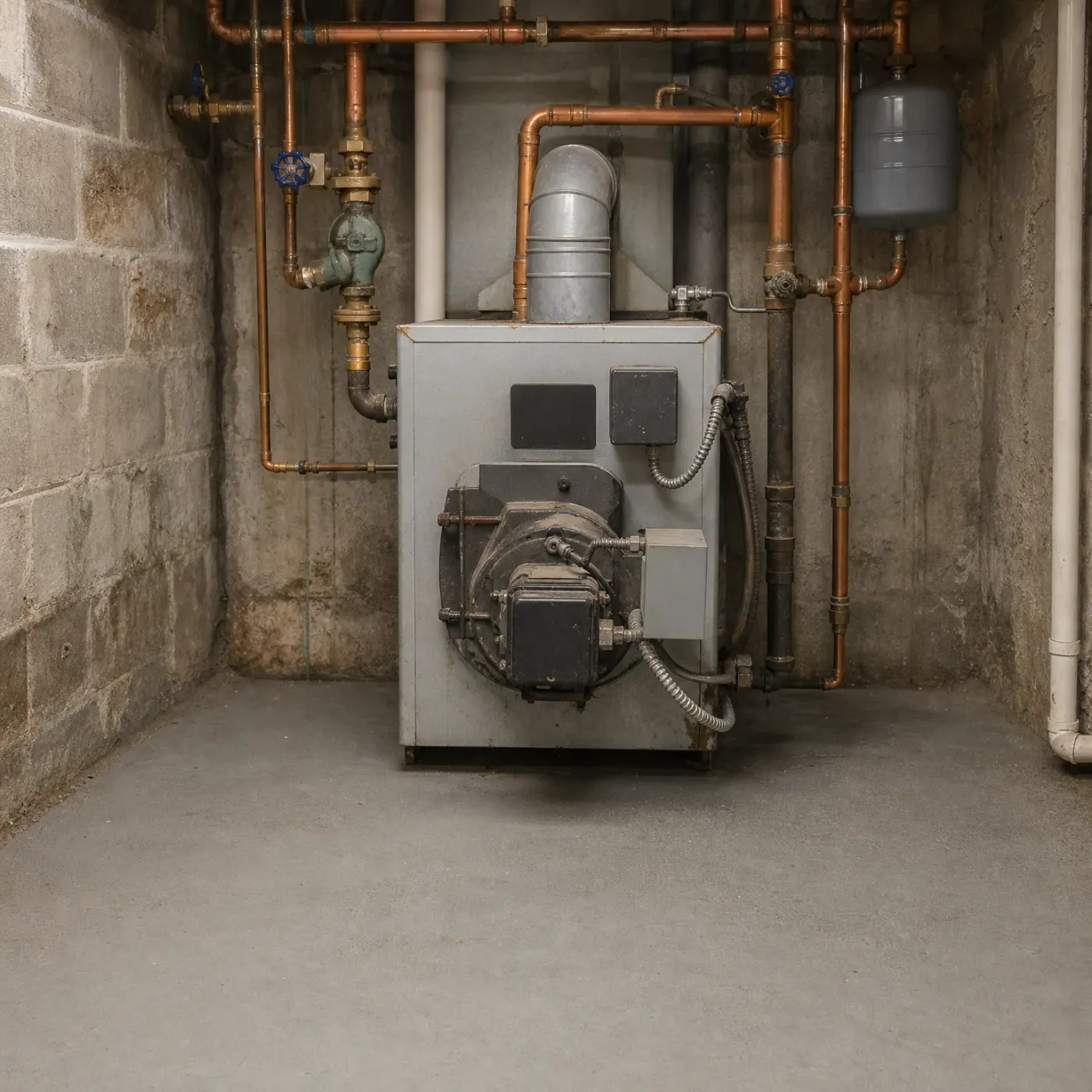
A gray boiler with a flue pipe and burner unit stands against a concrete block basement wall, surrounded by copper and steel piping, valves, and a gray expansion tank, on a bare concrete floor.
Before you get your boiler repair
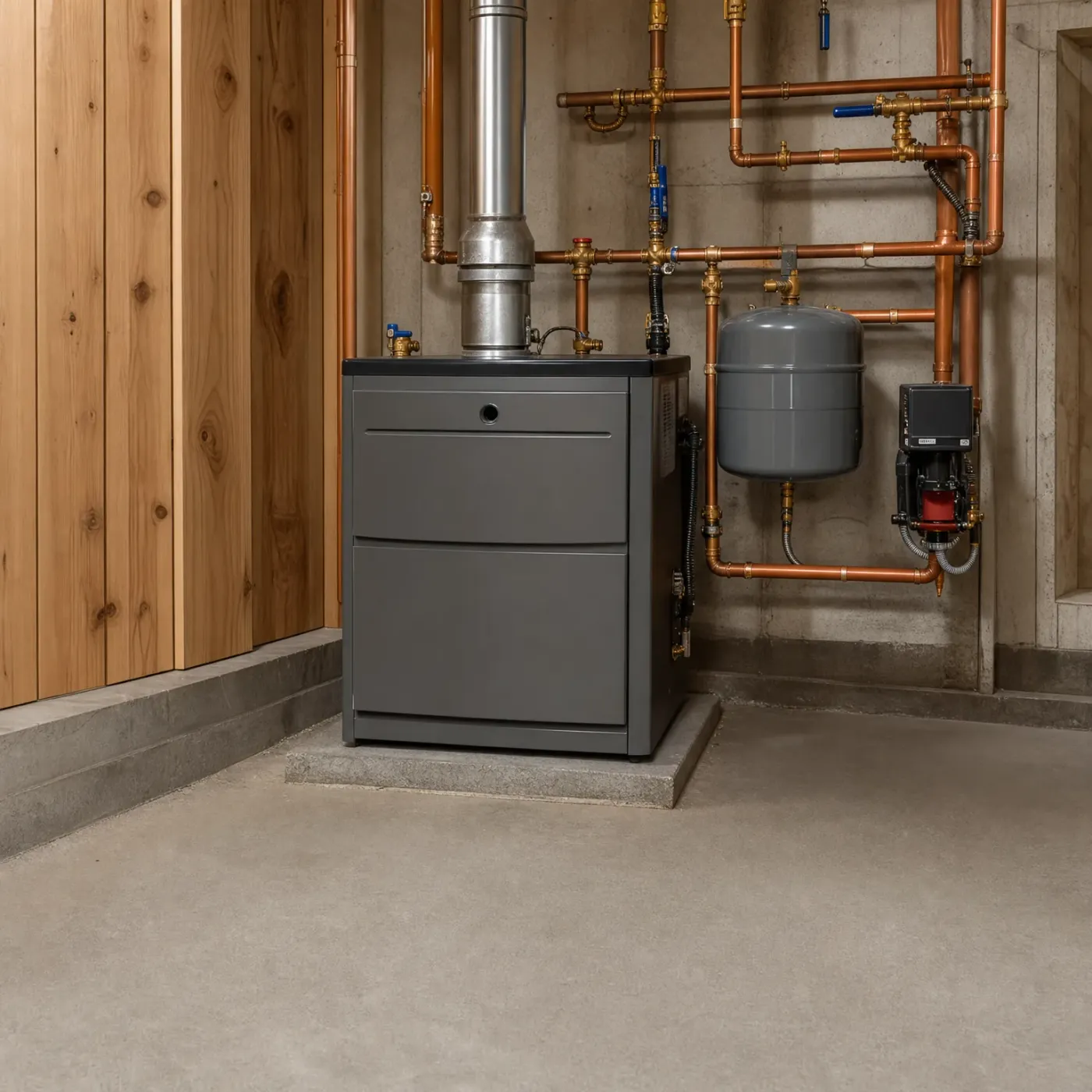
A gray boiler on a concrete pad in a basement, with a metal flue pipe and copper piping, brass valves, a gray expansion tank and a circulator pump mounted on the concrete wall beside wood paneling.
After you get your boiler repair

A small drip from a fitting might wait a day while you watch it, but that's the only kind of leak that should wait at all.

Once the pressure relief valve or the heat exchanger is the source, the leak doesn't slow down on its own, and calling around to several companies just gives the water more time to find your floor and your subfloor underneath it.

A woman and a child wrapped together in a thick knitted blanket on a sofa, both with eyes closed, with a lit table lamp and houseplant in the dim background.
An older woman with gray hair in a bun and glasses, wearing a beige knit sweater, smiles while looking to the side in a warmly lit kitchen, with a loaf of bread on the counter in the foreground and a snowy scene outside the window.
  1. Pressure in the boiler climbs past the 30 psi limit.

  2. The pressure relief valve opens to release it.

  3. Water drains down the pipe toward the floor.

  4. A worn valve seat keeps dripping even after pressure drops.

Winter nights average 15°F statewide

Overnight lows average 15°F across Iowa in December, January and February, so your boiler is running long stretches to keep up on those nights. More hours under pressure mean a weak seal or a worn valve shows itself sooner, often as a drip that starts small and doesn't stop.

NOAA nClimDiv 1991-2020 county normals weighted by homes

A boiler leaking water almost always traces back to one of a handful of things: a pressure relief valve doing its job a little too often, a worn seal where two pipes meet, a heat exchanger that's cracked, or a circulator pump giving out. None of those get better by waiting. A contractor who works on boilers all winter in Iowa has seen every one of these fail and knows which part is the likely source before they even open the access panel, because the same handful of things go wrong in the same handful of ways. You won't need to call around and repeat the problem to three different companies and then sort through what each one quotes you. One licensed local contractor gets the full picture from you once, looks at the valve, the tank, the exchanger, and tells you straight what's leaking and what it takes to stop it. The water on your floor has an answer. Getting it looked at is how you find out which one applies to your boiler.

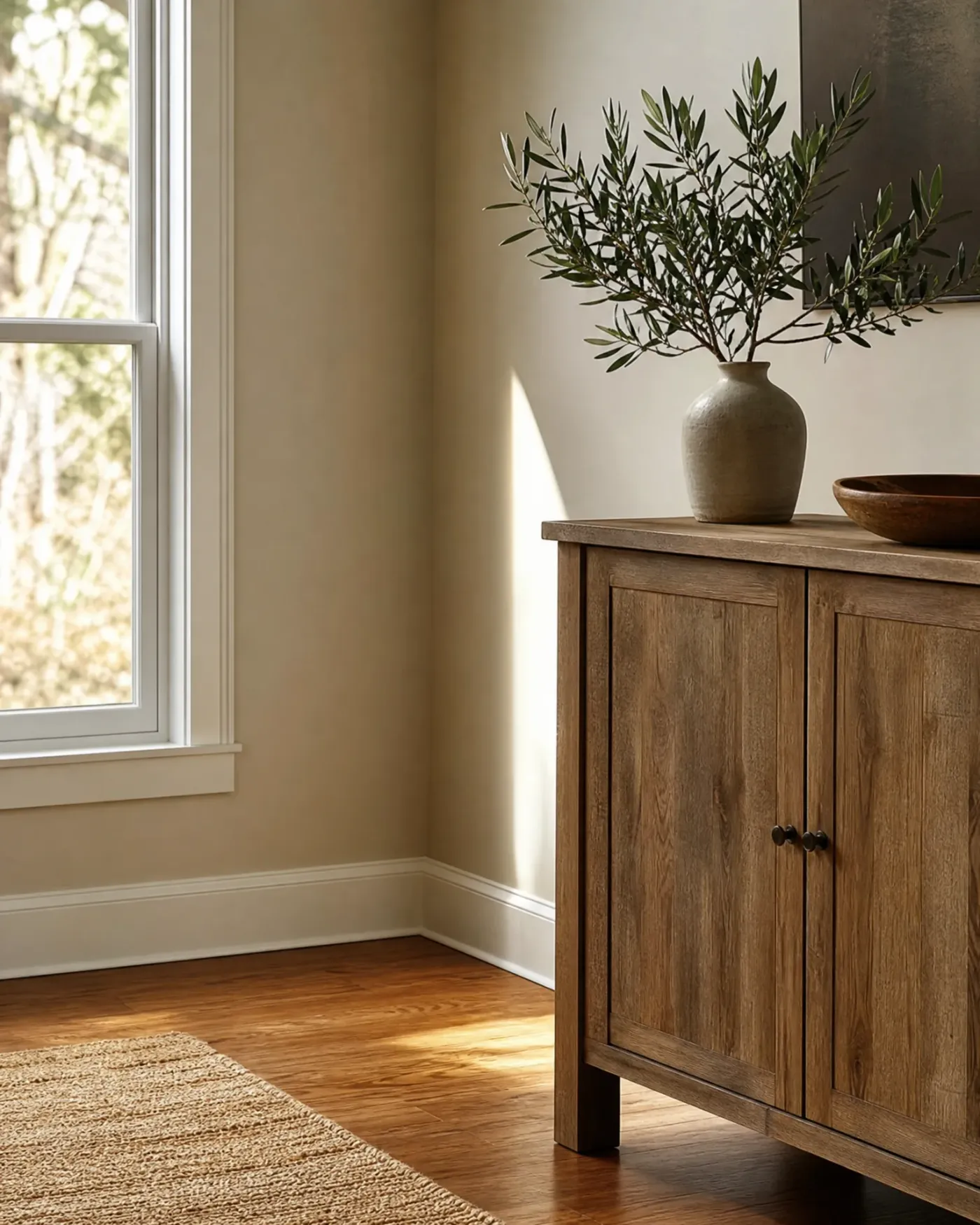
Sunlit corner of a room with a wooden sideboard holding a ceramic vase of olive branches and a dark wooden bowl, beside a white-framed window, a hardwood floor and woven rug.
A wooden cabinet holding a pale ceramic vase with leafy branches stands beside a beige wall in a sunlit room with hardwood floors, a jute rug, and a window showing green foliage outside.
Sunlit room corner with a beige upholstered sofa holding a rust-brown cushion, beside floor-length linen curtains at a window, over a wood floor with a woven rug.
Corner of a room with beige walls, a framed photograph, a floor-length linen curtain beside a window, an upholstered armchair with a knit pillow, white baseboards and trim, wood flooring and a pale rug.
Sunlit living room corner with a beige upholstered armchair with a cushion, linen curtains beside a wooden-framed window, green vertical panelled wall with a framed print, and a wooden table edge over a woven rug.

One form, no calling around

Your request stays with one local pro.

Fill out one form

You're not committing to anything by asking.