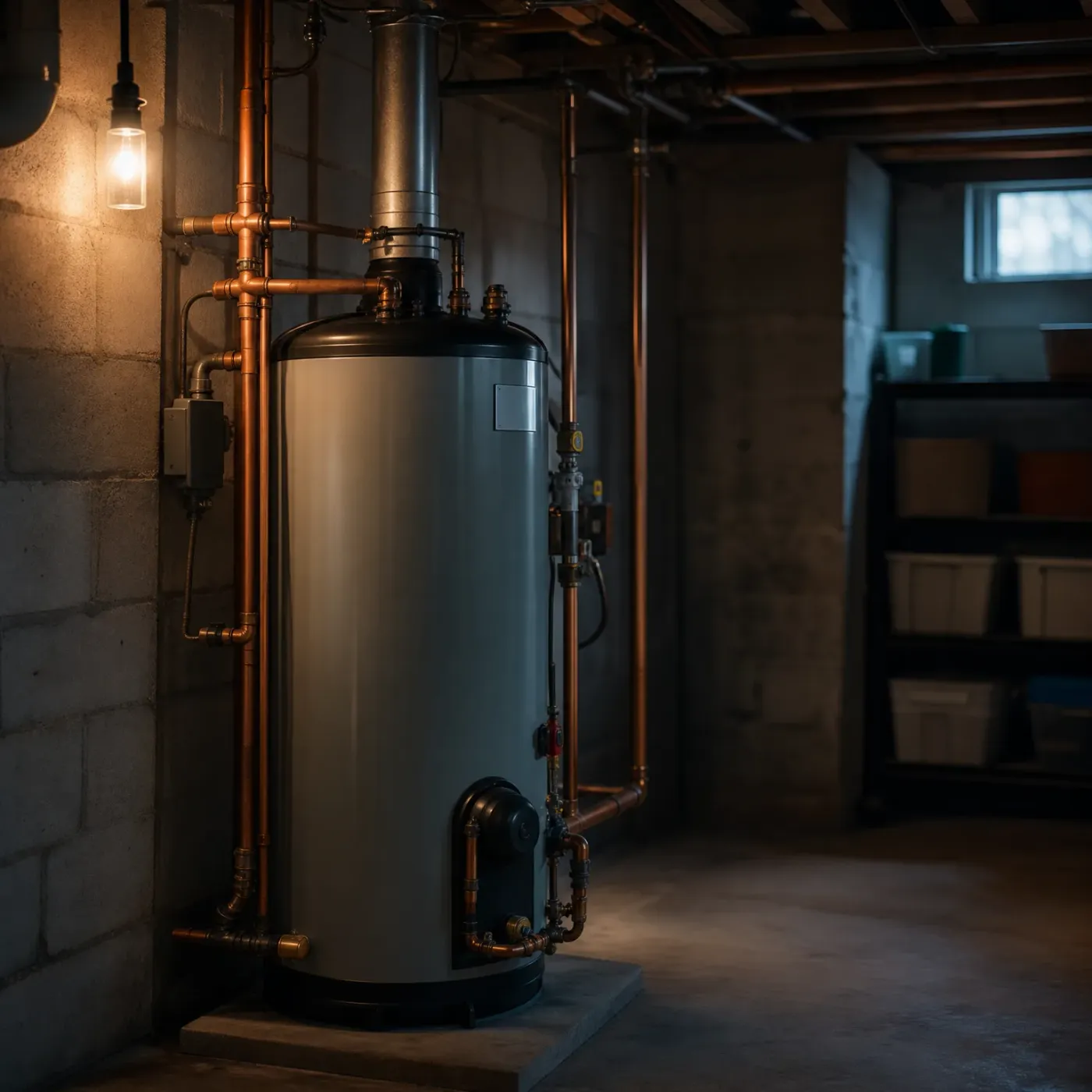
A cylindrical water heater or boiler with a flue pipe and copper piping stands on a concrete pad in a dim basement with concrete block walls, a hanging bulb at left and a shelving unit with bins at right.

Get the right pro for your boiler

What a boiler tune-up covers before an Iowa winter

A boiler tune-up before winter hits means someone bleeds the radiators, checks the pressure, looks at the pilot or ignition, and makes sure the system is actually ready for an Iowa cold snap instead of guessing. Below, what gets checked and what it catches. Answer a few questions and a contractor who works on boilers in your area will follow up.

Get my match

A boiler tune-up before winter covers a set list of things. A technician bleeds air out of the radiators or baseboards so heat moves through the whole house instead of leaving cold spots. They check the system pressure and top it off if it has dropped. They look at the pilot or ignition system and the burner to make sure it lights clean and stays lit. They check the flue and venting, since a boiler that can't vent properly is a safety problem, not just a comfort one. They test the controls and safety switches that are supposed to shut the system down if something goes wrong. All of this matters more here than somewhere with a mild winter, because once a cold snap sets in, a boiler that quits is not a small inconvenience. A tune-up catches the small failures while they're still small, before the first hard freeze asks the system to prove itself.

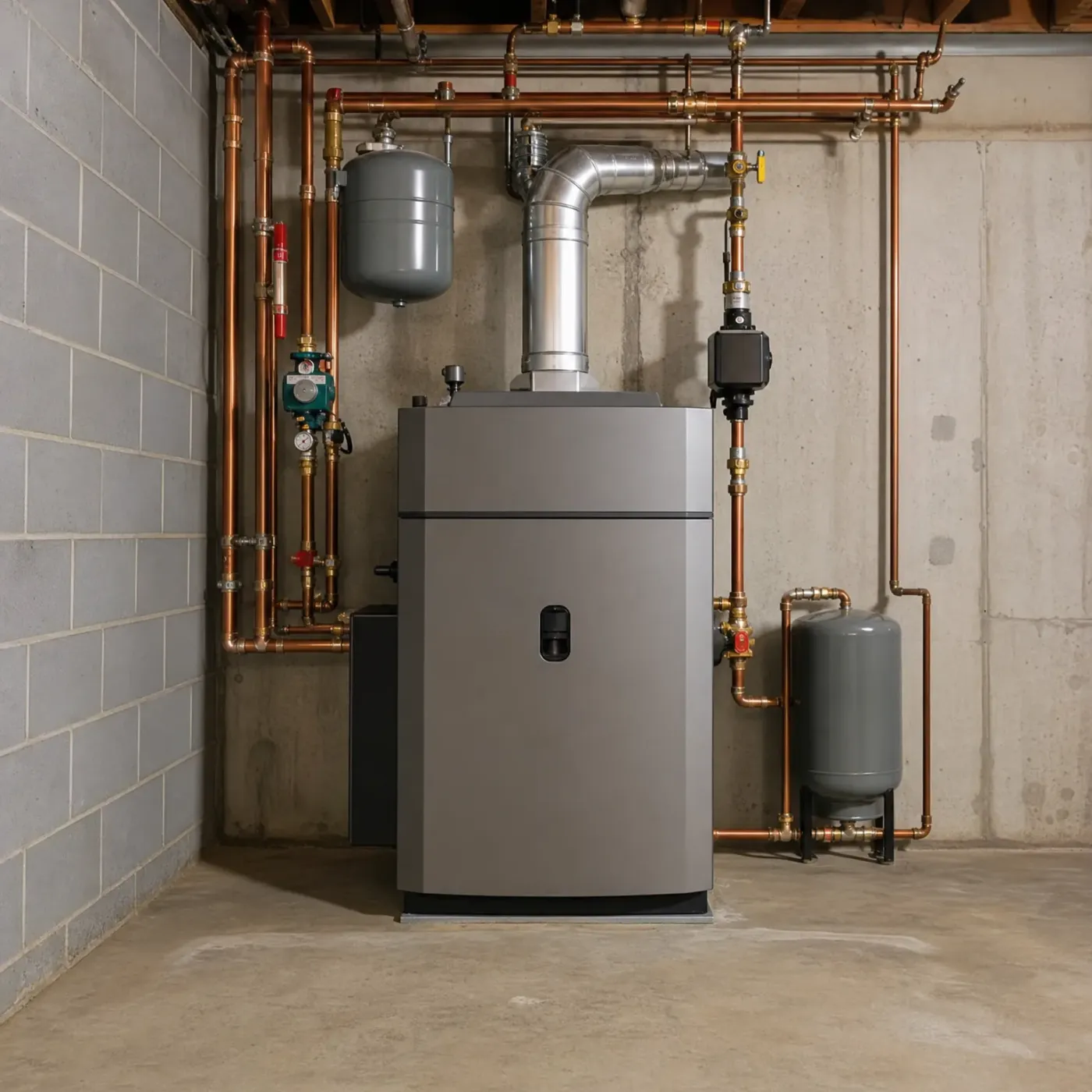
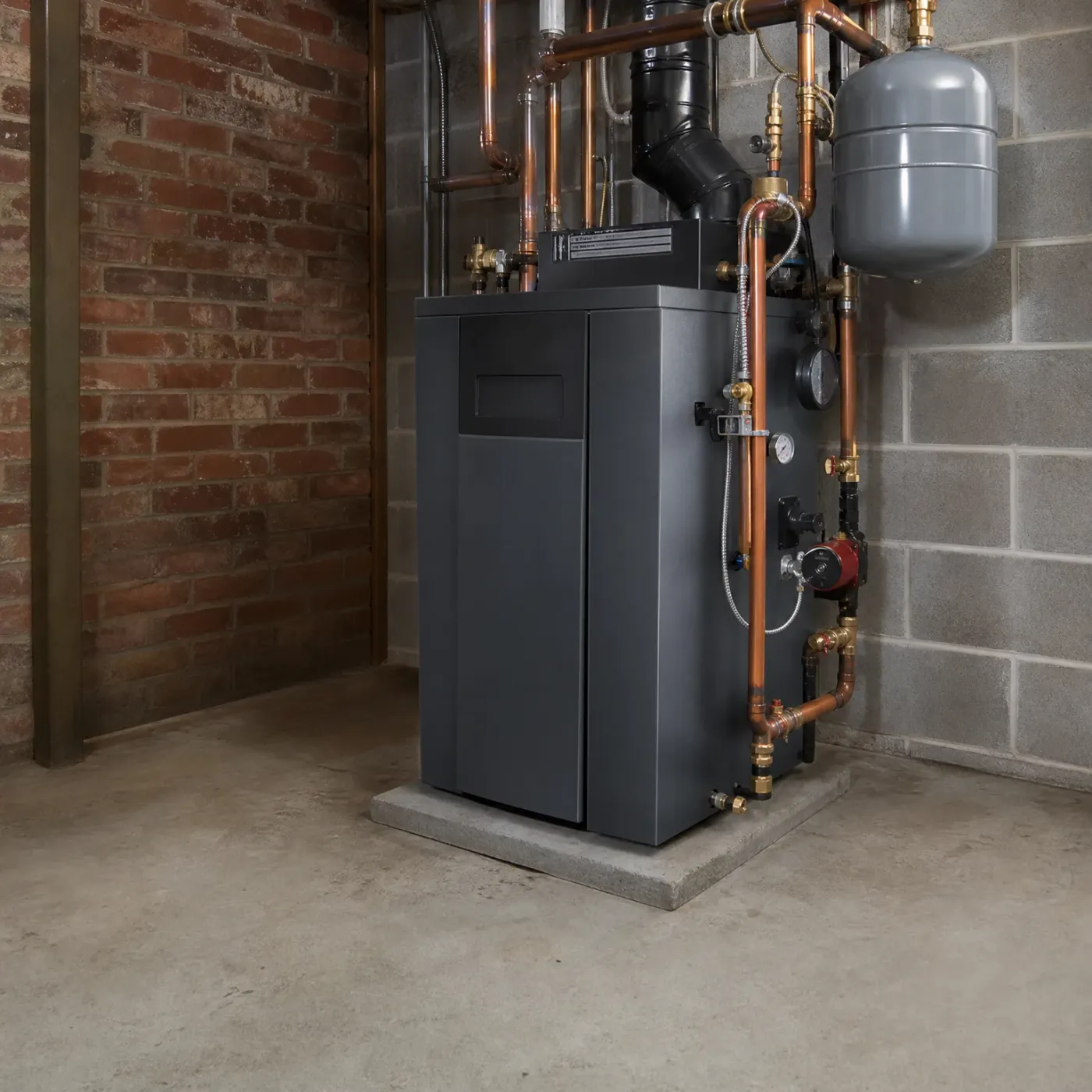
A dark gray floor-standing boiler on a concrete pad in a basement, connected to copper piping, valves, a circulator pump, a gauge, a black flue pipe, and a gray expansion tank, with a brick wall on the left and concrete block wall behind.

Tuned up before the cold

This is a boiler that got looked at before the snow came. Pressure's right, the gauges read where they should, and every pipe is doing its job. Fire it up in January and it heats the house evenly, no cold rooms, no noise from trapped air in the lines.
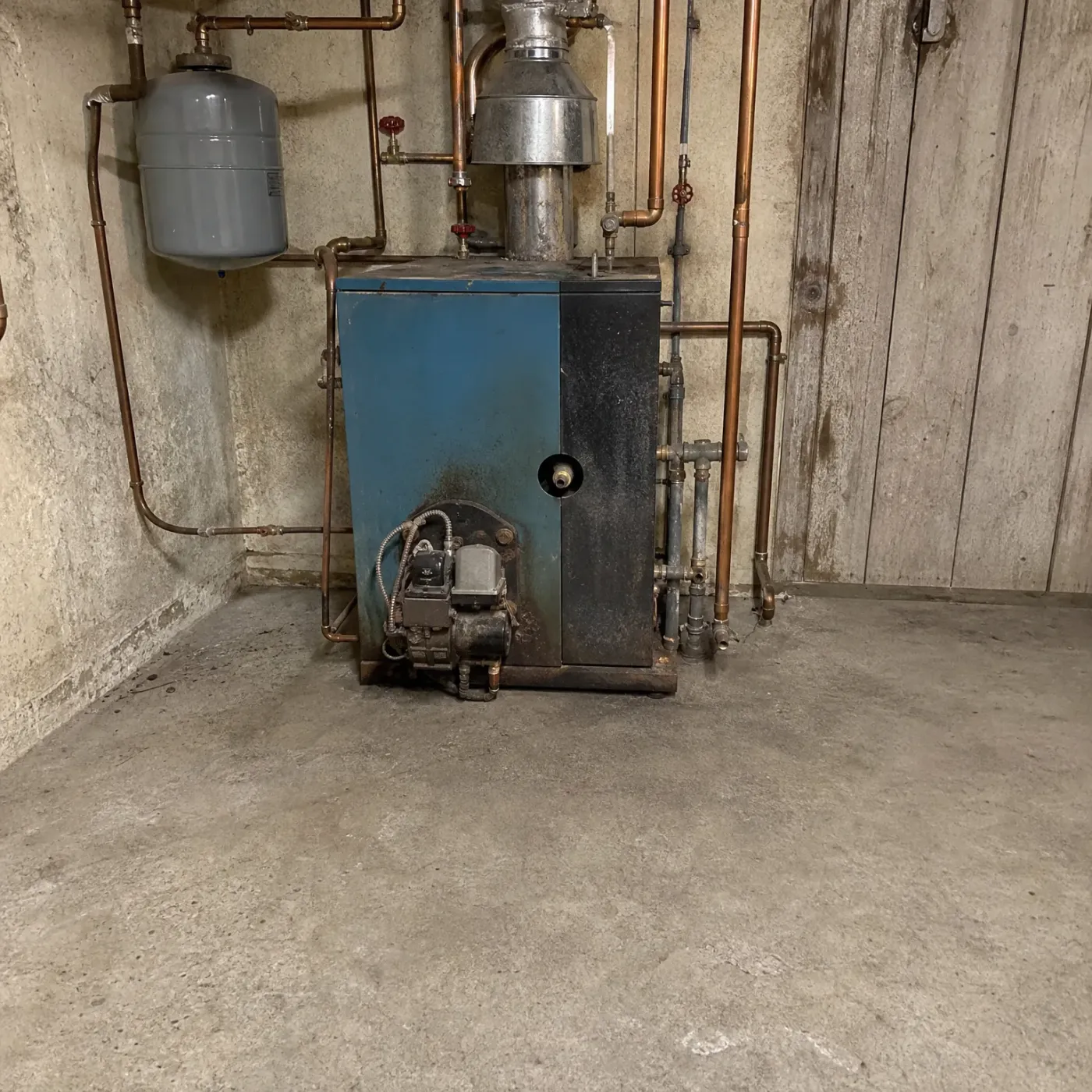
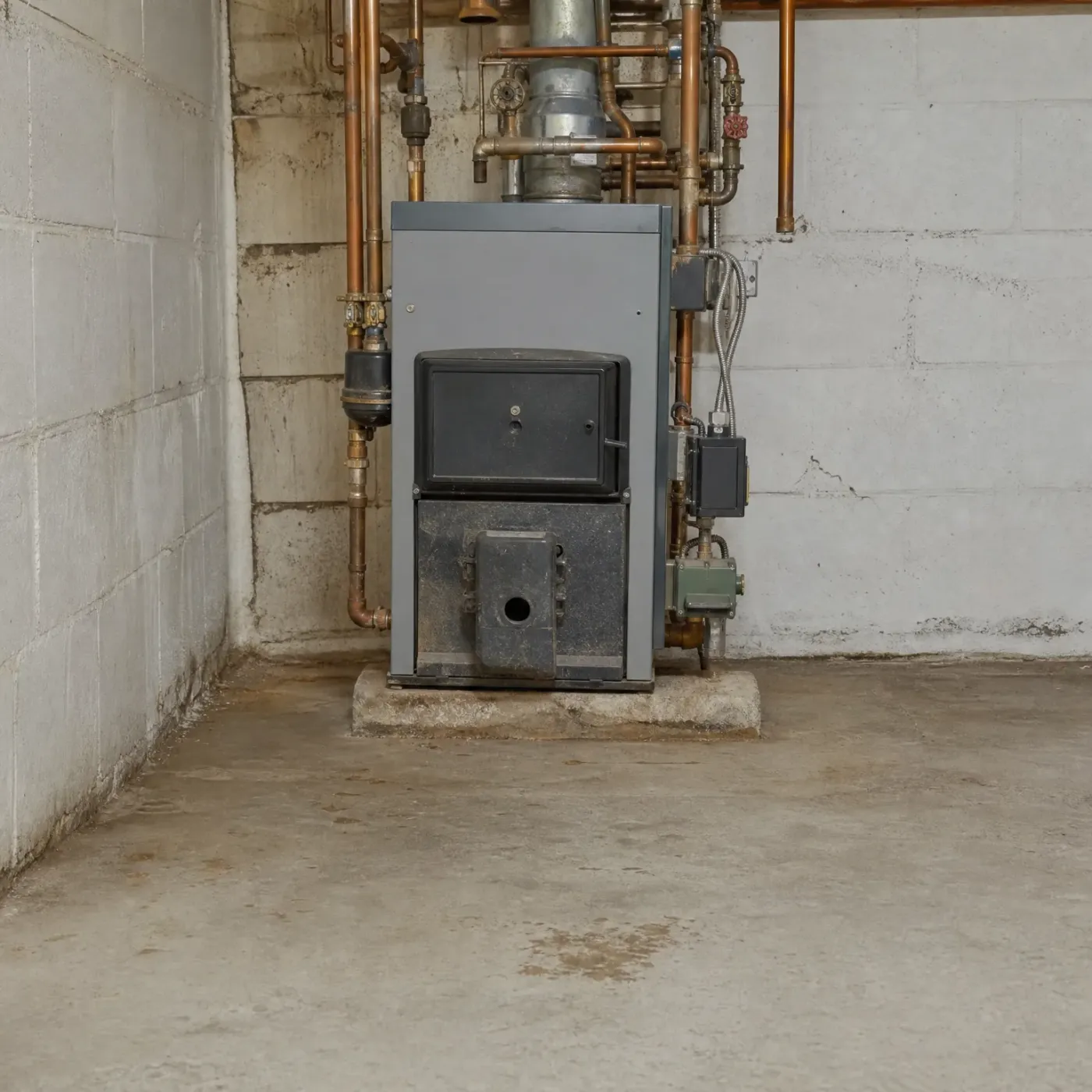
A blue and black boiler with a burner unit, flue, expansion tank and copper and steel piping stands on a concrete basement floor against a concrete wall and wooden plank partition.

Left to find out the hard way

This one's been running on whatever pressure it happens to have. Nobody's checked the ignition since last spring, if then. It might get through the winter fine, or it might quit on the night it's ten below, and that's when you find out which.

Is your boiler showing signs it needs attention?

A radiator that stays cool at the top while the bottom gets hot means air trapped inside it, and that room runs colder than the rest of the house. A boiler that gurgles or bangs when it fires up is usually low on water or has air somewhere in the lines. If the pilot light looks yellow or orange instead of blue, that's worth having looked at before the cold sets in. Some homes have a room that never quite warms up no matter what the thermostat says. None of this means the boiler is failing. It usually means nobody's checked the pressure or bled the lines in a while, and a system running that way through an Iowa winter burns more gas to do the same job.

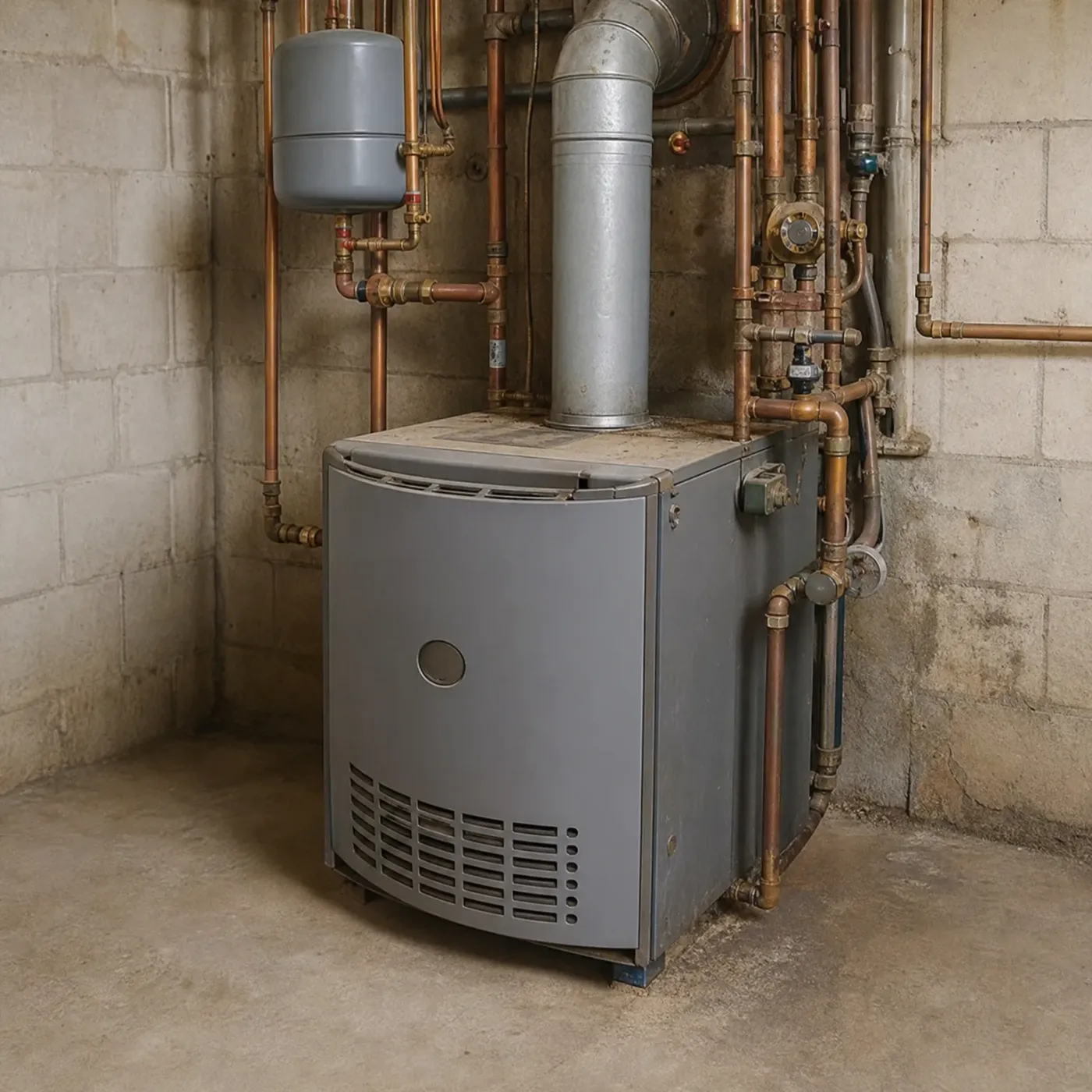
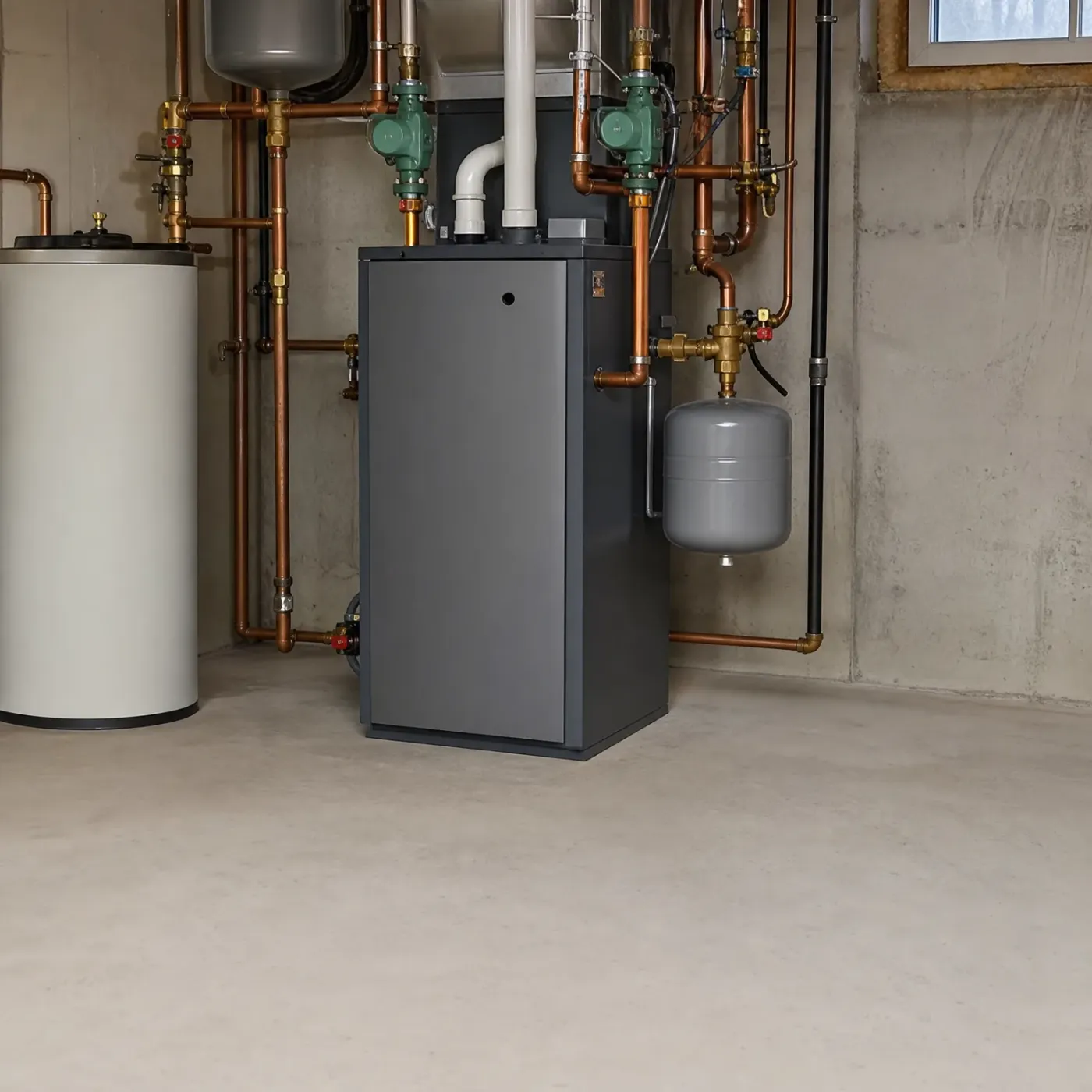
A dark gray floor-standing boiler in a concrete-walled basement, connected to copper piping, circulator pumps, a gray expansion tank, and a cream-colored storage tank to the left.

Running the way it should

This is what a basement boiler looks like when nothing's wrong. The pumps move water through the copper lines without a fight, the expansion tank holds steady pressure, and the water heater next to it does its own job without the boiler picking up any slack.

A gray residential boiler with a metal flue pipe stands in a concrete-block basement corner, surrounded by copper piping, valves and a gray expansion tank.

Working harder than it should

Nothing here looks broken, and that's the problem. A boiler can run like this for years while pressure drifts low or air sits in a line, costing you evenly heated rooms and a lower bill without ever tripping a switch to tell you.

Checked now, or found out in January

Tune-up before winter

  • A technician bleeds the radiators, so the top of every one gets hot and not just the bottom.
  • System pressure gets checked against what the manufacturer calls for, and topped off if it's dropped.
  • The pilot or ignition gets looked at so the boiler actually lights when the thermostat calls for heat.
  • Circulator pump and expansion tank get checked while the boiler is off, so a slow leak or weak pump turns up before January.
  • Any soot or scale near the burner gets found and dealt with before it affects how the boiler fires.

No tune-up

  • Trapped air stays in the radiators, so some rooms heat and others stay cold through a January cold snap.
  • Low pressure goes unnoticed until the boiler won't fire or shuts down on its own.
  • A pilot or igniter that's starting to fail doesn't show up until the morning it won't light at all.
  • A circulator pump that's wearing out keeps running weak until it stops moving water through the house.
  • Scale or soot builds up unseen, and the boiler works harder to put out the same heat.
A gray boiler with a metal flue pipe stands in a basement against concrete and concrete-block walls, connected to copper piping, a circulator pump, and two gray expansion tanks.
A boiler with clean connections and steady pressure gauges is one a technician already went through before the cold set in.
A gray boiler on a concrete pad in a basement with painted concrete block walls, copper piping, a metal flue, and electrical control boxes.
A boiler on an old concrete pad with no recent attention is the one that quits the night it finally drops below zero.
A gray-haired, bearded man in a dark coat dusted with snow stands smiling in a dimly lit room with a lamp, mirror, framed art, and a sofa in the background.
An older man with white hair and a beard, wearing a dark snow-dusted coat and scarf, stands in a warmly lit interior hallway with a framed landscape picture, a table lamp and a potted plant behind him, and a snowy view through a window at left.
An older man in a dark snow-flecked overcoat and scarf stands smiling in a warmly lit home entryway, with a glass-paned door showing darkness outside and a lamp-lit room visible through a doorway behind him.
An older man with gray hair and a beard, wearing a dark snow-dusted jacket and scarf, stands smiling in a warmly lit interior hallway with a lit table lamp, a vase of dried branches, and a framed picture in the background.

A pro who works on boilers

An Iowa cold snap doesn't wait for a convenient week. Once temperatures drop below zero and stay there, a boiler that was already running a little low on pressure or carrying trapped air in the lines is the one that gives out, and it tends to happen at night when the house has gone cold for hours before anyone notices. Most homes here run gas heat all winter, and the boiler is doing the work from the first hard freeze through the last one in spring. A tune-up now catches what's already off, while there's still time to fix it on a normal schedule instead of an emergency one. You've seen what gets checked and what it's worth catching. The part left is finding someone who'll actually go through it before the cold sets in, and that part doesn't have to sit on your list this week.

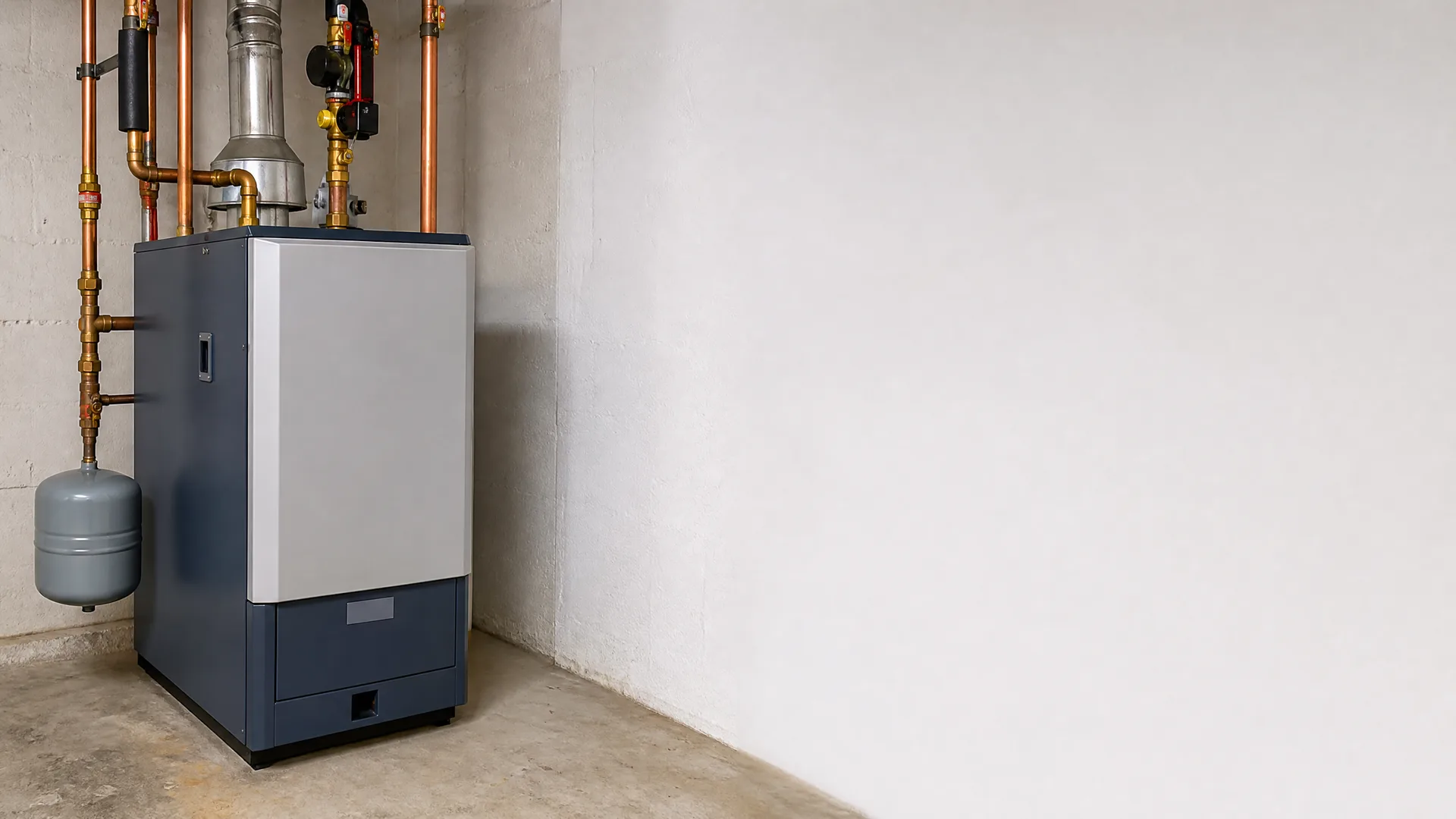
A gray and dark blue floor-standing boiler with copper pipes, a flue, and a small expansion tank stands in a basement corner with painted walls and a concrete floor.

What a cold start costs a boiler

A boiler that sits all summer with low pressure or a trapped pocket of air doesn't ease into the first cold snap. It fires cold, under pressure it wasn't built to run on, and the parts under the most strain are the ones that fail first. A pump working against trapped air runs hotter than it should. A pressure switch reading low can keep the unit from firing at all. None of that shows up in July. It shows up the first night it drops below zero.

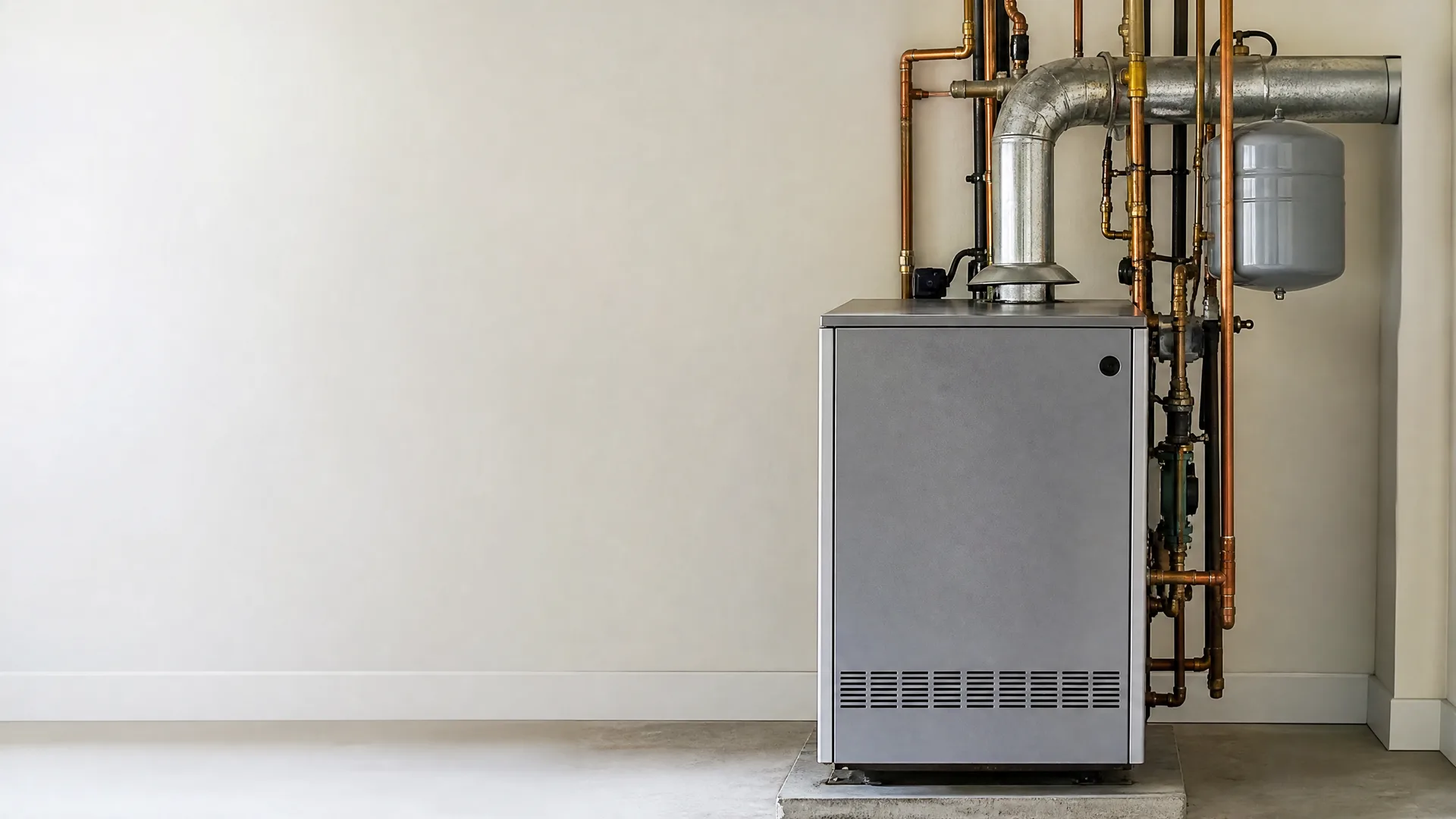
A grey floor-standing boiler with a vented front panel stands against a plain light wall, connected to copper and galvanised pipework, a metal flue, and a cylindrical expansion vessel above.

Why the pilot gets checked every time

Gas boilers in Iowa sit unused most of the summer, and a pilot or ignitor that worked fine in April doesn't always relight itself in November without help. A weak pilot flame can trip the safety switch meant to catch it, and the boiler won't fire at all until someone resets it. That's a five-minute check on a service call. Left alone, it's the reason a house has no heat the one week it's needed most.

Winter nights average 15°F statewide

Fifteen degrees is the average overnight low here in December, January and February, not the worst night you'll get. A boiler that's low on pressure or still carrying air in the lines doesn't have much room to work with once it's that cold outside, night after night.

NOAA nClimDiv 1991-2020 county normals weighted by homes

What a tune-up gets you

  • A tune-up before winter means someone bled the radiators, checked the pressure, and looked at the pilot or ignition before the first cold snap hit.
  • The same list of checks catches most of what makes a boiler quit on the coldest night of the year.
  • A furnace that passed these checks starts the season with even heat through the house and no banging from the pipes.
  • Once the form is sent, the work of finding a contractor is off your plate.
  • Fifteen degrees below zero isn't the worst this winter brings, and a boiler that got checked beforehand has the room to handle it.

A boiler tune-up before winter is a short list of checks, and the list covers the things that actually cause a breakdown. Air gets bled from the radiators so every room heats evenly instead of staying cold at the top. Pressure gets checked against what the system calls for and topped off if it has slipped. The pilot or ignition gets looked at so it lights reliably instead of failing on the one night it has to work hardest. None of this is complicated, but skipping it is what leaves a boiler unprepared for an Iowa cold snap, and the coldest nights here don't give a weak system much room to recover once it falls behind.

A boiler that went through these checks starts the season already proven out. It heats the house evenly, runs without banging or gurgling in the pipes, and holds pressure through the kind of nights that drop well below zero. That is the difference a tune-up makes, and it is the whole point of doing one before the cold sets in rather than after something fails.

Finding a contractor to do this work is its own task, and it is one you can hand off. Once the form is sent, that search is no longer something you have to manage. It moves to someone who does this for a living, and the only thing left on your end is waiting to hear back.

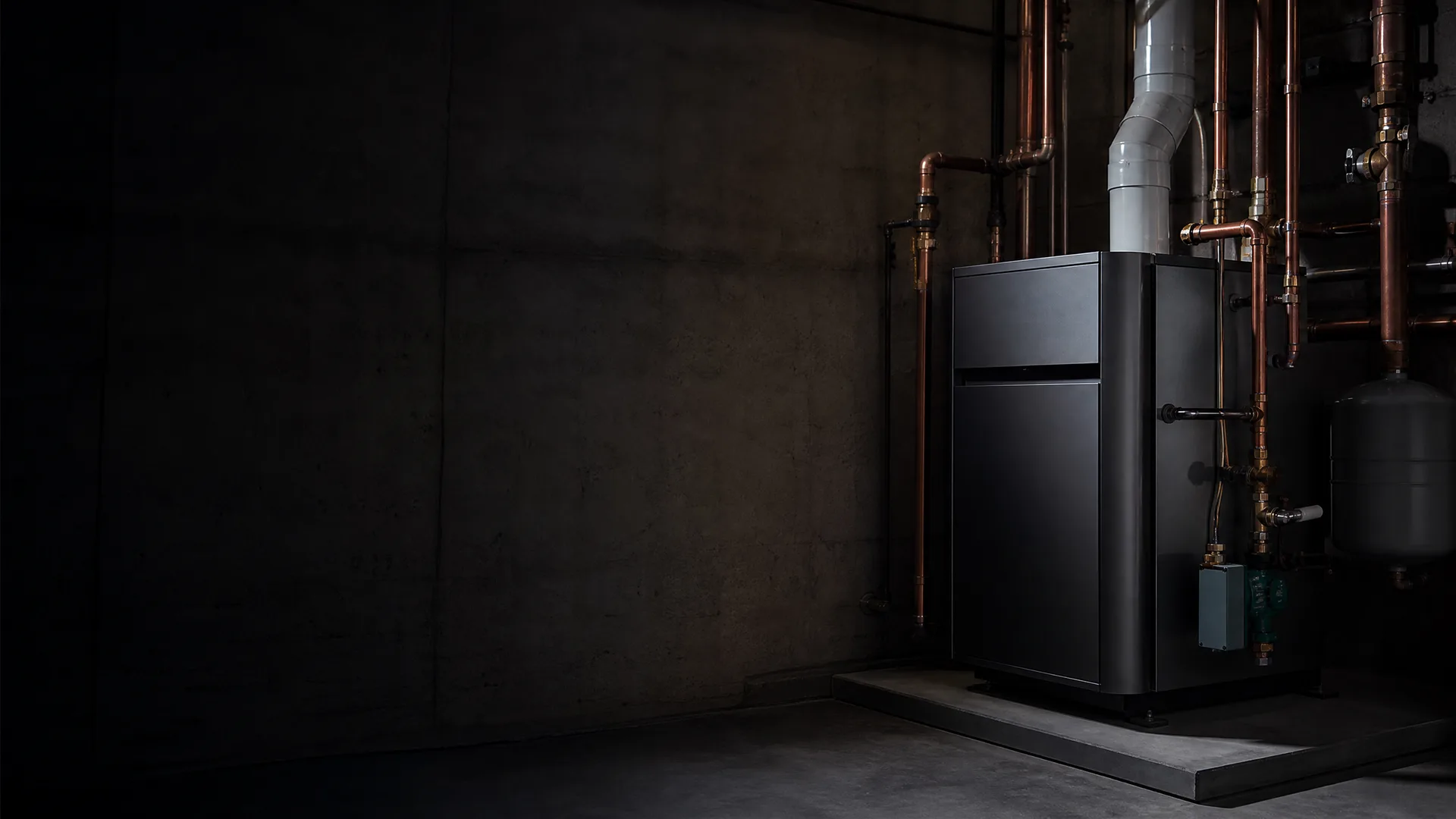
A black boiler unit on a concrete pad in a dim basement room, connected to copper pipes, a metal flue duct, and an expansion tank against a bare concrete wall.

Get your boiler to the right pro

Send the form and the boiler tune-up stops being something to remember.

Step 1 of 3: Equipment