Profile view of a bearded man wearing a dark baseball cap and a dark gray T-shirt against a plain off-white background.

Signs your boiler won't last an Iowa winter

Step 1 of 3: Equipment

A boiler that can't hold an Iowa winter usually tells you before it quits outright. Watch for rooms that stay cold no matter how high the thermostat goes, a kettle noise or banging from the tank as it heats, water leaking around the base, or a pilot light that won't stay lit. Short cycling, where it fires on and off every few minutes instead of running a steady stretch, is another one. These point to a failing heat exchanger, mineral buildup inside the tank, or a part wearing out from age, and any of them can leave you without heat when it's well below freezing outside and you need it most. A boiler running on a cracked heat exchanger or a worn circulator pump can fail on the coldest night of the year, not the mildest one, because cold is what strains it hardest. If your system is older and showing more than one of these, it's worth having someone look at it before the next cold snap, rather than after the heat is already out.

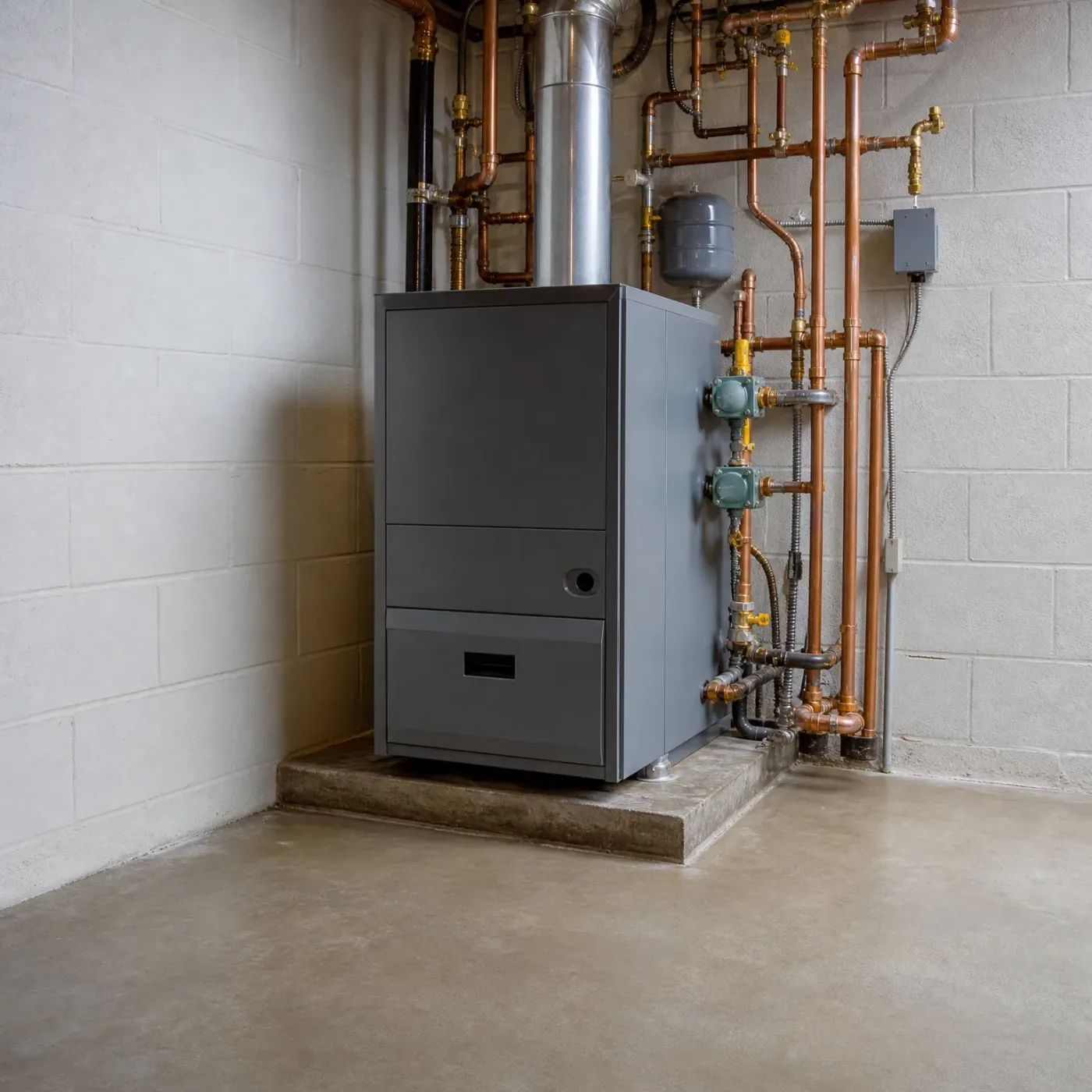
A gray boiler unit on a concrete pad in a basement corner, connected to copper piping, valves and a metal flue against painted concrete block walls.
A boiler like this is still holding its pressure, with clean, tight fittings and no rust bleeding from the joints.
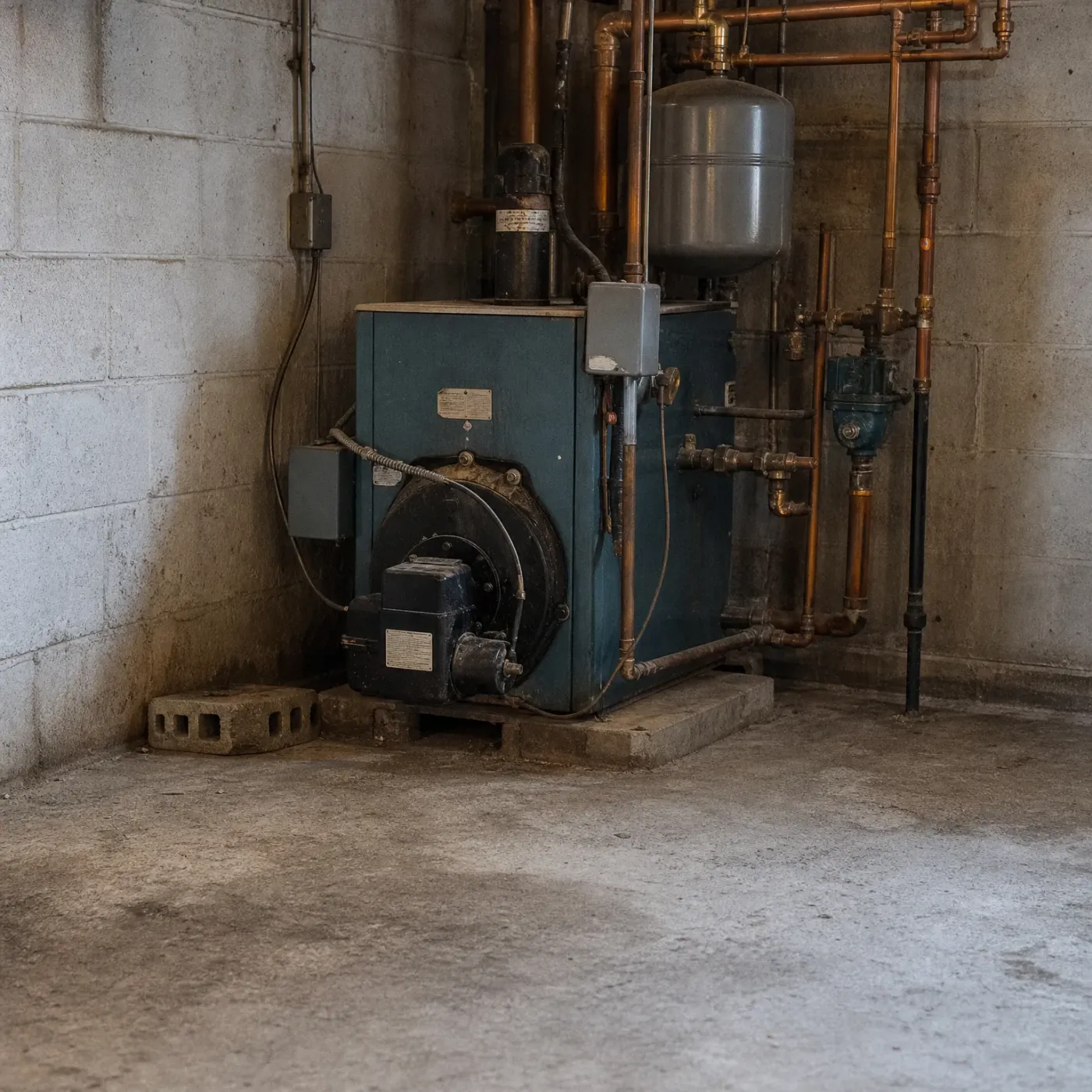
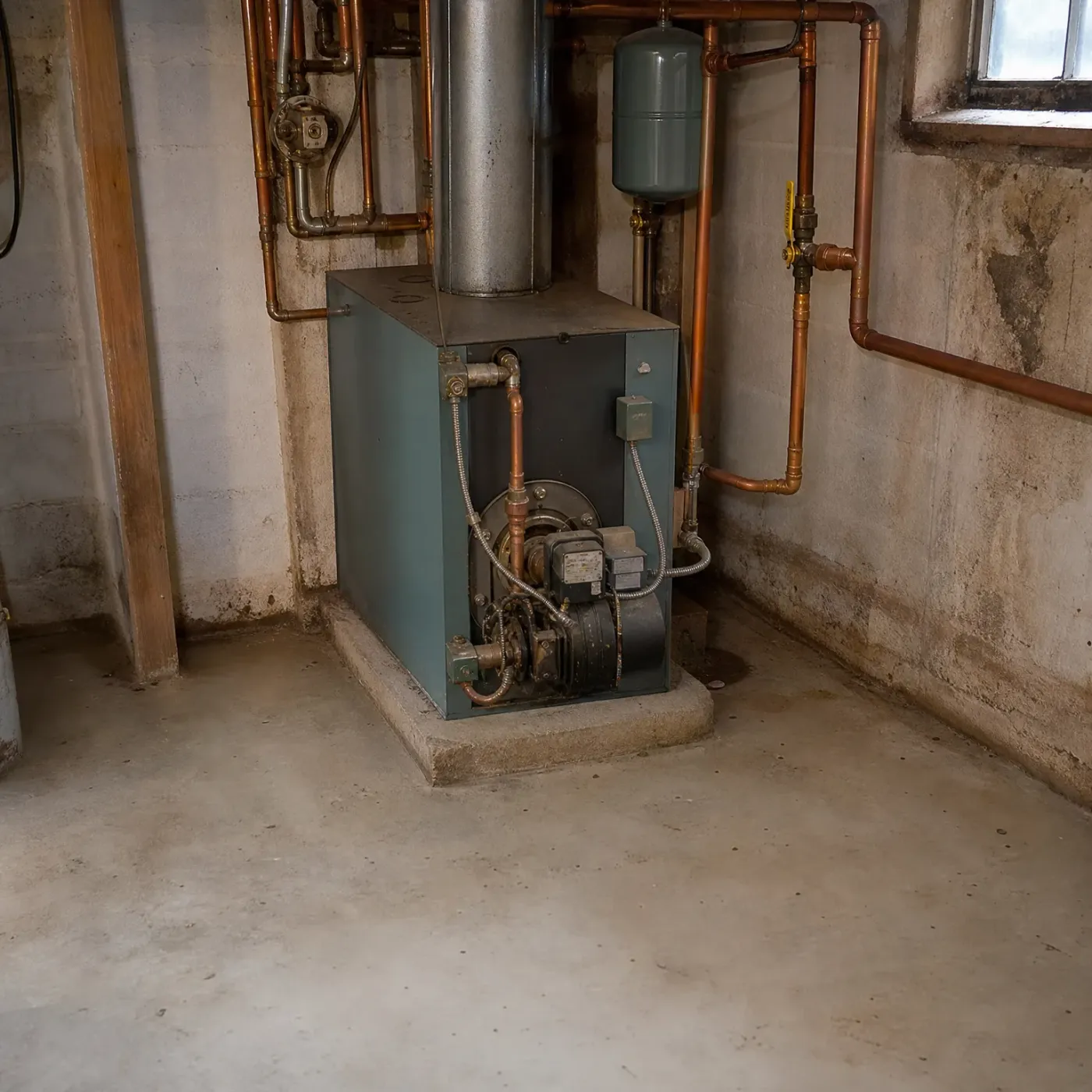
A blue oil-fired boiler with a burner unit sits on a concrete pad in a basement corner, with copper piping, valves and a gray expansion tank overhead against concrete block walls.
Blue paint and old iron pipe don't fail you here, but rust at a fitting or a damp spot on the floor means the tank itself is going.

A boiler doesn't just hold water, it heats it inside cast iron or steel sections, and every winter it runs, minerals in that water drop out as sediment along the bottom. That layer sits right between the fire and the water it's supposed to heat, so the burner has to work longer and harder to get the same warmth through to your radiators. The banging and kettling you might hear is water trapped under that sediment turning to steam and trying to escape. From the outside the tank can look fine, painted and solid, while that same sediment is wearing the iron thin from the inside. Heat isn't the only thing that can fail quietly. The circulator pump is what actually moves hot water out to your radiators or baseboard, and when it starts to go, you'll notice some rooms staying warm while others don't. There's also a low water cutoff built in to shut the burner down if water level drops too low. If yours keeps tripping that switch, water is getting out somewhere, and that's worth catching before the tank itself runs dry.

What's Happening Inside the Tank

  • Boilers heat water in a cast iron or steel section, and minerals in that water settle out as sediment over years of cycling.
  • A thick layer of sediment sits between the fire and the water, so the burner has to run longer to push heat through it.
  • That extra run time is what makes the banging and kettling you hear, as water pockets trapped under sediment flash to steam.
  • The same sediment eats at the iron from the inside, which is why a tank can look fine outside and still be thinning out underneath.
  • A circulator pump pushes the hot water out to the radiators or baseboard, and a failing one shows up as some rooms heating and others not.
  • The low water cutoff shuts the burner down if the tank runs low, and a unit that trips it often is losing water somewhere it shouldn't.
A woman in a gray sweatshirt with her hair pinned up sits in a living room looking off to the side, with a pale sectional sofa, cushions, a potted plant, framed wall art and a large window behind her.
A woman with long wavy brown hair in a gray top and dark cardigan stands near a window, looking to the side, with a living room, fireplace and round mirror blurred behind her.
A woman with curly dark hair in a grey long-sleeved top sits on a grey couch with patterned cushions, looking off to the side in a softly lit living room.
A woman in a gray knit sweater with her hair in a bun sits on a couch indoors, smiling and looking off to the side, with a dining area and framed picture blurred in the background.

A boiler working harder to heat the same rooms is burning more gas to do it, and an Iowa winter will show that on the bill before it shows anywhere else.

By the time you hear banging from the tank or feel cold spots that won't warm up, the sediment or the leak behind it has already been building for a while.

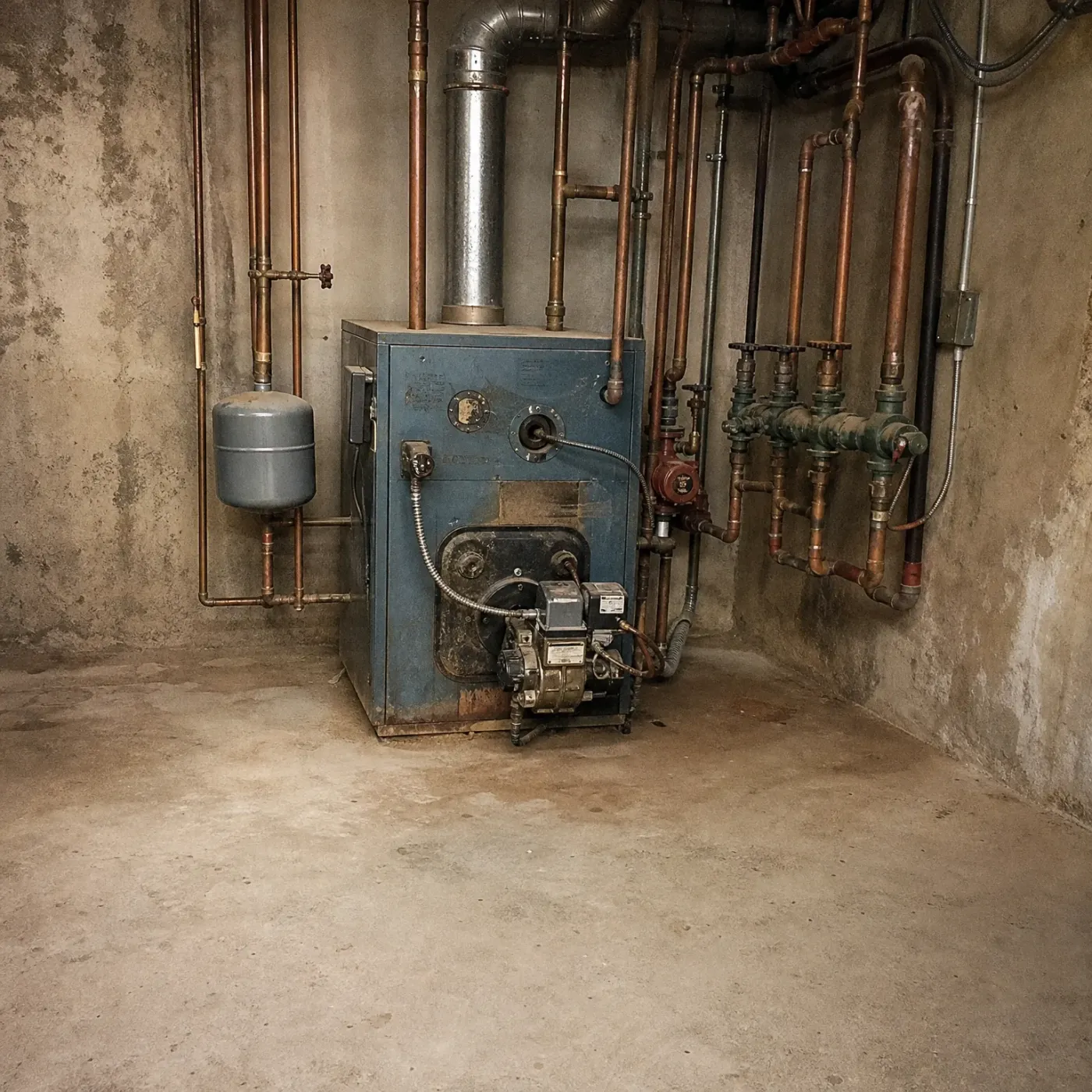
An older blue boiler with a burner unit stands in a concrete basement corner, connected to copper and steel piping, valves and a gray expansion tank on the wall.
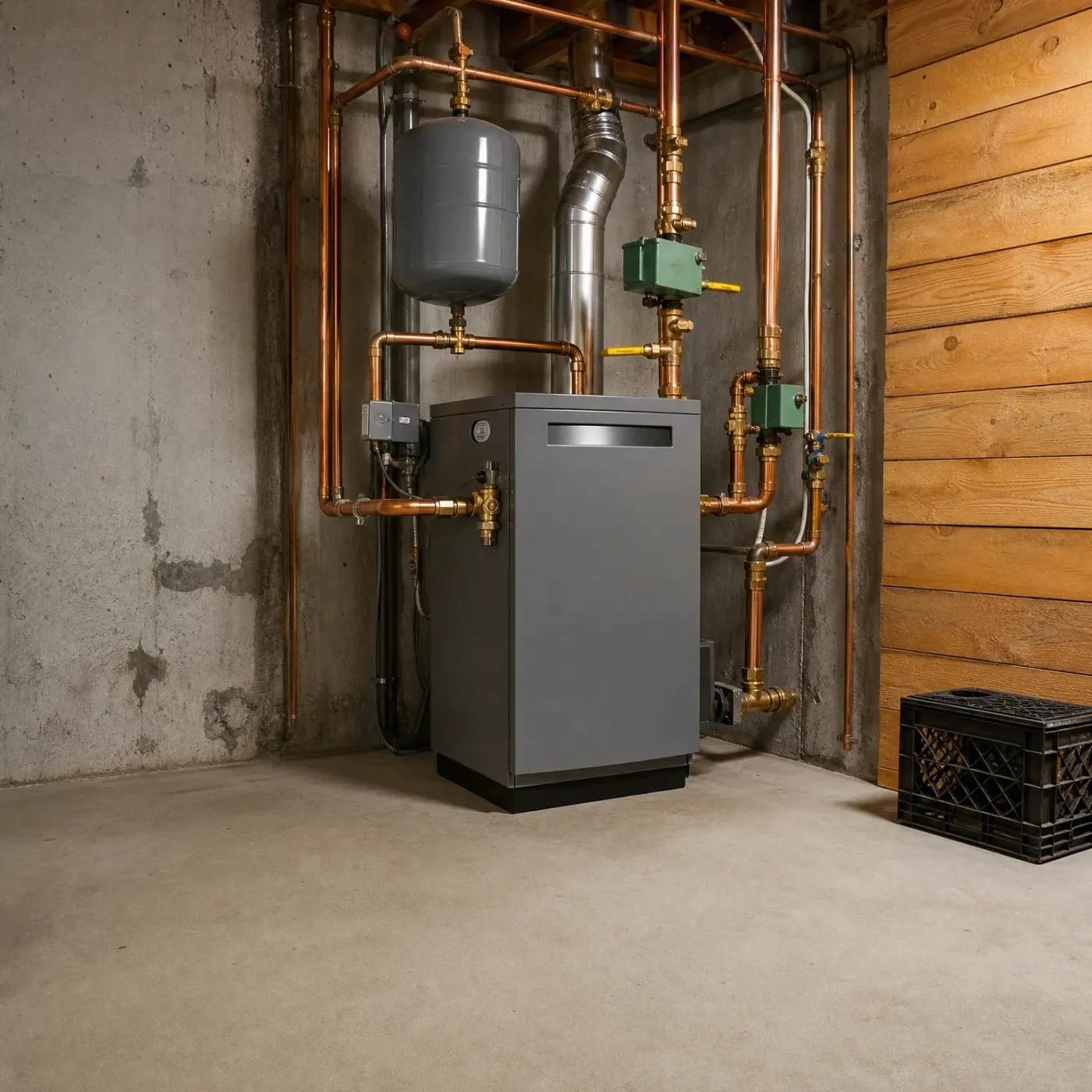
Before you get your boiler repair
A gray boiler unit in a basement corner with copper piping, brass valves, a gray expansion tank, a metal flue duct, concrete walls and a wood-paneled wall, with a black plastic crate on the floor at right.
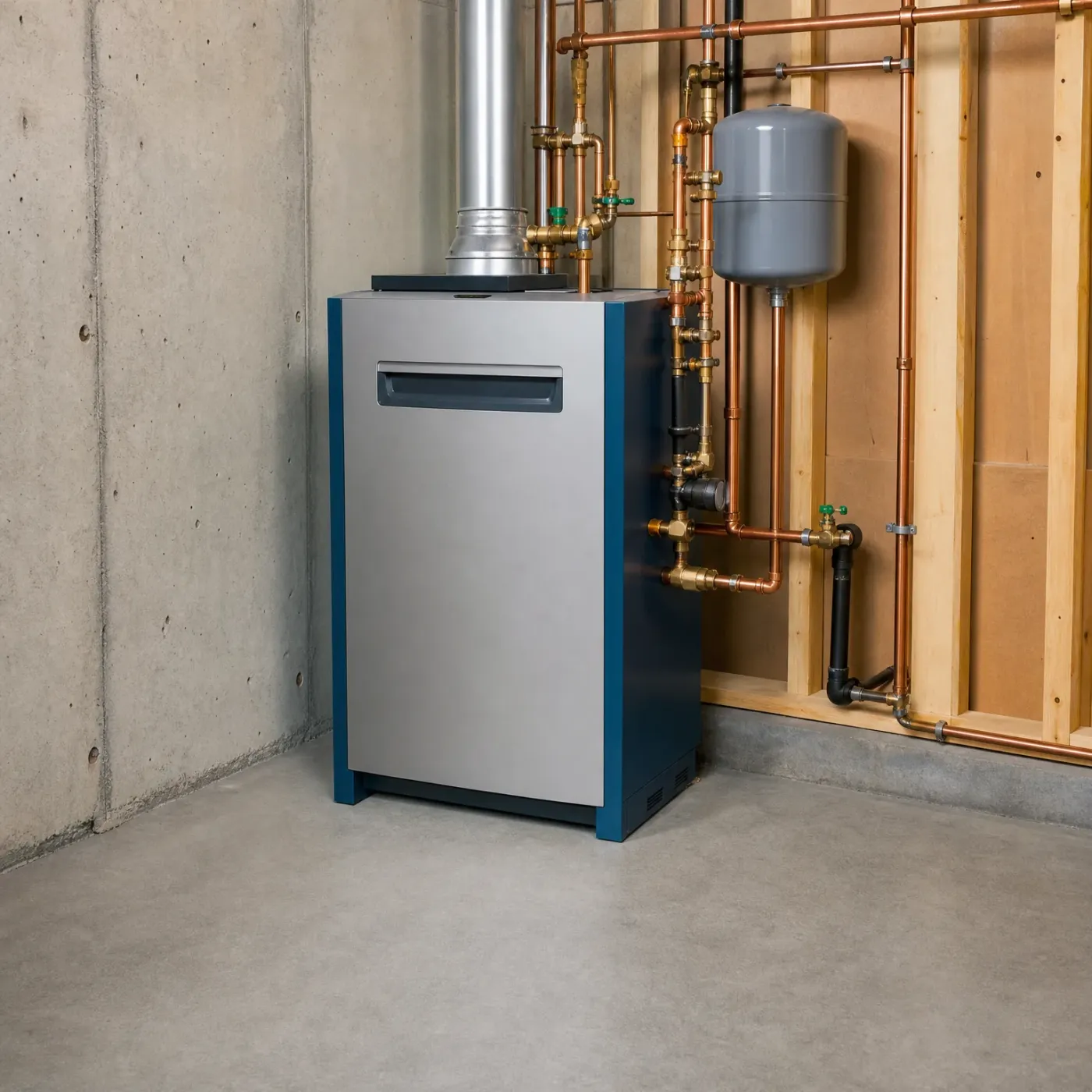
After you get your boiler repair
A gray and blue floor-standing boiler in a basement corner, with a metal flue pipe and copper and black piping, valves, and a gray expansion tank mounted on an unfinished wood-framed wall beside a concrete wall.

Running the way it should

Copper lines and brass fittings stay dry and tight, and the expansion tank mounted on the wall holds its pressure without strain. A boiler set up like this moves heat where it needs to go without the burner working overtime.

A green oil-fired boiler with a flue pipe, burner and circulator pumps sits on a concrete pad in a basement corner, surrounded by copper piping and an expansion tank against concrete walls.

Signs it's losing the fight

Piping along the block wall and the flue rising off the top don't tell you much on their own, but a boiler straining to keep a house warm will run longer and louder than it used to. If yours is pushing hard through an Iowa cold snap, that strain is the tank telling you something.

Winter nights average 15°F statewide

On a 15°F night your boiler can't ease into it, it has to hold that output for hours straight. A unit that's already losing pressure or fighting sediment shows its weakness right in those overnight hours, in rooms that never quite catch up.

NOAA nClimDiv 1991-2020 county normals weighted by homes

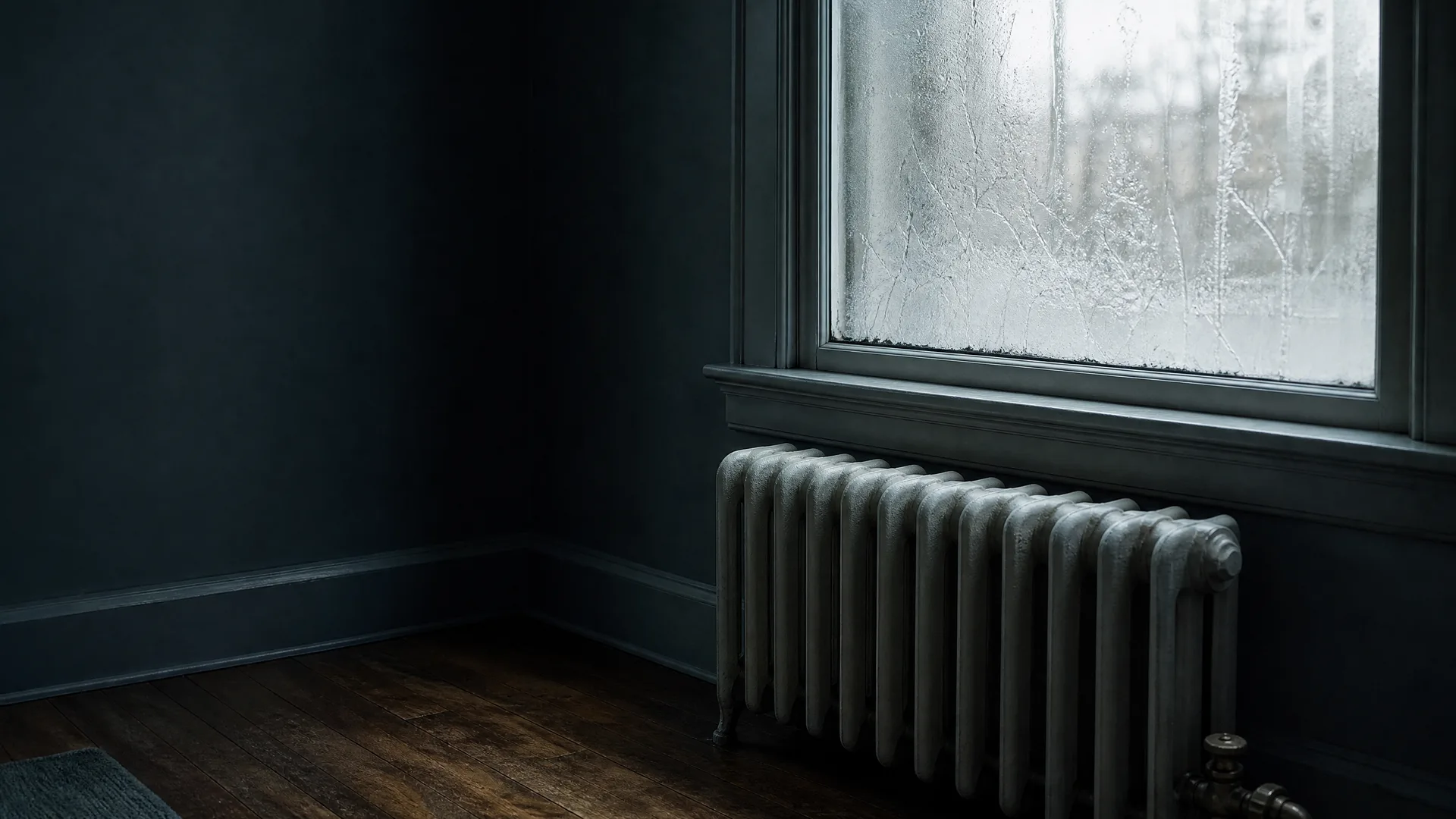
A cast iron column radiator under a condensation-covered window in a dim room with dark walls, dark baseboard trim and a worn wood floor.

It's just past six and still dark outside. The thermostat reads 68 but the air near the window feels colder than the hallway. Frost has crept up the inside of the glass overnight, a thin white film across the bottom corners. The radiator under the sill is warm at one end and cool at the other, ticking faintly. Outside, the yard is stiff with frost, the kind of January morning that sits at 10 or 15 degrees and doesn't move much past noon. You put a hand flat on the iron ribs, waiting for heat that doesn't come evenly. The kids will be up soon, looking for breakfast, and this is the room they eat it in.

Why does the back bedroom never warm up

Walk your house on a cold morning and pay attention to which rooms lag behind. If the one farthest from the boiler stays a few degrees cooler no matter how long the burner runs, that's a sign the system is losing its ability to push heat the full distance. Listen at the tank itself too. A low rumble or a tick as it fires, a radiator that gurgles instead of running quiet, or a thermostat that gets ignored because the room never catches up anyway. None of this strands you outright, but it means the boiler is spending more to deliver less, and on a night well below zero that gap is where a cold house and a frozen pipe start.

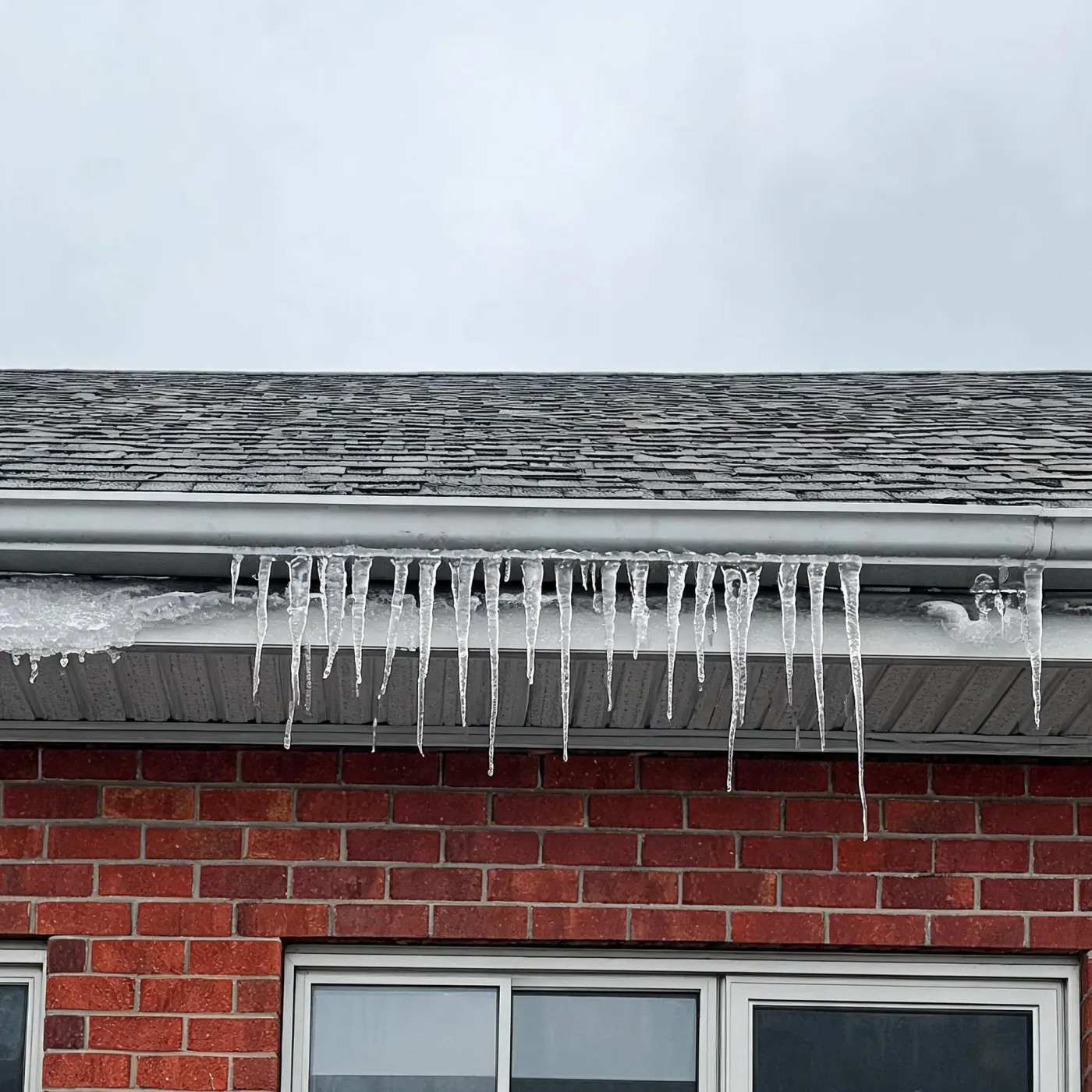
Icicles hanging from a white gutter along the edge of an asphalt-shingle roof on a red brick house, with a window below and overcast sky above.

15°F is the average low on a winter night across Iowa, per NOAA. A boiler that's sound handles that fine, it just runs its burner longer to keep up. One that's already lost pressure or built up sediment inside the tank will struggle right at that mark, and you'll feel it as a room that won't climb past 65 or a burner that seems to run nonstop after midnight. That's the stretch to watch, not the mild nights. If yours is already falling behind before the cold even sets in, a local contractor who works on these units all winter can tell you fast whether it's a fix or something bigger, and you'll only hear from the one.

NOAA nClimDiv 1991-2020 county normals weighted by homes

Send one request and you're done looking

You've read through the signs. Maybe one or two of them match what's happening in your house right now, the cold bedroom, the banging tank, the rust spot by the floor drain. Knowing what's wrong doesn't fix it, and a boiler that's already struggling in November won't get easier to live with in January. Iowa nights sit around 15°F for months, and a system that's losing pressure or fighting sediment has no slack left to give when it gets that cold. The part that's failing isn't going to heal itself over the next few weeks. Getting a local contractor who works on these systems every winter to look at it now, before the hard cold sets in, means whatever's going wrong gets caught while there's still time to fix it right, instead of at 2 a.m. when the burner finally gives out.

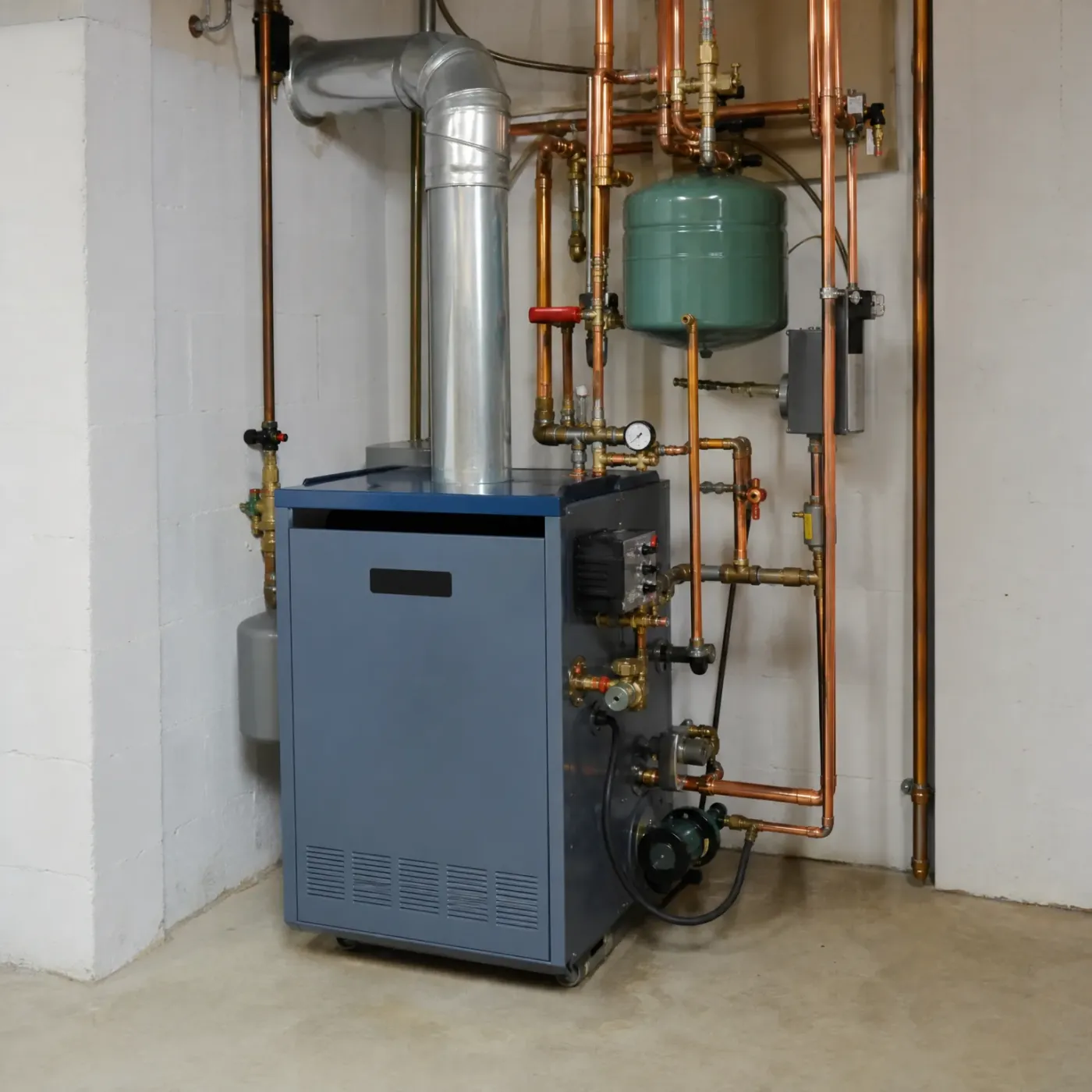
A blue-gray residential boiler in a basement corner, connected to copper piping, a green expansion tank, a circulator pump, gauges, and a metal flue pipe against painted block walls.

Holding up fine

The copper lines stay dry and the fittings stay tight. The expansion tank keeps its charge and the gauge sits where it should. A setup like this answers a cold snap by running the burner longer, not by falling behind.

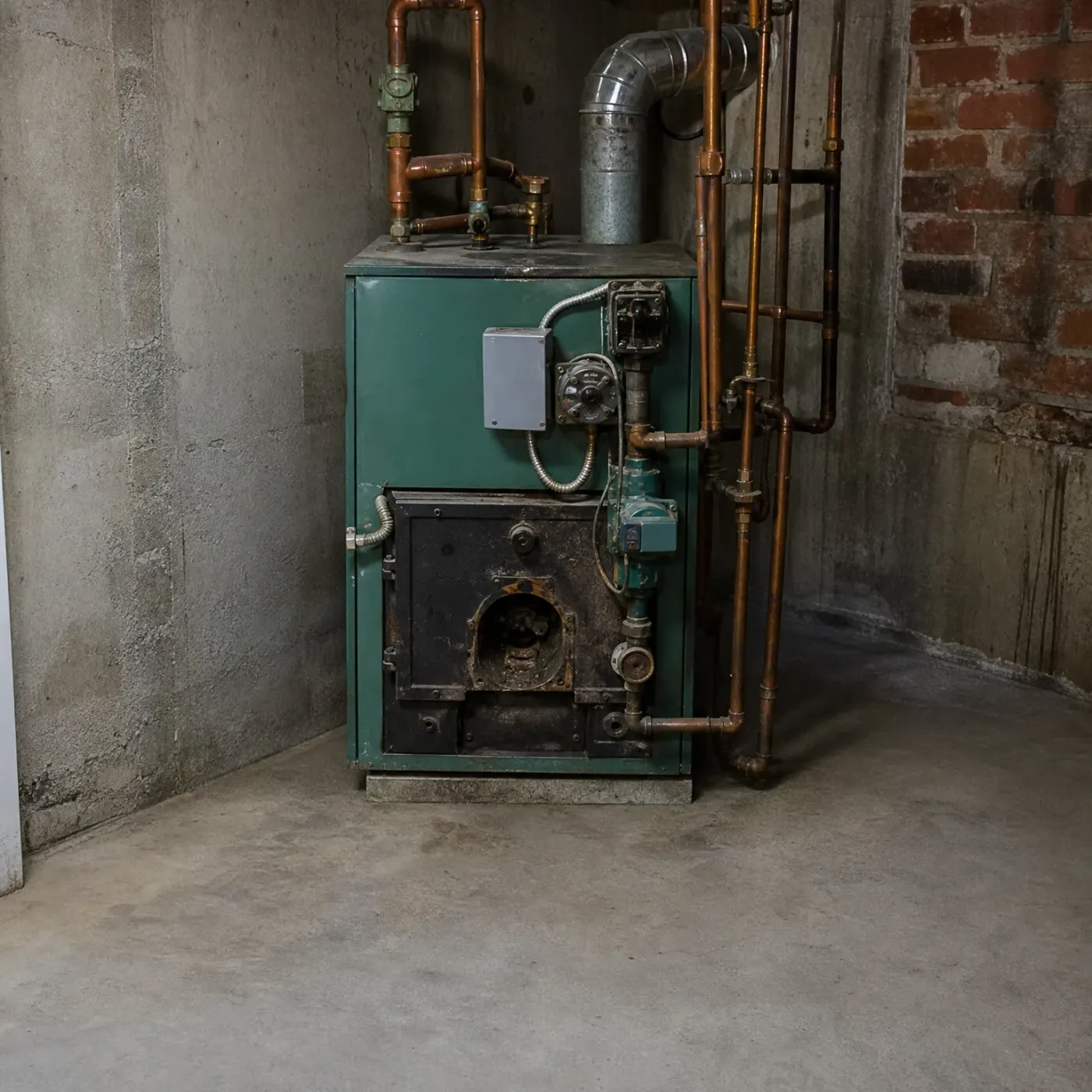
A green cast-iron boiler with a soot-stained front door, copper piping and a metal flue, standing on a concrete floor in a basement corner with concrete and brick walls.

On its way out

The firebox door is scaled with rust and the metal behind it has gone thin. Pipes still run to it, but a tank this far gone can't hold pressure the way it used to. By January this is the one that leaves a room cold.

Repair Now or Act Before the Cold Snap

Call for repair

  • The boiler holds pressure and the gauge sits steady, but one room still won't warm up on a cold morning.
  • A faint knock from the tank shows up now and then but hasn't turned into steady banging.
  • You've caught a little rust at one fitting, not a damp patch spreading across the floor.
  • The burner runs longer than it used to, and the gas bill shows it, but every room still comes up to temperature eventually.
  • The pilot lights and stays lit, it just takes a try or two some mornings.

Call before the next cold snap

  • A room stays cold no matter how long the burner runs, and it's the one farthest from the boiler.
  • The tank bangs or kettles every time it fires, not just once in a while.
  • Water sits at the base of the unit or near the floor drain, and it comes back after you wipe it up.
  • The pilot won't hold, or the burner short cycles instead of running a full heat cycle.
  • Pressure keeps dropping between fill-ups, so you're bleeding the system or adding water more than once a season.
A woman with her hair in a bun holds a sleeping boy against her shoulder, both wrapped in a thick cream knit blanket on a couch in a dim room with a lit lamp, potted plants and a shelf behind them.
An older woman with short gray hair in a cream cable-knit turtleneck sweater smiles while looking to the side in a wooden kitchen, with a round loaf of bread on a board in the foreground and a lit candle by a dark window.

What to do with these signs

  • Cold rooms, a knocking tank, rust at a fitting, or a rising gas bill each point to the same thing: the boiler is losing ground.
  • A 15°F night doesn't create new problems, it just shows you the ones already there.
  • A licensed boiler contractor local to Iowa sees these failures every winter and knows which ones can wait and which ones can't.
  • Sending one request means one contractor who knows this equipment calls, not a string of companies competing for the job.
  • None of these signs fix themselves once the cold settles in for the season.

Cold rooms, a knocking tank, rust at a fitting, a gas bill that keeps climbing, these aren't separate problems. They're the same boiler losing ground, showing itself in whatever way it can. None of them wait for spring to get better on their own, and a 15°F night will find whichever one you've been able to ignore so far.

The fix isn't guessing which sign matters most. It's getting someone who works on these units all winter to look at the pressure, the sediment, the fittings, and tell you what's actually failing. A boiler contractor licensed and local to Iowa has seen this exact pattern before, in houses not far from yours, and knows whether a knock means a minor fix or a tank near the end of its run.

Send one request and one contractor calls, the one who handles this equipment, not three or four companies working the same lead. That's less noise for you to sort through at the exact time you've got less patience for it. You've already read what to look for. The rooms that won't hold heat, the sound from the tank, the rust by the floor drain, you know now what they mean. What's left is having someone confirm it before the next cold snap turns a sign into a no-heat call.

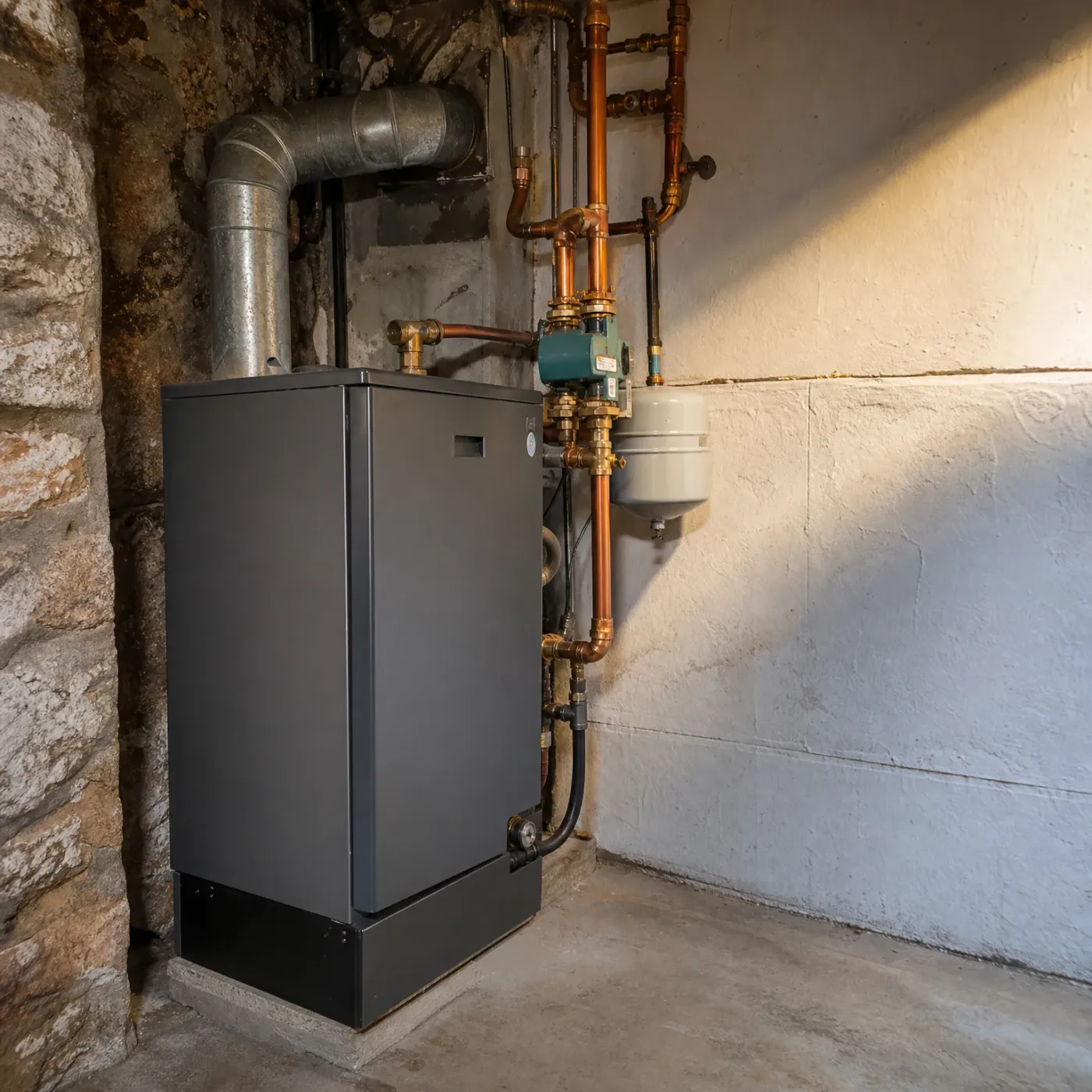
A dark gray boiler unit stands in a basement corner against a stone and painted concrete wall, connected to copper pipes, a circulator pump, an expansion tank, and a galvanized metal flue duct.

Finding a pro stops being your job

Reach a local pro

Only one pro gets your request, so you hear from one company.

No fee to send it, and nothing to sign.