Send the form and stop researching installers for the new boiler.
A boiler that's struggling in January doesn't wait for a convenient time to quit. Maybe it's short cycling, maybe the pilot won't hold, maybe it's just old and you're tired of wondering if tonight's the night it goes out for good. Either way, you're trying to figure out whether this is a repair or whether it's time to replace the thing, and you want a straight answer, not a guess.
That decision is easier with someone local who looks at boilers all winter and knows what tends to go wrong with them in Iowa homes. Most houses here heat with gas, and a contractor who works on these systems every season knows what a given age and symptom usually means, and whether a repair is worth doing or just delaying the inevitable.
Once you send the request, you're done chasing anyone down. You won't be stuck calling around to five different companies, waiting on quotes, trying to compare who said what. One licensed, local contractor gets your information and takes it from there. Finding someone stops being your job.
You still get the full picture, whether that means a repair that gets you through the season or a new boiler that's sized right for your house. What changes is that you're not the one doing the legwork to find a straight answer. That part is off your plate the moment the form goes in.
Below, you'll find what actually separates a repair situation from a replace situation, what a new boiler install involves, and what's worth knowing before someone comes to look at yours.
Most boilers in Iowa last between 15 and 20 years, and once one passes that mark, repair gets less reliable as a fix. A cracked heat exchanger, a failing circulator pump, or a control board that's started acting up are all signs the boiler is wearing out rather than just having a bad day. If your boiler is under 10 years old, a repair usually makes sense, especially if it's the first issue you've had. If it's older than 15 years and this isn't the first repair call, replacing it is usually the better move financially. Gas is the main fuel for heat in most Iowa homes, and a new boiler burns it more efficiently than one installed in the 2000s or earlier. Winters here are long and hard on heating equipment, and a boiler that keeps failing in the cold months puts the people depending on it at risk every time it goes down.
A boiler is a closed system, and most of its problems show up as pressure or heat that isn't getting where it should. If the gauge keeps dropping, water is escaping somewhere, through a pipe joint or a tired expansion tank, and it won't stop on its own. If the burner shuts off on its own, check the vent before you assume the worst. Iowa winters put a lot of exhaust through that pipe, and corrosion or blockage is enough to trip the safety switch that protects you from backdrafting. A pump that runs but doesn't deliver heat upstairs is usually mechanical, a bearing that's seized, not an electrical fault a new thermostat will solve. Heat that cycles on and off faster than it should often points to a limit switch misreading the water temperature rather than the burner itself. And if the boiler runs longer than it used to for the same warmth, mineral scale may be coating the inside of the heat exchanger, making the metal work harder to pass heat through. Some of this is a quick fix. Some of it tells you the boiler is on its way out.
How a boiler actually fails
Boilers heat water in a sealed loop, so a drop in system pressure usually means a slow leak somewhere in the piping or a failing expansion tank.
Most gas boilers in Iowa use an atmospheric or power vent, and a blocked or corroded vent is a common reason one trips out on a safety switch.
A circulator pump that hums but doesn't move water usually means a seized bearing, and no amount of thermostat adjusting will fix that.
Short cycling often traces back to a limit switch or a thermostat sensing water temperature wrong, not the burner itself.
Mineral buildup inside a cast iron heat exchanger insulates the metal from the water, which makes the boiler run longer to reach the same temperature.
A pilot that won't stay lit is almost always a worn thermocouple, a part a tech can swap in minutes if the rest of the boiler is sound.
Before you get your boiler installationAfter you get your boiler installation
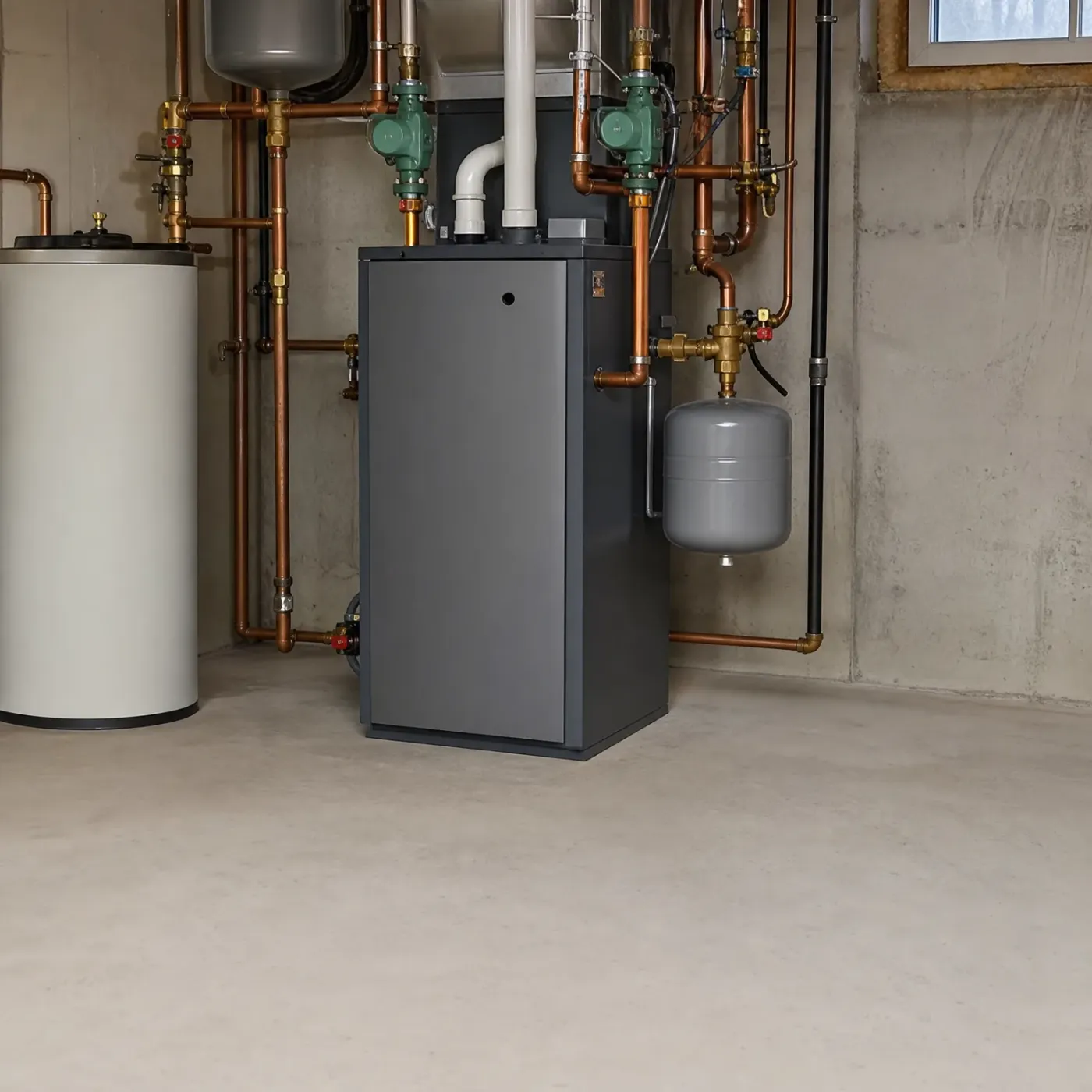
The boiler cycles on, heats the loop, and shuts off without drama. Pressure holds steady, the pilot stays lit, and the pipes and pumps around it do their job quietly. This is a boiler that's kept up with and still has years of service ahead of it.
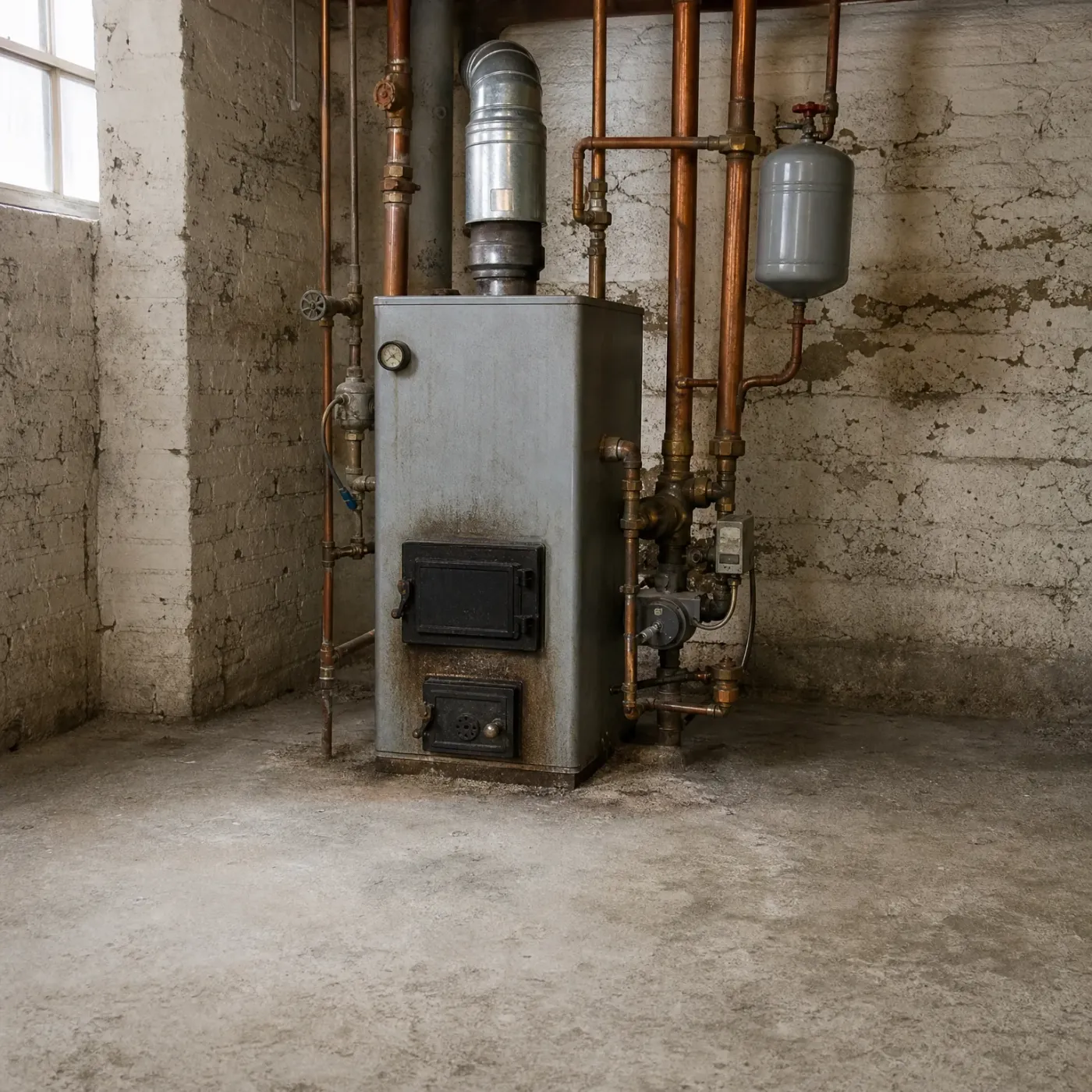
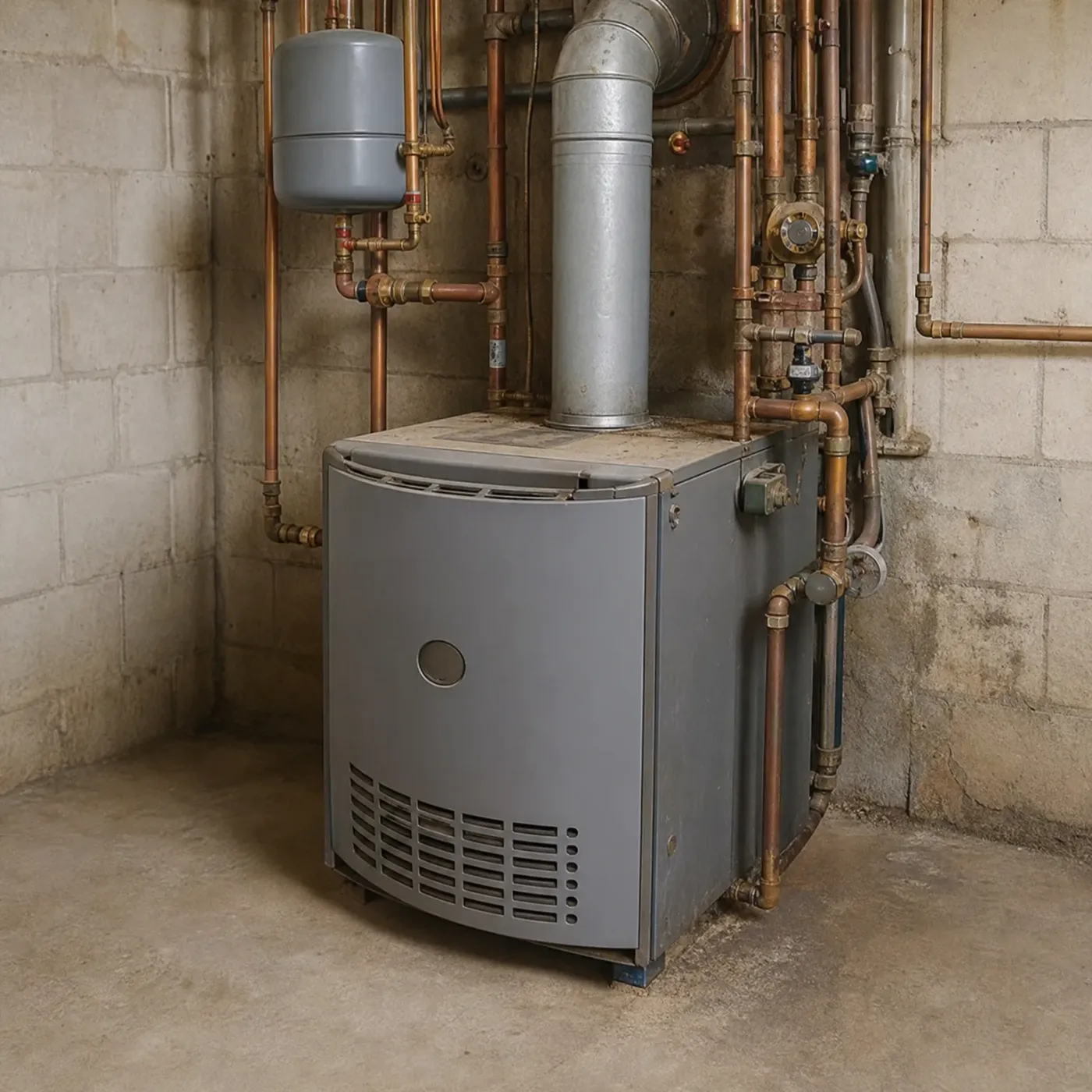
On its way out
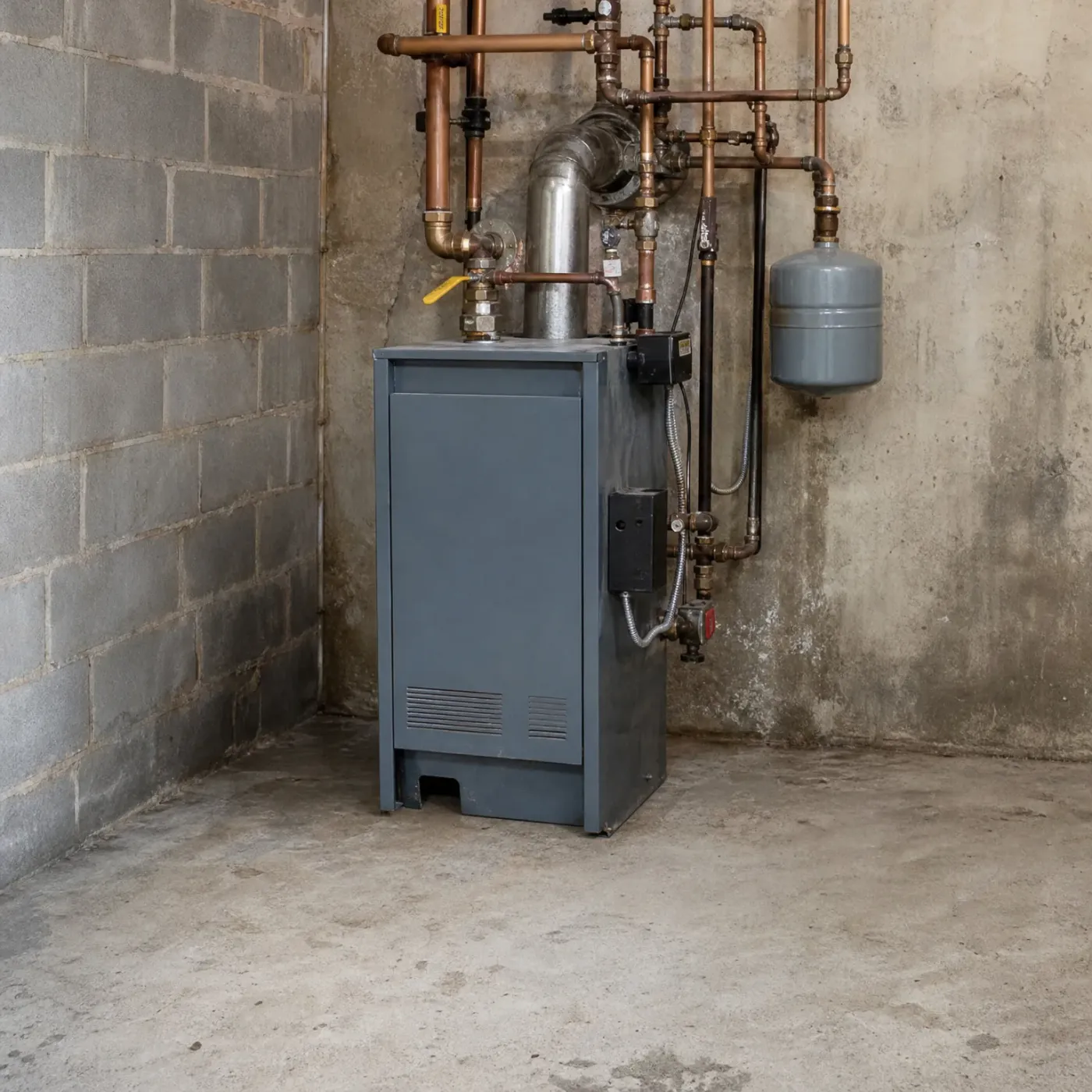
A cast-iron boiler like this one has likely been running for decades, and it shows. Corrosion on the flue, pressure that won't hold, a pilot that keeps dying out. These are the signs a boiler is closer to its last winter than its first.
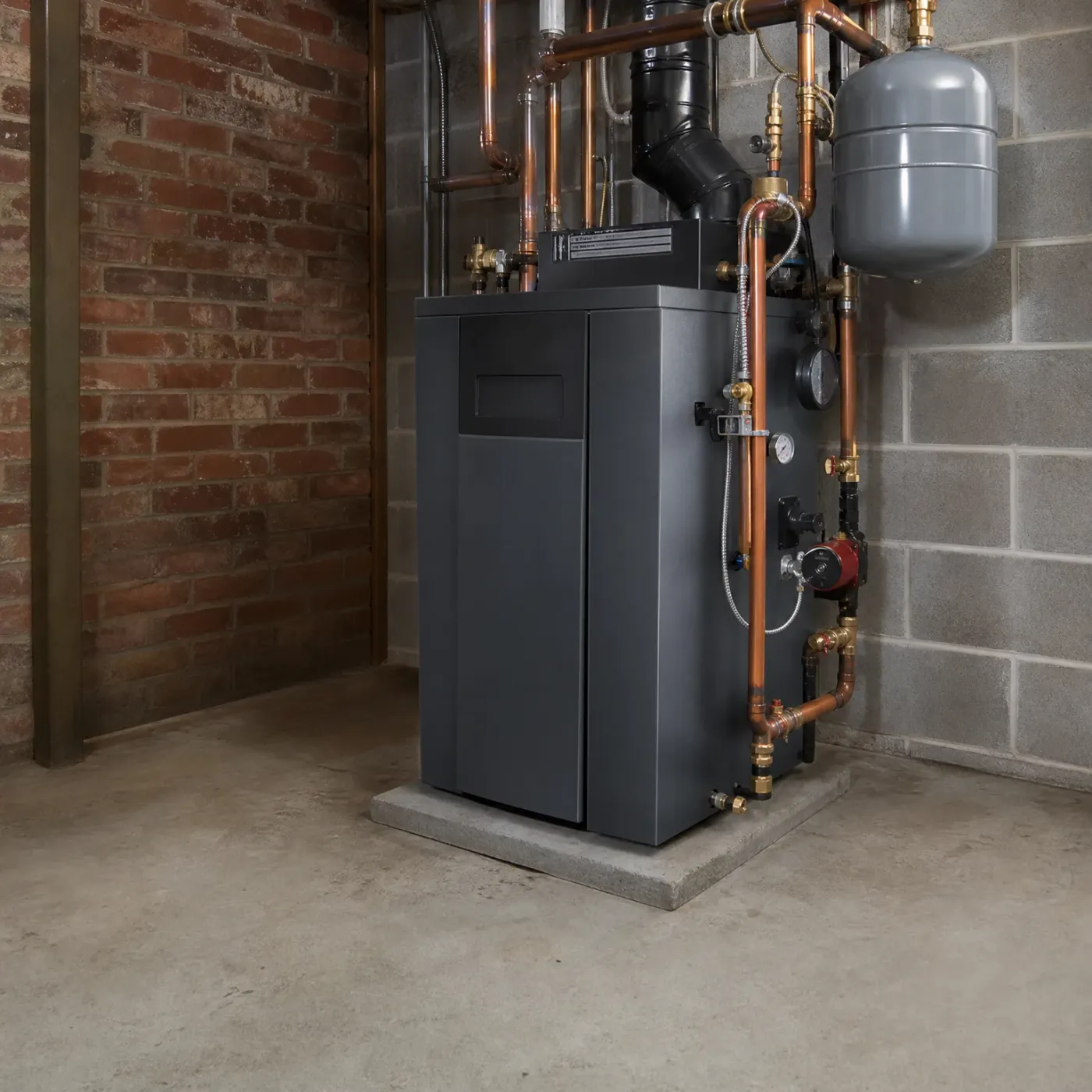
Still doing its job
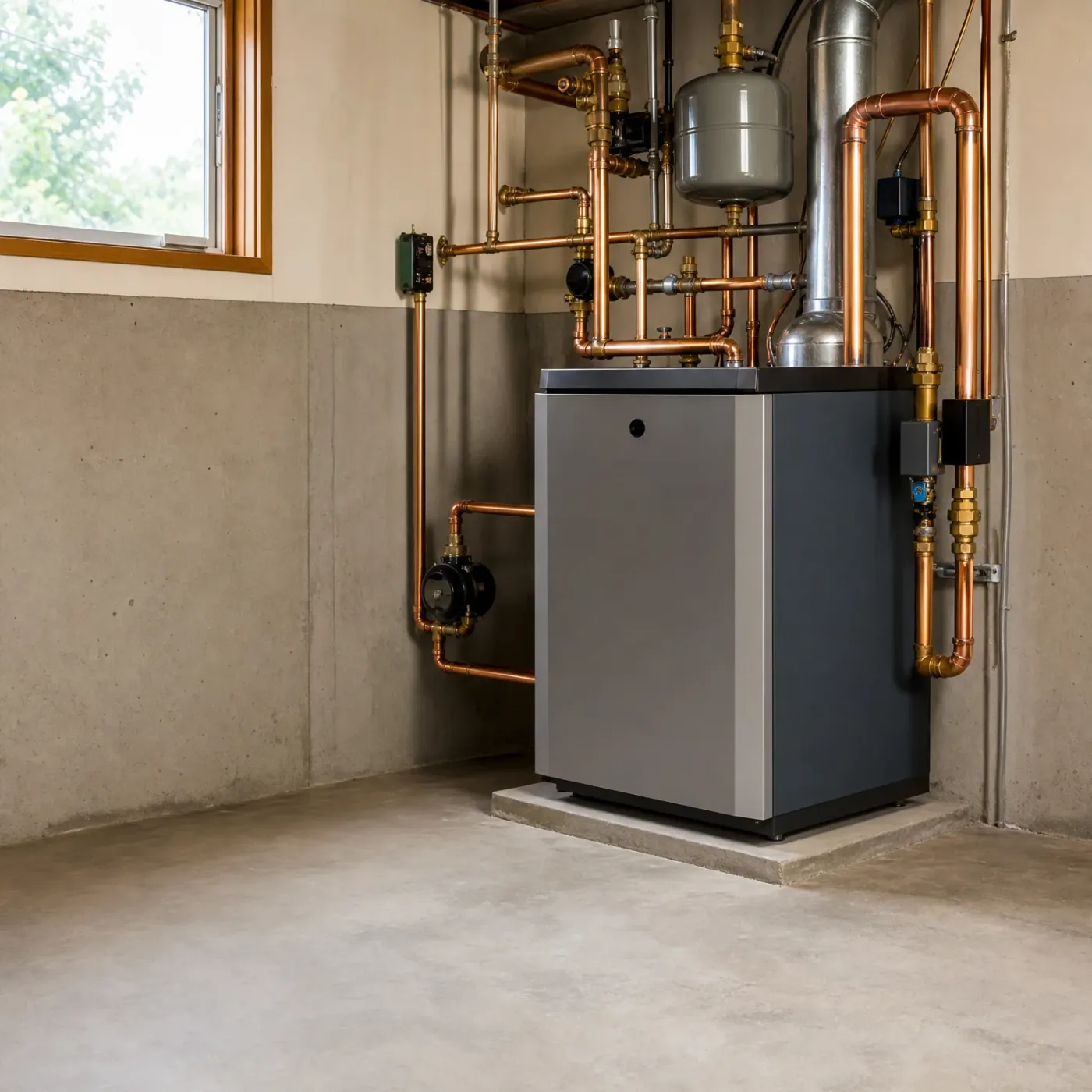
Copper lines run clean to the expansion tank, pressure gauges sit where you can check them, and the boiler holds its place on the pad without fuss. A system wired and plumbed like this is one worth repairing when something small goes wrong.
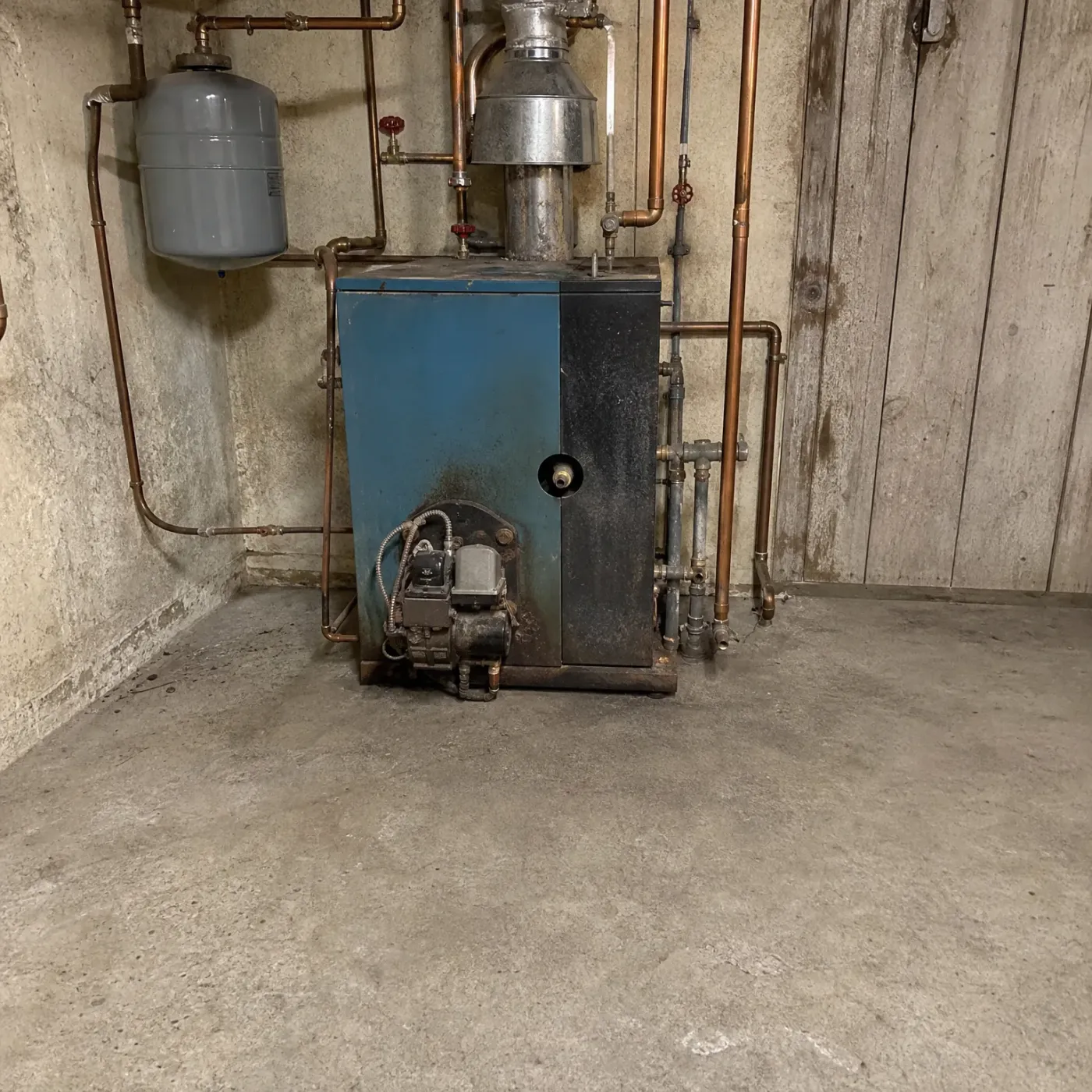
Past its working life
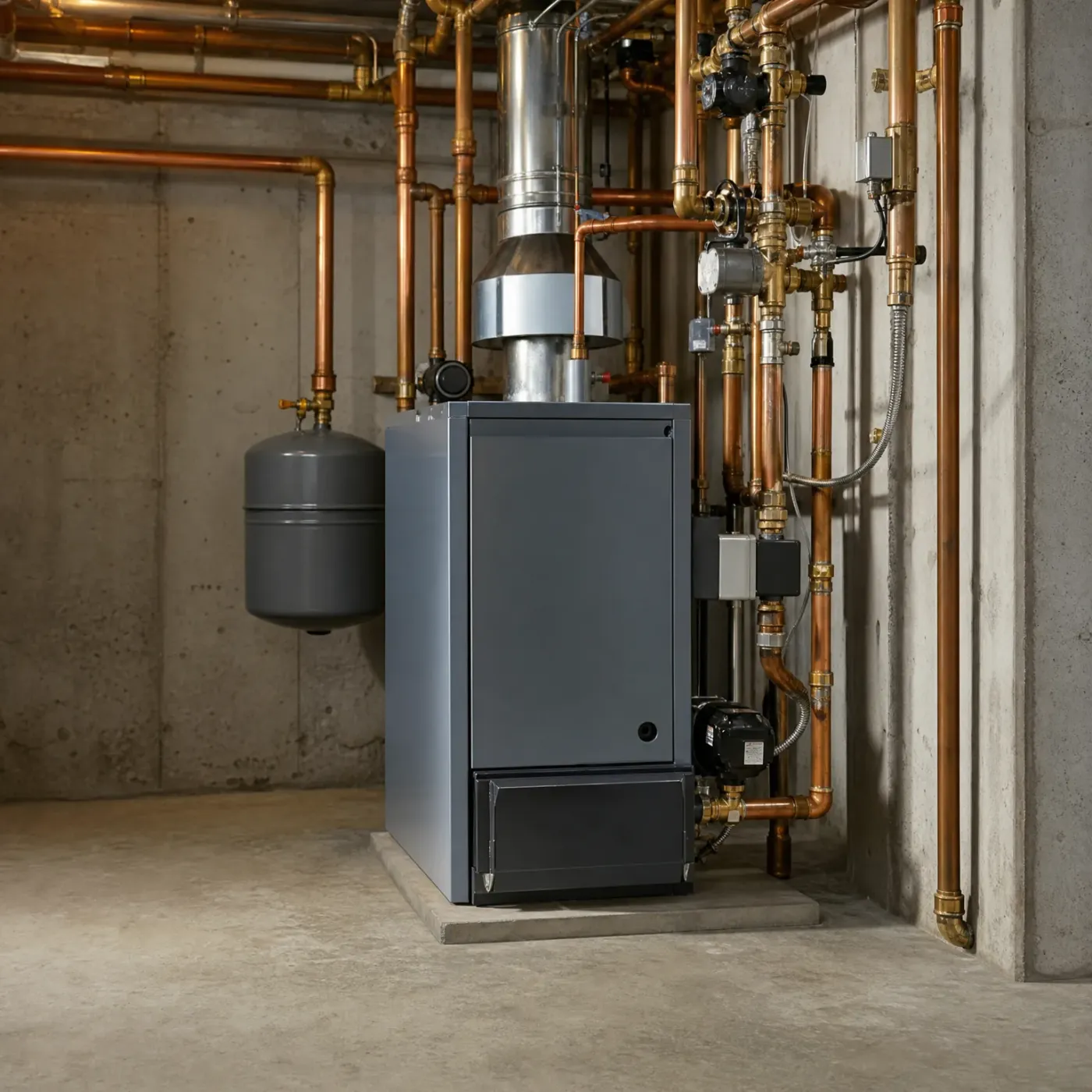
This oil-fired boiler is old enough that parts for it are getting harder to find. When a unit like this fails, you're often choosing between hunting down obsolete parts and putting in a boiler built for how your home runs today.
Repair the Boiler or Replace It
Repair
A circulator pump or zone valve replacement runs a lot less than a new boiler and can solve the problem outright.
If the heat exchanger and controls are sound, fixing the one part that failed gets the heat back on without touching anything else.
A boiler under 15 years old with one isolated problem is usually still worth putting money into.
Repairs happen fast once parts are on hand, which matters when it's January and the house is cold.
If this is the first issue the boiler has had, there's no reason yet to assume the next one is close behind.
Replace
Once a boiler is past 15 to 20 years, each repair is a bet that the next part won't fail a few months later.
A cracked heat exchanger can't be patched, and finding one means the boiler itself is done, not just a part.
New boilers recover heat faster and hold pressure more consistently than a unit that's been patched over several winters.
If you've had more than one repair in the past year or two, replacing it stops the pattern instead of paying into it again.
Pairing a new boiler with current controls and a sound expansion tank gives Iowa winters less to go wrong with.
An old boiler that keeps losing pressure or short cycling is spending fuel without heating the house as well as it should.
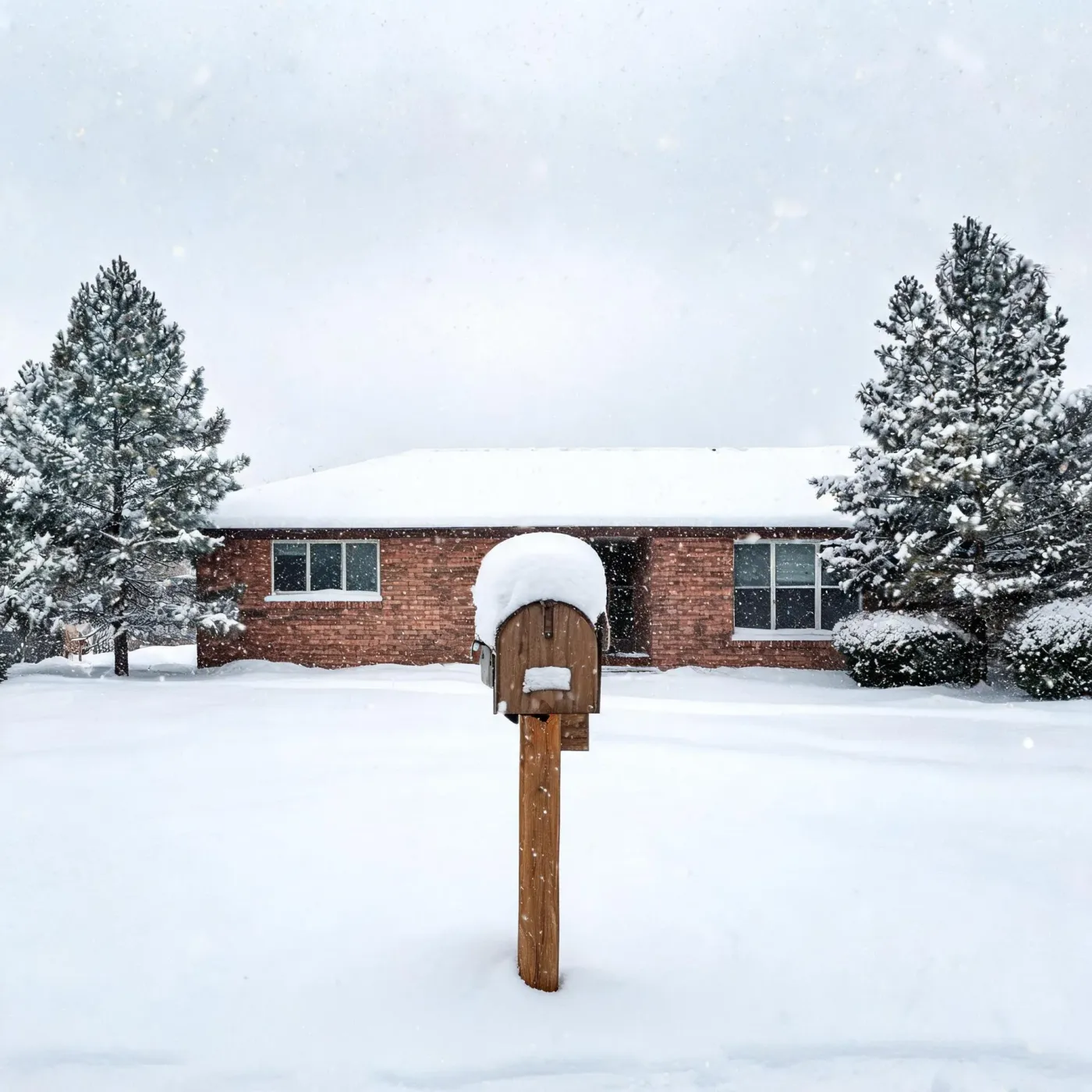
Statewide, winter nights average 15°F, according to NOAA climate data, and in Iowa your boiler is the thing standing between that cold and a warm house. At that temperature it's not cycling on for a few minutes here and there. It's running long stretches, often overnight, to keep the loop hot and the rooms even. An old circulator pump or a weak pilot gets found out on nights like these, not in October. If the heat holds steady through a 15°F night without the boiler running constantly or the pressure gauge creeping down, the system is keeping up with what Iowa winters ask of it.
NOAA nClimDiv 1991-2020 county normals weighted by homes
Copper lines, brass fittings and the pumps around them show no corrosion, and the boiler sits quiet once it reaches temperature.
A galvanized flue pipe like this corrodes from the inside, and rust at the seams often means it needs replacing before next winter.
Winter nights average 15°F statewide
At 15°F, your boiler holds the loop at full output for hours at a stretch rather than cycling on and off. An aging circulator pump or a weak heat exchanger has little room to rest when nights stay that cold.
NOAA nClimDiv 1991-2020 county normals weighted by homes
Where This Leaves You
A boiler past 15 to 20 years old is usually better replaced than patched, especially once the heat exchanger or circulator pump is failing.
A newer boiler holds pressure, keeps the pilot lit, and runs without the short cycling that wears on an aging system.
A licensed Iowa contractor who works on boilers all winter knows what tends to fail first in this cold and what to check before anything else.
Sending one request puts you in touch with a single local contractor, not a string of callbacks from companies you don't know.
Replacing a boiler before a hard freeze means you're not waiting on a repair with the heat already out.
Whether you repair or replace, the loop, the pump and the vent all need to be working together before the next cold night.
The boiler itself tells you most of what you need to know. One that's past 15 to 20 years and starting to show it, a cracked heat exchanger, a circulator pump on its way out, a control board acting up, is usually past the point where repair makes sense. One that's younger and still holding pressure, still keeping the pilot lit, is worth fixing when something small fails. There isn't a third option that splits the difference.
What happens next matters as much as which path you're on. A boiler contractor who works in Iowa all winter has already seen what a night at 15°F does to a weak circulator pump or a flue pipe rusting from the inside. They're not guessing at what usually goes wrong here, they're checking the same handful of things every time because those are the things that fail.
Sending one request connects you to that one contractor, not a handful of companies competing for the callback. No repair or installation gets scheduled before you've talked it through and agreed on what the house needs.
If the boiler is replaced, it should happen before the cold sets in hard, not during it. If it's repaired, the loop, the pump and the vent all need to be working together before the next freeze, not just the one part that failed. Either way, you're not left guessing what to do with what you've read here.