
IA Boiler Service

Is radiant floor heat worth it in Iowa

Send the request and finding a pro stops being your problem.

I'm done searching

Radiant floor heat is worth it in Iowa if you're already running a boiler, since that's the equipment it needs to work. It runs hot water through tubing under the floor instead of pushing heated air through ducts, so rooms warm evenly from the ground up and the furnace blast you get from forced air goes away. Most homes in Iowa heat with gas, and a boiler already uses gas, so adding radiant floors is a matter of extending what the system does rather than replacing how the house is heated. It won't do anything for summer, when the humidity here is the bigger problem, since the floors only carry heat, not cooling. For a house with cold winters, the comfort gain is real: no cold floors, no cold drafts near windows. The tradeoff is that it only makes sense where you can install tubing into or under the floor, and that's easier in a renovation or new room addition than in a finished house with floors you don't want to tear up.

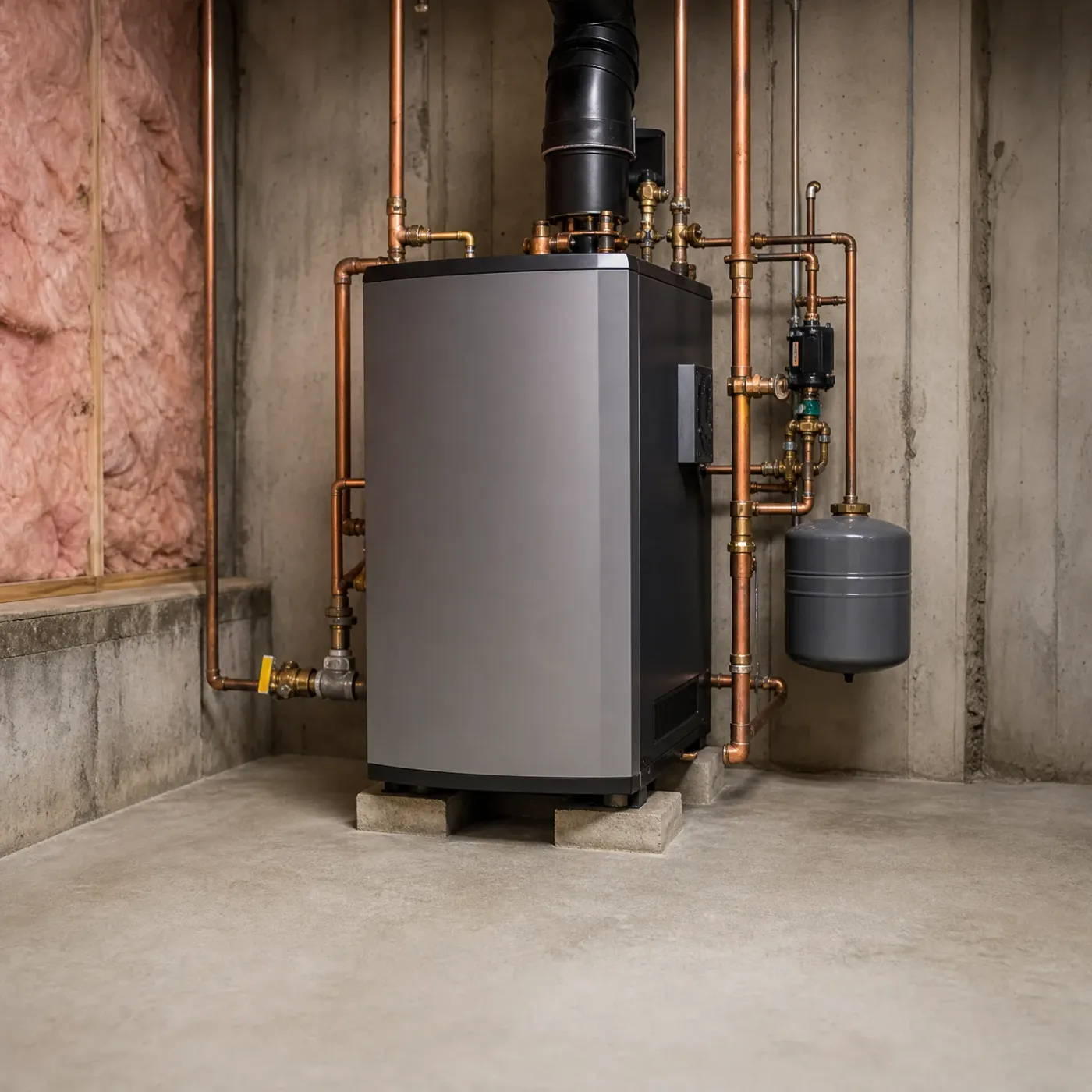
A wall-mounted grey boiler with copper pipework and white flue pipes installed against a concrete wall in an empty room with a plain pale wall to the right.

Why it pairs with a boiler

Radiant floor heat needs a heat source that can send hot water through tubing, which is exactly what a boiler already does. Adding a forced-air furnace alongside your boiler to run radiant floors doesn't make sense, since you'd be paying for two systems. With a boiler already in the house, the radiant loop just becomes another thing it heats water for.

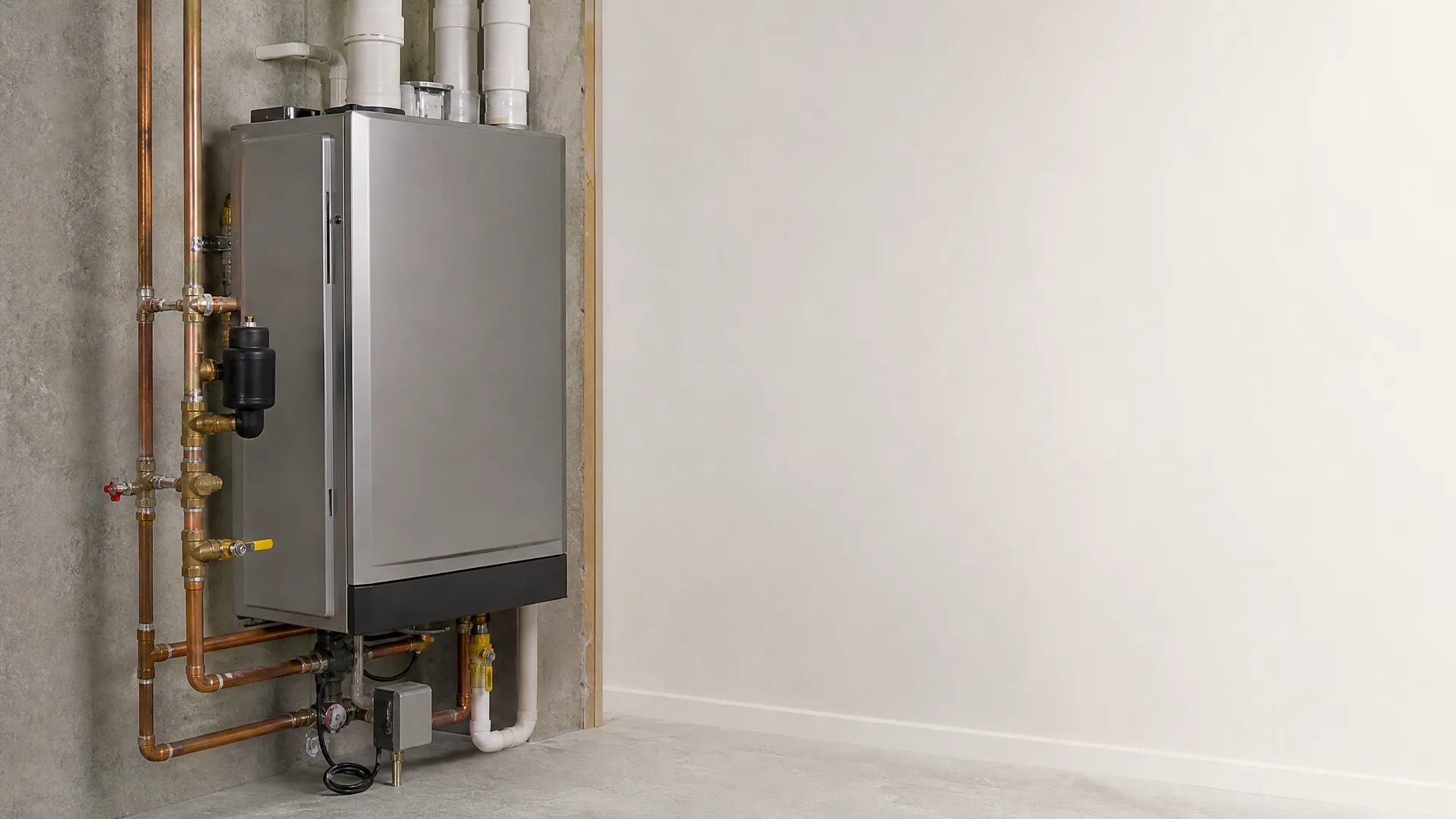
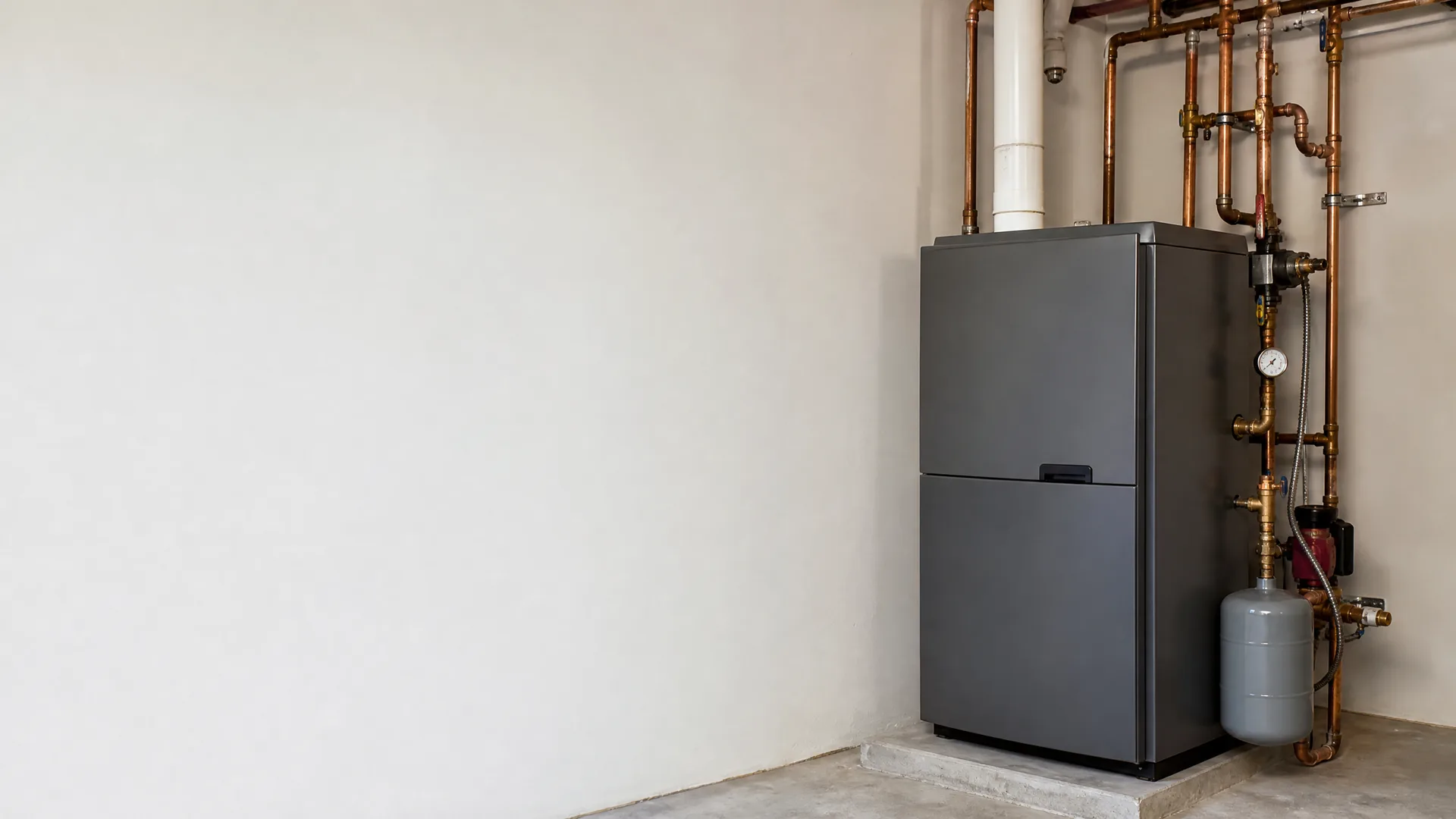
A dark grey boiler unit stands on a concrete pad against a plain light wall, connected to copper pipes, a pressure gauge, a pump and a grey expansion tank.

What it means for gas use

Most homes in Iowa heat with gas, and a boiler already runs on it. Water holds heat longer than air does, so once the floor is warm it keeps giving off heat after the boiler cycles off. Forced air cools fast when the furnace stops. That steadier heat is what radiant floors are known for, and it comes from the water, not the gas itself.

How does radiant floor heat actually get installed with my boiler?

You've got a boiler already, and you're trying to picture what adding radiant floors actually involves. It's not an abstract question. You want to know what gets connected to what, whether your boiler can run both jobs, and where the work happens in the house before you spend an evening deciding this is worth pursuing.

A manifold splits the loop, and a mixing valve controls the water temperature

Tubing gets laid under the floor in loops, and those loops run back to a manifold, which is the box where all of them connect and get balanced so each room gets even heat. That manifold ties into your boiler's piping. Radiant floors run on cooler water than baseboard or cast iron radiators need, so a mixing valve gets added to bring the boiler's output down before it reaches the tubing. If your boiler already serves radiators or baseboard elsewhere in the house, it can usually run both zones, with the floor loop on its own mixing valve and thermostat so each zone gets what it actually needs.

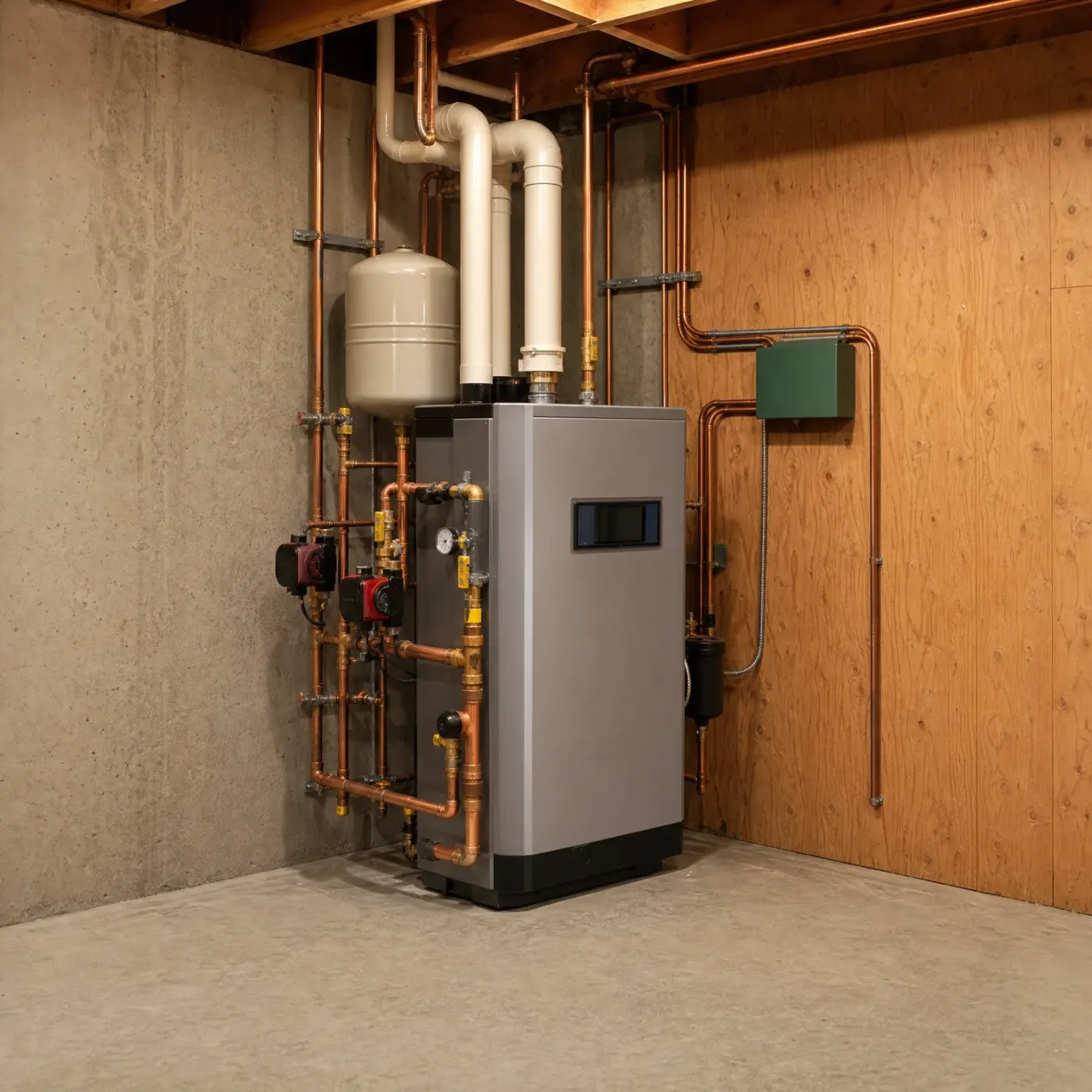
A gray floor-standing boiler in a basement corner with copper piping, two red circulator pumps, a beige expansion tank, white PVC vent pipes, concrete and plywood walls.

Boiler running radiant floors

This is what the install adds to what you've already got: a manifold feeding tubing loops, tied into the piping and the expansion tank you see here. The boiler still does the heating. It just sends water to the floor instead of, or alongside, your radiators.
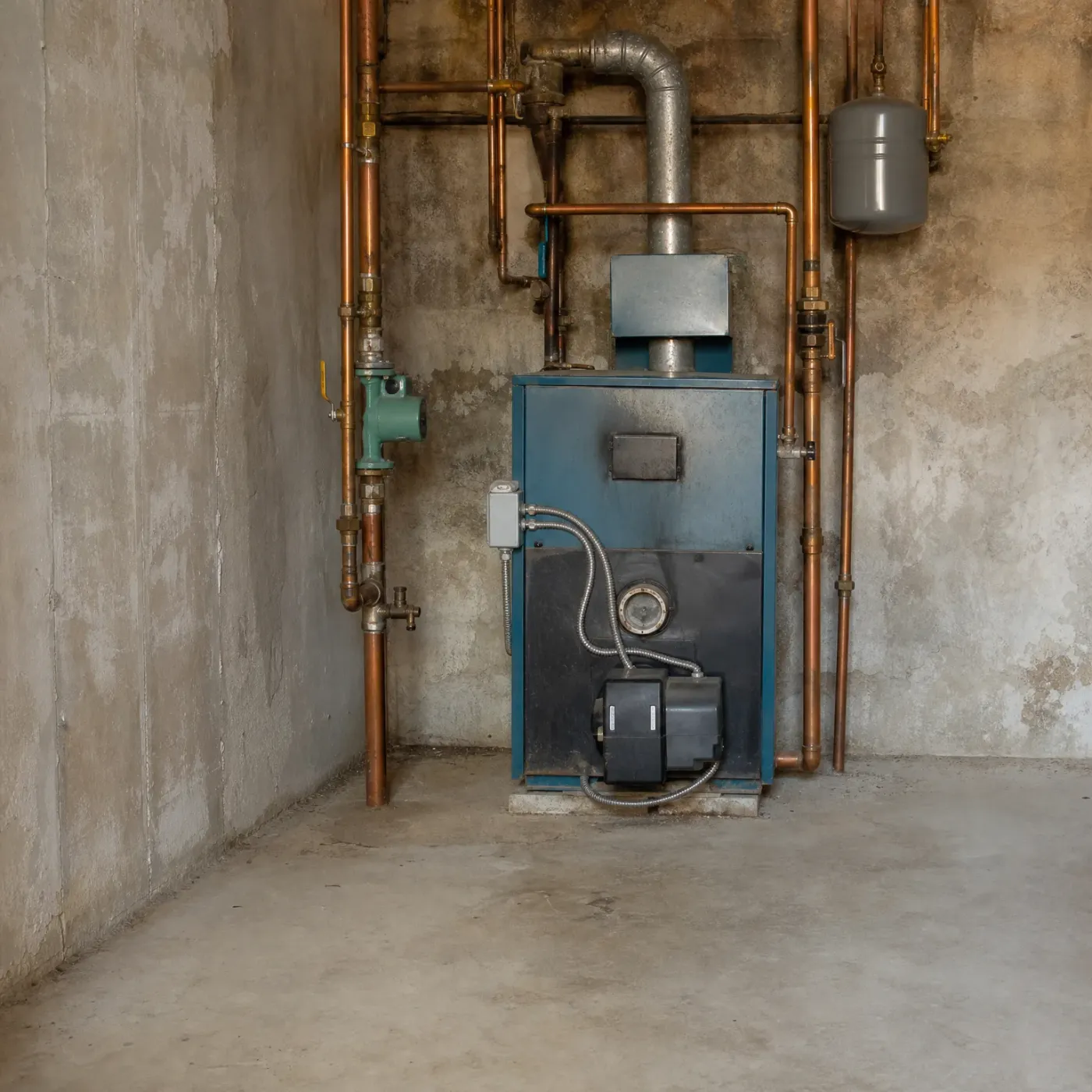
A blue residential boiler with a metal flue, pressure gauge and burner unit stands against a stained concrete basement wall, surrounded by copper pipes, a green circulator pump and a gray expansion tank.

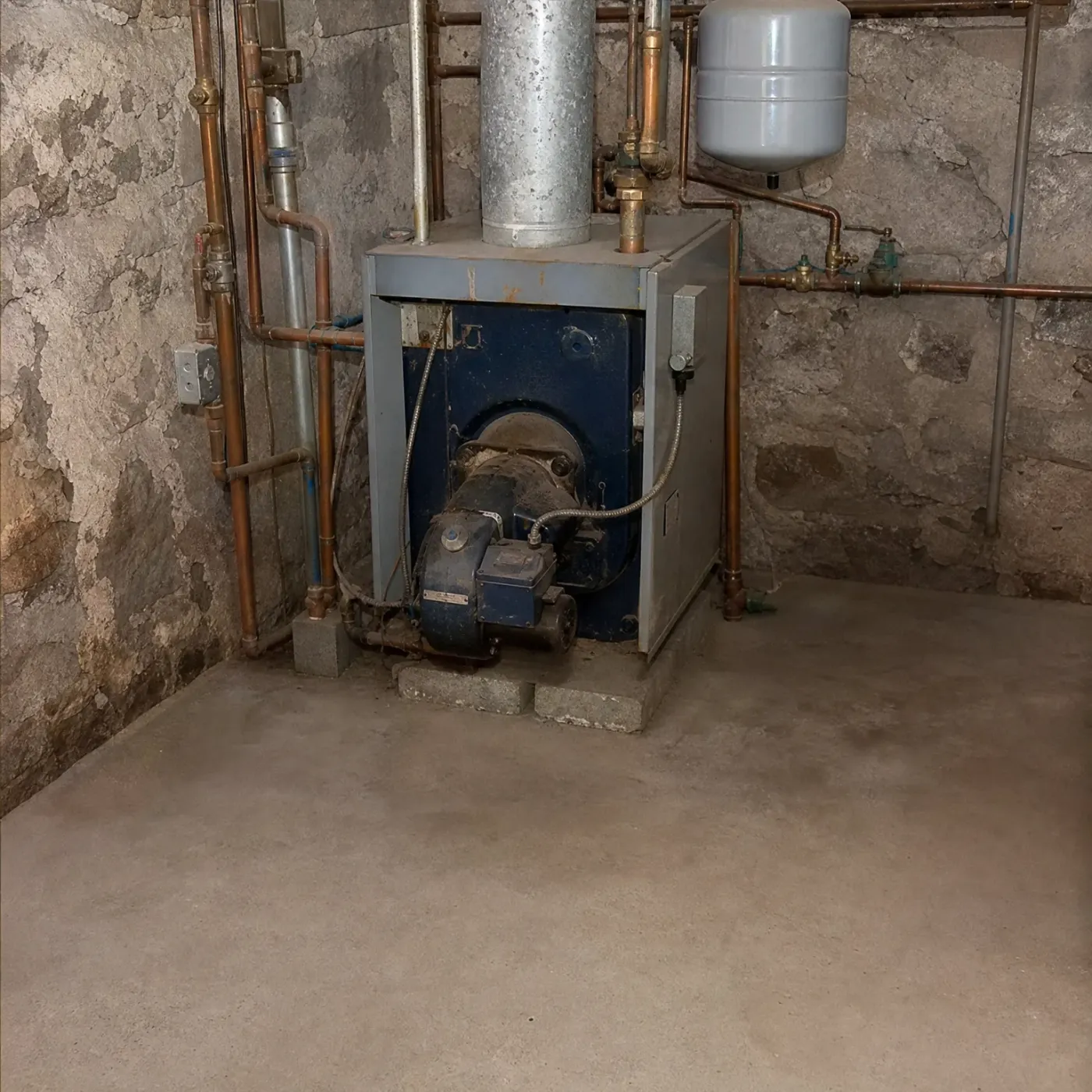
Boiler running on its own

This is your boiler as it stands, doing the job through radiators or baseboard. It heats the water and pushes it out through the same copper lines and circulator pump. Nothing about the floors changes until a loop gets added to the system.

An oil-fired boiler with a blue and gray cabinet and burner sits on concrete blocks in a basement corner with stone walls, connected to copper pipes, a metal flue, and a wall-mounted expansion tank.
Before you get your boiler installation
A gray and black boiler unit sits on concrete blocks in a basement corner, connected to copper piping, valves, a black flue duct, and a gray expansion tank, with bare concrete walls and exposed pink insulation at left.
After you get your boiler installation

Done looking for a boiler pro

You already have the boiler. That's the hard part done, and it's why radiant floors make sense here rather than someplace running a furnace. What's left is the piping work, the manifold, tying new loops into what's already heating your house. That part needs someone who installs this in Iowa homes regularly, not someone guessing at it from a manual. Iowa winters don't give you room for a system that's installed wrong and runs cold spots or short-cycles your boiler. A local contractor who works on boilers and radiant setups all season knows what tends to go wrong in a house like yours and how the piping should actually run. Send the request and this stops being something you have to figure out alone. One contractor gets it, not a handful, so you're not spending your evening sorting through calls. You get someone who can look at your boiler and tell you what adding radiant floors really takes.

What changes in your house

Floors warm up instead of vents blowing air at you. You stop finding that one cold spot in the bathroom tile in January, and you stop hearing the furnace cycle on and off at night. With a boiler already running the house, this is less a new system than a new way for the heat you're already paying for to get into the rooms. The air doesn't get stirred up and dried out the way forced air does, so you may notice less dust moving around and less of that dry-air feeling by February. None of this touches your summers. Iowa summers get sticky either way, and radiant floors don't cool anything, so whatever you're using for AC now stays exactly as it is.

What it puts at risk

The tubing goes under the floor, which means the floor itself may need to come up in the rooms you're adding it to. That's real disruption in a room you use every day, not something you do twice. If a loop ever fails years from now, finding it means opening that floor again, so the install work matters more here than with a system you can get at from a basement ceiling. None of this is a reason to skip it when you've already got the boiler to run it. It's a reason to have someone size the loops and place the manifold right the first time, since fixing it later costs more than getting it right now.

A smiling bearded man in a dark green hooded jacket and blue t-shirt sits on a couch in a living room with shelves, a potted plant, and a bowl of popcorn on a wooden table.
A smiling man in a green long-sleeved shirt sits on a beige sofa in a living room, with a bowl of popcorn in the foreground, a large potted plant and shelving behind him.
A smiling man in a dark blue T-shirt sits on a couch in a dimly lit living room with a bowl of popcorn and a remote on a wooden table, a lit floor lamp and bookshelves behind him, and windows showing greenery.
A smiling bearded man in a dark green long-sleeved shirt sits on a leather couch in a living room, with a bowl of popcorn and a remote control on a wooden table in the foreground.

Winter nights average 15°F statewide

On a 15°F night, your boiler has to keep that water hot enough to push through every loop under the floor without losing ground. A furnace can shrug off a cold snap by blasting more air for a few minutes. Your boiler holds steady heat for hours instead, which is what radiant floors need to work at all.

NOAA nClimDiv 1991-2020 county normals weighted by homes

Worth it, if you have the boiler

  • Radiant floor heat makes sense in Iowa mainly because you already have a boiler to run it.
  • The install adds a manifold and tubing loops tied into your existing piping and expansion tank.
  • Floors heat evenly from the ground up instead of relying on vents blowing warm air around a room.
  • A boiler holds steady heat through a cold night instead of cycling on and off the way a furnace does.
  • Installing a furnace just to run radiant floors doesn't make sense when a boiler can already do the job.
  • The piping and manifold work is the main task left once you know the boiler is already in place.

You've got the boiler. That's what makes radiant floor heat worth doing here, and it's the whole answer to the question. The boiler already heats water and moves it through pipe, which is exactly what radiant floors need. Nobody's installing a furnace alongside it to make this work, because that would mean running two heating systems in one house for no reason. What you're adding is a manifold and tubing loops, tied into piping and an expansion tank that are already there doing their job. Once that's in, the floor becomes the thing that heats the room, not a vent blowing air across it. You lose the cold spot in the bathroom tile. You stop hearing the furnace kick on at midnight, because there isn't one cycling that way. On a hard winter night, the boiler holds that water at temperature and keeps the floor warm for hours, steady, instead of blasting air for a few minutes and shutting off. That's a different kind of heat than what a furnace gives you, and it's one a boiler is suited to in a way a furnace never was. None of this requires new equipment to make the house work. It requires piping, a manifold, and loops tied into what's already running. If you have a boiler in Iowa, radiant floors are a reasonable next step, not a leap.

A woman in a dark gray sweater reclines on a light sofa with eyes closed and a slight smile, under a textured gray blanket with an open book resting on her lap, with a lit table lamp and plant in the background.
A smiling bearded man in a navy crewneck sweater sits at a dinner table with a glass of red wine, plates and glasses in the foreground, in a dimly lit room with a lamp and framed picture behind him.

Boiler Installation

It's off your list after this

Your request goes to one pro, not a list of companies.

A black-framed smartphone standing upright against a plain white background, its screen filled with solid green.
Step 1 of 3: Equipment