AFUE 95 percent or higher
A high-efficiency boiler turns almost all the gas you burn into heat. A standard boiler loses more of it up the flue, especially on the coldest days.
No quotes to chase
Gas is the common fuel for heat here, so the question is whether a high-efficiency boiler earns back its price against a standard one. That depends on your current unit, your gas use, and what install involves in your house. Rather than call around to boiler installers and repeat your setup on every line, this page gets you to one local contractor who installs these year-round and can work the numbers for your home.
Skip the callsA high-efficiency boiler is worth it in Iowa if your current boiler is old enough that you're replacing it anyway, and you plan to stay in the house long enough to use the lower gas bills it produces. These units pull more heat out of the same amount of gas by condensing the exhaust instead of venting it hot, and in a state where gas is the fuel most homes already heat with, that difference shows up every month from October through the coldest part of winter. The catch is install. A condensing boiler needs a drain for the condensate and often a different vent than a standard unit uses, so the job costs more going in than a straight swap would. Whether that's worth it depends on what your house already has to work with, and on how much gas your current unit is using. A licensed installer can look at your boiler and your gas bills and tell you where you actually land.




A high-efficiency boiler turns almost all the gas you burn into heat. A standard boiler loses more of it up the flue, especially on the coldest days.
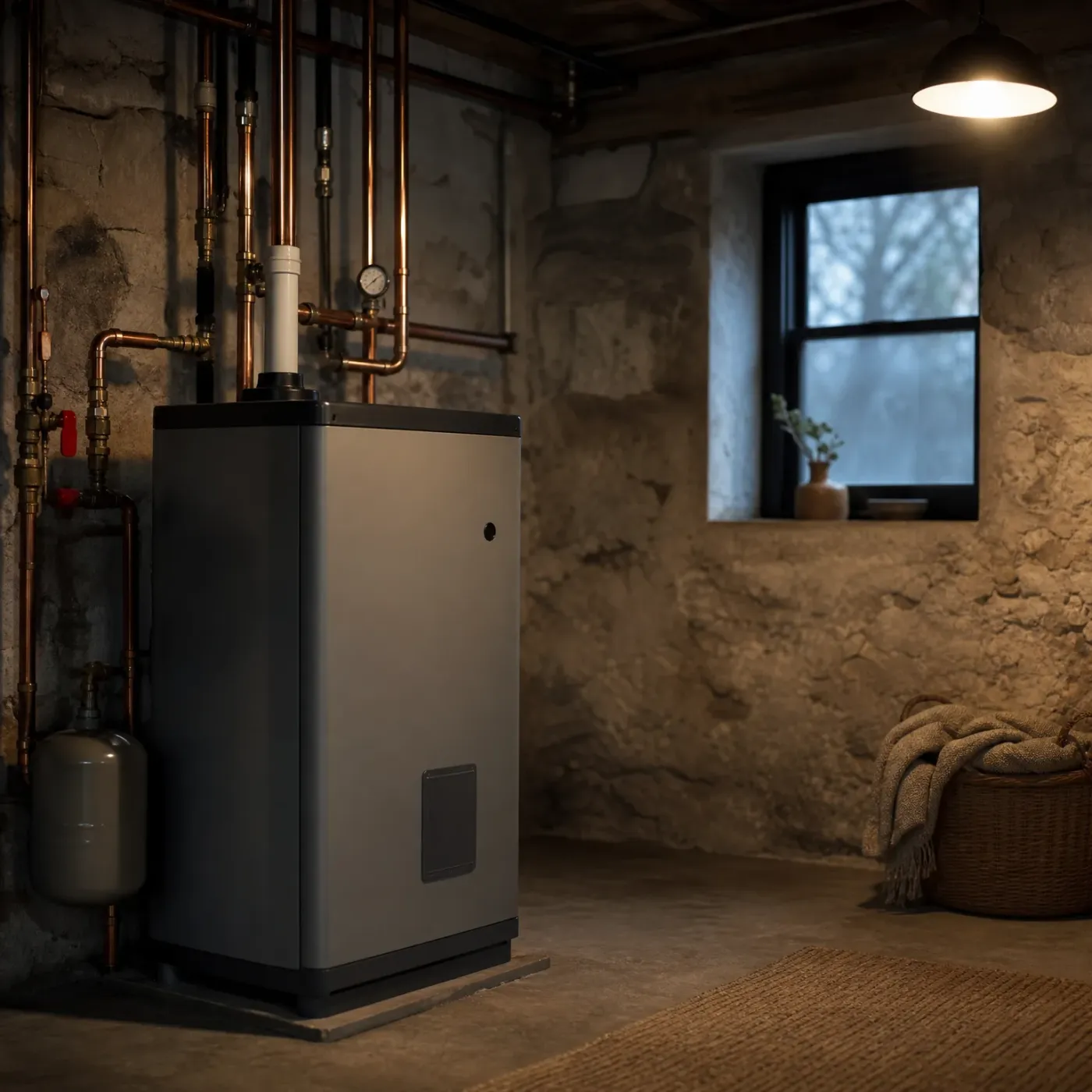
High-efficiency boilers vent through PVC pipe out a side wall. If your house still has the old chimney connection, that part of the job changes.
You notice it most in January and February, when the boiler is running most of the day and the gas bill shows it. If the unit is old, you might see a yellow flame instead of blue, hear it cycle on and off more than it used to, or notice the room near the flue staying warm even when the boiler isn't firing. That warmth is heat leaving the house instead of the radiators. A boiler that's losing efficiency this way isn't just costing you more each month. Left alone long enough, the same wear that drives up gas use can lead to a cracked heat exchanger, which is a safety issue, not just a cost one.
If your boiler is working fine and isn't close to the end of its life, replacing it early just to get a high-efficiency model usually doesn't pencil out. A standard boiler costs less to install, and that gap takes years of lower gas bills to close. If you're not sure how many winters are left in your current unit, that's worth having someone look at before you decide either way.
If you're replacing the boiler anyway and expect to stay in the house for years, the higher install cost has time to work in your favor. Gas here is the main heating fuel, and a unit that wastes less of it up the flue shows up on your bill every month from December through March. The longer you stay, the more those months add up.
You keep hearing that a high-efficiency boiler squeezes more heat out of the same gas, but nobody explains what that actually means inside the unit. You've got a standard boiler now, and the flame looks the same as any other flame. You want to know what's different about how it burns gas and where that extra heat goes instead of out the flue.
A standard boiler burns gas, pulls some heat off it, and sends the rest up the flue while it's still hot. A high-efficiency boiler adds a second heat exchanger downstream of the first one. The exhaust passes through it before it ever reaches the vent, and that second pass pulls out heat the standard design just throws away. The exhaust leaving a high-efficiency unit is cool enough that it condenses, which is why these are called condensing boilers, and why they vent through PVC pipe instead of a metal flue. That condensation also means the unit needs a drain line and a condensate trap, which a standard boiler never has. None of that changes how the heat gets into your house. It changes how much gas it took to make it.
Flue gas leaves the burner and enters the primary heat exchanger first.
A second heat exchanger pulls more heat from the same exhaust.
That cools the exhaust enough to turn its water vapor to liquid.
Condensing releases extra heat the gas already paid for.
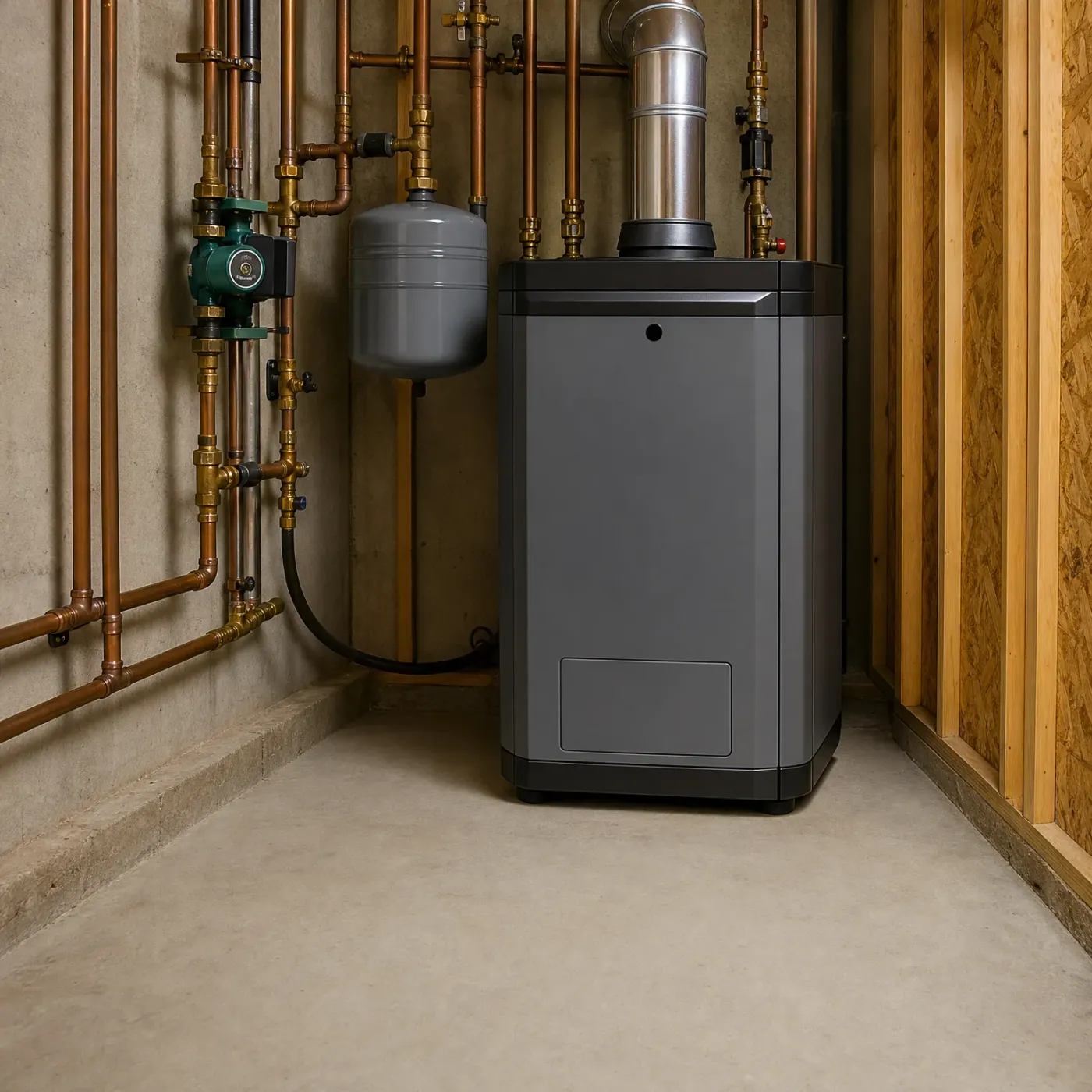
Getting to this point usually means calling a few plumbing outfits, explaining your boiler's age and your gas bills to each one, then waiting on quotes that don't line up because nobody looked at the same thing. A high-efficiency boiler is a venting change, a condensate line, and a unit sized to your house, and that's harder to get right over the phone than a standard swap. Sending the request here puts it in front of one licensed local contractor, someone who installs these in Iowa homes every heating season and knows how the wall venting and drainage usually need to go in a house like yours. You're not fielding five callbacks or sorting quotes that each assume something different about your situation. One person looks at your boiler, your gas use, and your house, and tells you straight whether the high-efficiency unit pays for itself here or whether a standard one is the better call this time.
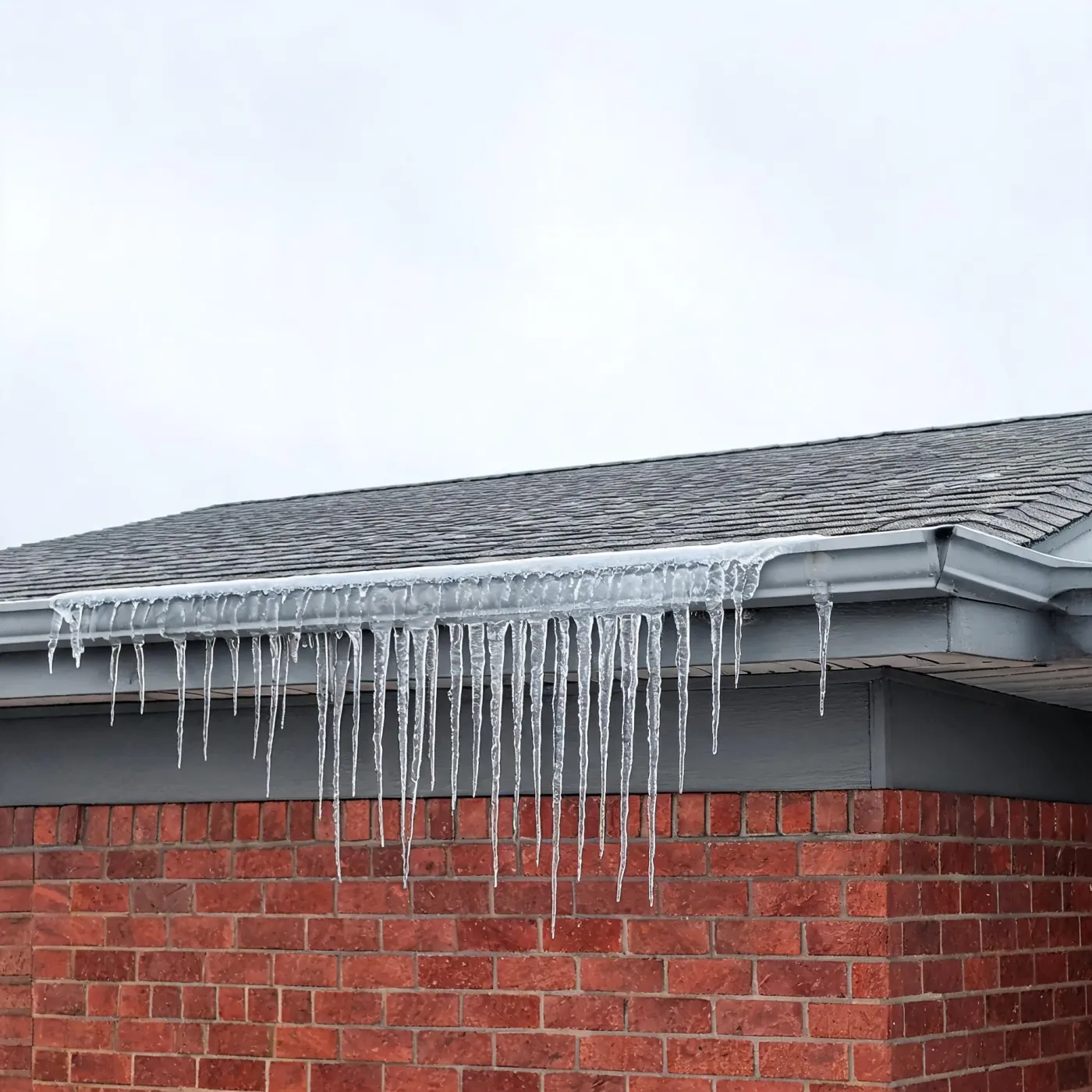
Statewide, winter nights average 15°F, and your boiler is what stands between that and a warm house from the first hard freeze through March. Source: NOAA. On those nights it runs close to constantly, not in short bursts like it does in October or April. That's where the difference between a standard and a high-efficiency unit shows up most, since the coldest nights are when a standard boiler loses the most heat up the flue. A high-efficiency boiler holds a steadier output through a run like that, and you'd notice it in a more even temperature room to room rather than warm spells followed by a chill as the burner cycles.
NOAA nClimDiv 1991-2020 county normals weighted by homes


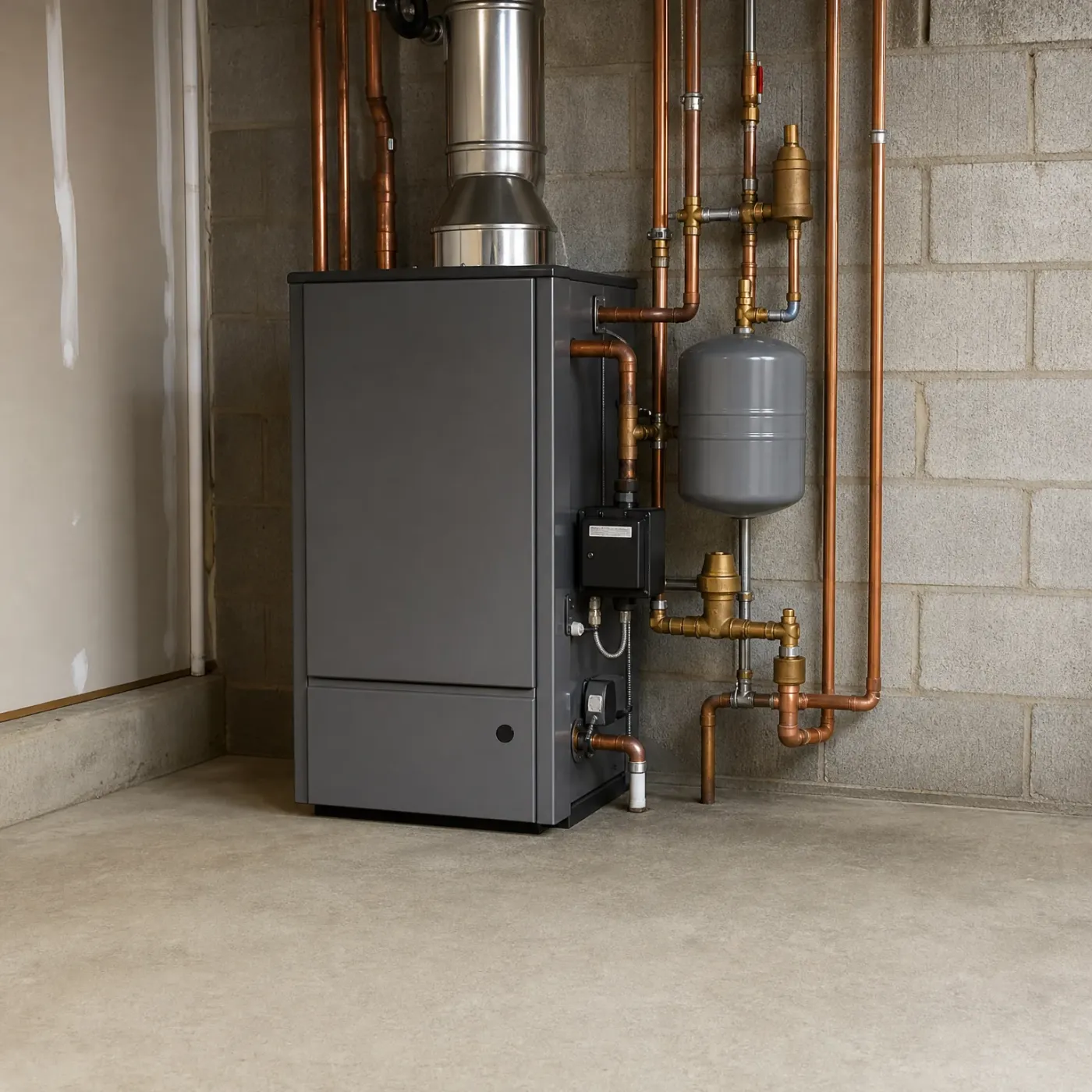
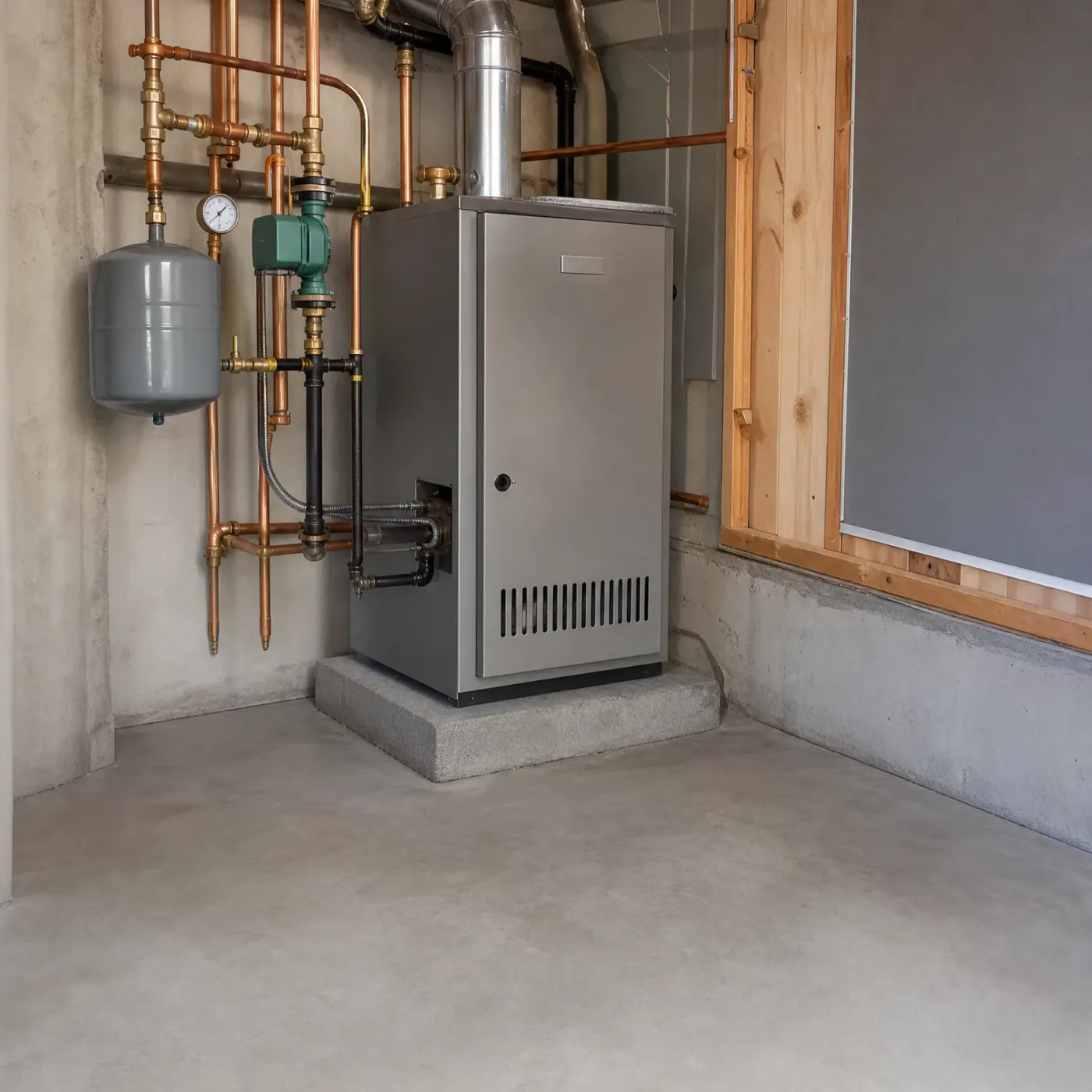
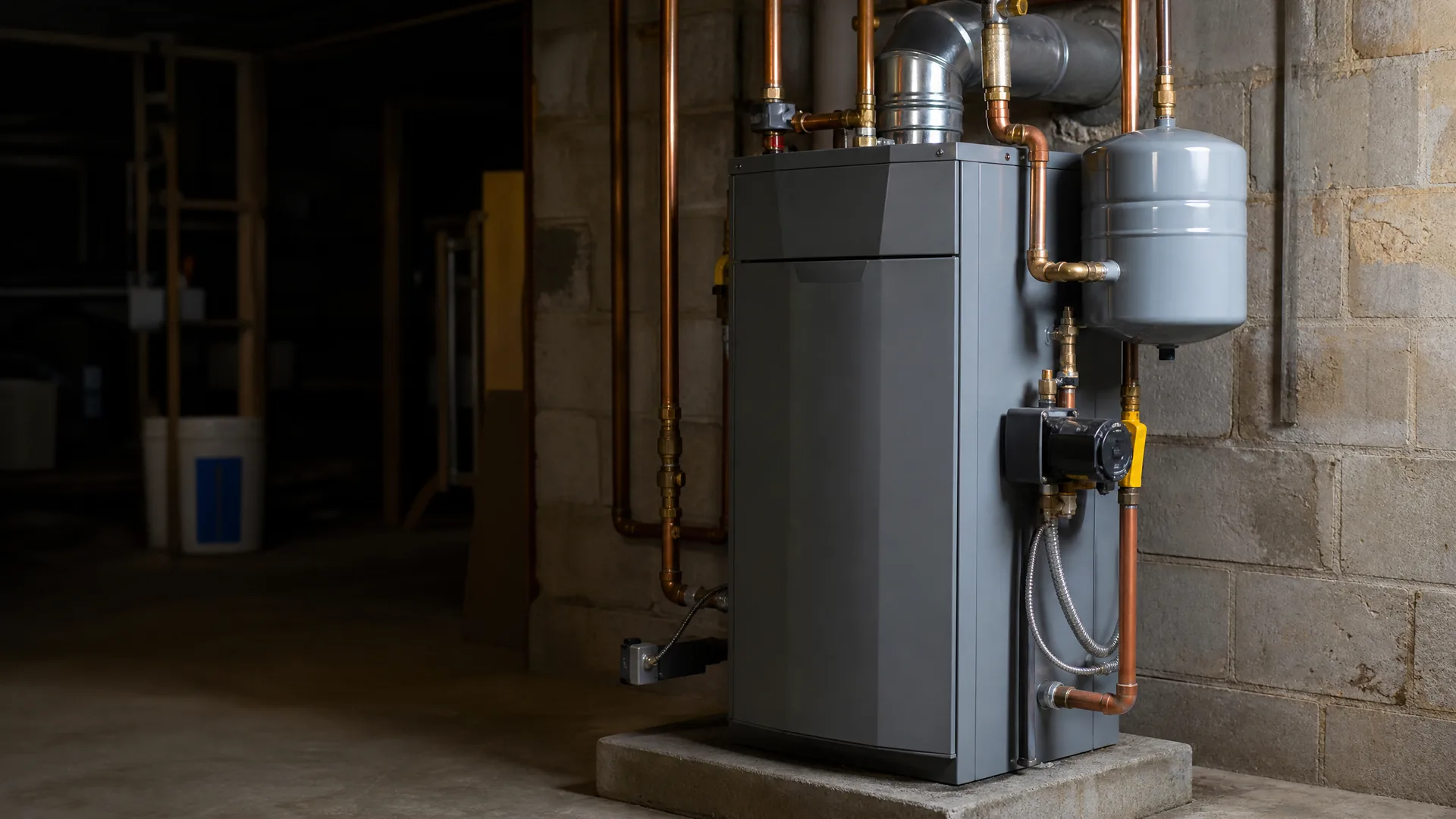
Copper feed lines and brass valves tied into the boiler mean a setup that's been maintained, not patched. A blue flame and a flue venting straight out are what a well-running unit looks like. This is the kind of system that keeps its efficiency year after year.
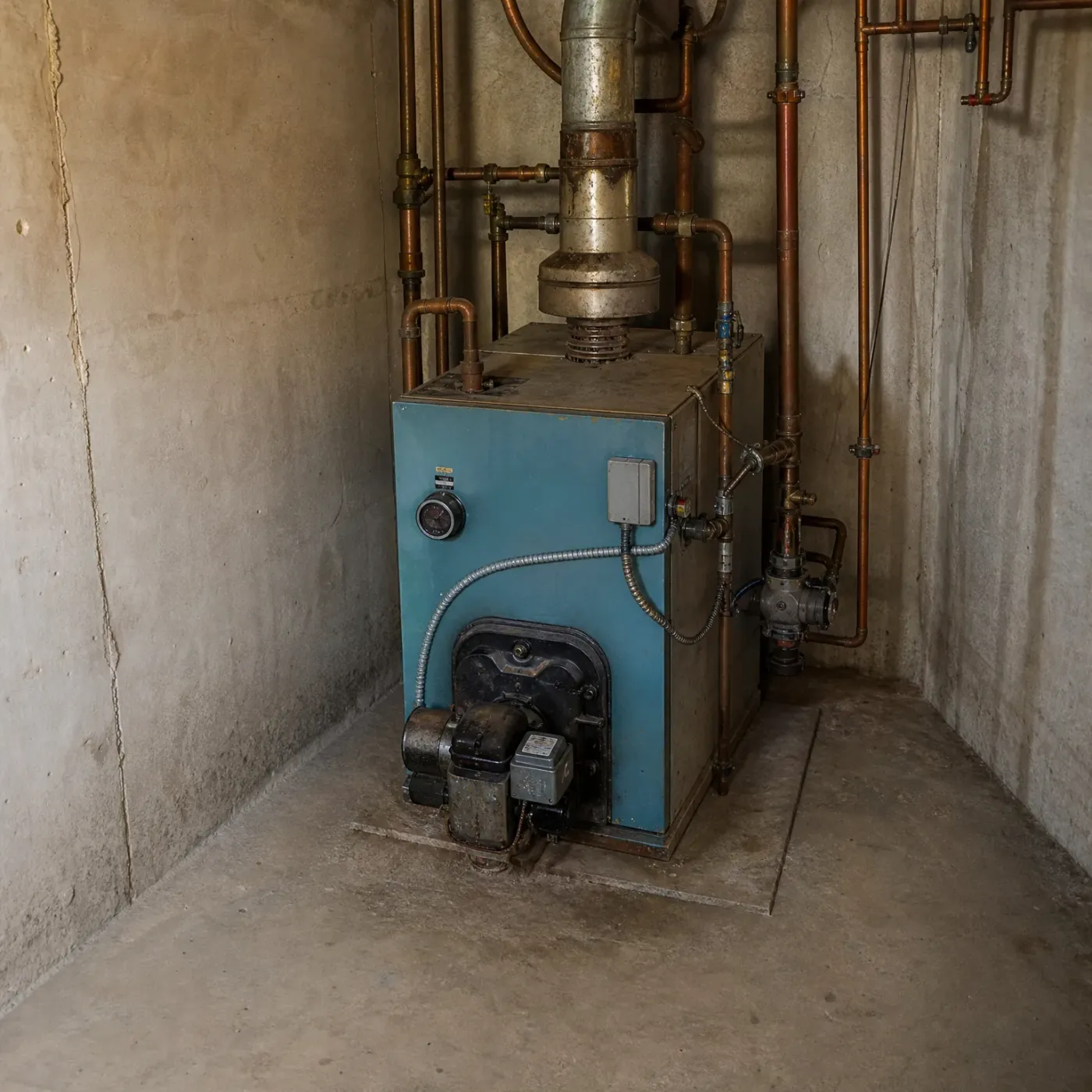
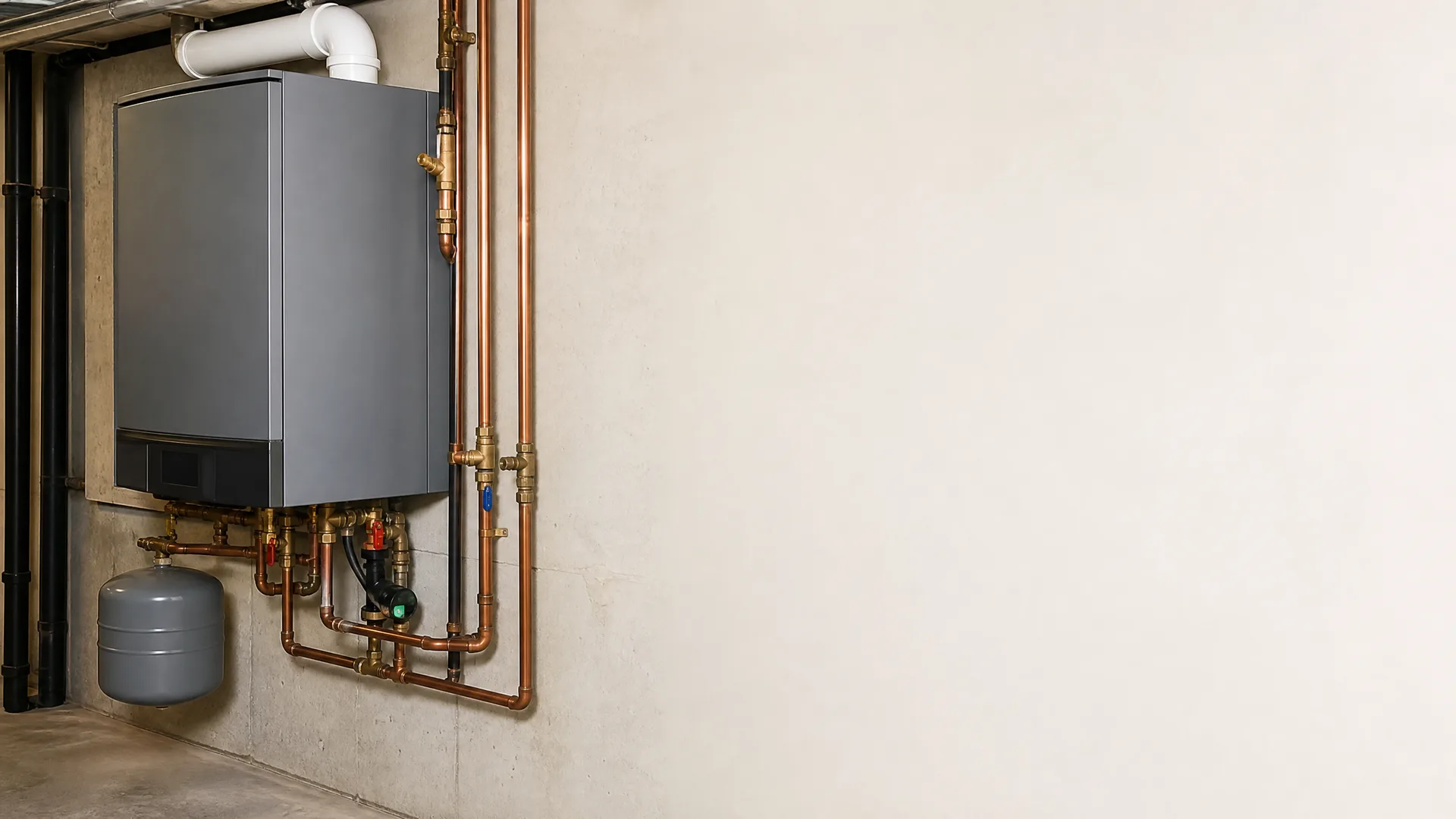
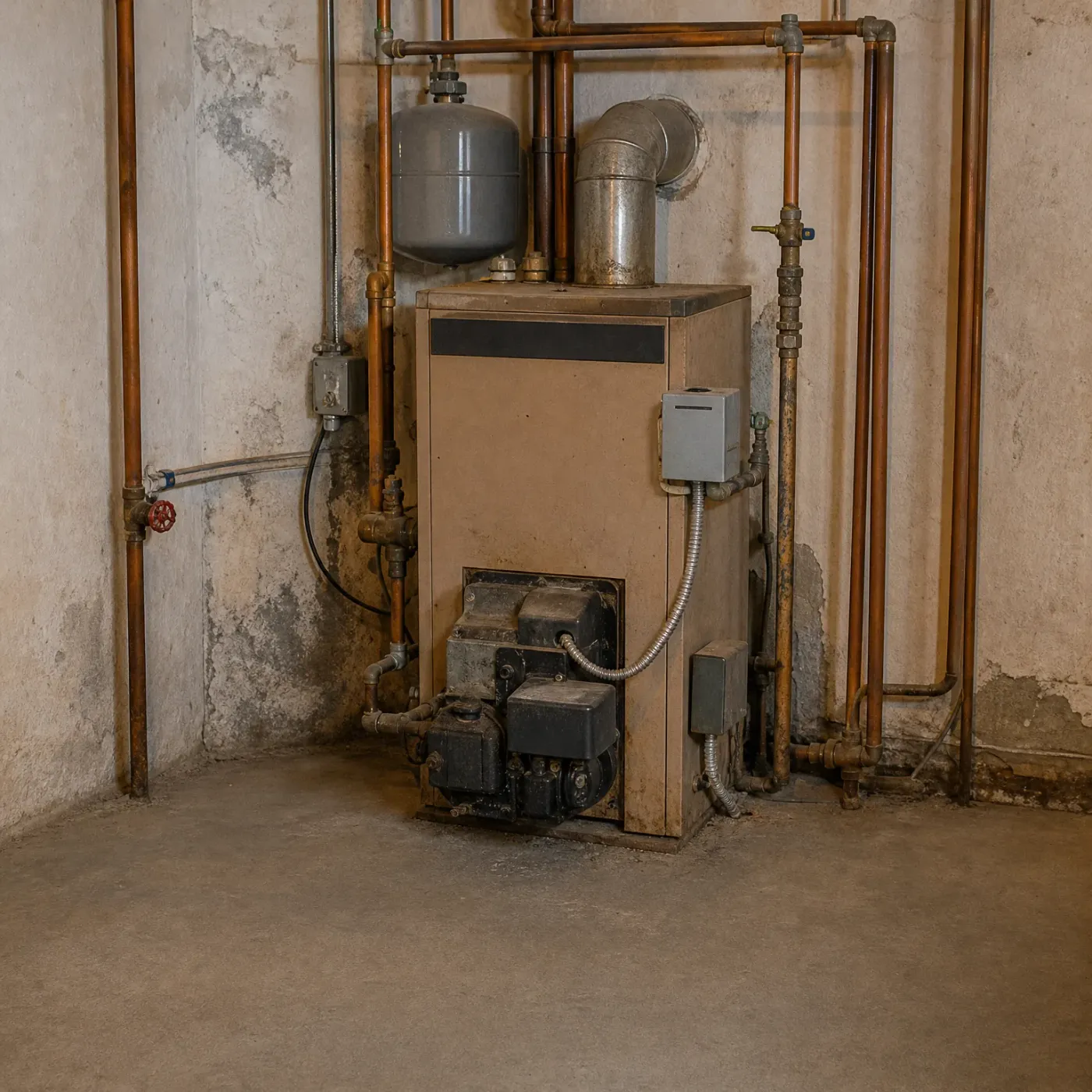
That teal casing and oil-fired burner assembly belong to a boiler well past the point where replacement is routine. The fuel pump and exposed burner are more parts to fail, and oil costs more to keep burning than gas. A unit like this is usually why the bill keeps climbing.
At 15°F, your boiler isn't cycling, it's running close to straight through the night. That's where the gap between a standard unit and a high-efficiency one shows up most, since every hour of runtime burns gas at whatever rate your boiler converts it to heat.
NOAA nClimDiv 1991-2020 county normals weighted by homes
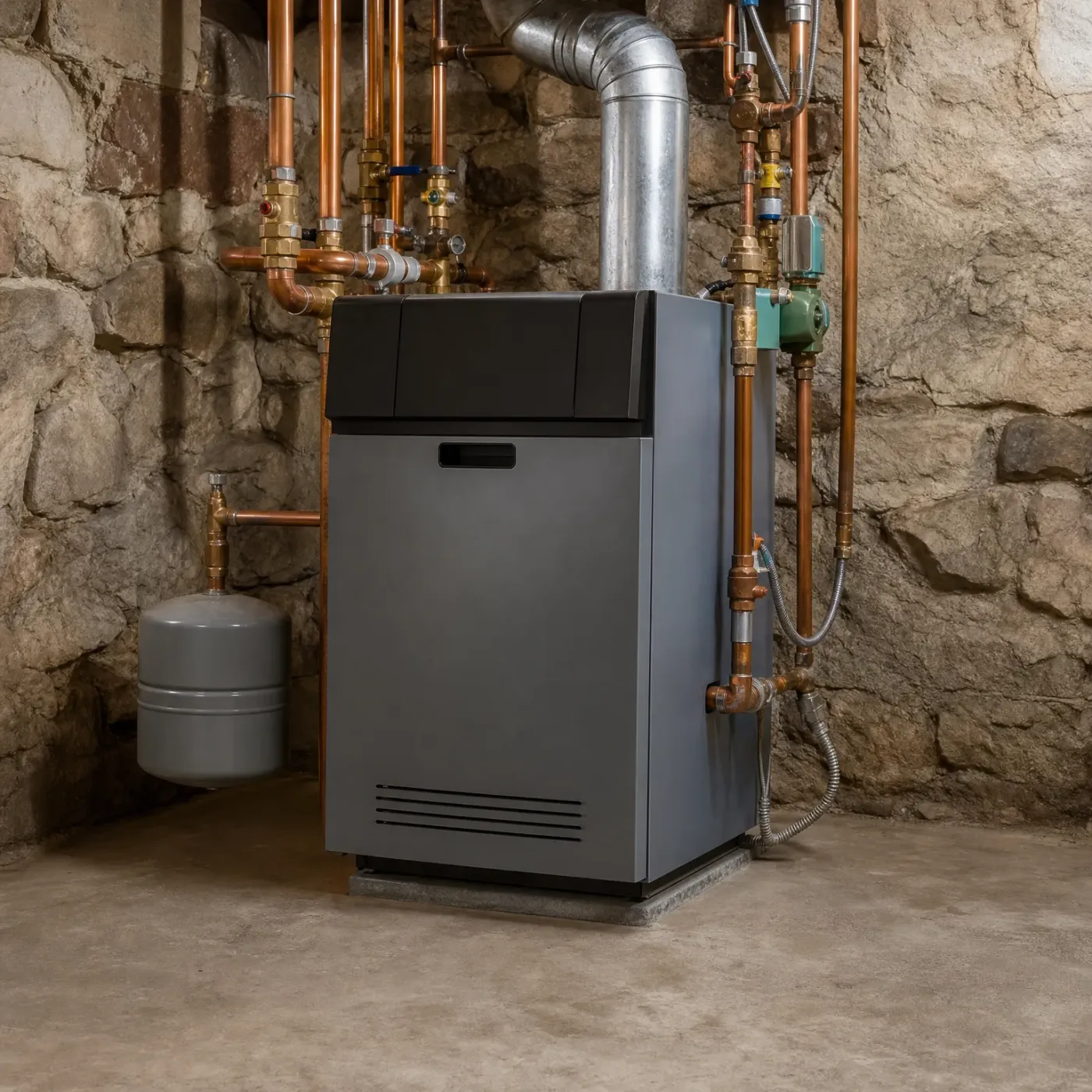
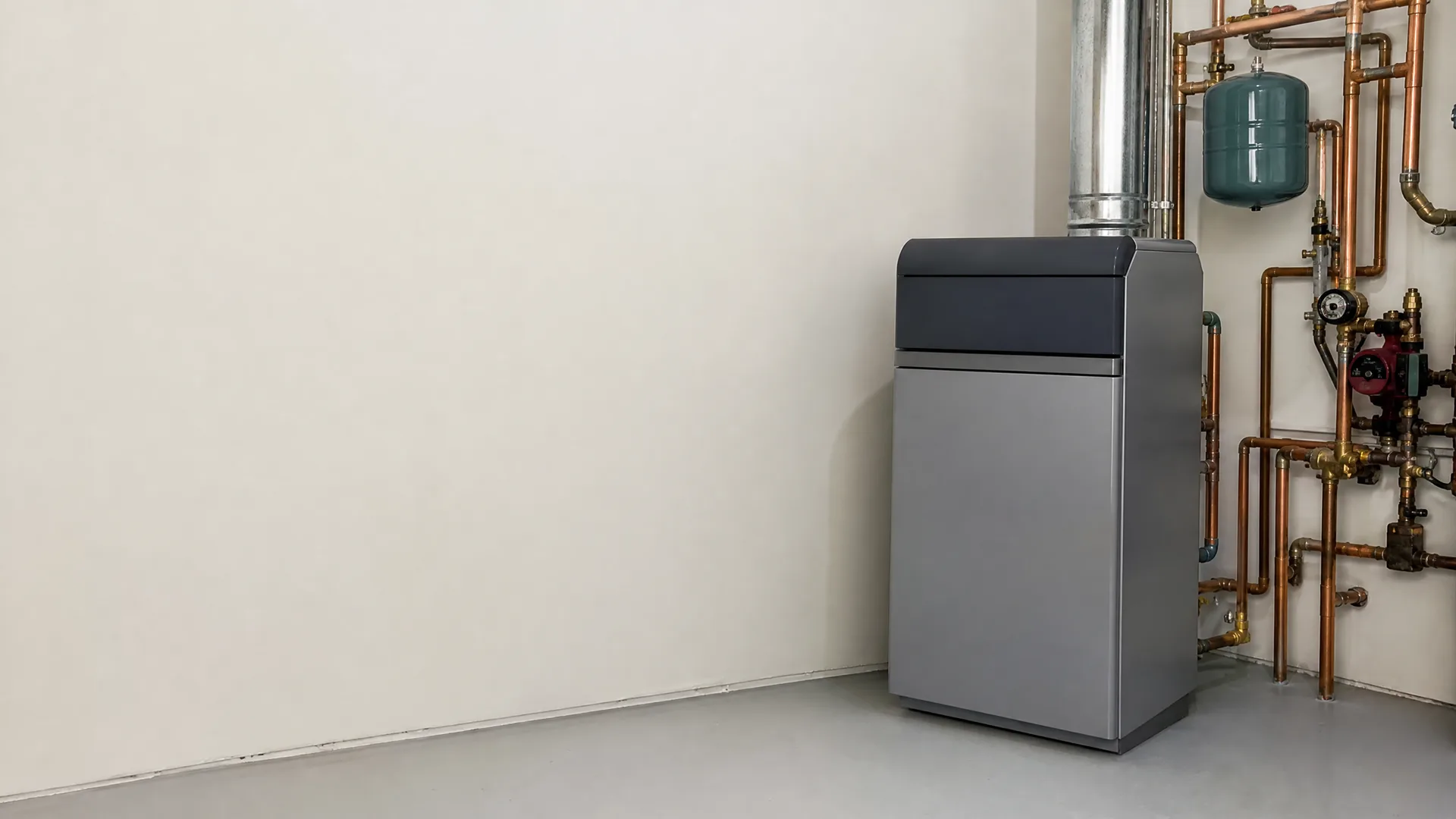
Copper feed lines and brass valves tied into the unit, a circulator pump moving hot water out to the house, and an expansion tank sized to the system. The flue runs straight out with no rust at the joints. That's a boiler holding its efficiency, not losing it.
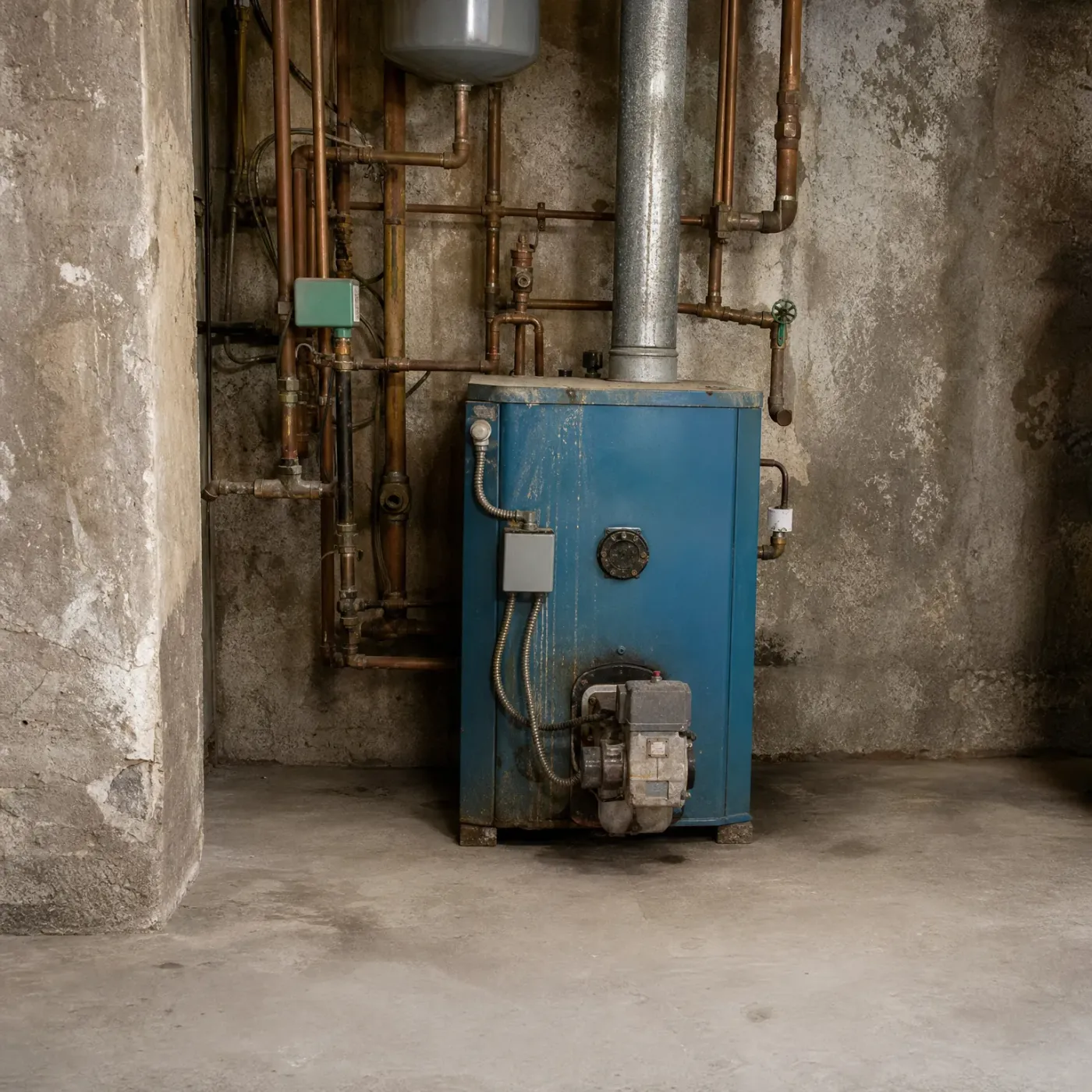
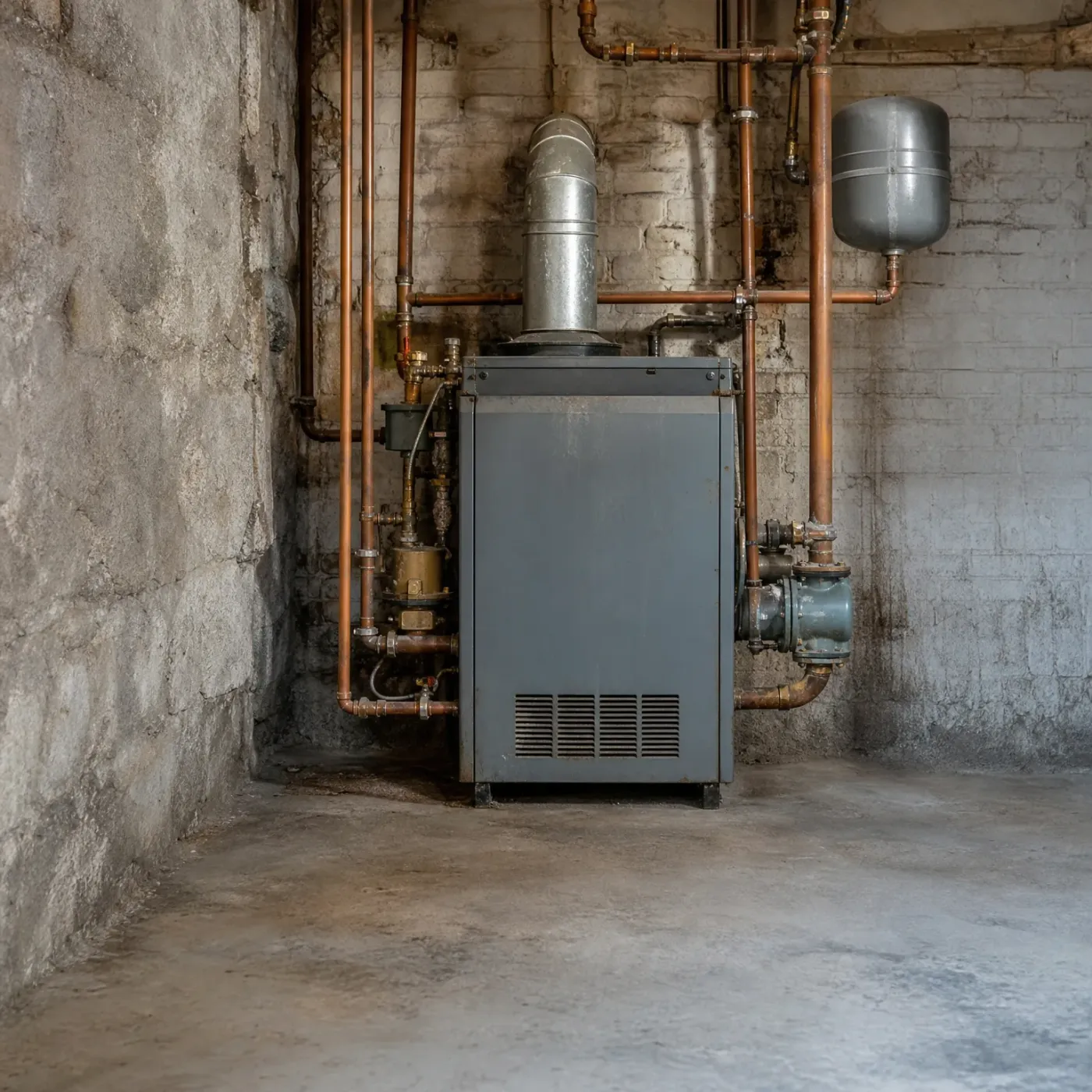
A bare basement, an old flue pipe rising straight up into a chimney instead of out a wall, and a burner assembly that's been patched more than once. Copper fittings corrode over the years this unit has been running, and a galvanized flue like this one means it was never built to condense.
If your boiler is old enough to be on its way out, a high-efficiency model earns its keep over the years you stay in the house, through the gas it doesn't burn. If yours still runs well and the flame's still blue, there's no case for swapping it early. The answer depends on the unit you have now, not on the one you might buy.
Either way, the install is the part that decides whether you get those numbers or spend years working around a venting job done wrong. Instead of calling several plumbing outfits and repeating your boiler's age and your gas bills to each one, you'd be handed to one licensed contractor local to Iowa, someone who vents these units through a wall every winter and knows where they tend to go wrong. No comparing quotes that don't match because nobody looked at the same boiler.

Describe it once