Once you send the form, finding a pro is off your list.
A gas boiler in Iowa usually runs 15 to 20 years before it needs to be replaced. Some get close to 25 if they've been maintained well. What shortens that is what you'd expect: a system that cycles hard all winter, year after year, through the kind of cold Iowa gets from December through February.
Most homes here heat with gas, and a boiler works for its living through a long stretch of the year. By the time it's 15 or so, you start watching for the signs. Rooms that used to heat evenly now have cold spots. The burner takes longer to catch. The pilot or igniter acts up more than once a season. Your gas bill creeps up even though nothing else changed. None of that means the boiler is done today, but it means you're on the back end of its life, and waiting for it to fail in January is a rough way to find out.
When a boiler is old enough that replacement is the real question, the work of finding someone to do it right is its own chore. You'd be calling around, explaining the same thing to every contractor who picks up, waiting on callbacks, then trying to compare quotes that are not quite apples to apples because nobody walked the same system twice.
This page exists to skip that part. Send the form, and the job of finding a licensed contractor to look at your boiler and tell you straight whether it's worth repairing or time to replace it stops being something you have to manage. That weight comes off your plate, not added to it. What's left is the actual decision about your home, made with someone who's seen your system, not a stranger's guess over the phone.
Below is what shortens a boiler's life in Iowa, what the warning signs actually look like, and what a straight answer tends to cost before you ever commit to anything.
How long does a boiler last in Iowa?
Iowa winters put a boiler through months of hard work, and once it's past 15 years or so, it's natural to wonder how much time is actually left on it. You're not looking to replace it before you have to, but you also don't want it quitting on you in January. Knowing the real range helps you figure out which situation you're in.
Most boilers in Iowa last 15 to 20 years
Gas boilers here get asked to run hard from around November through March, and that steady winter load is what wears one down over time. A boiler that's maintained well, with clean burners and good water chemistry, tends to land toward the higher end, sometimes close to 25 years. One that's been neglected, or that's had to fight through a string of brutal cold snaps winter after winter, tends to go sooner. If yours is in its late teens, it's not necessarily on its way out, but it's worth having someone look at it before the next cold stretch rather than finding out mid-winter that it can't keep up.
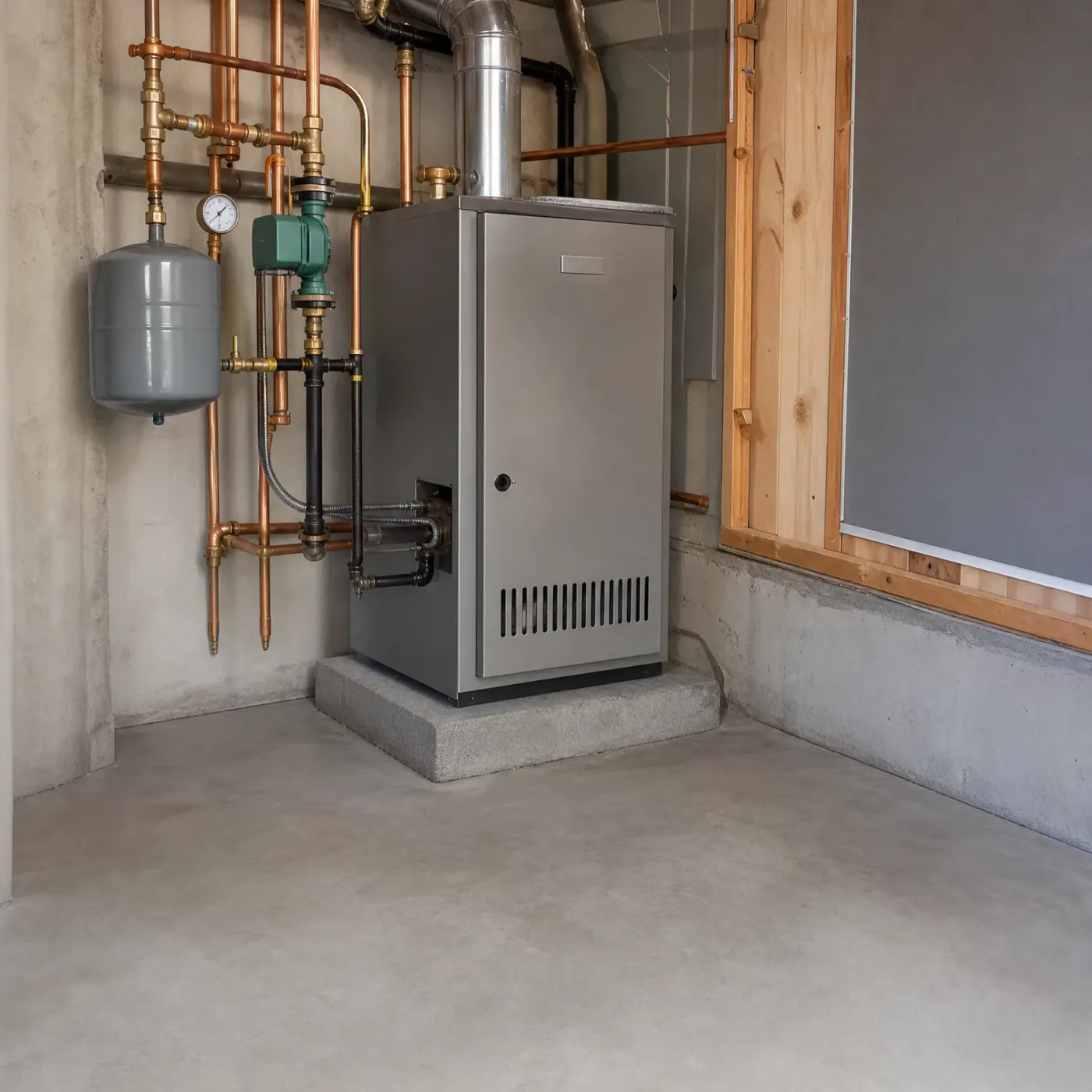
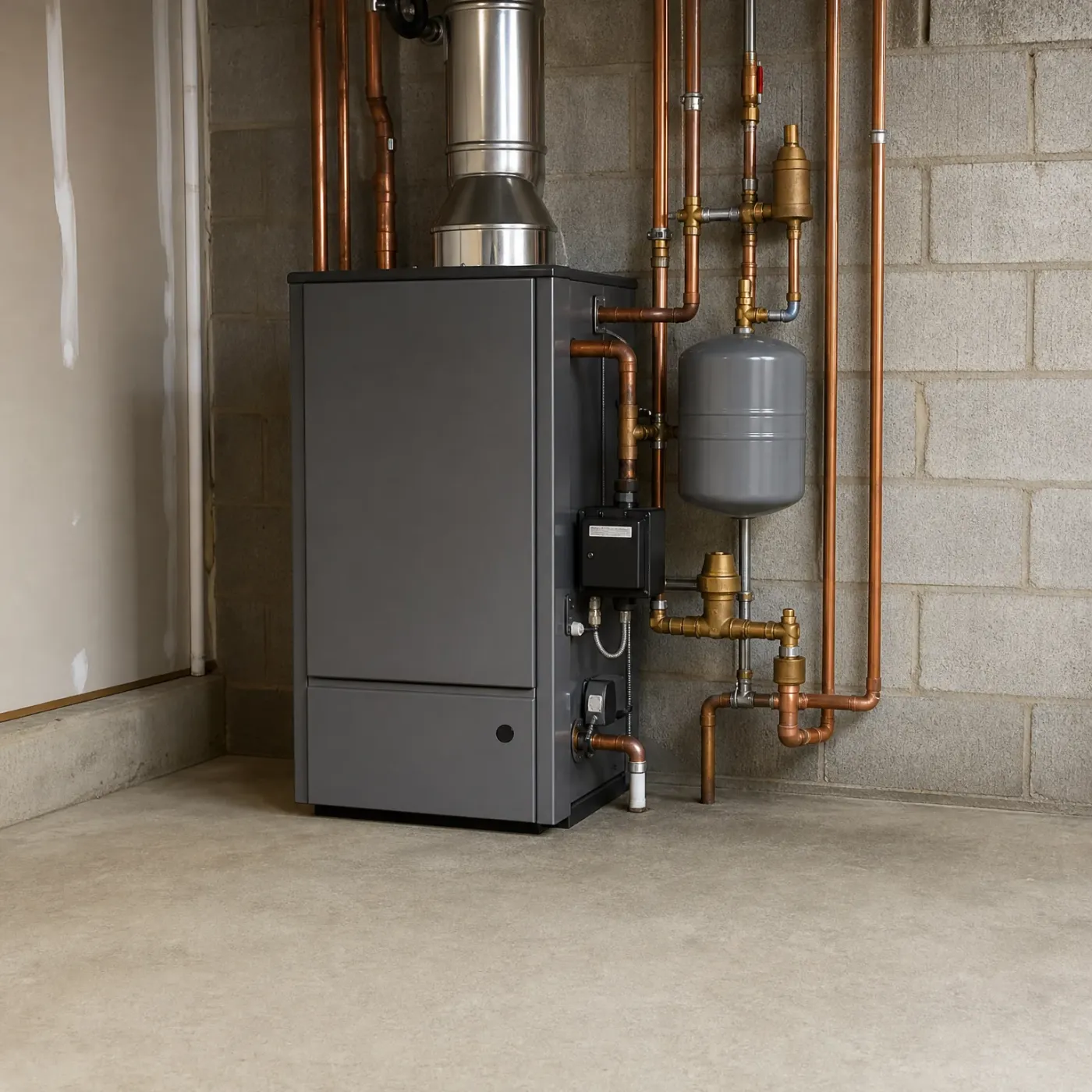
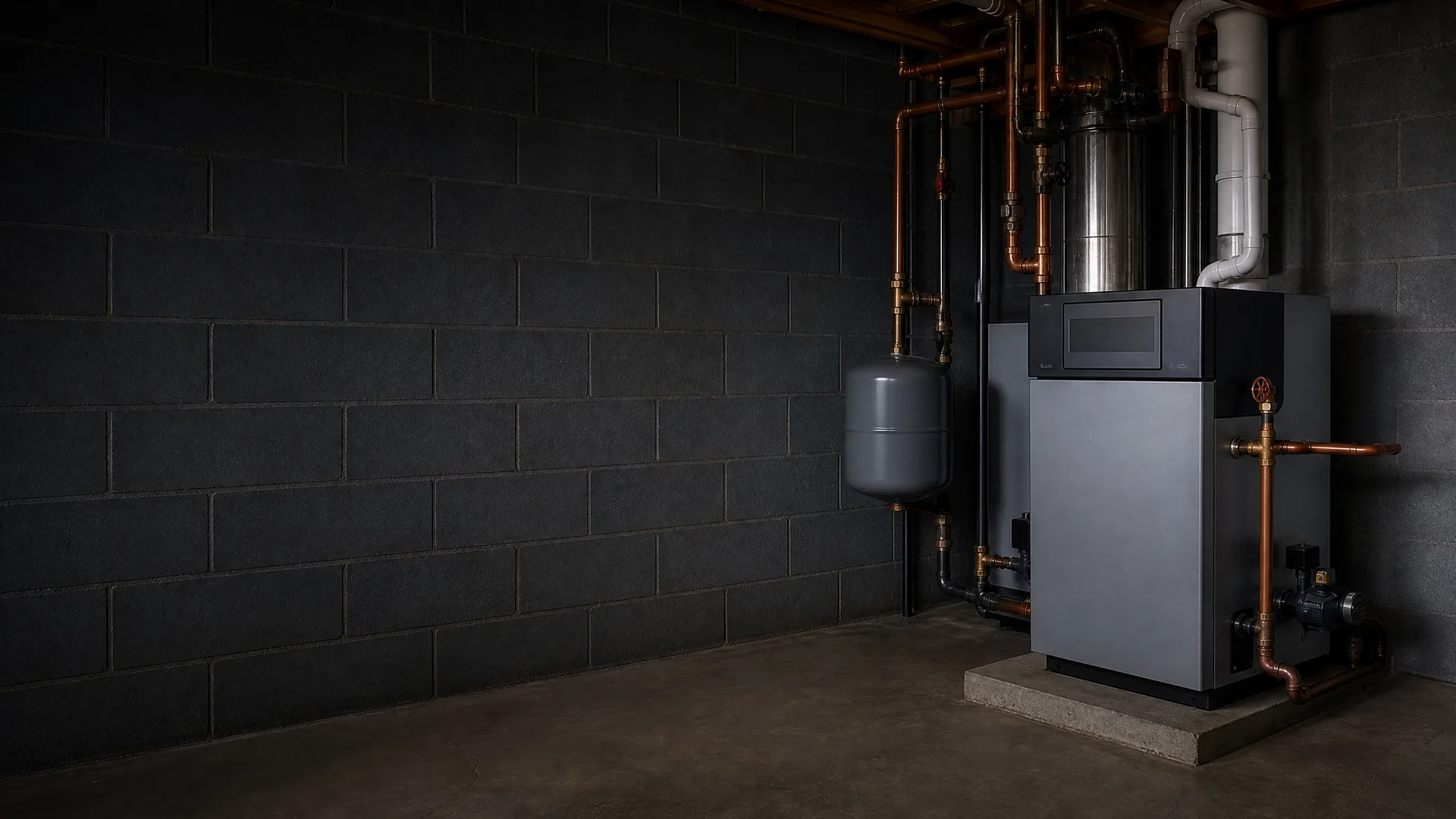
A boiler like this one is still doing its job: steady pressure, clean piping, no rust creeping up the tank.
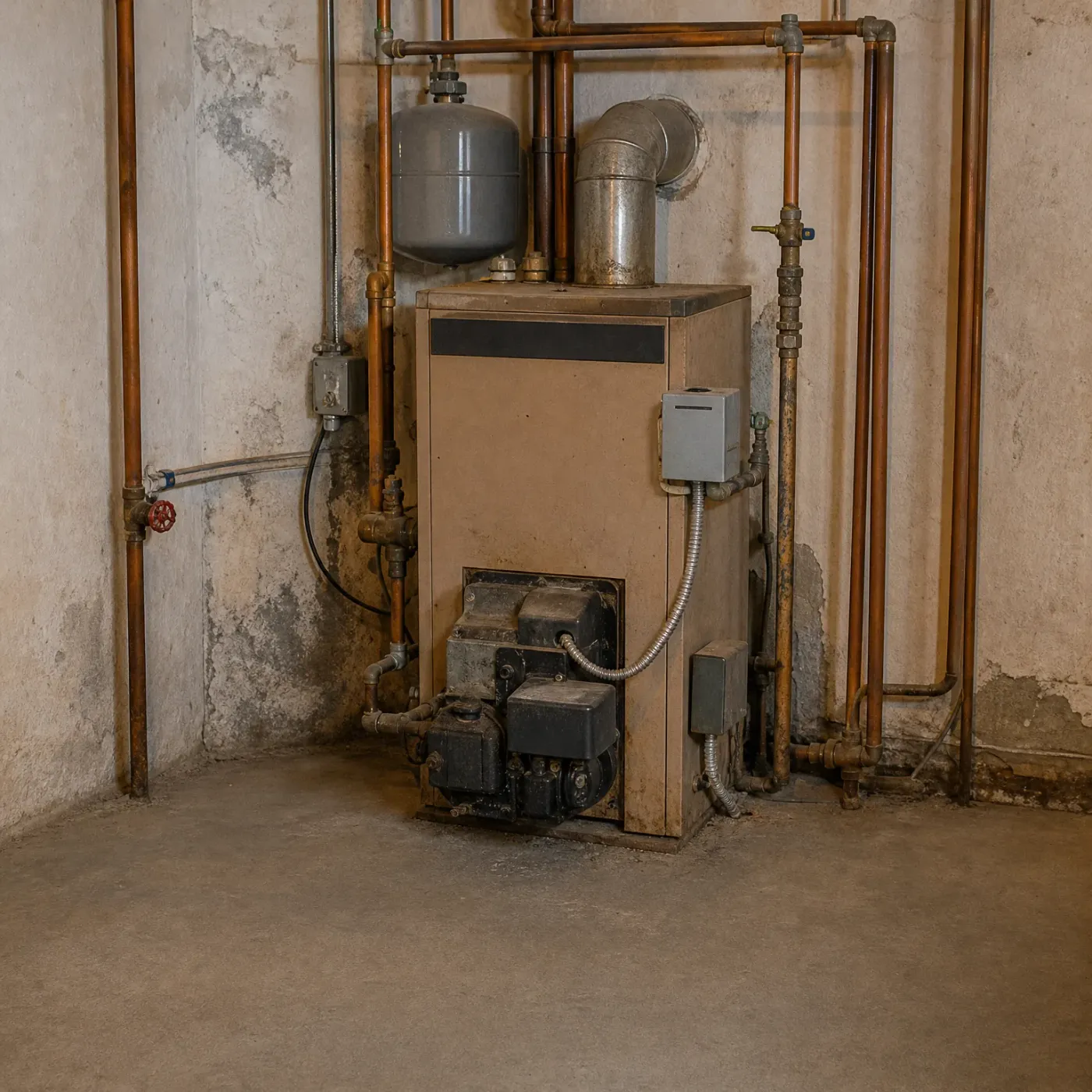
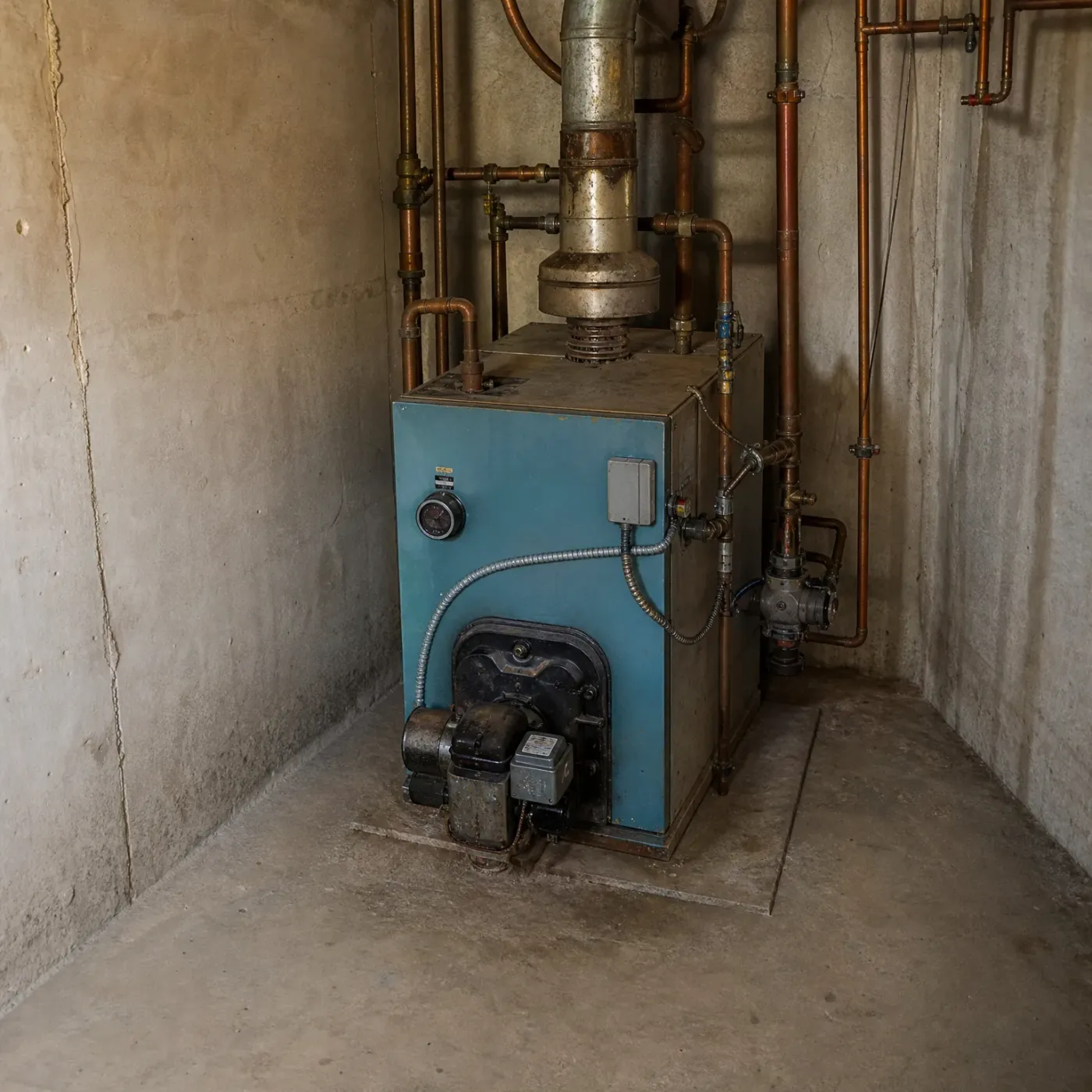
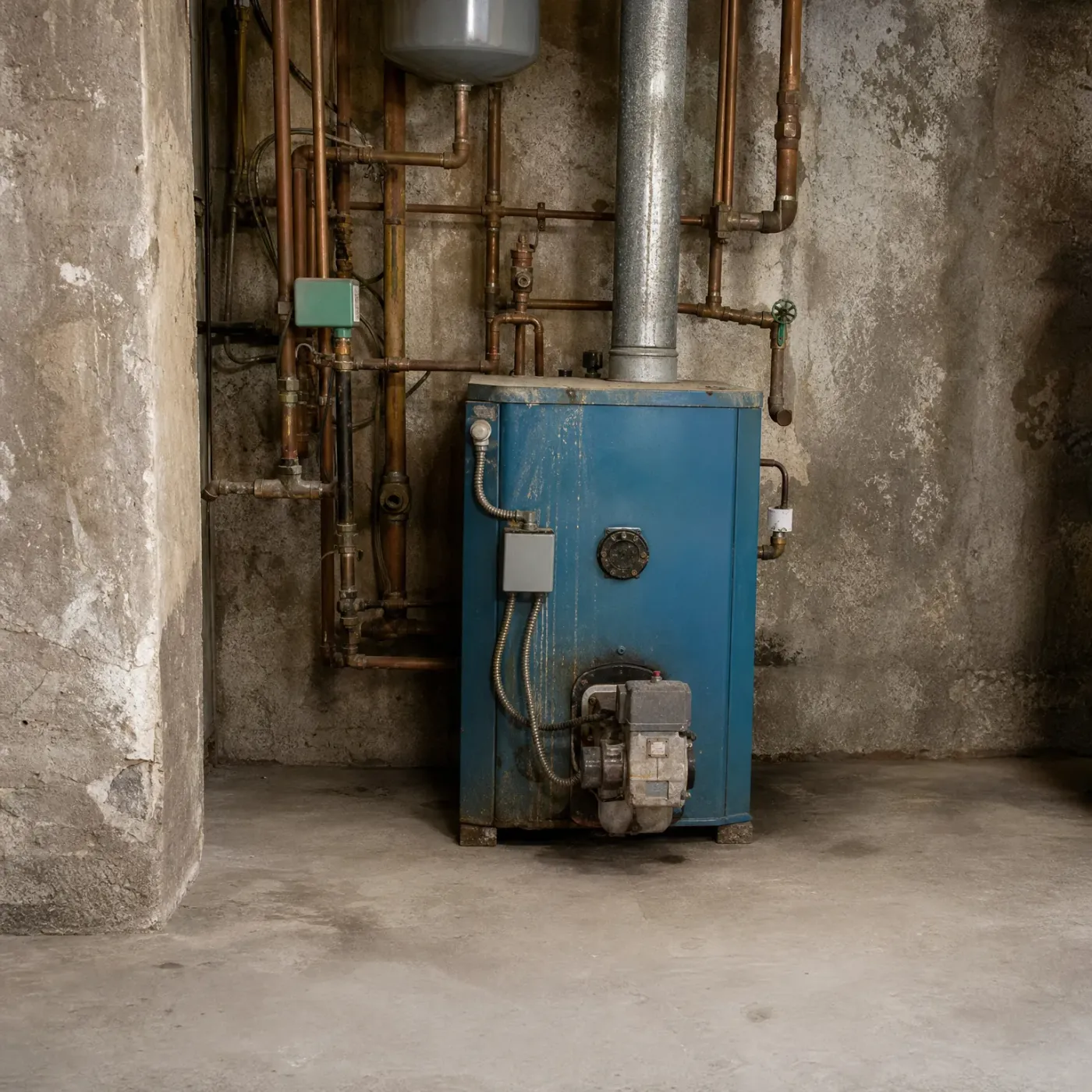
An oil-fired boiler this old, with worn pipe runs and an aging burner assembly, is closer to the end than the middle.
1
Water fills the boiler and the burner fires to heat it
2
A circulator pump pushes hot water out through the pipes
3
Radiators or baseboards release that heat into each room
4
Cooled water returns to the boiler to be reheated again
What an aging boiler means for your house this winter
If your boiler is past 15 years, pay attention to what it's actually doing. Rooms that used to heat evenly now have cold spots. The burner runs longer to get the same result, and that shows up on your gas bill even though power here is cheap and the gas is doing the work. A pinhole leak in an old pipe run or a cracked heat exchanger doesn't always announce itself before it fails, and when a boiler goes out in January, you're not choosing a good time, it's choosing for you.
Replacing it isn't something you want to figure out while the house is getting cold. You'd be calling around, explaining the same thing to three different companies, and trying to judge their quotes against each other with no real way to compare. Sending one form here means that work is off your plate. You find out what's wrong and what it takes to fix it, instead of spending your evening on hold.
Winter nights average 15°F statewide
A 15 degree night is routine here, and it means your boiler is firing on and off most of the night just to hold a room at 68. That's the kind of steady load that wears a burner and a heat exchanger down faster than a mild winter would.
NOAA nClimDiv 1991-2020 county normals weighted by homes
A boiler that's starting to fail doesn't quit all at once. You'll notice it first in the rooms farthest from the mechanical room, the ones that take longer to warm up and never quite get there on a January morning. You might hear the burner cycling more through the night, or catch a faint metallic smell near the tank that wasn't there last winter. Your gas bill creeps up even though you haven't changed the thermostat, because a tired heat exchanger has to burn longer to push out the same heat. If it's past 18 years, a cracked heat exchanger or a failed circulator pump can leave you without heat on the kind of night Iowa doesn't give much warning for. That's the real risk, not a slow decline but a sudden one, timed to the week you can least afford it. Catching the signs early means you're choosing the timing instead of having it chosen for you.
Before you get your boiler installationAfter you get your boiler installation
Send one request and you're done looking
Answer a few questions instead of calling shop after shop.
After you send the request, you're done searching.
A circulator pump or a zone valve runs a few hundred dollars and keeps a boiler that's otherwise sound going a few more winters.
Repairs make sense when the boiler is under 15 years old and the rest of it, the heat exchanger and piping, still looks solid.
Fixing the immediate problem doesn't stop the slow efficiency loss that comes with a burner that's logged over a decade of hard winters.
Each repair buys time, but a boiler that needs a second or third fix within a year or two is telling you something.
Parts for an older boiler can be harder to source, which stretches out how long you're without heat while you wait.
Replace
A new boiler installed now runs on current efficiency standards, which matters over 15 to 20 years of Iowa winters.
Replacement makes sense once a boiler is past 15 years and showing more than one problem at a time.
You stop paying to patch a system that's already cost you in gas bills from years of declining efficiency.
A new unit comes with a warranty, so the first several winters aren't a gamble on what breaks next.
Sizing the new boiler correctly for your house avoids the uneven heat and short-cycling that wears out a unit early.
Running the way it should
This one holds pressure without you having to think about it. The piping is clean, the pump runs quiet, and the tank shows no rust climbing up the side. A boiler kept up like this can carry a house through plenty more Iowa winters.
Running on borrowed time
This one is older, and it looks it. The flue pipe and burner assembly have seen years of hard winters, and the piping behind it shows the wear to match. A boiler in this shape is more likely to leave you without heat on a night you can't afford it.
Is your boiler actually telling you something right now
Walk past it tonight and notice what it's doing. Is the burner kicking on more than it used to, running longer to heat the same rooms? Is there a room upstairs that used to warm up by breakfast and now doesn't get there until noon? Listen for a bang or a kettle-like rumble when it fires, that's sediment built up on the heat exchanger. Look at the floor around the base for any dampness, and check the pressure gauge if you know where it sits. None of this means tonight is an emergency. But a boiler working this hard, this often, is further along than the thermostat setting suggests, and it's worth knowing before a cold week makes the decision for you.
Winter nights average 15°F statewide, and a boiler doesn't just fire once and hold. Every few degrees that room temperature drifts, the burner kicks back on, and at 15°F outside that happens over and over through the night. An older heat exchanger takes that cycling the hardest. It expands and contracts each time the burner fires, and after 15 or 18 winters of that, small cracks and leaks start where the metal has flexed the most. You'll notice it as a boiler that runs longer stretches but still leaves a bedroom or a far room cooler than the thermostat says it should be.
Source: NOAA
NOAA nClimDiv 1991-2020 county normals weighted by homes
Where your boiler stands now
A gas boiler in Iowa typically runs 15 to 20 years, and sometimes close to 25 with good upkeep.
Hard winters with nights near 15 degrees wear down a heat exchanger faster than a mild climate would.
Cold spots, longer burner cycles and rising gas bills are the signs a boiler is on its way out, not holding steady.
A boiler under 15 years with sound piping and a clean heat exchanger is usually worth repairing rather than replacing.
Once a boiler is past 15 years and showing those signs, the question is timing, not whether it needs to happen.
Sending the form means you stop calling around and explaining the same problem to every contractor you reach.
Fifteen to twenty years is the range for a gas boiler here, longer if it's been kept up, shorter if it's spent every winter working hard against nights in the teens. That's the whole answer. What matters now is where your boiler falls in it. If it's under 15 and the piping and heat exchanger still look sound, a repair is the right call and it'll keep running. If it's past 15 and you're seeing cold spots upstairs, a burner that runs longer than it used to, or a gas bill that's crept up without a reason, that's not bad luck. That's a boiler nearing the end of what it has. Iowa winters don't let a system coast once it's worn, and a boiler in that shape isn't going to hold steady through another one.
Once you know that, the only real question left is timing, and that's not something to sort out alone. It means finding a contractor who installs boilers, checking they're licensed, calling a few, explaining the same cold spots and the same noises every time, then sitting with quotes that don't line up to figure out what's fair. Sending the form skips that part. You explain it once, and finding someone to take it from there stops being something you have to manage yourself.