Tell us about the job
Takes about a minute. No obligation.
A boiler that stops heating in Crawford County almost certainly failed for reasons that were already building inside the system before any storm arrived. 82 severe weather events were recorded in Crawford County, Iowa between 2015 and 2024. At that rate, severe weather is an occasional presence here, not a standing load, and a contractor diagnosing a failed heat exchanger, a seized circulator pump, or a cracked section starts with how old the unit is, how it was installed, and what service it has received. A weather event may have been the final push, but the repair scope is shaped by what the boiler was carrying before that point.
Piping that has been spliced, rebalanced, or rerouted through a series of past repairs tells a contractor more about why a boiler is underperforming than the boiler's own components usually do. Half the homes in Crawford County, Iowa were built in 1968 or earlier (2020-2024 ACS 5-year). A system that old has had time to accumulate mismatched repairs: a zone valve added here, a section of different pipe there, pressure settings adjusted to compensate for something upstream. When a contractor opens the boiler and finds the unit itself serviceable, the remaining question is what the distribution side has been asked to work around. That is where the diagnosis goes next.
The Parts of a Boiler a Contractor Checks First
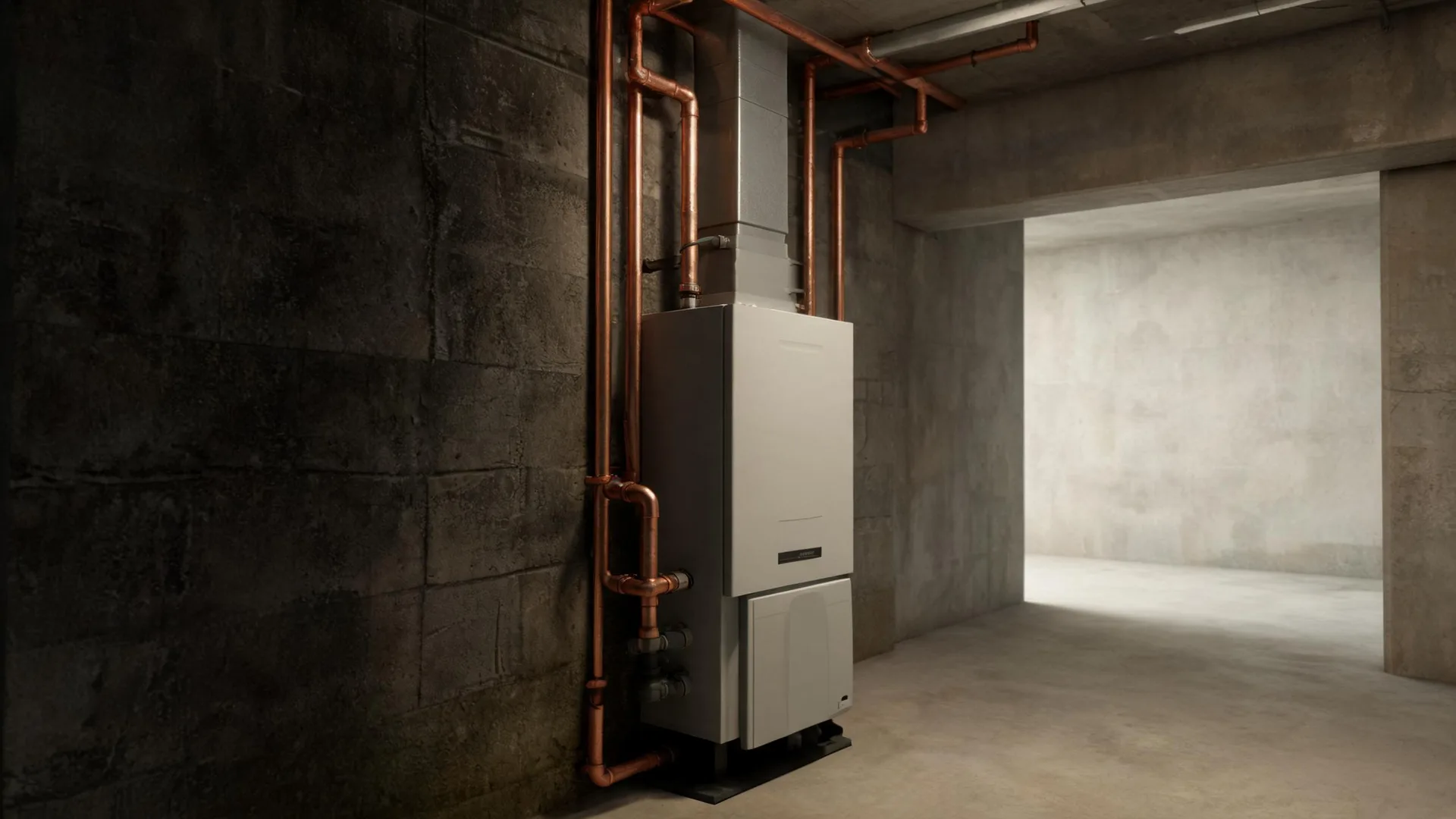
The boiler itself sits in the basement or a utility room and is the piece a contractor goes to first. It heats water and sends it out through the system. When it fails, the signs range from no heat at all to banging pipes to water pooling beneath the unit, and the cause is usually found inside the boiler jacket: the heat exchanger, the burner, or the ignition assembly.
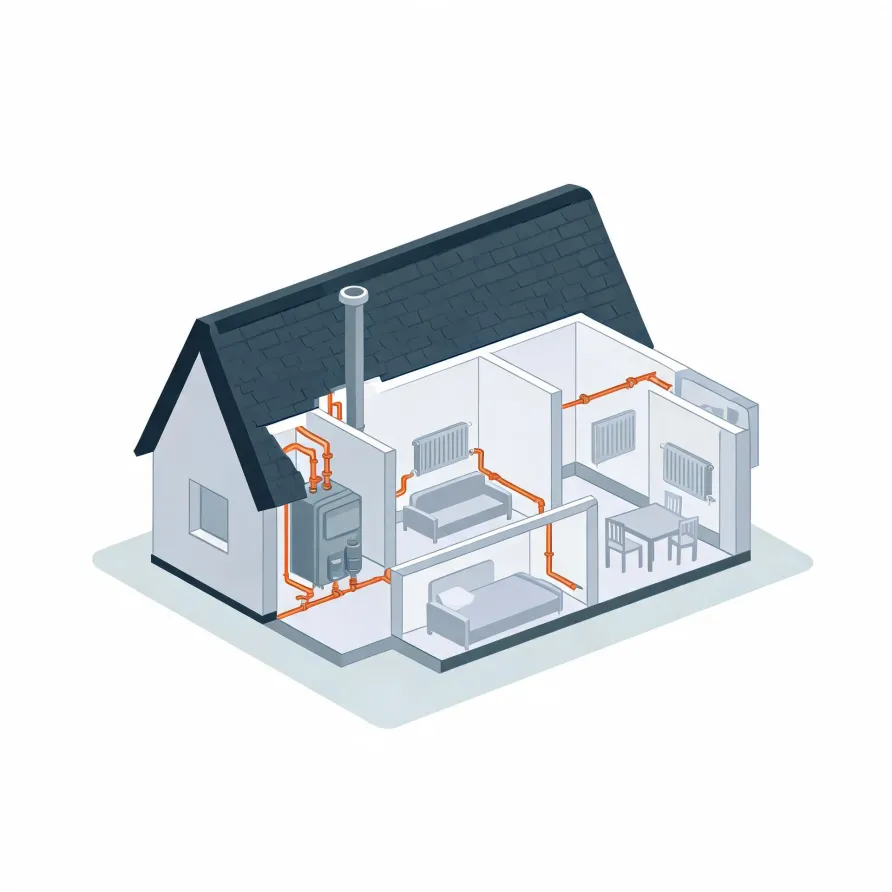
From the boiler, supply pipes carry hot water to radiators or baseboard units in each room, and return pipes bring cooled water back. The circulator pump moves water through that loop, and the expansion tank sits nearby to absorb pressure. A stuck pump or a waterlogged expansion tank will stop heat from reaching rooms even when the boiler fires normally.
The drawing shows the general layout of a boiler system, and a licensed contractor determines which parts apply and what needs attention in your specific home.
Get matched in Crawford CountyCrawford County, Iowa, by the numbers
82 severe weather events were recorded in Crawford County, Iowa between 2015 and 2024.
NOAA National Centers for Environmental Information, Storm Events Database, bulk CSV export, events 2015-01-01 through 2024-12-31.Half the homes in Crawford County, Iowa were built in 1968 or earlier (2020-2024 ACS 5-year).
U.S. Census Bureau, 2020-2024 American Community Survey 5-Year EstimatesCrawford County, Iowa holds 6,869 housing units (2020-2024 ACS 5-year).
U.S. Census Bureau, 2020-2024 American Community Survey 5-Year EstimatesOwners occupy 76.0% of the occupied homes in Crawford County, Iowa (2020-2024 ACS 5-year).
U.S. Census Bureau, 2020-2024 American Community Survey 5-Year EstimatesCodes & Standards Governing Boiler Repair in Crawford County, Iowa1 sourced rules and standards
Licensing and Legal Requirements in Crawford County, Iowa
Iowa requires a state licence to install or repair HVAC, refrigeration, mechanical or plumbing systems, and to operate as a contractor, with exceptions listed in section 105.11.
Severe Weather Events in Crawford County
Extreme weather puts real strain on boiler systems, and Crawford County's climate is part of what determines how hard local equipment works over time. That workload shapes what repair needs look like here, which is why the record matters.
82 severe weather events, 2015–2024. Source: NOAA National Centers for Environmental Information, Storm Events Database.