Tell us about the job
Takes about a minute. No obligation.
A contractor quoting boiler installation in Clinton County has to account for what the climate actually demands before settling on equipment size. 171 severe weather events were recorded in Clinton County, Iowa between 2015 and 2024. At that rate of severe weather, a boiler sized to average conditions rather than peak ones will be pushed hard on a regular basis, shortening the life of heat exchangers and controls alike. Getting the load calculation right at the start is what keeps a new system from spending its early years running near its ceiling.
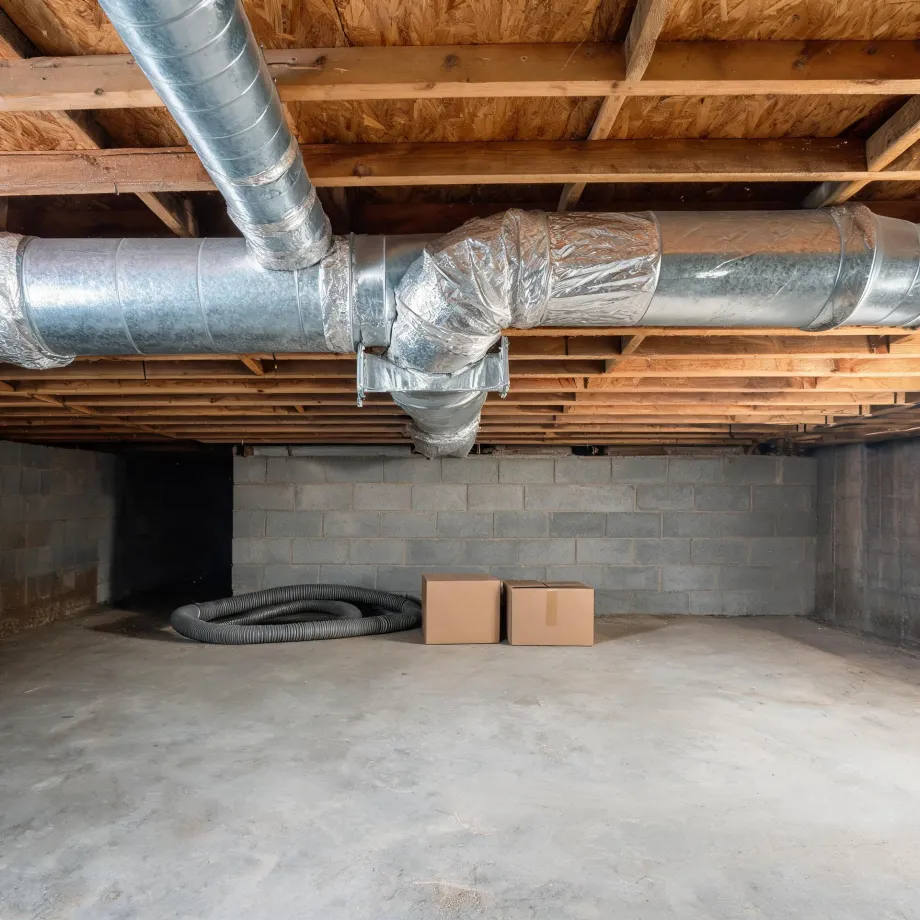
Ductwork laid down for a coal or early gas system carries assumptions about airflow and routing that a modern boiler does not share. Half the homes in Clinton County, Iowa were built in 1957 or earlier (2020-2024 ACS 5-year). A contractor pricing a boiler installation here has to trace what is actually in the walls and floors before the equipment choice means anything, because the existing runs may need rerouting, upsizing, or replacement to carry the new system at all. The electrical service gets the same look, since what a modern boiler draws for controls and pumps can exceed what older wiring was set up to handle.
What a Boiler Installation Puts in Your Home
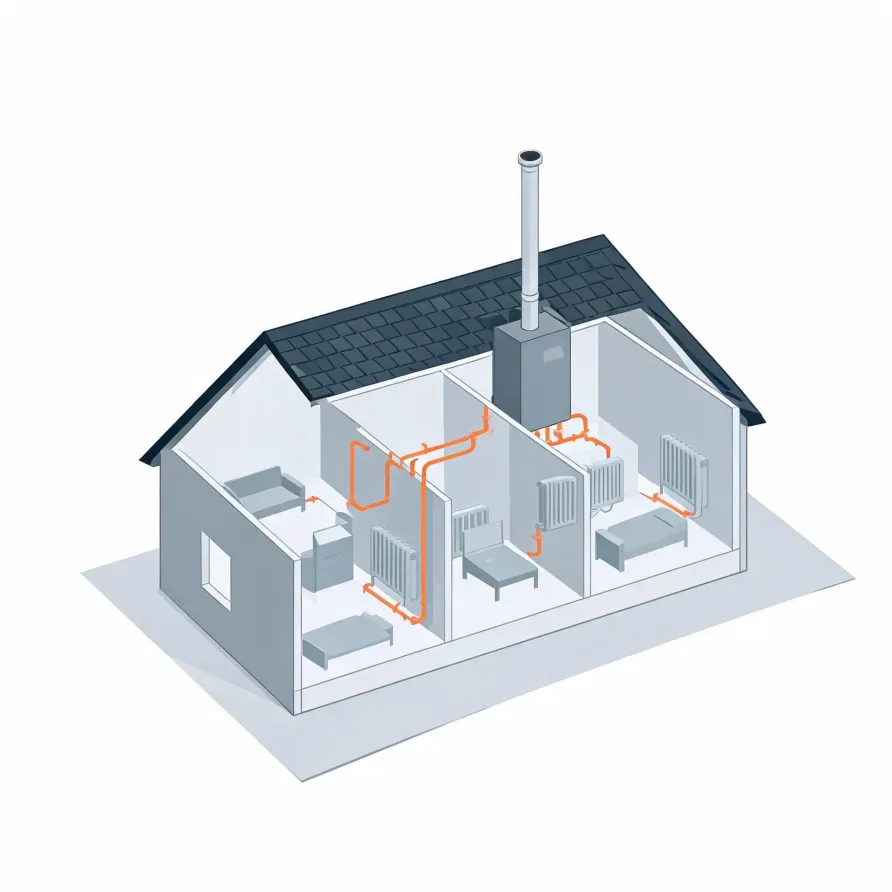
The boiler itself sits in a mechanical room, basement, or utility closet and is the heart of the system. It heats water that travels out through the house to deliver warmth. Alongside it, an expansion tank manages pressure as water heats and cools.
From the boiler, supply and return pipes run through the house to radiators, baseboard units, or radiant floor loops, each placed in the rooms they serve. A circulator pump moves the heated water through that loop, and a thermostat mounted on a wall ties the whole system together by calling for heat when the house needs it.
The drawing shows a typical layout, and a licensed contractor determines exactly which components and configurations apply to your home.
Get matched in Clinton CountyClinton County, Iowa, by the numbers
171 severe weather events were recorded in Clinton County, Iowa between 2015 and 2024.
NOAA National Centers for Environmental Information, Storm Events Database, bulk CSV export, events 2015-01-01 through 2024-12-31.Half the homes in Clinton County, Iowa were built in 1957 or earlier (2020-2024 ACS 5-year).
U.S. Census Bureau, 2020-2024 American Community Survey 5-Year EstimatesClinton County, Iowa holds 21,581 housing units (2020-2024 ACS 5-year).
U.S. Census Bureau, 2020-2024 American Community Survey 5-Year EstimatesOwners occupy 74.5% of the occupied homes in Clinton County, Iowa (2020-2024 ACS 5-year).
U.S. Census Bureau, 2020-2024 American Community Survey 5-Year EstimatesBoiler Installation Rules for Clinton County, Iowa1 sourced standards and codes
Licensing and Legal Requirements in Clinton County, Iowa
Iowa requires a state licence to install or repair HVAC, refrigeration, mechanical or plumbing systems, and to operate as a contractor, with exceptions listed in section 105.11.
Severe Weather Events in Clinton County
Weather puts load on heating equipment. How hard that load runs, and how often, depends on what this county actually sees, which is why local conditions shape the conversation about what to install and how to size it.
171 severe weather events, 2015–2024. Source: NOAA National Centers for Environmental Information, Storm Events Database.