Send the request today and stop worrying about who to call.
A gas boiler that isn't venting right can put carbon monoxide into your house with no smell and no color. Soot near the draft hood, a yellow flame where it should be blue, rust or water around the flue pipe, a headache that eases up when you leave the house and comes back when you're home again. Any one of those is worth taking seriously.
Iowa homes run these boilers hard from October through April, and most of that running happens behind a closed utility room door where nobody's checking on it day to day. A cracked heat exchanger or a blocked flue doesn't announce itself. It just sits there working against you a little more each week.
If you're reading this because something feels off, you don't need to spend the afternoon on it. You don't need to search for a boiler tech, call three or four and see who answers, explain the make and the model and the symptoms over and over, then sit with a stack of quotes trying to guess who actually knows gas boilers versus who just says they do. That whole process is its own kind of exhausting, on top of already being worried about your air.
Send the form on this page and that part stops being yours to manage. A licensed contractor who works on boilers in Iowa gets your information and the finding is done. No more calling around, no more repeating yourself to a new voice every time, no more sorting through quotes trying to compare apples to apples. That weight is off you.
A boiler with a carbon monoxide problem is not something to sit on while you think it over. The signs below will tell you more about what to look for. The step that gets a qualified person looking at your actual unit is the one at the bottom of this page.
What are the signs of carbon monoxide from my boiler?
You keep an eye on small things before they turn into big ones, so when you notice something off about your boiler, you want to know what to check. Carbon monoxide doesn't announce itself with a smell or a color, which is what makes it worth learning the actual signs instead of waiting to feel sick. A gas boiler that's running fine looks and sounds a certain way, and when it isn't, there are usually marks it leaves behind.
Soot, flame color, and how you feel in the house are the signs that matter
A boiler burning gas the way it should has a flame that's blue, steady, and mostly quiet. If it's burning yellow or orange, or flickering more than usual, it isn't getting enough air and that's when carbon monoxide builds up. Streaks of soot around the draft hood or on the floor near the unit mean the same thing. So does rust or water stains on the flue pipe, since a flue that's leaking exhaust instead of carrying it outside is the actual mechanism behind the gas getting into your house. If anyone in the house gets headaches or feels sick only at home and better outside or away, that's a sign worth acting on right away, not waiting out.
What would you actually notice in your own house
A furnace filter that stays clean longer than it should, streaks of soot on the wall behind the boiler, or a pilot light that burns yellow or orange instead of blue. Moisture collecting on windows near the utility room. You or someone in the house gets drowsy or has a headache in the evening and feels fine the next morning once you've been outside a while. A carbon monoxide alarm that chirps once and stops. None of these prove anything by themselves, but together they point at a boiler that isn't burning gas cleanly or isn't venting what it burns. Left alone, that gas keeps building in a closed-up house, and the people in it are the ones breathing it.
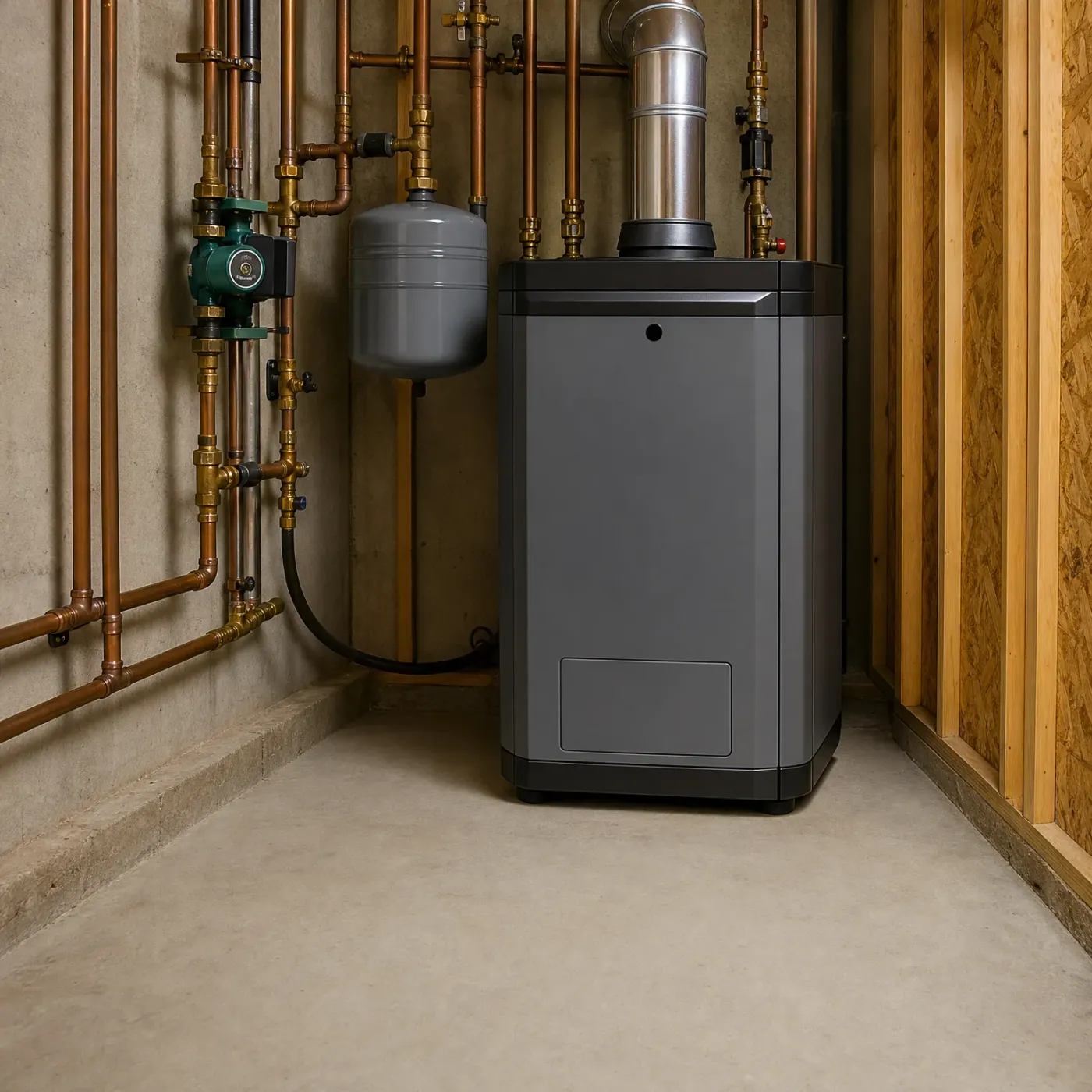
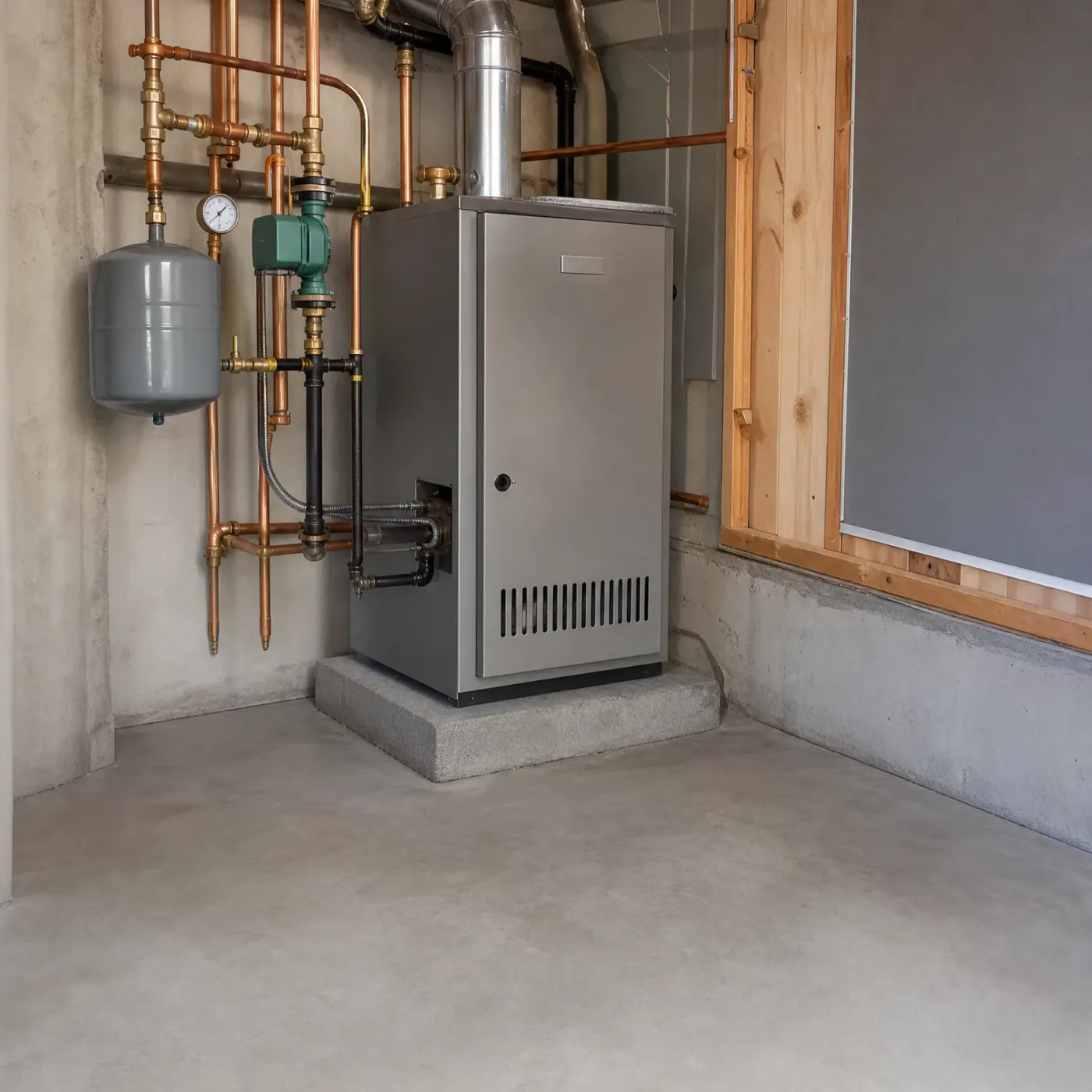
Boiler venting correctly
The flue runs straight and tight, with no rust or staining anywhere along it. The pilot or burner flame is blue, steady, and quiet. No soot marks the draft hood, and the area around the unit stays dry. This is what a boiler looks like when combustion gas is leaving the house.
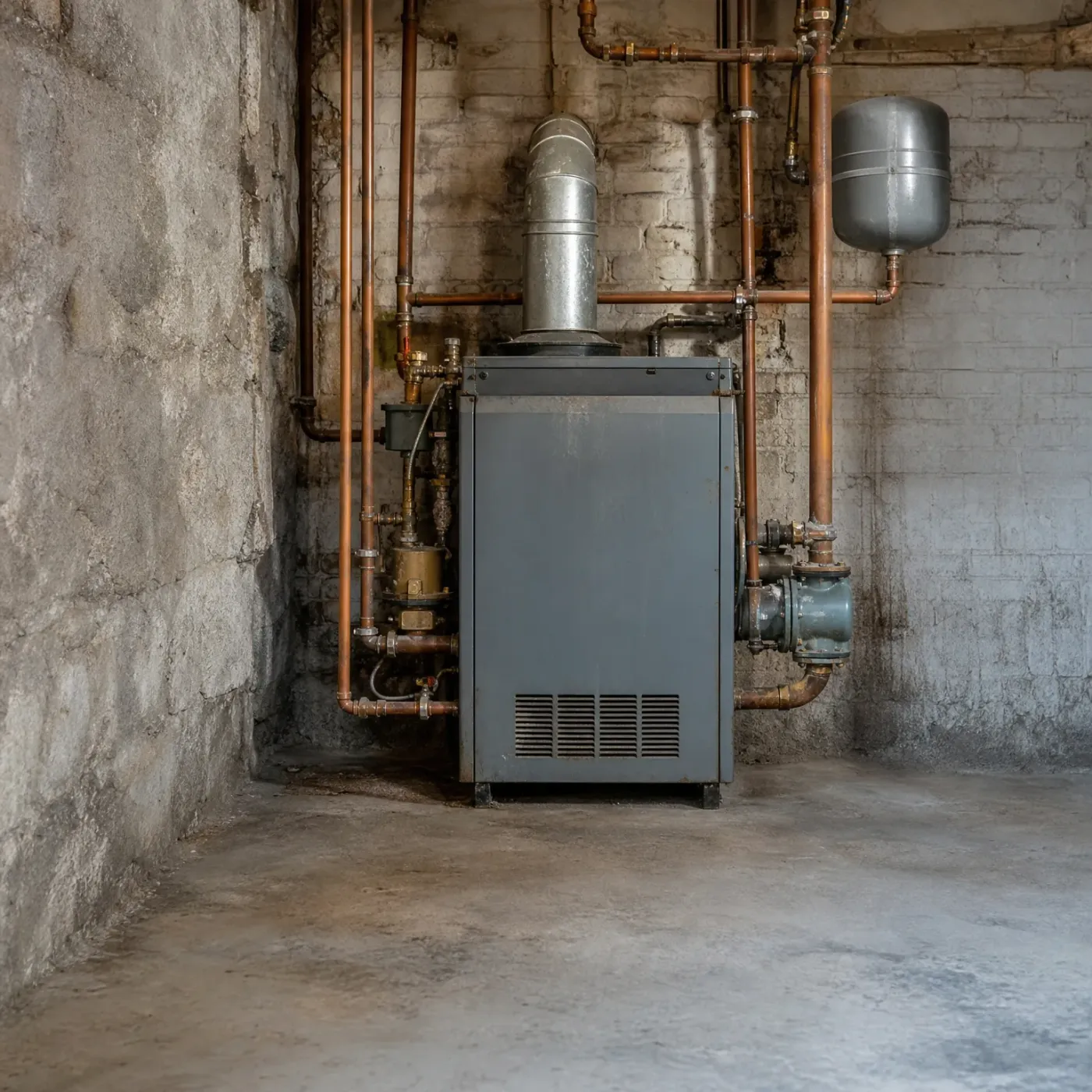
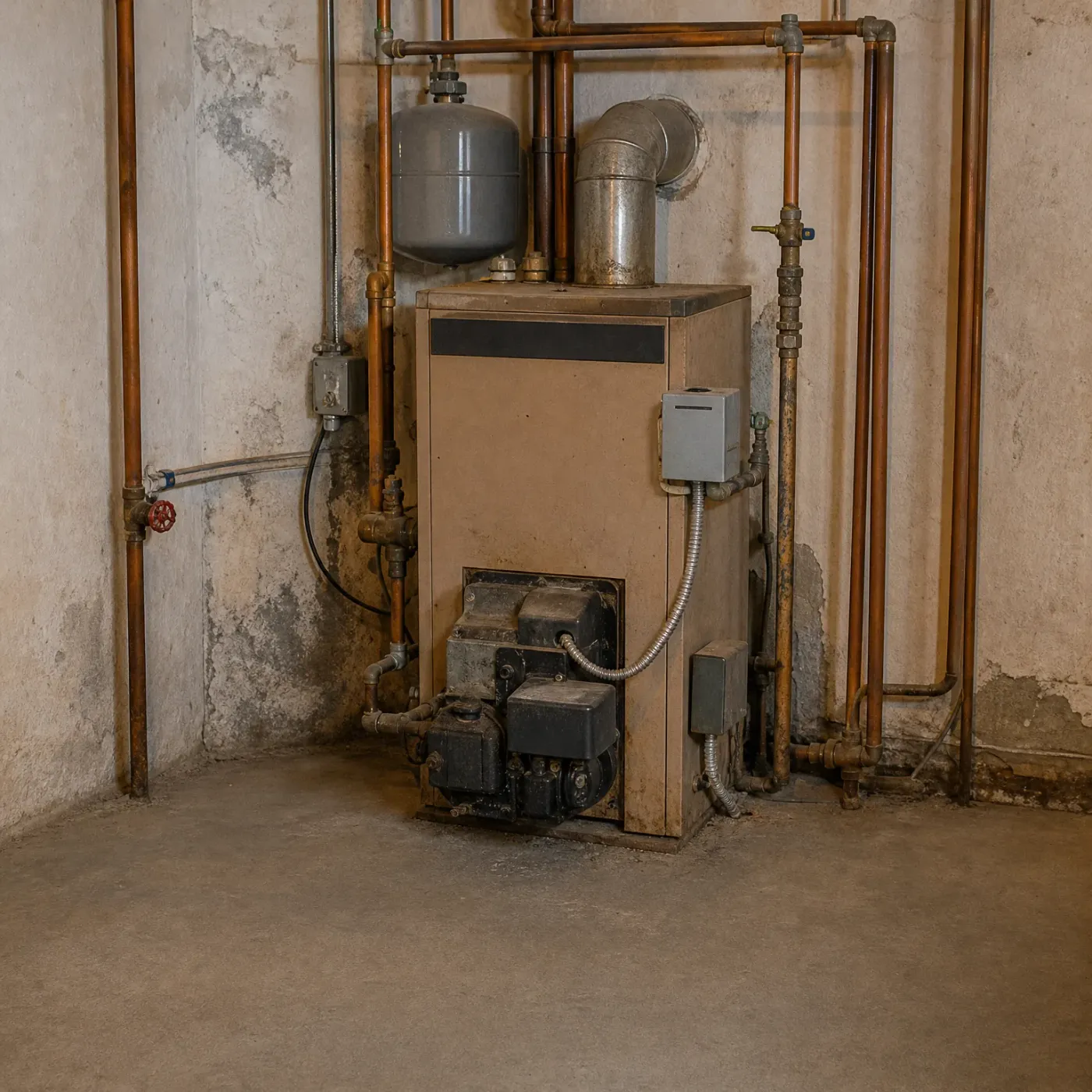
Boiler in trouble
An older cast-iron boiler like this one is worth a closer look at the flue connections and the metal around them. Rust or water stains on a galvanized vent, a flame burning yellow instead of blue, or soot on nearby surfaces are signs the gas isn't venting the way it should.
Hand off the boiler problem
Answer a few questions instead of calling shop after shop.
Send the request today and let a boiler pro reach out to you.
A pilot or burner flame burning yellow or orange instead of a steady blue means the gas isn't burning clean.
Soot stains on the wall or ceiling near the boiler point to exhaust that isn't leaving through the flue.
Rust or water stains on the flue pipe itself, not just around it, mean the pipe is failing where it carries the exhaust out.
A headache or nausea that shows up at home and fades once you're outside is worth treating as a gas issue, not a bug going around.
A carbon monoxide alarm that sounds near the boiler and doesn't stop needs a technician before the boiler runs again.
Signs worth watching, not panicking over
A furnace filter staying cleaner longer than usual can mean several things and isn't on its own a carbon monoxide sign.
Light condensation on windows near the boiler in cold weather happens in plenty of houses and isn't automatically a venting problem.
A faint musty smell near the unit is worth a look but doesn't point to combustion gas the way soot or a yellow flame does.
A slightly louder burner than you remember is worth mentioning to a technician at your next service, not a reason to shut the system down tonight.
Dust around the draft hood is normal for the area near a vent and isn't the same as soot staining.
1
Gas burns and mixes with air inside the combustion chamber.
2
Flame should burn blue if the mix is right.
3
Exhaust gas rises into the flue pipe above the draft hood.
4
Draft pulls that exhaust up and out through the vent.
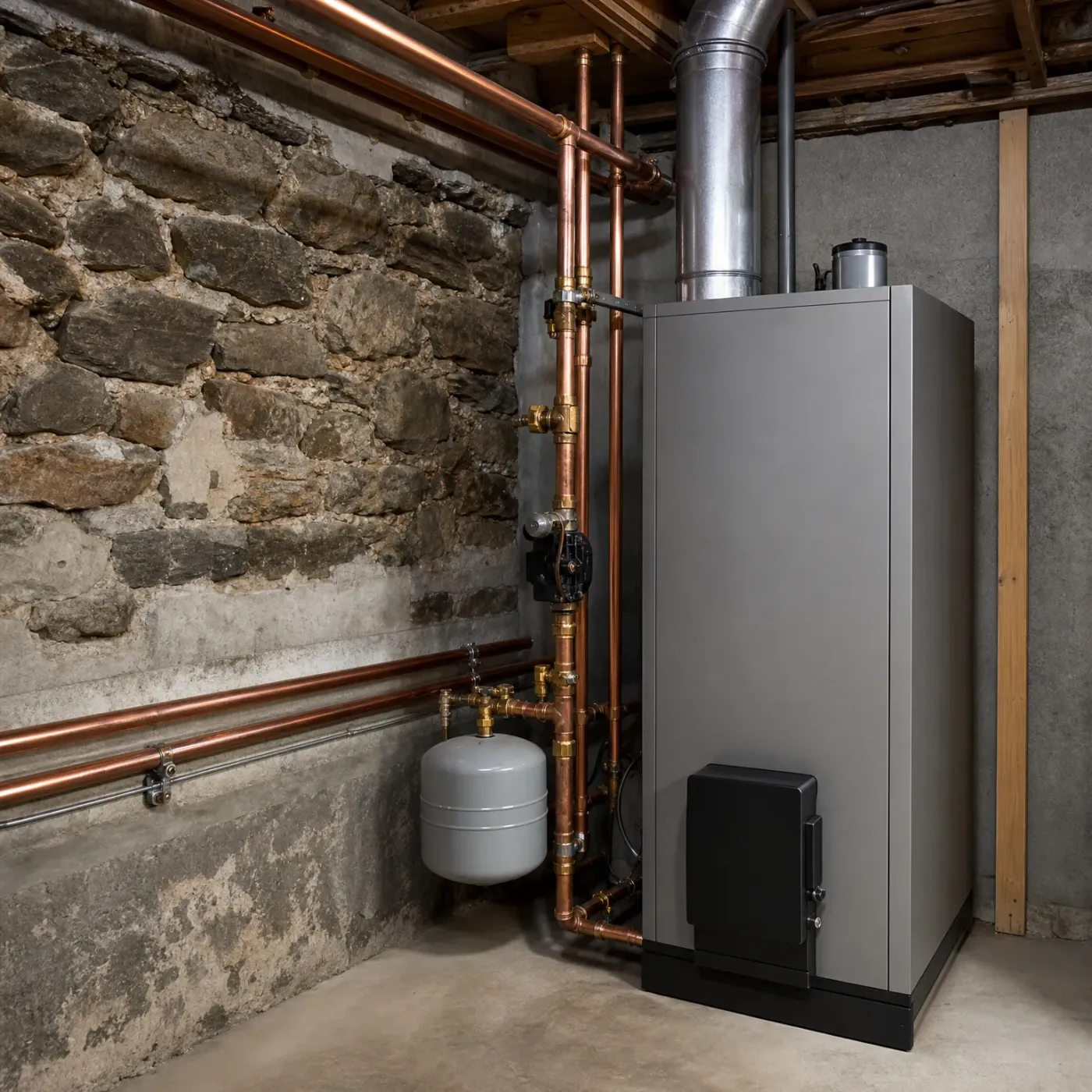
The flue pipe runs clean to the wall, the pressure gauge sits steady, and the floor around the unit stays dry.
That corner of the basement tells a different story: a flue elbow going soft with rust and pipe joints weeping where they meet the boiler.
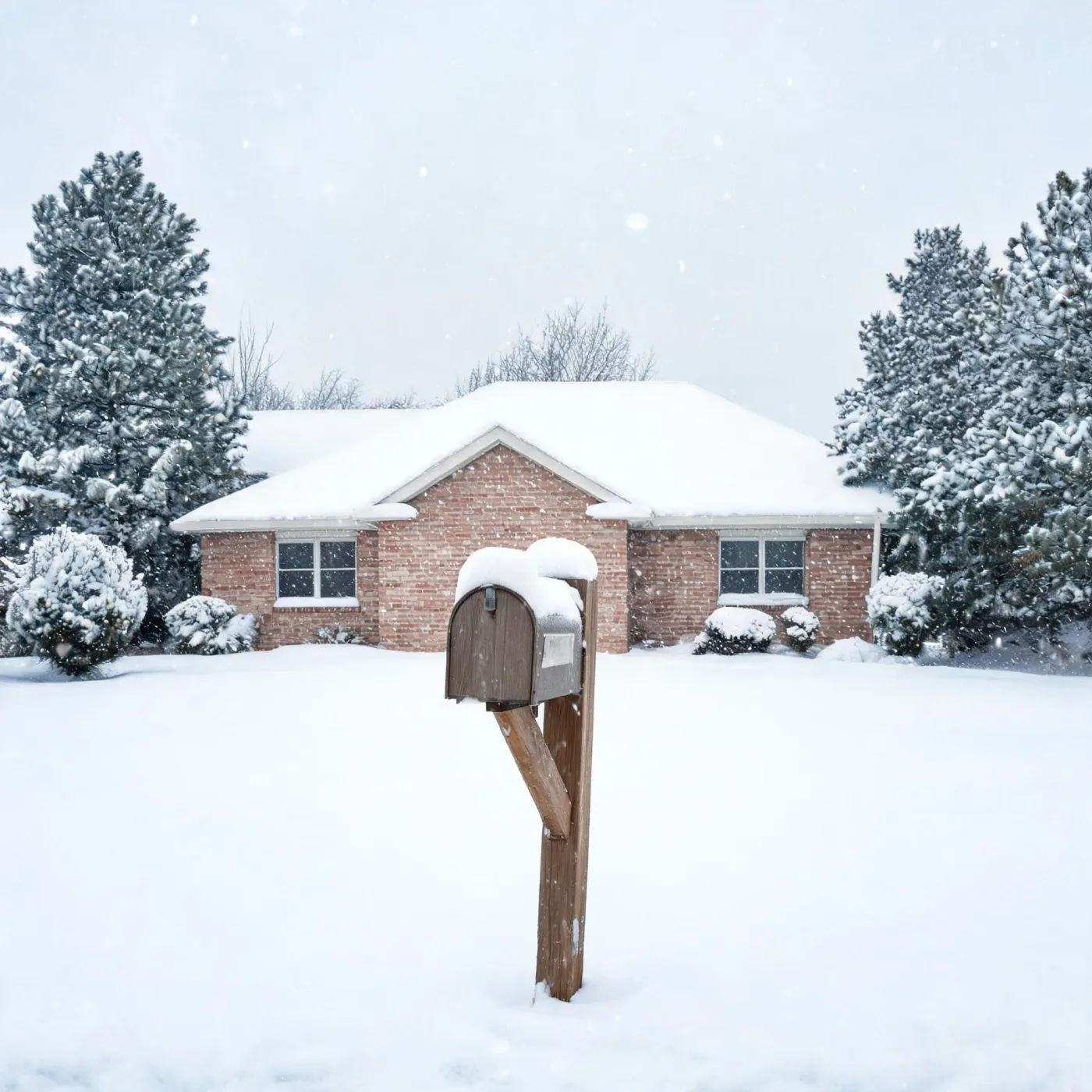
Winter nights average 15°F statewide, so your boiler runs long stretches without shutting off, night after night from December through February. That kind of steady run time matters because it's the hours of continuous combustion that wear on a flue connection or push a marginal draft problem into a real one. A boiler cycling on and off for a few minutes here and there can mask a venting issue that shows up clearly once it's running for hours straight. If yours has been running most of the night lately, that's exactly the condition under which soot, a changed flame color, or moisture around the flue tends to show up first. Source: National Weather Service.
NOAA nClimDiv 1991-2020 county normals weighted by homes
A boiler that vents right has a blue flame, a dry floor, and no rust on the pipe. One that doesn't will show it somewhere: soot on the wall, a yellow flame, water where there shouldn't be any, a headache that lifts once you're outside. You already check on small things before they turn into big ones, and that habit is what catches this early, while it's still a repair and not an emergency. Once you've spotted something off, the next step shouldn't be a search for who's available, who's licensed, and who can actually get to your boiler this week. That part of it, the calling around and the explaining the same problem twice, is what sending in the details skips past. What's left is the actual work: someone looking at your flue, your flame, your pressure gauge, and telling you straight what's wrong and what it takes to fix it. You stay in Iowa, your boiler keeps running through the cold months, and the question you came here with gets answered by someone standing in your basement instead of a page.