




Profile view of a bearded man wearing a dark green baseball cap and a dark gray T-shirt against a plain light background.

Best boiler temperature for an Iowa winter

Step 1 of 3: Equipment

What's the best boiler temperature setting for winter in Iowa?

Winters here get cold enough that your boiler runs for months straight, and most people never touch the dial once the installer sets it. But that factory setting is usually tuned for a milder climate than Iowa, not for the kind of cold that settles in from December through February. You want to know what number actually makes sense for your house once it gets genuinely cold outside, not just warm enough to be comfortable.

Set it between 165 and 180 degrees on the coldest days

A boiler heats water and sends it through pipes or baseboards to warm your house, and the colder it gets outside, the hotter that water needs to be to keep up. Most boilers come set around 140 to 150 degrees from the factory, which is fine for a mild fall day but not enough when temperatures drop into the single digits or below, which happens plenty in Iowa. Running it closer to 165 to 180 on those coldest stretches gives the system enough heat to actually keep pace with the house losing warmth. On milder winter days, you can turn it back down. Keeping an eye on how your house responds and adjusting as the temperature swings is part of catching problems before they turn into a boiler that can't keep up at all.

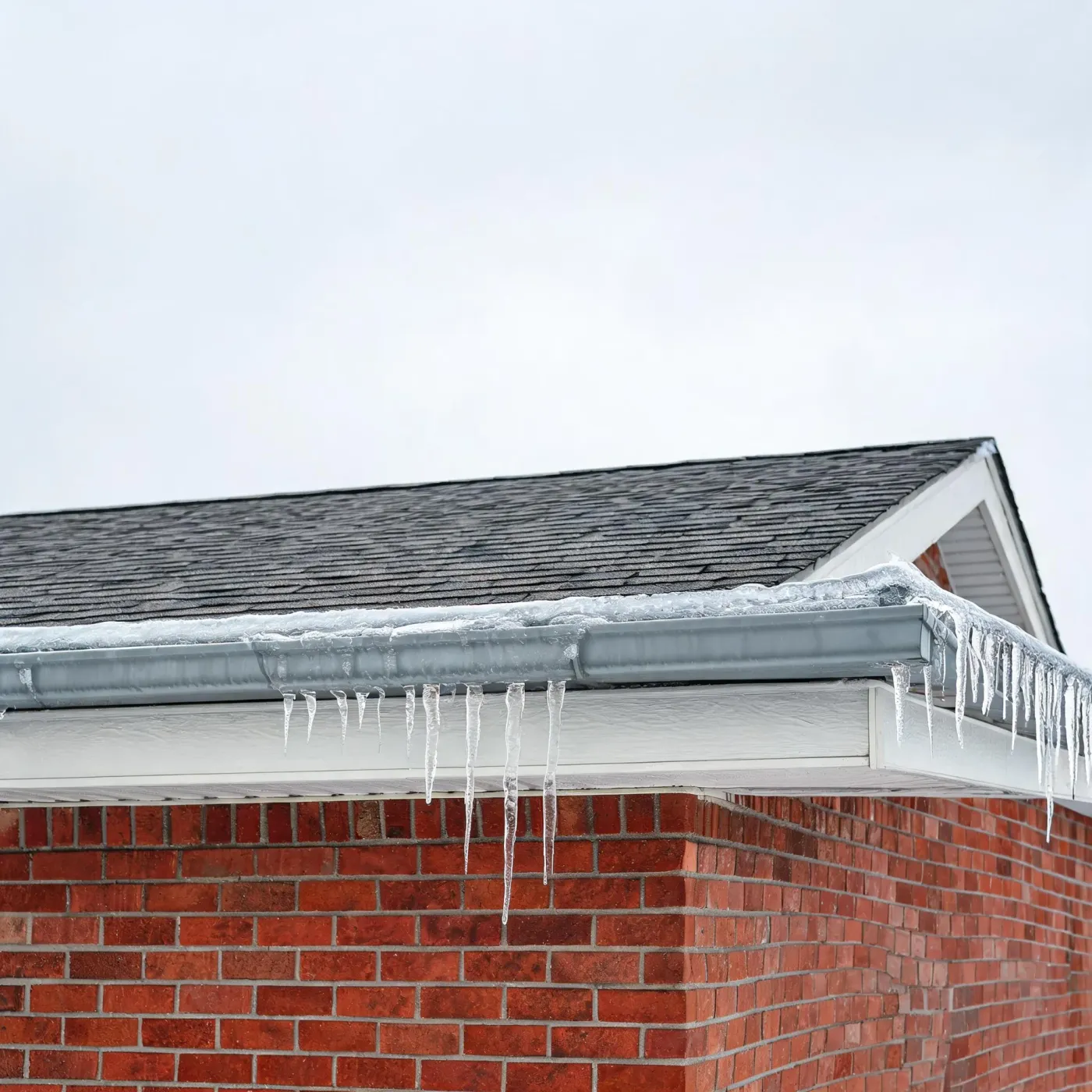
Corner of a brick house with asphalt shingle roof, white soffit and gray gutter, with icicles hanging from the gutter against an overcast sky.

Winter nights average 15°F statewide, according to NOAA climate data, and that's the kind of cold that keeps a boiler cycling on and off most of the night instead of settling in. At that outdoor temperature, your system has to push harder to hold the water temperature you've set, and if the dial is set higher than you actually need, you'll notice it in rooms that feel overheated while the boiler rarely rests. A setting that's closer to what your home actually needs lets it run longer, steadier stretches instead of short, hard bursts. Short bursts are what wear out an igniter or a circulator pump early. You'll feel the difference as more even heat room to room, not just a lower number on the thermostat.

NOAA nClimDiv 1991-2020 county normals weighted by homes

Is your boiler set wrong for this kind of cold?

Walk past your radiators tonight and feel them. If they're hot at the bottom and barely warm at the top, or if some rooms stay cold while the boiler keeps running, the temperature setting isn't matched to a 15°F night. You might also notice the burner short cycling, kicking on and off every few minutes instead of holding a steady run. That pattern wears on the ignition system faster than it should and still leaves you cold in the rooms furthest from the boiler. Some households just turn up the thermostat to compensate, which burns more gas without fixing the actual setting that's off.

A woman in a cream cowl-neck sweater sits by a window with snow outside, in a dimly lit living room with a sofa, lit lamp, mirror, candles and a fireplace.
A woman in a gray turtleneck sweater sits beside a large window looking out at snow-covered evergreen trees, in a dimly lit living room with a lit fireplace, lamps, couch and houseplant.
A woman in a cream turtleneck sweater stands beside a large window with snow-covered ground and bare trees outside, in a dimly lit living room with lamps, a sofa and framed art.
A woman in a grey cowl-neck sweater stands indoors near a window, looking out at falling snow, with a lamp, framed picture and couch in the warmly lit room behind her.

Hot Dial or Moderate Dial

Running it hot

  • A higher setting, around 180°F, pushes heat through baseboard or radiators faster when it's 15°F or colder outside overnight.
  • Rooms farthest from the boiler catch up quicker, which matters if your place has long runs of pipe.
  • The boiler cycles less often at a high setting, since each run moves more heat before the thermostat is satisfied.
  • Running this hot most of the winter puts more wear on the heat exchanger and the circulator pump over the years.
  • Gas use climbs with the setting, so a dial left at 180°F all season costs more than one that steps down on milder days.

Running it moderate

  • A setting closer to 160°F to 170°F still heats most homes fine on an average Iowa night in the 20s and 30s.
  • It cycles more often in short bursts, which some systems handle better than long, hot runs.
  • Radiators stay warm rather than hot to the touch, which is normal and doesn't mean the system is underperforming.
  • Lower water temperature means less stress on the boiler's joints and seals over a long heating season.
  • On the coldest nights, 15°F or below, a moderate setting may leave upstairs rooms or far radiators noticeably cooler.
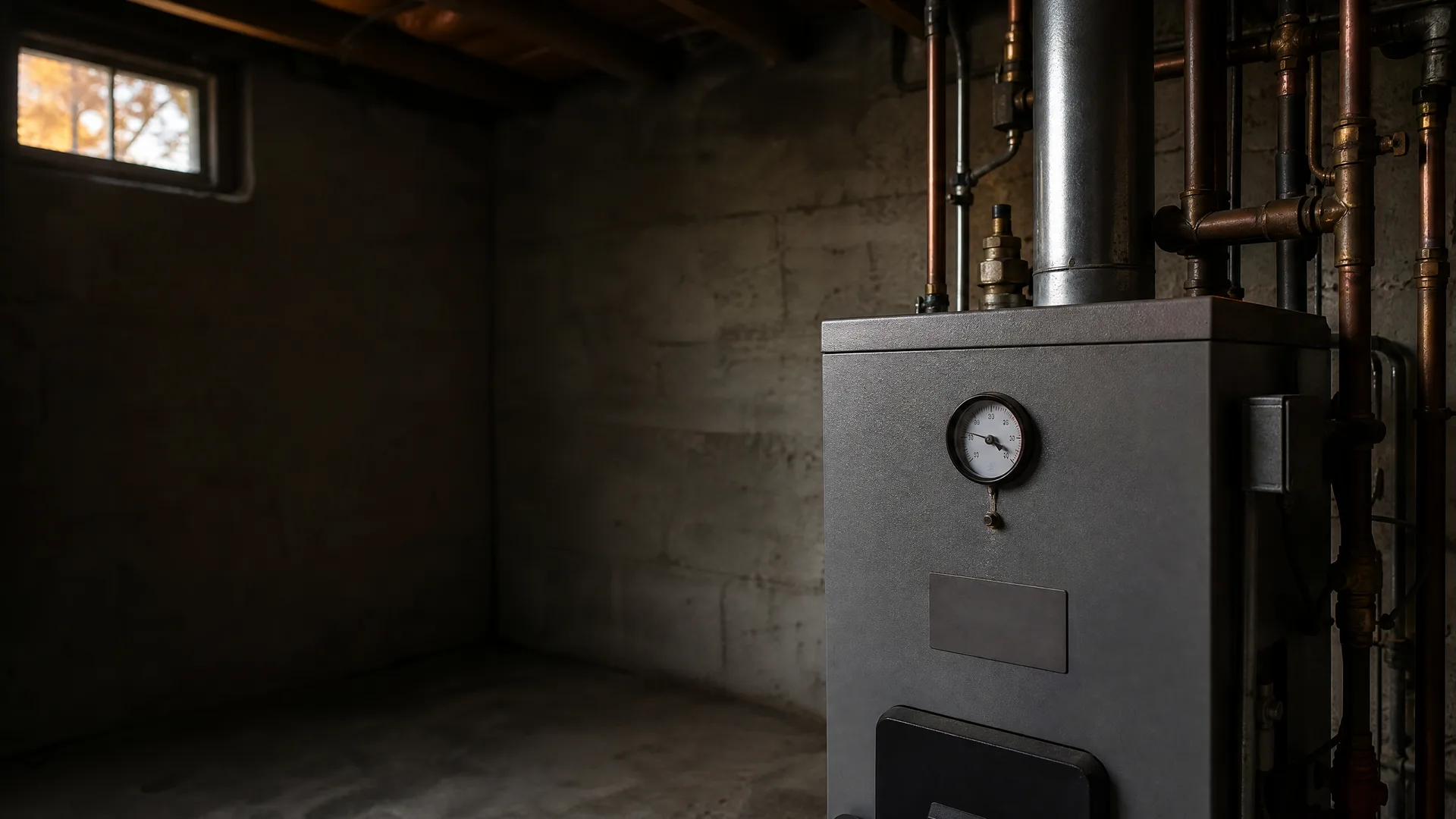
A gray boiler with a round pressure gauge and copper piping stands in a dim concrete basement lit by a small window showing yellow foliage.

You're down in the basement on a gray October afternoon, flashlight in hand, checking the boiler before the cold really sets in. The pressure gauge sits low, the needle resting under where it should be. You tap the glass once, out of habit, and it doesn't move. Upstairs the radiators are still cold, no reason to run them yet, but you wanted to look before November hit. You stand there a minute, weighing whether this is something to deal with now or something to let ride until a cold snap finds it for you. You've caught small things before they got big. This feels like one more.

The right pro for this job

Send the form and the boiler tune-up stops being something to remember.

There's no charge for the request.

What the aquastat actually controls

The aquastat is the dial that sets how hot the water in the boiler gets before it shuts off and starts again. It doesn't control your thermostat or how long the burner runs each cycle. It only sets the ceiling. Set it too low and the water cools before it's finished giving up its heat to the far rooms. Set it high and the boiler holds that heat longer between cycles, which is why installers lean toward 160 to 180°F for Iowa winters rather than the 140°F that suits a milder climate.


Why pressure changes the picture

A boiler running at the right temperature still won't heat evenly if the pressure has drifted from the 12 to 15 psi range most residential systems need. Low pressure means water moves slower through the pipes, so the far radiators never get the full heat the aquastat is producing. This is why two homes set to the same 180°F can perform completely differently. One has a tech checking pressure each fall. The other is quietly losing ground to a slow leak nobody's noticed yet.

A bearded man in a blue and brown plaid flannel shirt stands indoors looking out a window at snow-covered trees, with a ceramic mug on the windowsill.
A man in a blue T-shirt sits on a light gray sofa, laughing while looking at an open laptop in the foreground, with a framed picture, lamp and potted plant behind him.

A boiler doesn't send water straight from the aquastat to your radiators. It heats the water, holds it near that set point, and a circulator pump pushes it out through the supply pipes while the return pipes bring cooler water back to be reheated. That loop runs the whole time your thermostat calls for heat, cycling the burner on and off to keep the water near the aquastat setting rather than running flat out. Cast iron radiators and baseboard units give off heat at different rates, so the same water temperature can feel plenty warm in one room and weak in another, depending on how much baseboard or radiator surface is in that room and how far the pipe run is from the boiler. If your system has an outdoor reset control, it's already adjusting the water temperature as the outside air gets colder, which is why some installers set the aquastat higher as a ceiling and let the reset do the finer work through the night.

Winter nights average 15°F statewide

At 15°F, your boiler is holding water near its set point most of the night rather than cycling off for long stretches. If the aquastat is set low for a milder night, you'll feel it in the rooms farthest from the basement.

NOAA nClimDiv 1991-2020 county normals weighted by homes

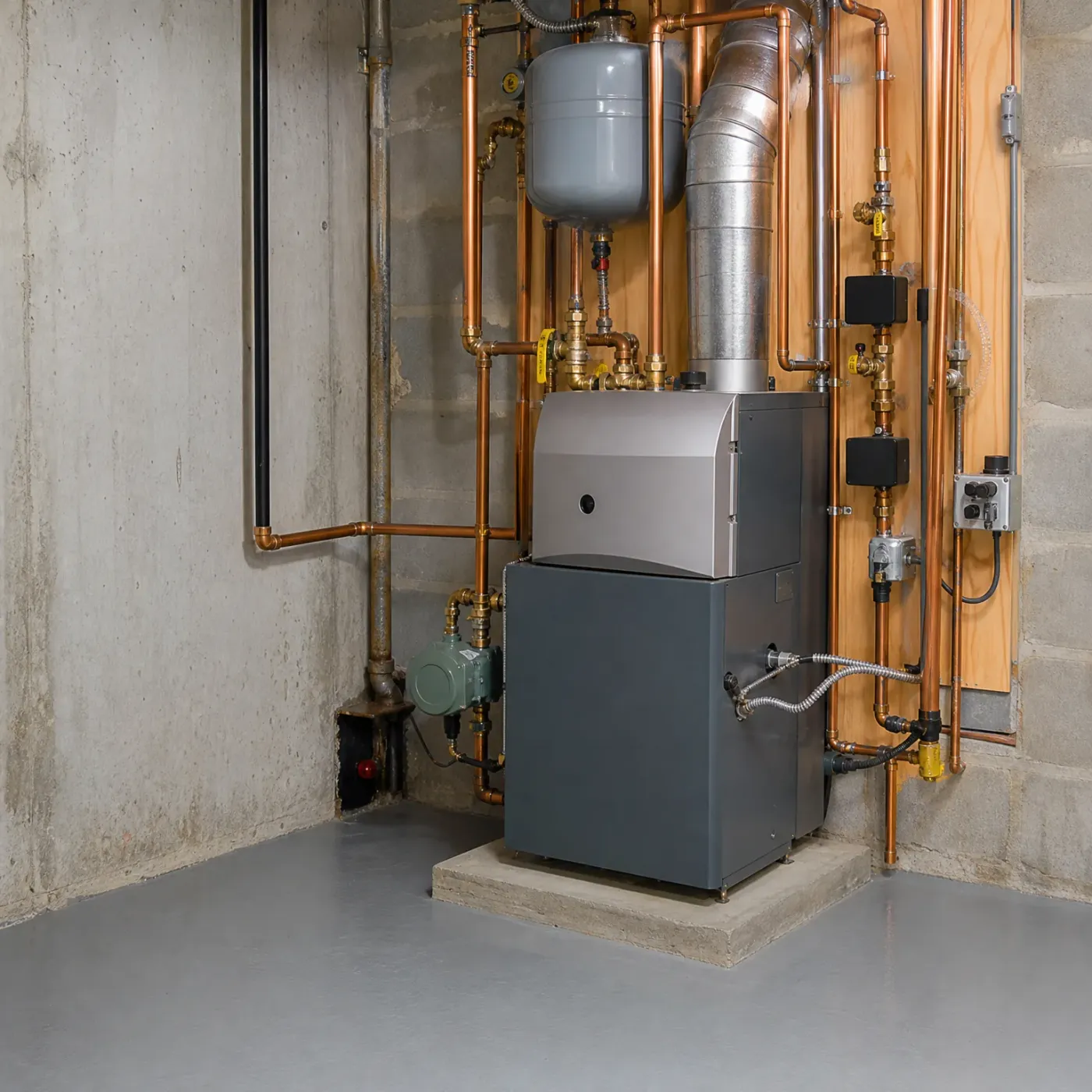
A gray residential boiler on a concrete pad in a basement corner, connected to copper piping, an expansion tank, circulator pumps and insulated flue ducting against concrete and plywood walls.

A system that's keeping up

Copper piping run clean, an expansion tank doing its job, valves and fittings tight. A setup like this holds its set point through a 15°F night without the aquastat working overtime or short cycling.

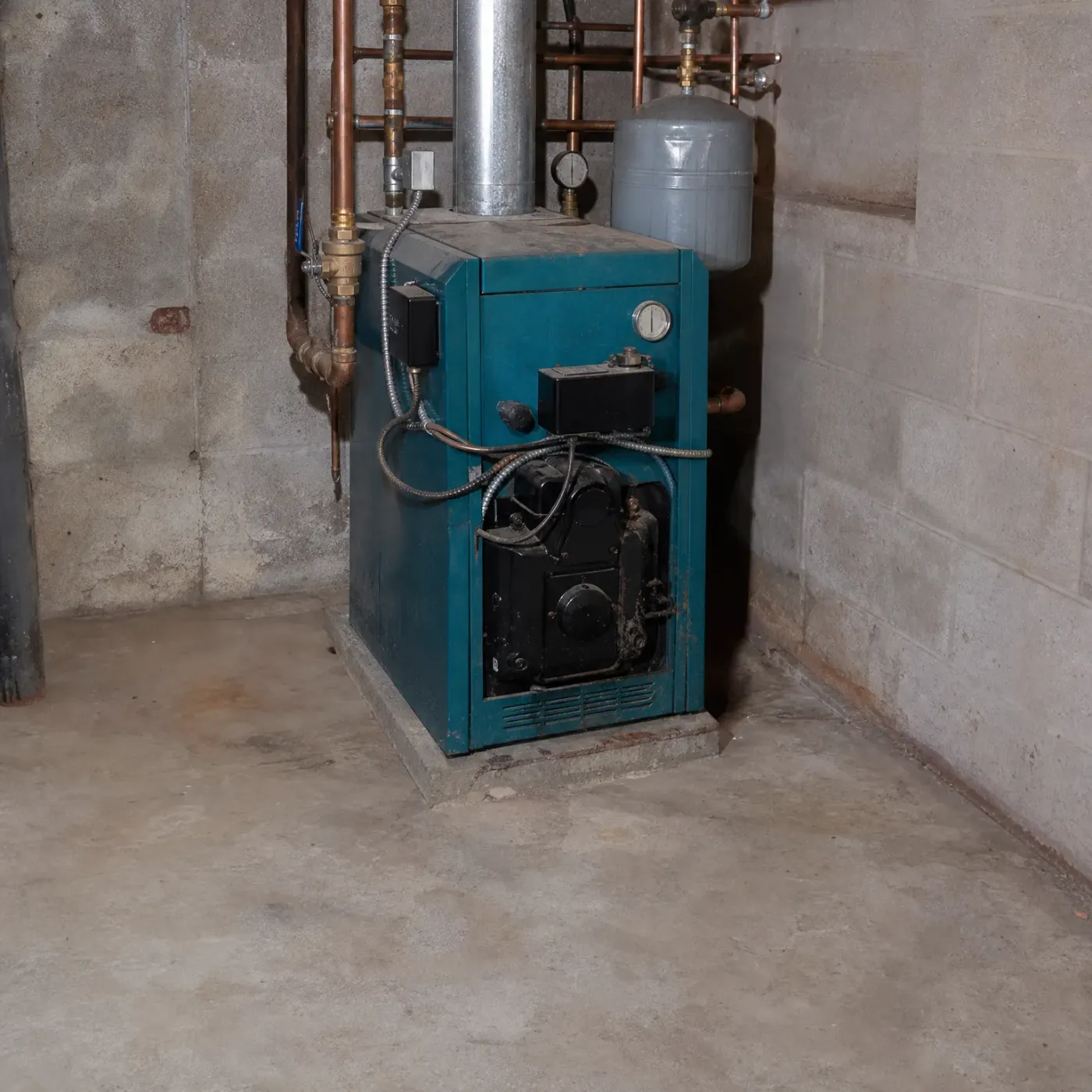
A teal boiler with a pressure gauge and black burner unit sits on a concrete pad in a basement corner, with copper pipes, a flue vent, and a gray expansion tank above against concrete block walls.

A system under strain

An older unit with a gray expansion tank and a pressure gauge nearby is worth a closer look if your radiators run cold on one end. Age alone doesn't mean trouble, but it's a reason to check instead of guess.

A woman in a cream sweater and jeans stands in the open doorway of a white stucco house, holding the dark door, while a man in a dark quilted jacket seen from behind walks toward the entry past potted plants.

What a wrong setting costs you this winter

Set too low, you notice it in the rooms farthest from the basement first. A back bedroom or a room over the garage stays a few degrees under the rest of the house, and you end up running a space heater to cover the gap the boiler should be covering. Set too high, the boiler short cycles on mild nights, and that's wear on the circulator pump and the burner that shows up as a repair bill sooner than it should.

Either way, you're the one who notices first, because you're the kind of person who checks the pressure gauge in October instead of waiting for a cold room in January. The aquastat setting that's right for your house depends on your piping, your radiators, and how your system was balanced when it went in, which isn't something you can read off a dial. A contractor who knows boilers in Iowa homes can look at your setup and tell you where that number should actually sit, and once you've requested that, finding the right person for your system isn't something you have to chase down yourself.

Interior corner with a beige sofa holding a dark green and a light cushion and a textured throw, a potted small-leaved tree beside a white-framed window, and a dark shallow bowl on a wooden coffee table in the foreground.
  1. Cold water returns from the radiators to the boiler

  2. The burner fires and heats water to the aquastat's set point

  3. A circulator pump pushes hot water out through the supply pipes

  4. The aquastat cuts the burner once the water hits its limit

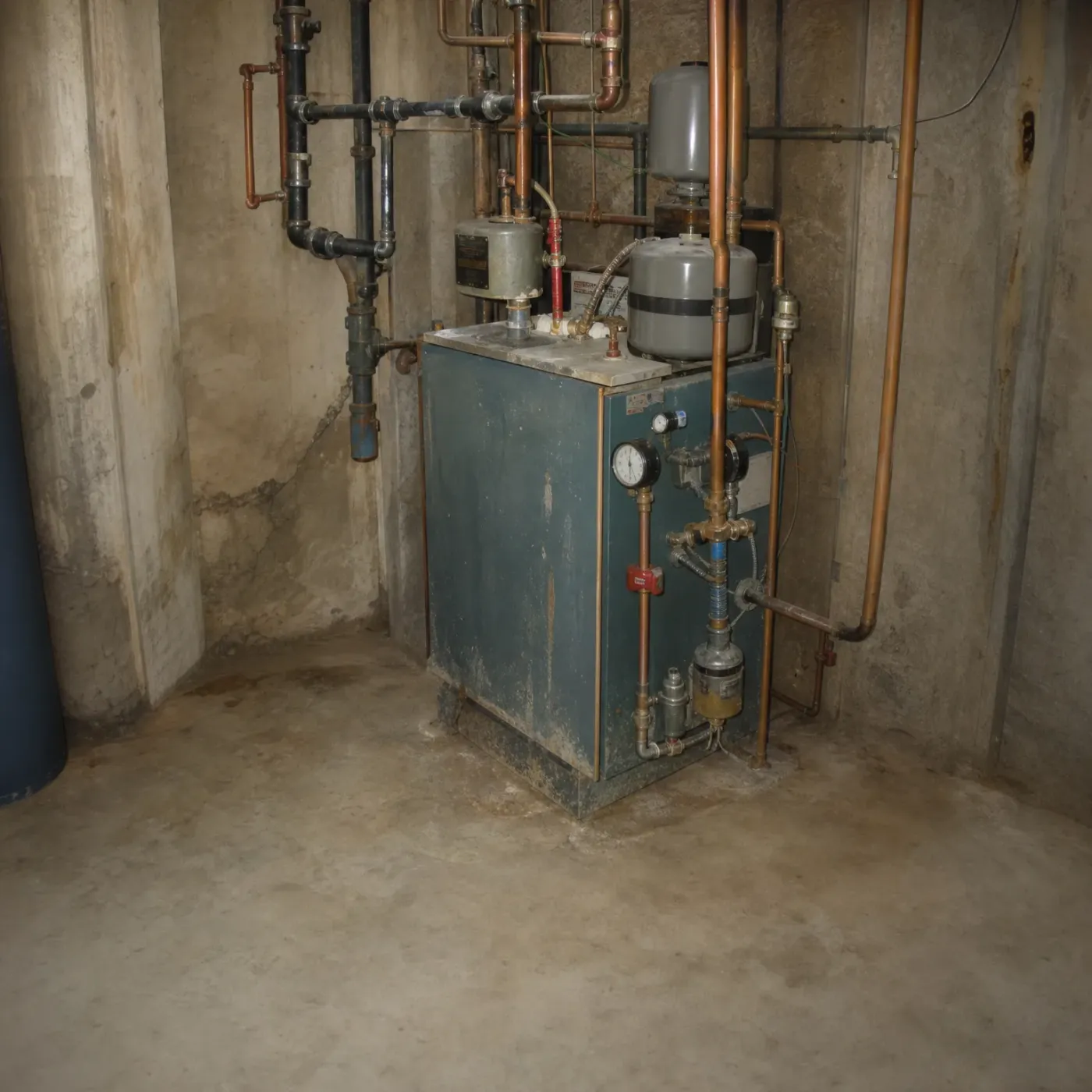
A green metal boiler with pressure gauge stands in a concrete basement corner, surrounded by copper and black iron pipes and two tank-shaped vessels.
Before you get your boiler maintenance
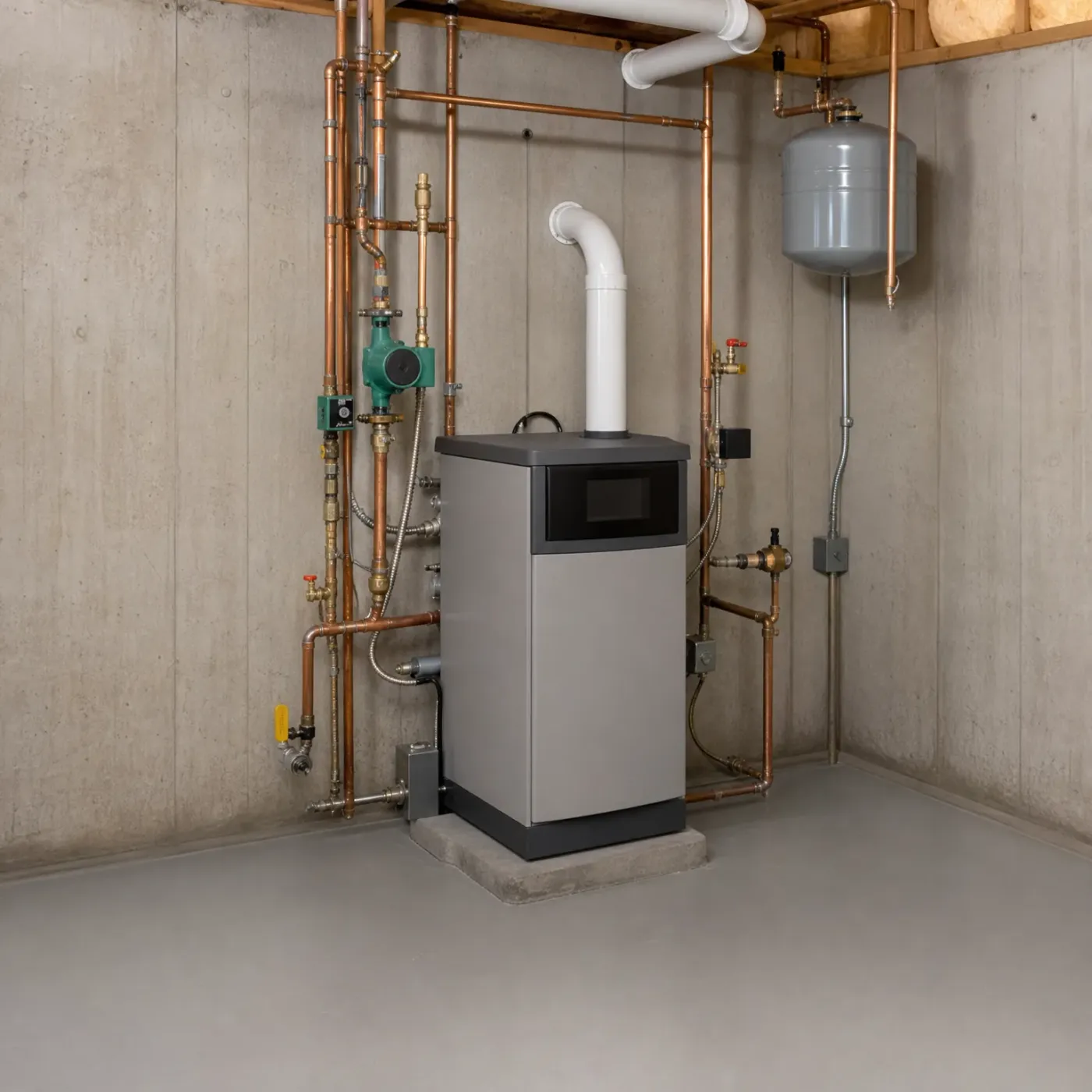
A gray floor-standing boiler on a concrete pad in a basement corner, with copper piping, a circulator pump, a white PVC flue, and a gray expansion tank mounted on the wall.
After you get your boiler maintenance

Setting it right for winter

  • Most boilers hold up fine in the 160°F to 180°F range through an Iowa winter, provided the system around the aquastat is sound.
  • A setting that's too low leaves rooms far from the basement cold while the boiler still runs most of the night.
  • A setting that's too high wears on the boiler and still won't fix cold rooms if the real issue is pressure or a stuck valve.
  • Weak heat in part of the house on a 15°F night usually points to the system, not the dial.
  • A technician can check pressure, the circulator pump and the aquastat together and set the temperature to match what your home actually needs.
  • Once you send in a request, you're done chasing it down; a contractor who covers your area follows up to sort it out.

The dial matters less than what's attached to it. Somewhere in the 160°F to 180°F range, most boilers hold a house through an Iowa winter without trouble, as long as the pressure is right, the circulator pump is doing its job, and nothing is stuck or blocked along the way. Push the number up or down without checking those things first, and you're just guessing.

If a back bedroom stays cold on a 15°F night while the boiler runs and runs, that's rarely the aquastat's fault. Low pressure, a weak pump, or a valve that isn't opening all the way will produce the same cold room no matter where the dial sits. Raising the temperature in that case just means a hotter boiler and the same cold room.

This is the kind of thing worth sorting out before January rather than during it. A technician who checks the pressure, the pump, and the aquastat together can tell you whether your setting actually fits your house, or whether something else is working against it. That's a different answer than a number pulled from a chart.

Once you've sent in a request, that part of it is off your plate. You're not the one tracking down who's available or calling around. A contractor who covers your area takes it from there and follows up with you directly.

Interior room corner with sunlight from a window, showing peeling paint and damaged plaster on the wall above a white baseboard, a wooden cabinet with a pale bowl on top, hardwood floor and a patterned rug.
Interior corner of a room with tan walls, white profiled baseboard and window trim, a wood-plank floor in sunlight, and green foliage visible through the window.
An empty room corner with cream walls, white baseboard, two windows with deep sills showing green foliage outside, and a wood plank floor lit by sunlight.
Empty room corner with beige walls, white beadboard wainscoting, chair rail and baseboard, a window with green foliage outside, and sunlight casting leaf shadows on the wall above a wood floor.
Sunlit room corner with a multi-pane window, beige walls, white baseboard, wood floor with a woven rug, and a dark wooden cabinet holding a ceramic table lamp below a framed picture.

Matched to your boiler job

One request and finding someone for the tune-up is handled.

Get a local pro

You only hire the pro if you want to.